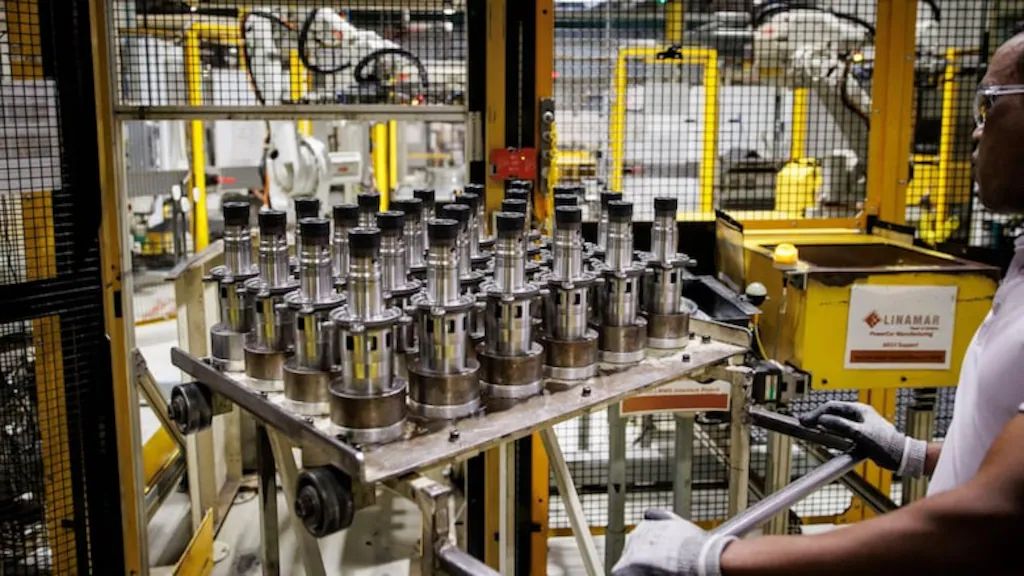
Statistics Canada says manufacturing sales were essentially unchanged in September at $80.2 billion.
The agency says sales were down in 11 of the 21 subsectors, including a 9.5 percent drop in primary metal sales, while the wood product subsector dropped 7 percent.
Petroleum and coal product sales rose 10 percent, helped by higher prices.
On a constant dollar basis, manufacturing sales fell 1.5 percent in September.
In a separate report, Statistics Canada says wholesale sales, excluding the petroleum, petroleum products, and other hydrocarbons group and the oilseed and grain category, rose 0.7 percent to $92.5 billion in September.
However, in volume terms, wholesale sales, excluding the same categories, fell 0.2 percent in September.
Excluding the petroleum and coal product subsector, total manufacturing sales fell 1.5 percent in September.
On a year-over-year basis, total manufacturing sales were up 10.9 percent.
The flat sales report comes as economists are watching for signs of broadening inflation pressures.
In the United States, recent data showed inflation rose to 4 percent in October compared with a year ago, up from 3.7 percent in September.
Federal Reserve officials have expressed concern that price increases are spreading beyond one-time shocks from tariffs and high energy costs.
Lorie Logan, president of the Federal Reserve Bank of Dallas, said Tuesday that price increases remain high for services such as "visits to the doctor, child care, dining out and hotel stays."
"Prices for these services aren't particularly sensitive to tariffs, conflict in the Middle East or surging demand for computer chips," she added.
Logan said she supported two additional quarter-point rate hikes and that the Fed could "move more rapidly this winter" than it "has moved so far this fall."
Wall Street investors now see 90 percent odds that the Fed will lift borrowing costs at its next meeting Dec. 8-9, according to futures prices tracked by CME Fedwatch.
Expectations for a second hike at its January meeting tripled between Monday and Tuesday, to more than 64 percent.
Anna Paulson, president of the Philadelphia Fed, said Tuesday that "underlying inflation is above target, and it hasn't come down."
"That tells me that raised inflation isn't just about factors that will go away on their own," she said.
The latest U.S. inflation report showed prices rising in many areas with little connection to energy costs, including streaming video services, beef and auto insurance.
Prices for smartphones jumped 1.4 percent just from September to October, the government said, the largest such increase on record.
Computer prices leapt 0.5 percent last month, and television prices rose 3.3 percent.
Fed governor Christopher Waller noted Tuesday that 70 percent of services prices rose by 3 percent or more in September from a year earlier.
Waller also said that if monthly core inflation were to reach 0.3 percent or higher in October, the Fed should consider a half-point interest rate increase next month.
As it turned out, that's exactly how much core inflation increased.
In a Tuesday speech, Fed governor Michelle Bowman suggested that inflation may be getting worse, saying that, "price pressures had been concentrated in a few categories, but the latest data suggest that these pressures may be broadening."
This story was written by the e2gold.ca newsroom from reporting by The Globe and Mail, Investment Executive, Advisor.ca and Forex Factory. Quotes are checked word for word against that reporting.