Coinbase Global, Inc. (COIN) is the stock of the first publicly traded cryptocurrency exchange, listed on the Nasdaq. For Canadian investors, it represents a way to gain exposure to the broader crypto economy through a regulated platform. Buying shares involves accessing US markets through Canadian brokerage accounts, which comes with specific tax implications and volatility considerations. Understanding this stock's history, mechanics, and risks is essential for any Canadian considering an investment.
What Is Coinbase Stock?
Coinbase Global, Inc. is a financial technology company that operates a platform for crypto assets in the United States and internationally. The company provides the primary financial account in the crypto economy for consumers, a brokerage platform with a pool of liquidity for institutions, and a suite of products for developers to build onchain. Founded in 2012, Coinbase became the first publicly traded cryptocurrency exchange when it completed a direct listing on the Nasdaq stock exchange in 2021. The stock, trading under the symbol COIN, allows investors to buy a share in the company itself rather than directly holding cryptocurrencies. Its performance is closely tied to the trading volume and prices of digital assets like Bitcoin on its platform. For Canadian investors, COIN offers a regulated avenue to invest in the growth of the crypto industry without directly purchasing and storing digital coins.
How Coinbase Stock Works and Its Performance
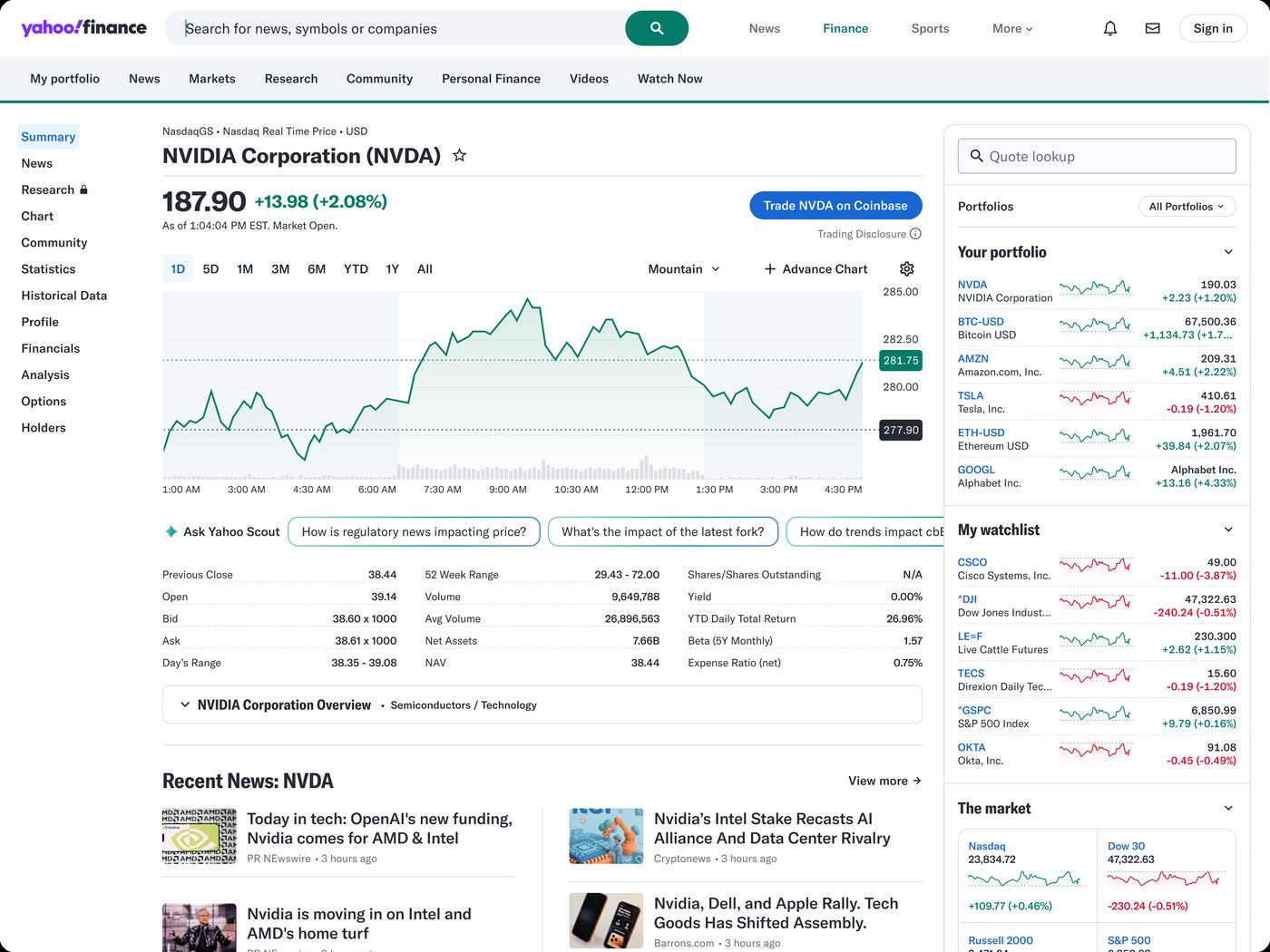
Coinbase stock trades on the Nasdaq exchange, where its price is determined by market forces of supply and demand. The bid and ask prices represent the highest price a buyer is willing to pay and the lowest price a seller is willing to accept, respectively. The bid-ask spread can indicate the stock's liquidity, with a smaller spread often suggesting higher liquidity. Real-time price data for COIN is provided by services like Nasdaq Basic, which is also available for Canadian listed equities via Nasdaq Data Link. The data displayed in a quote bar updates every 3 seconds, allowing for real-time price monitoring. The company's revenue and, consequently, its stock price are highly correlated with cryptocurrency trading activity and market sentiment. Over a recent 12-month period, the stock price ranged from a low of $139.11 to a high of $373.25. The stock's beta measurement of 3.41 indicates it is significantly more volatile than the average stock on the Nasdaq, which has a beta of 1. This high volatility means the stock can experience large price swings, representing a higher risk for investors. Coinbase is not expected to pay a dividend to shareholders in the near term, so returns are solely based on capital appreciation. Technical analysis gauges for the stock may use indicators like moving averages and oscillators, but these do not constitute investment advice or a guarantee of success.
History and Major Price Milestones
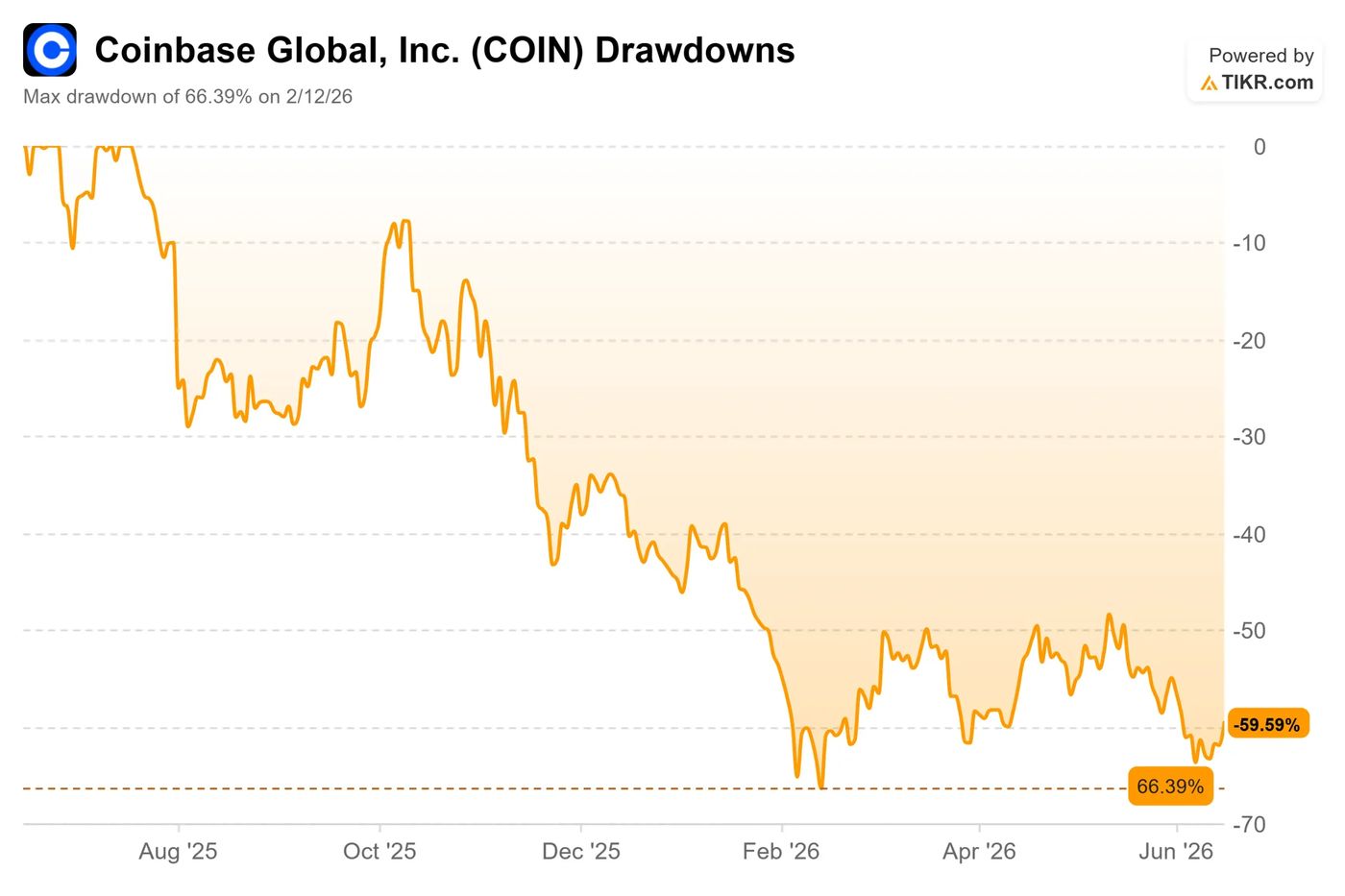
Coinbase's journey to becoming a public company culminated in a landmark direct listing on the Nasdaq on April 14, 2021. In a direct listing, no new shares are created or sold ahead of the opening. Existing shares simply begin trading publicly. The company set a reference price of $250 per share the day before trading began. On its first day of trading, COIN stock opened at $381 per share, a substantial 52.4% premium to the reference price, though only 10.9% above the $343.58 volume-weighted average price from private trading in the first quarter of 2021. After a choppy trading session where its valuation reached as high as $112 billion intraday, the stock closed at $328.28. This closing price gave Coinbase a fully diluted valuation of $85.78 billion, including unvested stock options and restricted stock, and a market capitalization of $65.39 billion. For comparison, this valuation was similar to that of the New York Stock Exchange's owner, Intercontinental Exchange Inc, at the time. At the time of its debut, the company reported having 56 million users globally and an estimated $223 billion in assets on its platform, accounting for 11.3% of the crypto asset market share. The listing was a major milestone for the cryptocurrency industry, bringing a new level of mainstream recognition and transparency. The stock's price history since then has reflected the extreme volatility of the crypto markets it serves, with its value surging in line with Bitcoin's gains prior to the listing, as the company was valued at just under $6 billion as recently as September 2020.
Financial Results and Correlation with Crypto Markets
Coinbase's financial performance demonstrates a direct and powerful link to cryptocurrency market cycles. In the first quarter of 2021, as Bitcoin more than doubled in price, Coinbase estimated its revenue would surpass $1.8 billion with net income between $730 million and $800 million. This was a dramatic increase compared to its entire 2020 revenue of $1.3 billion. The company's revenue surge was in lock-step with the rally in Bitcoin trading volumes and price, which hit a record above $63,000 in April 2021. Analysts note that the correlation between Bitcoin's price and Coinbase's stock is expected to be very high, meaning when the price of Bitcoin goes down, it is inevitable that Coinbase's revenue and inherently the price of the stock will decline as well. This dependency makes COIN a proxy for crypto market sentiment rather than a traditional, diversified technology stock. The company's most recent financial results prior to its listing underscored how its fortunes are tied to digital asset volatility. For investors, this means that analyzing Coinbase stock requires a deep understanding of cryptocurrency market trends and catalysts, as traditional equity valuation metrics may be less predictive of its short-term price movements.
How Canadians Buy and Store Coinbase Stock
Canadian investors cannot buy Coinbase stock on the Toronto Stock Exchange (TSX) because it is not listed there. Instead, COIN is listed on the Nasdaq under the symbol COIN. To purchase shares, Canadians must open a brokerage account with an online trading platform that provides access to US stock exchanges like the Nasdaq. Several Canadian brokerages offer this access, including Questrade, Wealthsimple, Interactive Brokers, and Moomoo. The process involves funding a Canadian dollar account, which may then be converted to US dollars to purchase the stock, often incurring a currency conversion fee. Some platforms also offer the ability to buy fractional shares of COIN, allowing investment with a smaller amount of capital than the price of a full share. Once purchased, the shares are held within the investor's brokerage account, similar to any other stock. Canadians should compare trading platforms for factors like fees, currency conversion costs, and the availability of fractional shares before proceeding. It is also possible to trade certain Canadian-listed securities through the Nasdaq Canada exchange, which operates three trading books for TSX, TSX-Venture, and CSE listed securities, but this does not apply to US-listed stocks like COIN.
Canadian investors can buy Coinbase Global, Inc. stock, which trades on the NASDAQ under the symbol COIN. To do so, you need to open a brokerage account with a Canadian online trading platform that provides access to US exchanges like the NASDAQ. Popular platforms in Canada that offer this access include Questrade and Wealthsimple. It is important to note that Coinbase stock is not listed on the Toronto Stock Exchange (TSX).
- Open an account with a Canadian brokerage that offers access to the Nasdaq.
- Fund the account with Canadian dollars.
- Convert funds to US dollars if required by the platform, being mindful of associated fees.
- Place an order to buy COIN stock, using either a market or limit order to optimize price execution.
- Monitor the investment within the brokerage's platform, noting that after-hours trading can occur on alternative trading systems like Blue Ocean ATS from 8 PM to 4 AM ET.

Canadian Tax Rules for Coinbase Stock Investments
Canadian investors are required to pay taxes on investment income earned from buying and selling US stocks like Coinbase. The Canada Revenue Agency (CRA) taxes this income based on several factors, including the investor's marginal tax rate, the type of account holding the investment, and the length of time the stock was held. Profits from selling COIN shares are considered capital gains. If the shares are held in a registered account like a Tax-Free Savings Account (TFSA) or Registered Retirement Savings Plan (RRSP), the tax treatment differs, often allowing growth to be tax-sheltered or tax-deferred. It is crucial for investors to track the adjusted cost base of their shares and report all transactions accurately on their Canadian tax returns. Consulting with a tax professional is recommended to ensure compliance with all CRA rules regarding foreign stock investments. The tax implications are a key consideration, as they directly affect the net return on an investment in a volatile asset like COIN.
Primary Risks and Considerations for Investors
Investing in Coinbase stock carries significant risks that Canadians must carefully consider. The primary risk is extreme volatility, as evidenced by the stock's beta of 3.41, meaning it is over three times more volatile than the market average. This volatility is directly tied to the cryptocurrency markets, as Coinbase's revenue depends on trading volume and transaction fees. When crypto prices fall or trading activity slows, the company's financial results and stock price are likely to suffer. Regulatory risk is another major concern, as governments worldwide continue to develop frameworks for digital assets, and changes in regulation could impact Coinbase's operations. The company has previously suspended trading in assets like XRP following regulatory actions, demonstrating this tangible business risk. The stock does not pay dividends, so returns are entirely dependent on price appreciation. Furthermore, as a US-listed stock, Canadian investors are exposed to currency exchange rate fluctuations between the Canadian and US dollars. Investors should only allocate capital they are prepared to lose and consider COIN a high-risk, speculative component of a diversified portfolio. The stock's performance is not guaranteed, and its history shows it can fall significantly from its highs, having been down 80% from all-time highs at one point in 2022.
Regulatory Environment and Competitive Landscape
The regulatory environment for cryptocurrency exchanges is a critical factor for Coinbase's future. The company operates in a space where rules are still being defined, particularly in the United States, its home market. Regulatory actions can have immediate and severe consequences, as seen when Coinbase suspended trading of XRP after U.S. regulators charged the associated blockchain firm Ripple with a $1.3 billion unregistered securities offering. This action highlights how the company's ability to offer various digital assets is subject to regulatory approval and legal interpretations. As Coinbase increases the number of digital assets users can trade, it potentially increases its exposure to regulatory scrutiny. Furthermore, the competitive landscape is intensifying as mainstream financial firms and technology companies dive into the crypto space, attracted by the surge in asset values. Coinbase's position as a first-mover and publicly traded entity provides brand recognition, but it must continue to operate successfully within an evolving and sometimes uncertain legal framework to maintain its market share, which was estimated at 11.3% at the time of its public listing. For investors, this means the company's long-term success is not just tied to crypto prices but also to its ability to adapt to regulatory changes and competitive pressures.
Frequently asked questions
Can Canadians buy Coinbase stock?
Yes, Canadian investors can buy Coinbase (COIN) stock. It is not listed on the TSX, so you must use a Canadian brokerage platform that provides access to US exchanges like the Nasdaq. Platforms such as Questrade, Wealthsimple, Interactive Brokers, and Moomoo offer this access. You will need to open an account, fund it, and place an order for COIN shares.
Is Coinbase stock volatile?
Yes, Coinbase stock is highly volatile. Its beta measurement of 3.41 indicates it is significantly more volatile than the average stock on the Nasdaq. This high volatility is due to its direct correlation with the cryptocurrency markets. The stock price can experience large swings based on crypto trading volumes, regulatory news, and broader market sentiment towards digital assets.
How is Coinbase stock taxed in Canada?
Profits from selling Coinbase stock are subject to Canadian capital gains tax. The Canada Revenue Agency taxes investment income from stocks based on three main factors. If the shares are held within a registered account like a TFSA or RRSP, the tax treatment may be more favourable, often sheltering the gains from immediate taxation. You must report all transactions to the CRA.
Does Coinbase pay dividends?
Coinbase is not expected to pay a dividend over the next 12 months. This is a key consideration for income focused investors. The company's financial model is tied to cryptocurrency trading volume and platform growth rather than returning capital to shareholders via dividends. Investors should therefore not anticipate dividend income from this stock in the near term. Potential returns are based solely on changes in the stock's market price.
Can I buy fractional shares of Coinbase in Canada?
Yes, it may be possible to buy fractional shares of Coinbase stock depending on the trading platform you are signed up with. Fractional shares allow you to invest in Coinbase stock even when you cannot afford its full share price. The availability of this feature varies by broker, so investors must check with their specific Canadian trading platform. This method enables more accessible and precise investment amounts in the company.
What was Coinbase's direct listing valuation?
At the close of its first day of Nasdaq trading, Coinbase's stock closed at $328.28. This price gave Coinbase a fully diluted valuation of $85.78 billion, which included the value of unvested stock options and restricted stock units. The company's market capitalization at that time was $65.39 billion. This direct listing in April 2021 marked a major milestone, valuing the firm significantly higher than its valuation of under $6 billion just months prior.
Sources and further reading
- Coinbase Global, Inc. (COIN) Stock Price, News, Quote & ... ca.finance.yahoo.com
- Coinbase Global, Inc. Class A Common Stock (COIN) nasdaq.com
- How to Buy Coinbase (COIN) Stock in Canada finder.com
- Coinbase Global (NASDAQ:COIN) Stock Price & News fool.ca
- Coinbase valued at $86B after 1st day of Nasdaq trading in ... globalnews.ca
This article explains how things work and is not financial, tax or legal advice. Rules, limits and rates change, so check the current figures with the Canada Revenue Agency, your province or your financial institution before you act.