Know Your Customer (KYC) refers to the legal and regulatory processes that financial institutions and other regulated businesses must follow to verify the identity of their clients. In Canada, these procedures are a core component of the national anti-money laundering (AML) and counter-terrorist financing (CTF) regime, designed to prevent financial crime. The framework is governed by the Proceeds of Crime (Money Laundering) and Terrorist Financing Act (PCMLTFA) and enforced by the Financial Transactions and Reports Analysis Centre of Canada (FINTRAC). For Canadians, KYC checks are a standard part of opening bank accounts, trading securities, using cryptocurrency exchanges, and other financial activities, impacting both personal finance and business operations.
What is KYC and Its Core Objectives
Know Your Customer is a set of laws, regulations, and guidelines that require regulated businesses to verify the identity of their customers and assess the risks of maintaining a business relationship with them. These procedures are integral to global anti-money laundering and counter-terrorist financing efforts. The core objectives are to identify the customer, verify their true identity, understand their activities and source of funds, and assess the associated risks. Initially focused on banks and financial institutions, KYC obligations now extend to a wide range of sectors including fintech companies, virtual asset dealers, real estate agents, accountants, and casinos. In Canada, the legal foundation is the Proceeds of Crime (Money Laundering) and Terrorist Financing Act, which mandates specific compliance programs for entities it classifies as reporting entities.
The Legal Framework and Reporting Entities in Canada
The Canadian KYC and AML regime is administered by the Financial Transactions and Reports Analysis Centre of Canada (FINTRAC). All businesses classified as reporting entities under the PCMLTFA must establish and maintain a full compliance program. The scope of reporting entities has expanded over time, especially with amendments to the Act in 2024. Federally, the list includes banks, credit unions, securities dealers, money services businesses, life insurance companies, real estate brokers and developers, and dealers in precious metals and stones. Notably, dealing in virtual currencies is considered a money services business activity, bringing cryptocurrency exchanges under FINTRAC's oversight. Provincially, cryptocurrency platforms that offer contractual rights to crypto are also generally required to register as securities dealers with provincial regulators like the Ontario Securities Commission.
The obligations on these entities are comprehensive and mandatory. They must verify client identity, keep extensive records, conduct ongoing monitoring, and report suspicious transactions. Failure to comply can result in significant penalties, as evidenced by FINTRAC issuing 23 notices of violation with penalties totalling over CAD $25 million in the 2024 to 2025 period alone. The regime is designed to improve financial transparency, deter crime, and support law enforcement investigations. The 2024 amendments expanded the definition of reporting entities to include payment service providers, crowdfunding platforms, and mortgage administrators, bringing more industries under formal oversight.
When KYC is Triggered in Canada
Reporting entities are required to perform KYC verification during specific transactions and at the outset of business relationships. The triggers are clearly defined in FINTRAC guidance and regulations. A common trigger is the initiation of a new business relationship, such as opening a bank account or an investment account. For occasional transactions, verification is required for large cash transactions of CAD $10,000 or more, foreign currency exchanges of $3,000 or more, and virtual currency exchanges or transfers of CAD $1,000 or more. Suspicion of money laundering or terrorist financing also triggers a requirement to verify identity, regardless of the transaction amount. Furthermore, entities must verify identity when there are doubts about the accuracy of previously obtained client information. For business entities, verification is required when entering into a service agreement.
- Opening a new account or starting a business relationship.
- Large cash transactions of CAD $10,000 or more.
- Foreign currency exchange transactions of $3,000 or more.
- Virtual currency exchange or transfer of CAD $1,000 or more.
- When suspicions of money laundering or terrorist financing arise.
- When there are doubts about previously obtained client information.
- When entering a service agreement with a business entity.
These triggers ensure that verification occurs at points of highest risk, balancing regulatory needs with operational practicality for businesses. Money service businesses have an additional specific rule requiring them to verify a person within five years of entering a business relationship for the second time. This requirement is part of ongoing monitoring obligations under AML/CFT laws. The rule helps manage the risks associated with re establishing a business relationship.
Methods for Verifying Identity
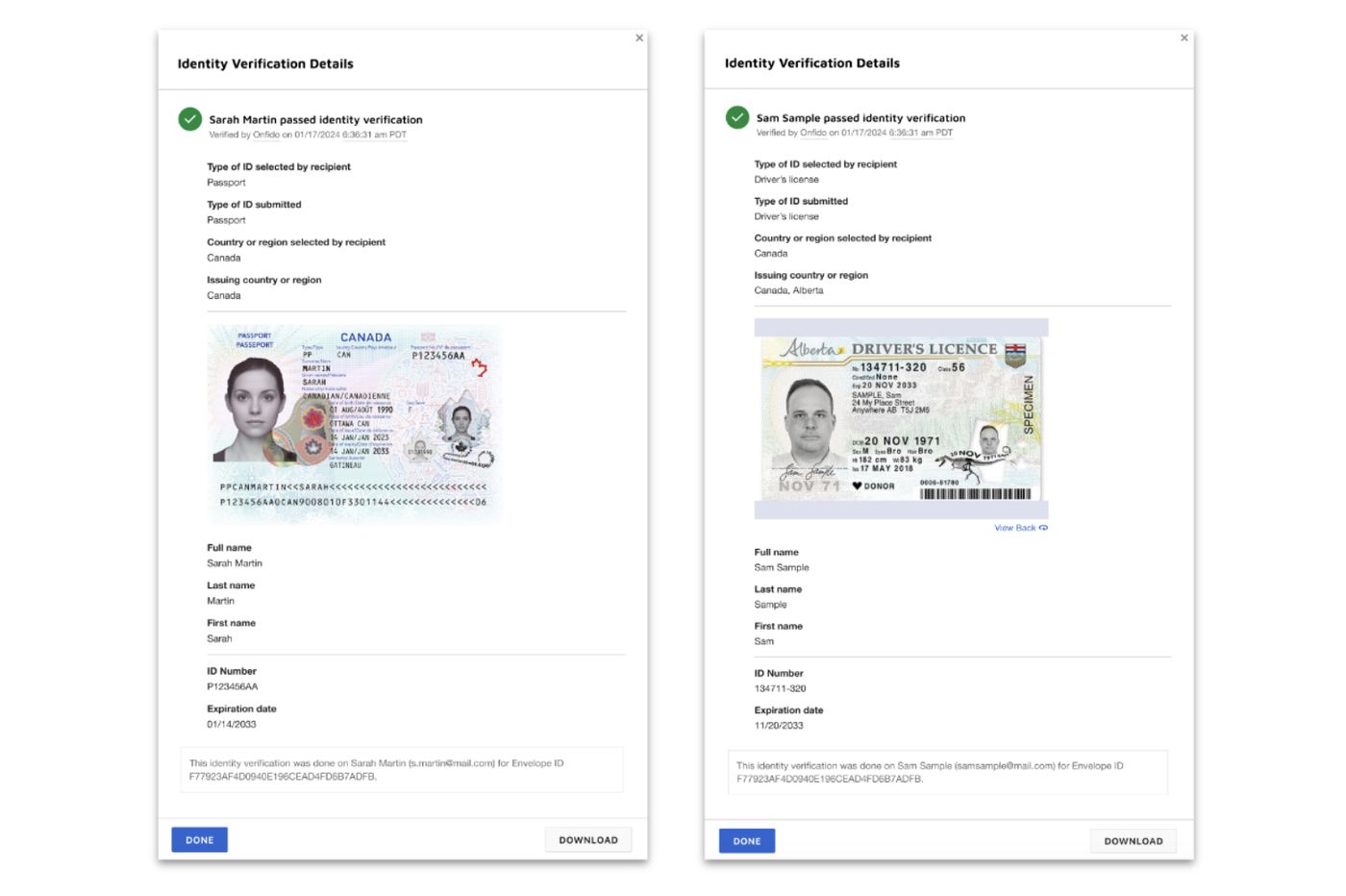
FINTRAC outlines specific, acceptable methods for verifying the identity of individuals and entities. For individuals, there are five primary methods, with the government-issued photo identification method being the most common. To use this method, the document must be issued by a federal, provincial, or territorial government, contain a photo, and be authentic, valid, and current. Examples include a driver's licence or passport. The verification can be done in person or remotely using technology capable of authenticating the document's security features. Other methods include using a credit file from a Canadian credit bureau, relying on verification already done by another reporting entity, or using a combination of two other reliable and independent sources of information. For the credit file method, the search must be conducted at the time of verification and cannot use a previously obtained copy, and the credit file must have been in existence for at least three years.
For business entities such as corporations or trusts, verification focuses on confirming legal existence. This is typically done by referring to a record from a reliable source that confirms the entity's formation and ongoing status, such as a certificate of incorporation or a partnership agreement. For all businesses, entities must also identify and verify beneficial owners, which are individuals who own 25 percent or more of the legal entity or who exercise control over it. The information collected must be recorded and kept for at least five years after the business relationship ends. A business can also use a reliance method to depend on verification performed by another registered entity, provided that entity's process was consistent with the PCMLTFA, or a simplified method for low-risk entities like public companies.
Customer Due Diligence and Risk-Based Approach
KYC in Canada involves more than just an initial identity check. It encompasses a full cycle of Customer Due Diligence (CDD), which includes understanding the nature and purpose of the customer relationship, developing a customer risk profile, and conducting ongoing monitoring. The Canadian regime requires a risk-based approach, meaning the level of due diligence applied should be proportionate to the assessed risk. Lower-risk clients, such as established Canadian residents with simple financial profiles, may undergo standard CDD. Higher-risk scenarios trigger Enhanced Due Diligence (EDD) requirements. Factors that indicate higher risk include clients who are Politically Exposed Persons, those from jurisdictions identified as high-risk by the Financial Action Task Force, businesses with complex ownership structures, or transactions involving large amounts or unusual patterns.
When EDD is required, reporting entities must take additional steps. These include establishing the source of the client's wealth and funds, conducting more extensive background checks, and applying more intensive ongoing monitoring. For example, if a transaction exceeds $100,000 or a client is identified as a politically exposed person, the entity must establish the source of funds and apply enhanced measures. The compliance program of every reporting entity must document its methodology for assessing risk and the procedures for both standard and enhanced due diligence. This ongoing monitoring is a mandatory obligation and includes keeping client identification information up to date based on the risk assessment throughout the business relationship, and updating customer risk profiles when significant changes like new beneficial ownership occur.
Record Keeping and Reporting Obligations
Reporting entities have stringent record-keeping duties under the PCMLTFA. They must retain all records related to client identification, account files, and business correspondence for a period of five years from the day the record is created or the business relationship ends. When FINTRAC requests records, entities must provide them within 30 days. Beyond record keeping, entities are legally required to report specific transactions to FINTRAC. This includes reporting suspicious transactions that may be related to money laundering or terrorist financing. They must also file large cash transaction reports for any receipt of cash amounting to CAD $10,000 or more. For virtual currency, every receipt of CAD $10,000 or more in a single transaction must be reported. Starting in October 2025, new discrepancy reporting requirements will take effect, requiring entities to report material mismatches between their internal beneficial ownership records and official government registries.
| Report Type | Trigger Threshold |
|---|---|
| Suspicious Transaction Report (STR) | Any amount where there are reasonable grounds to suspect ML/TF |
| Large Cash Transaction Report (LCTR) | CAD $10,000 or more in cash |
| Virtual Currency Transaction Report | CAD $10,000 or more in virtual currency |
These reporting mechanisms are critical for FINTRAC's intelligence function, providing data that can be used to investigate and prosecute financial crimes. All registered entities also have a duty to report incidents of suspected sanctions evasion under Canadian laws like the Special Economic Measures Act, and they must keep a record of the purpose and intended nature of each business relationship. This record keeping is a core component of Customer Due Diligence. It helps develop a customer risk profile and ensures transactions are consistent with the entity's knowledge of the customer.
Challenges and Criticisms of KYC Systems
While KYC systems are vital for crime prevention, they are not without significant challenges and criticisms. A major issue is de-banking, where financial institutions close accounts or deny services to customers due to the high cost and perceived risk of KYC compliance. The Financial Action Task Force has noted that this can lead to financial exclusion, particularly affecting low-income individuals, minorities, the elderly, charities, and small businesses. Research from the United Kingdom illustrates the scale, with over 450,000 personal and business accounts closed in 2024, often because the compliance costs outweighed the benefits for the institution. In Canada, similar pressures exist, especially for small businesses that deal in cash or operate in developing economies, and UK data shows major banks closed accounts for over 140,000 small and medium enterprises in 2023.
Another criticism is the potential for abuse. In some countries, governments have labelled political opponents as terrorists to ensure they fail KYC checks and lose access to banking, using the system for political repression. Furthermore, the compliance burden is substantial and growing. The 2024 expansion of reporting entities in Canada means many fintechs, crowdfunding platforms, and online marketplaces now face the complex and costly task of implementing full KYC programs, including potentially reverifying tens of thousands of existing business clients. These challenges highlight the ongoing debate about balancing effective crime prevention with financial inclusion and operational efficiency. The problem is compounded by estimates that between CAD $45 billion and $113 billion is laundered in Canada annually, underscoring the high stakes for the regulatory system.
KYC for Cryptocurrency and Digital Assets in Canada
The application of KYC to cryptocurrency platforms in Canada involves a dual regulatory layer. At the federal level, platforms that deal in virtual currency are classified as money services businesses and must register with and comply with FINTRAC. This means they must verify user identity for transactions or exchanges of CAD $1,000 or more and report receipts of CAD $10,000 or more. At the provincial level, because platforms often grant customers contractual rights to crypto assets, they are generally considered to be dealing in securities or derivatives. This requires registration with provincial securities commissions, such as the Ontario Securities Commission or the Autorité des marchés financiers in Québec, and often membership in the Canadian Investment Regulatory Organization.
This dual requirement creates a significant compliance barrier for new entrants. The interim registration path for restricted dealers has closed, meaning new trading platforms must apply directly for full investment dealer registration, which demands substantial capital, secure custody solutions, and robust compliance infrastructure. Furthermore, pending legislation like the Stablecoin Act will bring stablecoin issuers under the supervision of the Bank of Canada. For Canadian users, this means that using a registered crypto platform involves thorough identity verification, and truly anonymous, no-KYC crypto trading is not legally available through regulated channels. The Office of the Superintendent of Financial Institutions also governs banks' exposures to crypto assets, adding another layer of oversight to the ecosystem.
Frequently asked questions
What is KYC verification?
KYC verification is the process where a regulated business confirms a customer's identity using reliable and independent sources. In Canada, common methods include checking a government-issued photo ID like a driver's licence, verifying information against a credit file, or using other independent data sources. The goal is to ensure the customer is who they claim to be, which is a legal requirement under anti-money laundering laws. The verification must confirm the information is authentic, valid, and current.
What are the KYC requirements in Canada?
In Canada, KYC requirements are set by the Proceeds of Crime Act and enforced by FINTRAC. Businesses must verify customer identity at specific triggers, such as opening an account or conducting a large transaction. They must identify beneficial owners with 25% or more control, understand the purpose of the relationship, assess risk, conduct ongoing monitoring, and keep records for five years. The requirements apply to banks, credit unions, money services businesses, real estate brokers, and cryptocurrency exchanges. The 2024 amendments expanded these obligations to new sectors like crowdfunding platforms.
Is KYC mandatory for crypto in Canada?
Yes, KYC is mandatory for regulated cryptocurrency platforms in Canada. Platforms dealing in virtual currency are classified as money services businesses by FINTRAC and must verify user identity for any exchange or transfer of CAD $1,000 or more. Additionally, most platforms must register as securities dealers with provincial regulators, which imposes further KYC and investor protection obligations. There is no legal way for a registered platform to offer anonymous, no-KYC trading to Canadians. The interim restricted-dealer registration route is now closed to new applicants.
What is the $10,000 rule in Canada?
The CAD $10,000 rule refers to several reporting thresholds under Canadian law. Financial entities and money services businesses must file a large cash transaction report with FINTRAC for any receipt of cash amounting to $10,000 or more. Similarly, for virtual currency, a report is required for any single transaction where a business receives $10,000 or more in crypto. This is separate from the KYC identity verification trigger for foreign exchange ($3,000) and crypto transfers ($1,000). These reports are a key part of the transaction monitoring system.
What happens if you fail KYC?
If a customer fails or refuses to complete KYC verification, the regulated business is legally prohibited from proceeding with the transaction or establishing the business relationship. They must also terminate any existing relationship if they cannot meet their due diligence obligations. For the business, failure to properly conduct KYC can result in severe regulatory penalties from FINTRAC, including large fines, which totalled over CAD $25 million in a recent year. The business may also face reputational damage and increased scrutiny.
Are there no-KYC casinos for Canadians?
Legitimate online casinos operating within Canada's regulated framework, such as those run by provincial lottery corporations, are required to perform KYC checks on players. Offshore casinos that advertise no-KYC play are not licensed or regulated in Canada and operate outside the national AML regime. Using such sites carries significant risks, including lack of consumer protection, potential fraud, and possible legal implications, as they do not comply with Canadian financial crime laws. In Canada, gambling services are explicitly listed as obligated entities under anti-money laundering regulations.
Sources and further reading
- Know your customer (Wikipedia) en.wikipedia.org
- Methods to verify the identity of persons and entities fintrac-canafe.canada.ca
- KYC Requirements in Canada: Business Compliance Guide ondato.com
- FINTRAC Identification, Canada Verification and KYC ... trulioo.com
- Know Your Customer (KYC) Regulations for Canadian ... help.kimoby.com
- Canada Crypto & Virtual Assets Compliance Guide identomat.com
This article explains how things work and is not financial, tax or legal advice. Rules, limits and rates change, so check the current figures with the Canada Revenue Agency, your province or your financial institution before you act.