SHA-256 is a cryptographic hash function from the SHA-2 family, designed by the United States National Security Agency and standardized by the National Institute of Standards and Technology. It converts any input data into a fixed 256-bit output, known as a hash or digest, which is a 64-character hexadecimal string. SHA-256 is a one-way function, meaning it cannot be reversed to recover the original input, and it is deterministic, so the same input always produces the same hash. This algorithm is essential for data integrity verification, digital signatures, and is fundamental to critical systems including Bitcoin's proof-of-work and provably fair gaming, making it a key component of modern digital security in Canada and globally.
What Is SHA-256 and How It Works
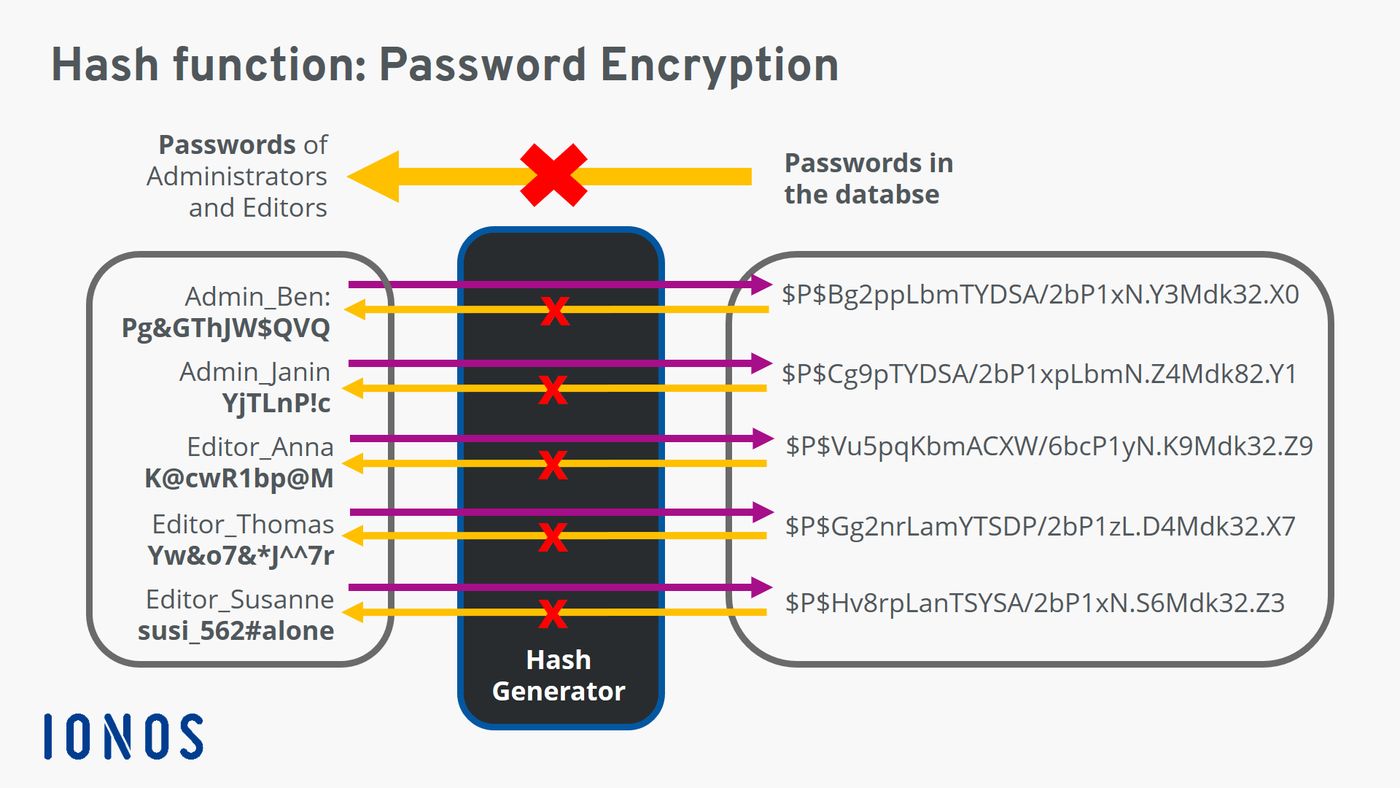
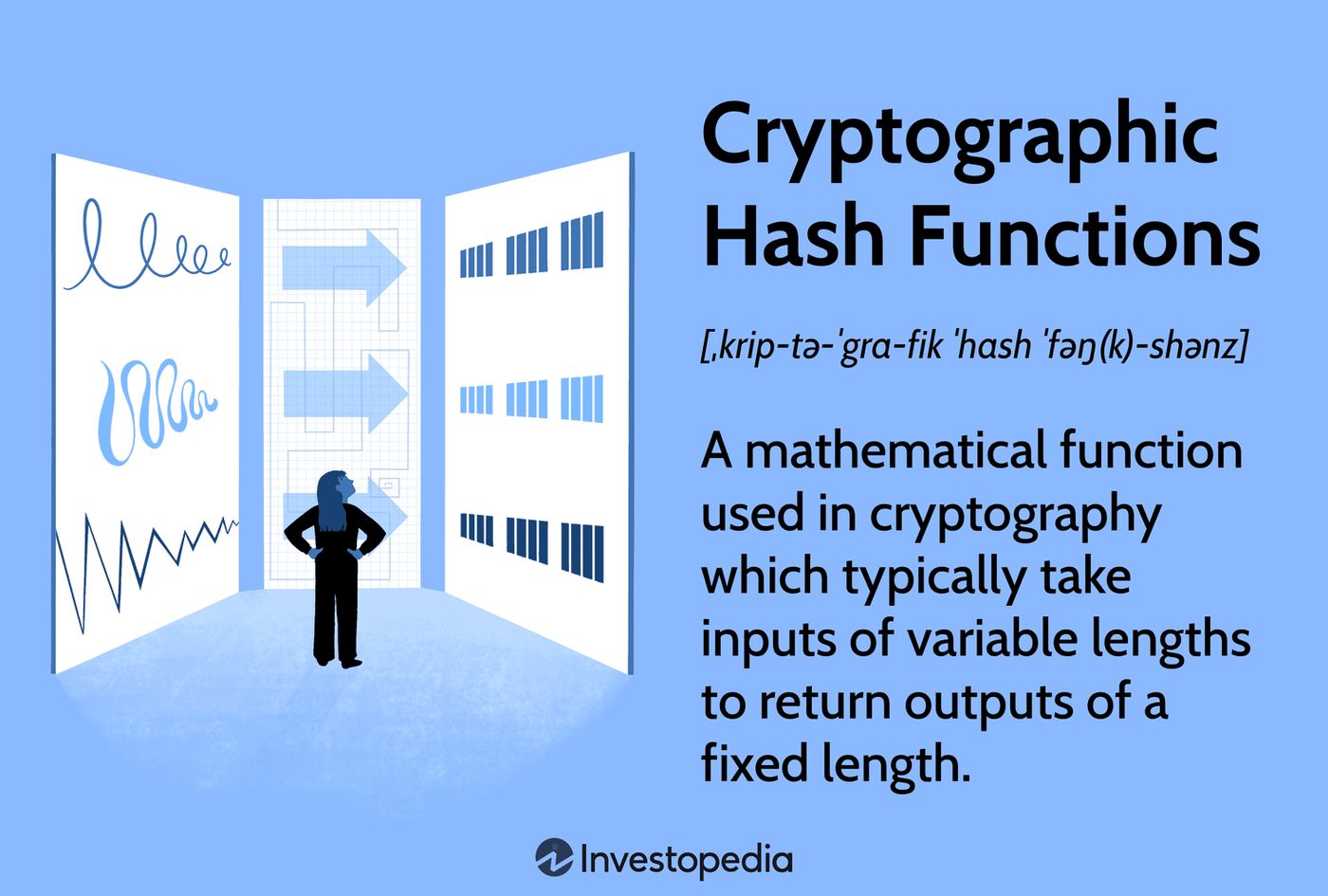
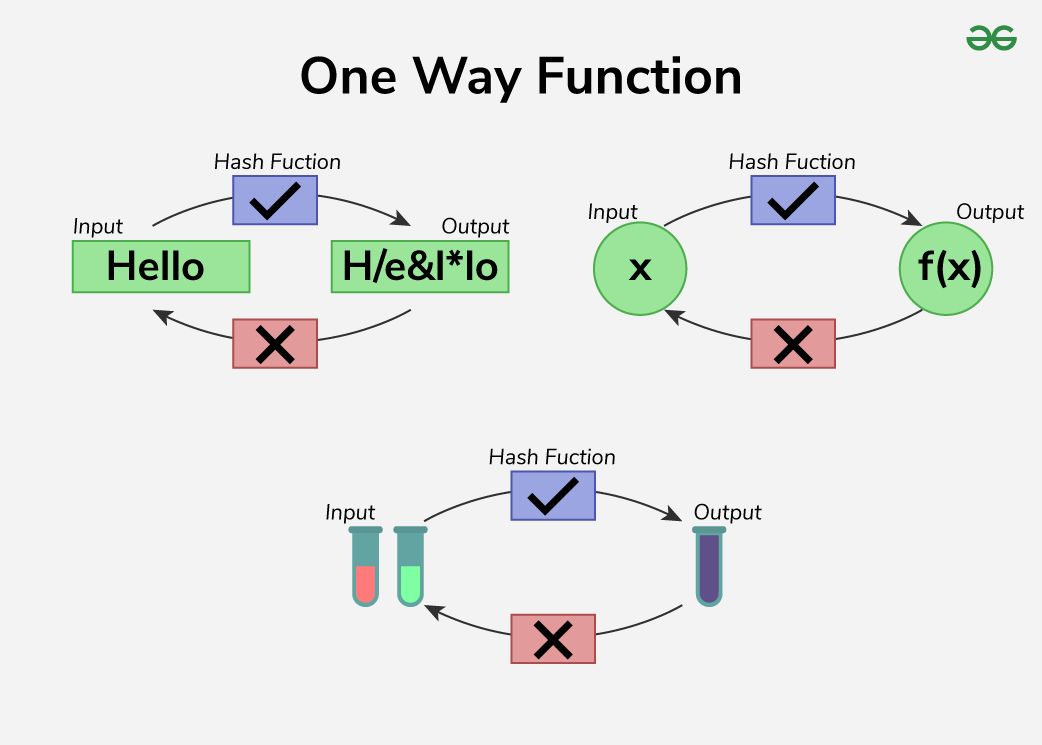
SHA-256 is a member of the SHA-2 family of cryptographic hash functions, which were introduced in 2001 as stronger successors to the earlier SHA-1 algorithm. The '256' denotes the size of its output, which is always a 256-bit digest, equivalent to a 64-character string when represented in hexadecimal notation. This function is not an encryption algorithm, as encryption is designed to be reversible with a key, whereas hashing is a one-way process by design. There is no key and no method to decrypt a hash back to its original input data. SHA-256 processes input through a series of well-defined steps beginning with padding the data to a specific length. The padded message is then broken into 512-bit chunks, each of which undergoes 64 rounds of a compression function that mixes the data thoroughly using bitwise operations, modular addition, and pre-defined constants. The algorithm uses eight 32-bit working variables, initialized to specific values derived from the square roots of prime numbers, which are updated each round. The final hash value is the concatenation of these eight variables after all message chunks have been processed, resulting in a unique fingerprint for the input data.
A crucial property of SHA-256 is the avalanche effect, where even a minuscule change in the input message results in a completely different, seemingly random output hash. For example, adding a single period to the end of a sentence changes approximately half of the bits in the resulting SHA-224 hash, a closely related variant. This deterministic yet unpredictable output makes it ideal for verifying data integrity, as any alteration of the original file or message will be immediately detectable by a mismatch in the hash. The function is built using the Merkle, Damgård construction from a one-way compression function, which itself uses the Davies, Meyer structure from a specialized block cipher. Its structure is virtually identical to SHA-512, another SHA-2 function, differing primarily in word size and number of rounds. SHA-256 operates on 32-bit words, while SHA-512 uses 64-bit words and 80 rounds, but their core algorithmic logic is the same.
History and Standardization
The SHA-2 family, including SHA-256, was first published in 2001 in the draft FIPS PUB 180-2 by the National Institute of Standards and Technology. Following public review, FIPS PUB 180-2 became the official Secure Hash Standard in August 2002, replacing the previous FIPS PUB 180-1 standard from 1995. This initial standard included SHA-1 alongside the new SHA-256, SHA-384, and SHA-512 algorithms. A significant update occurred in February 2004 with a change notice that added SHA-224, a truncated version of SHA-256 designed to match the key length of two-key Triple DES. The standard was revised again as FIPS PUB 180-3 in October 2008, formally incorporating SHA-224 but making no fundamental changes to the core algorithms. The primary goal of this update was to move security recommendations and usage guidance to separate Special Publications, namely SP 800-107 and SP 800-57.
In January 2011, NIST published SP800-131A, which mandated a transition in U.S. federal government use from a minimum of 80-bit security, provided by SHA-1, to 112-bit security, provided by SHA-2. SHA-1 was allowable until the end of 2013, with SHA-2 becoming the minimum requirement starting in 2014. The most recent standard, FIPS PUB 180-4, was published in March 2012 and added the hash functions SHA-512/224 and SHA-512/256. It also removed a restriction on padding input data, allowing hash calculation to occur simultaneously with content generation, such as from a real-time video feed. In March 2023, NIST announced its decision to revise FIPS 180-4 into FIPS 180-5, which will remove the SHA-1 specification entirely and incorporate guidance from SP 800-107. Despite the selection of a new hash function, SHA-3, in a separate NIST competition in 2012, SHA-2 and SHA-3 are distinct and SHA-3 is not derived from SHA-2.
- 2001: SHA-2 family first published in draft FIPS PUB 180-2.
- August 2002: FIPS PUB 180-2 becomes official standard.
- February 2004: SHA-224 variant added via change notice.
- October 2008: FIPS PUB 180-3 published.
- January 2011: NIST SP800-131A mandates move from SHA-1 to SHA-2 by 2014.
- March 2012: FIPS PUB 180-4 published, adding SHA-512/224 and SHA-512/256.
- March 2023: NIST announces FIPS 180-5 revision to remove SHA-1.
Applications and Uses
SHA-256 is implemented in a vast array of widely used security applications and protocols that are essential in Canada and worldwide. It is used in the Transport Layer Security (TLS) and Secure Sockets Layer (SSL) protocols that secure web browsing, as well as in PGP for email encryption, SSH for secure remote access, S/MIME for secure messaging, and IPsec for network security. The algorithm is used for authenticating Debian software packages and is part of the DKIM standard for email message signing. In telecommunications, HMAC-SHA-256 serves as a key derivation function in both 4G and 5G mobile networks to generate cryptographic keys, as defined in the 3GPP Technical Specifications. For password security, Linux distributions often use SHA-512, another SHA-2 variant, for secure password hashing, though using SHA-256 alone for password storage is strongly discouraged due to its speed, which aids attackers.
One of the most prominent applications of SHA-256 is in blockchain technology and cryptocurrencies. Bitcoin uses SHA-256 extensively for verifying transactions and calculating the proof-of-work that secures the network. The computational demand of Bitcoin mining has led to the development of specialized application-specific integrated circuits (ASICs) designed solely to accelerate SHA-256 calculations. This rise in ASIC mining also prompted other cryptocurrencies to adopt different proof-of-work schemes, such as scrypt, to maintain decentralization. Beyond finance, SHA-256 is critical for 'provably fair' systems in online gaming and applications. These systems use SHA-256 in a hash commitment scheme to allow users to cryptographically verify that game outcomes were not manipulated after the fact, replacing blind trust with verifiable mathematics. The algorithm is also used in DNSSEC to secure the domain name system.
Security Analysis and Cryptographic Properties
As of 2026, SHA-256 is considered secure against all known practical cryptographic attacks, including those from quantum computers. For a hash function with an L-bit digest, a brute-force preimage attack, which seeks a message that produces a given hash, requires on average 2^L evaluations. For SHA-256, this is 2^256 operations, a number so vast it is considered computationally infeasible. A collision attack, which seeks two different messages that produce the same hash, is easier due to the birthday paradox, requiring roughly 2^(L/2) evaluations, or 2^128 for SHA-256. While this is also an astronomically large number, increased analysis during the SHA-3 competition produced new academic attacks on reduced-round versions of SHA-2. For instance, researchers have demonstrated pseudo-collision attacks extending to 52 rounds on SHA-256 and 57 rounds on SHA-512, but these do not threaten the full 64-round and 80-round functions, respectively. No practical collision or preimage attack against the full SHA-256 algorithm exists.
SHA-256 is a cryptographic hash function because it achieves three key security properties. First, it is preimage-resistant, meaning it is infeasible to find an input that hashes to a specific output. Second, it is second-preimage-resistant, making it infeasible to find a different input that hashes to the same value as a known input. Third, it is collision-resistant, as finding any two distinct inputs with the same hash is infeasible. The security contrast with its predecessor, SHA-1, is stark. Practical collisions for SHA-1 were demonstrated in 2017, leading to its deprecation. Major technology companies like Google, Microsoft, and Mozilla phased out support for SHA-1 in TLS certificates between 2014 and 2017. Regarding quantum computing, SHA-256's security is not significantly diminished. Shor's algorithm does not apply to hash functions. Grover's algorithm can speed up brute-force searches, but only quadratically, reducing SHA-256's effective preimage resistance from 256 bits to about 128 bits, which remains secure for the foreseeable future.
SHA-256 in Bitcoin and Cryptocurrency
In Bitcoin, SHA-256 is the core hashing algorithm used for transaction validation and block generation through the proof-of-work mechanism. However, Bitcoin typically does not use a single pass of SHA-256. The primary method is HASH256, also known as double-SHA256 or SHA-256d. This involves putting data through the SHA-256 algorithm and then taking the resulting hash and putting it through SHA-256 again. This double hashing is used for calculating block hashes, transaction IDs (TXIDs), and within the Merkle tree structure that summarizes all transactions in a block. Satoshi Nakamoto's rationale for choosing double-SHA256 may have been caution against potential length extension attacks, though such attacks are not a concern for Bitcoin's specific usage. Modern Bitcoin upgrades, such as Segregated Witness, now favour single-SHA256 where possible, for instance, when hashing scripts in Pay-to-Witness-Script-Hash (P2WSH) outputs.
Another common hashing method in Bitcoin is HASH160, which combines SHA-256 with another hash function, RIPEMD-160. This involves hashing data with SHA-256 and then hashing that result with RIPEMD-160. HASH160 is used primarily for constructing legacy Bitcoin addresses, such as those from Pay-to-Public-Key-Hash (P2PKH) and Pay-to-Script-Hash (P2SH) scripts. RIPEMD-160 produces a shorter 160-bit digest, making addresses more compact while maintaining security. The choice of RIPEMD-160 over SHA-1, which also produces 160-bit outputs, has proven wise, as SHA-1 has since suffered collisions. The massive computational power of the Bitcoin network, dedicated to solving SHA-256 puzzles, underscores the algorithm's resilience. It has been calculated that using all of Bitcoin's network power to find a SHA-256 collision would take an unimaginable 39 times the current age of the universe, highlighting its practical security.
Implementation and Validation in Canada
In Canada, implementations of FIPS-approved cryptographic functions like SHA-256 can be officially validated through the Cryptographic Module Validation Program (CMVP). This program is jointly run by the United States National Institute of Standards and Technology (NIST) and Canada's Communications Security Establishment (CSE). Formal CMVP validation is required by law for certain applications, particularly those involving the protection of sensitive unclassified information for government use. For developers and organizations seeking informal verification, NIST provides test vectors for download to check the correctness of their SHA-256 implementations. However, this self-verification does not replace the formal CMVP validation process when it is legally mandated. As of December 2013, there were over 1300 validated implementations of SHA-256 globally, with only a small fraction capable of processing messages where the length in bits is not a multiple of eight.
The adoption of SHA-256 and the broader SHA-2 family was not immediate after their publication, even though they offered better security than the vulnerable SHA-1. Initial slow uptake was due to factors like lack of support on older operating systems such as Windows XP SP2 and a lack of perceived urgency before practical SHA-1 collisions were found. The migration was accelerated by directives from standards bodies and technology firms. NIST recommended that U.S. government agencies transition away from SHA-1 for all applications as soon as possible, using SHA-2 or SHA-3 as alternatives. This guidance influenced Canadian government and private sector IT security policies as well. In the public sector, adherence to internationally recognized standards like FIPS is common for ensuring interoperability and security in cross-border communications and data protection.
Provably Fair Systems and SHA-256
Provably fair randomness is an algorithmic process that allows users to verify the fairness of a randomized outcome, such as in an online game, in real time using cryptography. SHA-256 is the most common hash function at the heart of these systems. The core principle is to replace blind trust in a central server with verifiable mathematics. The process typically involves three variables: a server seed, a client seed, and a nonce. Before a game round begins, the casino or service provider generates a random server seed and provides the user with its SHA-256 hash. This hash acts as a commitment, locking in the seed value before any user action. The user provides a client seed, often generated by their browser, and a nonce, which is a sequential number that increments with each bet.
These three inputs are combined and processed through a hashing algorithm, often HMAC-SHA-256, to produce a final hexadecimal string. This string is then converted into the game outcome, such as a card draw or dice roll. After the round concludes, the service reveals the original, unhashed server seed. The user can then independently verify the result by taking the revealed server seed, the client seed, and the nonce, running them through the same hashing algorithm, and confirming that the output matches the game result they witnessed. This proves two things: that the server seed used was indeed the one committed to before the round, and that the specific combination of inputs produced the declared outcome. Any discrepancy indicates tampering. This technology is a standard in blockchain-based gaming and applications where transparency is paramount, providing a trustless environment without needing third-party audits.
Common Misconceptions and Proper Usage
A widespread misconception is that SHA-256 is suitable for securely storing passwords. This is incorrect and potentially dangerous. SHA-256 is designed to be computationally fast, which is ideal for verifying data integrity and digital signatures but is the wrong property for password hashing. An attacker who obtains a database of SHA-256 password hashes can use modern hardware to try billions of password guesses per second in a brute-force attack. Secure password storage requires dedicated, slow password-hashing functions that are deliberately resource-intensive to thwart such attacks. These functions, such as bcrypt, scrypt, Argon2, or PBKDF2, incorporate a unique random salt for each password, ensuring identical passwords hash to different values, and they are computationally costly or memory-hard.
Another point of confusion is the difference between hashing and encryption. SHA-256 is a hash function, not an encryption algorithm. Encryption is a two-way process. Ciphertext can be decrypted back to plaintext using the correct key. Hashing is a one-way process. A hash cannot be reversed to reveal the input. There is no decryption key for a hash. This fundamental distinction means SHA-256 is used for verification and fingerprinting, not for keeping data secret. Finally, while SHA-256 is secure, it is part of a broader ecosystem. For digital signatures and certificates, the security also depends on the underlying public-key algorithm. The post-quantum cryptography migration focuses on replacing vulnerable public-key algorithms like RSA and ECC, while trusted hash functions like SHA-256 remain a foundation for new standards, such as the hash-based signature algorithm SLH-DSA.
Frequently asked questions
What is SHA-256?
SHA-256 is a cryptographic hash function from the SHA-2 family, designed by the United States National Security Agency and standardized by NIST in 2001. It takes any input data and produces a fixed 256-bit output, known as a digest, which appears as a 64-character hexadecimal string. It is a one-way function, meaning the hash cannot be reversed to recover the original input. SHA-256 is used to verify data integrity, in digital signatures, and is the core algorithm behind Bitcoin's proof-of-work.
How does SHA-256 work in Bitcoin?
In Bitcoin, SHA-256 is used primarily through a method called HASH256 or double-SHA256, where data is hashed twice consecutively. This is used to calculate block hashes, transaction IDs, and the Merkle root that summarizes transactions. Miners compete to find a hash for a new block that meets a specific difficulty target, a process called proof-of-work. The algorithm's security and deterministic nature ensure that transactions cannot be altered and that the blockchain remains tamper-evident.
Is SHA-256 secure in 2026?
As of 2026, SHA-256 is considered secure against all known practical attacks. No feasible method exists to reverse the hash or find two different inputs that produce the same output (a collision). It is also considered quantum-safe. While quantum computers could theoretically speed up some attacks using Grover's algorithm, the effective security remains strong. This contrasts with SHA-1, which was broken and deprecated after practical collisions were found in 2017.
What is a provably fair system using SHA-256?
A provably fair system uses SHA-256 to allow users to cryptographically verify the fairness of a random outcome, such as in an online game. The service provider commits to a secret server seed by giving the user its SHA-256 hash before the game. After the game, the server seed is revealed. The user can then combine it with their client seed and a nonce, hash them with SHA-256, and confirm the result matches the game outcome, proving it was not manipulated.
Can SHA-256 be used for password storage?
No, SHA-256 alone should not be used for password storage. It is designed to be fast, which makes it vulnerable to brute-force attacks if an attacker obtains the password hashes. Secure password storage requires purpose-built, slow hashing functions like bcrypt, scrypt, Argon2, or PBKDF2. These functions incorporate a unique salt for each password and are computationally expensive, making attacks vastly more difficult and time-consuming.
How is SHA-256 validated for use in Canada?
Implementations of all FIPS-approved security functions, including SHA-256, can be officially validated through the CMVP program. This program is jointly run by the National Institute of Standards and Technology (NIST) and Canada's Communications Security Establishment (CSE). For informal verification, a package to generate a high number of test vectors is available for download from NIST. However, this informal verification does not replace the formal CMVP validation, which is required by law for certain applications.
Sources and further reading
- SHA-2 (Wikipedia) en.wikipedia.org
- SHA256 for provably-fair game hashes 002 steemit.com
- What is SHA- 256? encryptionconsulting.com
- Provably Fair Randomness: A Technical Guide chain.link
- Hash Function | Fingerprints for Data learnmeabitcoin.com
- What Is SHA-256? A Complete Guide (2026) millionminer.com
This article explains how things work and is not financial, tax or legal advice. Rules, limits and rates change, so check the current figures with the Canada Revenue Agency, your province or your financial institution before you act.