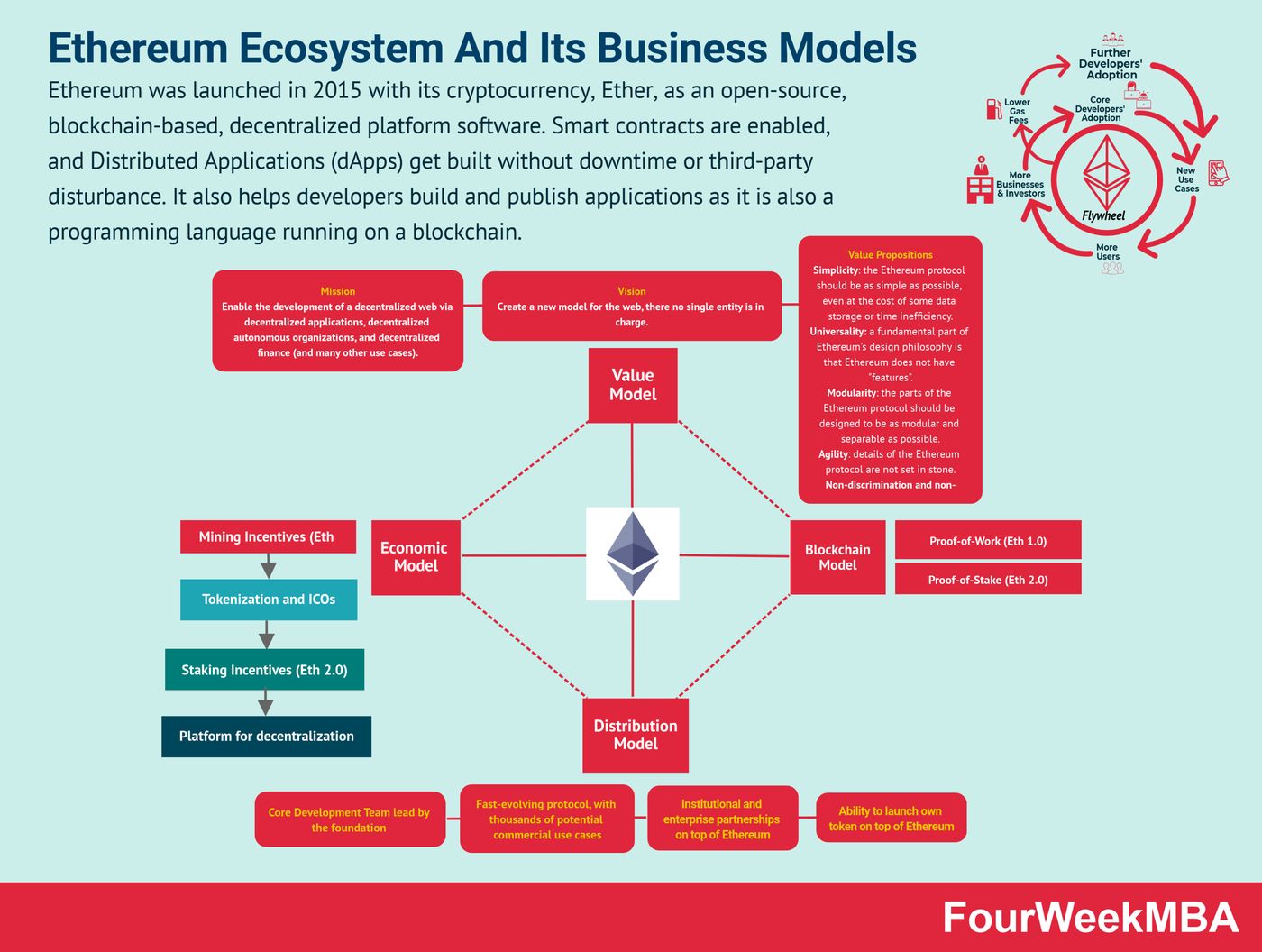
Ethereum is a decentralized, open-source blockchain network that enables smart contracts and decentralized applications. Its native cryptocurrency, Ether (ETH), is the second-largest by market capitalization after Bitcoin. For Canadians, Ethereum serves as the foundational platform for a vast ecosystem including decentralized finance (DeFi), non-fungible tokens (NFTs), and enterprise solutions, with major Canadian financial institutions like Scotiabank and the National Bank of Canada participating in its development consortium. The network's 2022 transition to a proof-of-stake consensus mechanism reduced its energy consumption by over 99%, addressing significant environmental concerns.
What is Ethereum and How It Works
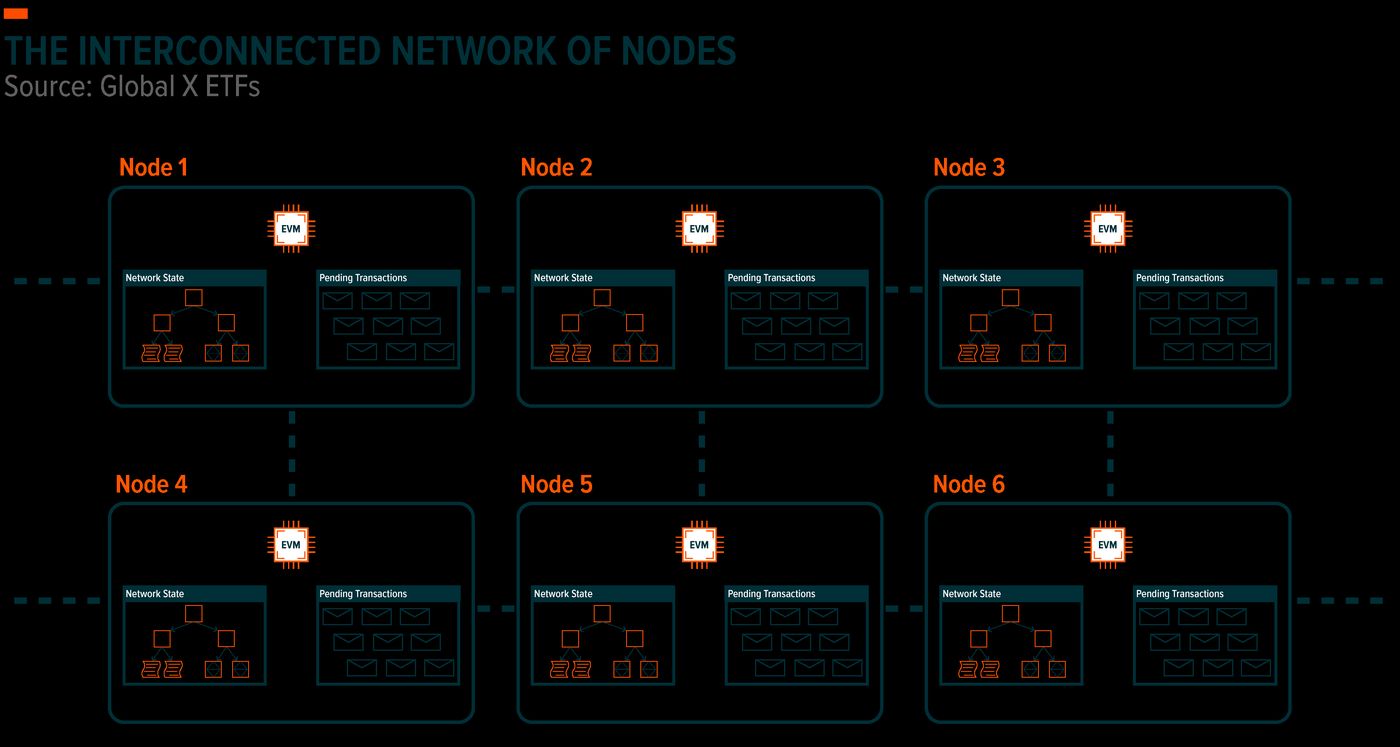
Ethereum is a peer-to-peer network that maintains a shared database of account balances and processes state-altering transactions. The network groups transactions into blocks approximately every 12 seconds, with each block cryptographically linked to the previous one, forming a blockchain. Any network participant, or node, connects to a subset of peers to propagate transactions and blocks across the entire network within seconds. The core innovation of Ethereum is the Ethereum Virtual Machine (EVM), a Turing-complete, stack-based virtual machine that serves as the runtime environment for executing smart contracts. The EVM is designed to be deterministic, ensuring every node processes transactions identically to achieve consensus on the network's state. This environment allows developers to build and deploy decentralized applications (dApps) that run exactly as programmed without downtime, censorship, or third-party interference.
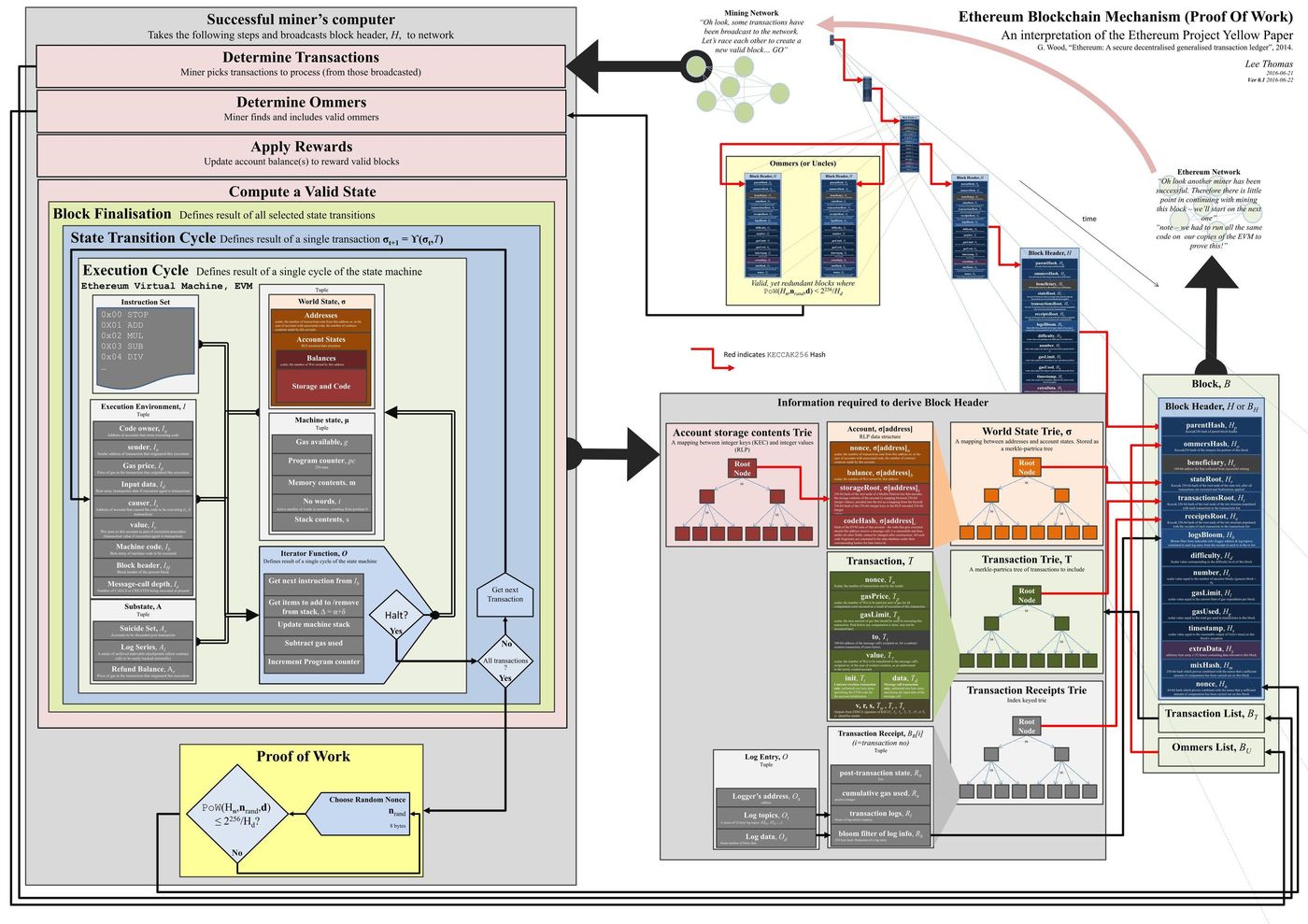
The network operates on a proof-of-stake consensus mechanism. To participate in securing the network, an Ethereum account must stake a minimum of 32 ETH to register as a validator. Validators are pseudorandomly assigned to propose new blocks or attest to the validity of proposed blocks during time slots called epochs. Validators are rewarded with newly generated ETH for making valid proposals and attestations, and they can lose a portion of their stake for malicious or inactive behaviour. This system incentivizes validators to support the chain they believe others view as canonical, leading to a high degree of consensus. Ether is fundamental to network operation, used both as the reward for validators and as the only currency accepted for paying transaction fees, which compensates validators for the computational work of processing transactions.
History and Major Milestones
Ethereum was conceived in late 2013 by programmer Vitalik Buterin, who described it in a white paper as a platform for building decentralized applications beyond simple currency. Buterin announced Ethereum at the North American Bitcoin Conference in Miami in January 2014. Development work began in early 2014 through a Swiss company, Ethereum Switzerland GmbH, with Gavin Wood specifying the Ethereum Virtual Machine in the Ethereum Yellow Paper. The project was crowdfunded via an online public sale from July to August 2014, where participants bought ether with bitcoin. The network officially went live with its "Frontier" release on 30 July 2015, creating its genesis block.
In 2016, a major event known as The DAO hack occurred, where approximately US$50 million was stolen from a decentralized autonomous organization built on Ethereum. This led to a contentious hard fork, splitting the network into Ethereum, where the theft was reversed, and Ethereum Classic, which continued on the original chain. The following years saw rapid growth and mainstream attention. In 2017, the game CryptoKitties launched, popularizing non-fungible tokens (NFTs) and highlighting scalability concerns due to network congestion. The ERC-721 NFT standard was published in January 2018, formalizing the technology. Major enterprises also formed the Enterprise Ethereum Alliance (EEA) in March 2017, with founding members including Canadian institutions.
- 2013: Vitalik Buterin authors the Ethereum white paper.
- Jan 2014: Ethereum announced at the North American Bitcoin Conference.
- Jul-Aug 2014: Crowdfunding sale for ether development.
- 30 Jul 2015: Official network launch with "Frontier".
- Jun 2016: The DAO hack and subsequent network fork.
- 2017: Launch of CryptoKitties and formation of Enterprise Ethereum Alliance.
- Jan 2018: ERC-721 NFT standard published.
- 15 Sep 2022: "The Merge" transitions Ethereum to proof-of-stake.
The most significant technical overhaul, known as "The Merge," was completed on 15 September 2022. This set of updates transitioned Ethereum's consensus mechanism from proof-of-work to proof-of-stake. The switch from proof-of-work to proof-of-stake has cut Ethereum's energy usage by over 99%. Subsequent major network upgrades have focused on scalability and cost reduction. These included Dencun in March 2024, which introduced cheaper data storage for Layer 2 networks. Other upgrades were Pectra in May 2025 and Fusaka in December 2025.
Ethereum Gas Fees and Transaction Costs
Gas is the unit that measures the computational effort needed to process a transaction or execute a smart contract on the Ethereum network. Gas fees are the amount of ETH paid to network validators for this processing and for helping to secure the blockchain. The total gas fee is calculated as the amount of gas used multiplied by the effective gas price, which is the sum of a base fee and an optional priority fee (tip). All gas fees on Ethereum must be paid in the native ETH currency. These fees are typically denominated in gwei, a smaller unit of ETH where 1 gwei equals 0.000000001 ETH, making it easier to discuss very small amounts.
Transaction complexity directly impacts gas usage. A simple transfer of ETH between externally-owned accounts normally requires 21,000 gas units. More complex actions, such as interacting with a smart contract or transferring ERC-20 tokens, consume significantly more gas. For example, an ERC-20 token approval transaction requires about 45,000 gas. The base fee is a minimum price per gas unit set by the protocol based on network congestion. It is burned (permanently removed from circulation). The priority fee is an optional tip paid to the validator to incentivize them to include the transaction in a block quickly. During periods of low congestion, such as those often seen in 2026, fees for routine transfers can be very low, sometimes just a few cents in Canadian dollars.
Users set a gas limit, which is the maximum amount of gas units they authorize a transaction to consume. If a transaction runs out of gas before completion, it fails, but the sender still pays for the gas used up to that point. This system protects users from runaway costs due to errors or malicious contracts. High fees are typically caused by network congestion, which can occur during popular NFT mints, surges in DeFi trading, or peak user activity times. Canadians can reduce costs by transacting during off-peak hours when North America is asleep, using Layer 2 scaling networks for suitable transactions, or waiting for periods of lower congestion.
Tokens, Smart Contracts and the Canadian Ecosystem
Ethereum's programmability allows anyone to create and deploy smart contracts, which are self-executing agreements with the terms written directly into code. This capability has given rise to an entire ecosystem of decentralized applications. A primary use case is the creation of tokens, most notably fungible ERC-20 tokens and non-fungible ERC-721 tokens. ERC-20 is a technical standard used for creating interchangeable tokens, such as stablecoins like USDC, which require about 61,000 gas for a transfer. ERC-721 is the standard for unique, non-fungible tokens (NFTs) that power digital art, collectibles, and other assets. It is important to note that interacting with any ERC-20 token, including sending it, requires paying a gas fee in ETH, which is why a wallet must hold ETH to move ERC-20 tokens.
The decentralized finance (DeFi) ecosystem built on Ethereum provides financial instruments like lending, borrowing, and trading without traditional intermediaries like banks or brokerages. Canadians can access these global DeFi protocols directly from their digital wallets. On the enterprise side, Ethereum has significant backing from major corporations and financial institutions. The Enterprise Ethereum Alliance (EEA), formed in March 2017, includes several Canadian members. By May 2017, the National Bank of Canada had joined as a member, and by July 2017, Scotiabank was also a member. This institutional involvement signals serious exploration of Ethereum's technology for business applications like supply chain management and secure transactions.
Rules, Taxation and Legal Considerations in Canada
In Canada, cryptocurrencies like Ether are treated as commodities by the Canada Revenue Agency (CRA) for income tax purposes. This means that using ETH to pay for goods or services is considered a barter transaction, and the fair market value of the goods or services received must be reported as income. Similarly, any disposal of cryptocurrency, including trading it for another digital asset or selling it for Canadian dollars, is a taxable event that may trigger a capital gain or loss. Canadians must keep detailed records of all their cryptocurrency transactions, including the date, purpose, value in CAD at the time of the transaction, and the other party's wallet address. These records are essential for accurate tax reporting.
Canadian cryptocurrency exchanges and trading platforms are subject to regulation as money services businesses (MSBs) by the Financial Transactions and Reports Analysis Centre of Canada (FINTRAC). This means they must register with FINTRAC, implement a compliance program, keep certain records, identify their clients, and report suspicious or large transactions. For individual Canadians, purchasing, holding, and selling ETH is legal. However, engaging with decentralized applications, particularly those in the DeFi or online gambling sectors, carries inherent risks. Smart contract vulnerabilities can lead to fund loss, and the decentralized nature of these applications means there is often no central authority to appeal to for recourse. Canadians should exercise caution and conduct thorough research before interacting with unfamiliar dApps or smart contracts.
Staking ETH, which involves depositing at least 32 ETH to become a network validator, also has tax implications. The CRA has not issued specific guidance on staking rewards, but general tax principles suggest that rewards received are likely considered income at their fair market value in Canadian dollars at the time they are received. If the staked ETH itself appreciates in value, a capital gain would be realized upon its eventual sale or disposal. The legal status of activities like yield farming or providing liquidity in DeFi protocols remains complex and is an area where Canadian regulators may provide further clarification in the future.
Key Debates, Risks and Future Outlook
Ethereum faces ongoing debates and challenges despite its technological advancements. A primary historical criticism was its high energy consumption under the proof-of-work model. The Merge in 2022 addressed this by reducing energy use by over 99%, though critics note that the computers used for mining may simply be redirected to other energy-intensive cryptocurrencies. Scalability remains a central challenge, as high demand can still lead to network congestion and increased gas fees, as famously demonstrated by the CryptoKitties craze in 2017. The network's response has been a multi-pronged scaling roadmap focusing on Layer 2 solutions and core protocol upgrades like Dencun, Pectra, and Fusaka, which have significantly reduced costs for common transactions by 2026.
Security and decentralization are perpetual topics of discussion. While proof-of-stake is more energy-efficient, some argue it could lead to greater centralization of influence among the largest ETH stakers. Smart contract risk is a major concern for users. Bugs or vulnerabilities in contract code, as seen in The DAO hack, can lead to irreversible loss of funds. The regulatory environment, especially concerning DeFi and token offerings, continues to evolve in Canada and globally, creating uncertainty for developers and users. Furthermore, the complexity of the ecosystem can be a barrier to mainstream adoption, as users must manage private keys, understand gas fees, and handle frequent technical upgrades.
| Upgrade | Live Date | Key Focus |
|---|---|---|
| The Merge | 15 Sep 2022 | Transition to Proof-of-Stake consensus |
| Dencun | 13 Mar 2024 | Reduced costs for Layer 2 networks (EIP-4844) |
| Pectra | 7 May 2025 | Protocol improvements |
| Fusaka | 3 Dec 2025 | Protocol improvements |
The future development of Ethereum is guided by a roadmap focused on further improving scalability, security, and sustainability. Continued adoption by enterprises, including Canadian banks through the EEA, points to its potential for institutional use cases. However, competition from other smart contract platforms and the need to balance decentralization with efficiency will likely shape its evolution. For Canadians, Ethereum represents a dynamic but complex technological frontier with significant opportunities in finance, digital ownership, and innovation, paired with notable risks related to volatility, technical complexity, and an evolving regulatory landscape.
Frequently asked questions
What is Ethereum?
Ethereum is a decentralized, open-source blockchain network that enables smart contracts and decentralized applications (dApps). Its native cryptocurrency is Ether (ETH). Unlike Bitcoin, which is primarily a digital currency, Ethereum is designed as a programmable blockchain where developers can build applications for decentralized finance (DeFi), non-fungible tokens (NFTs), and more. The network transitioned to a proof-of-stake consensus mechanism in September 2022, drastically reducing its energy consumption.
How do Ethereum gas fees work?
Gas fees are payments made in ETH to compensate network validators for the computational effort of processing transactions. The fee is calculated as Gas Used multiplied by (Base Fee + Priority Tip). The base fee is burned, while the tip goes to the validator. Simple ETH transfers use about 21,000 gas units, while complex actions like ERC-20 token transfers use more. Fees are denominated in gwei, where 1 gwei equals 0.000000001 ETH. Network congestion is the main driver of high fees.
What are ERC-20 tokens?
ERC-20 is a technical standard on Ethereum for creating fungible, interchangeable tokens. Most tokens on Ethereum, like stablecoins (e.g., USDC), are ERC-20 tokens. A key point for users is that transferring any ERC-20 token requires paying a transaction fee (gas) in ETH, not in the token itself. This means your wallet must hold ETH to move ERC-20 tokens. Transfers of these tokens typically consume more gas than a simple ETH transfer.
How can I buy Ethereum (ETH) in Canada?
Canadians can buy Ether (ETH) through regulated cryptocurrency exchanges that operate as money services businesses registered with FINTRAC. The process typically involves creating an account, verifying your identity, depositing Canadian dollars, and placing an order to buy ETH. Once purchased, you can withdraw the ETH to a personal digital wallet you control. It is important to use reputable platforms and to understand the tax implications, as disposing of cryptocurrency is a taxable event in Canada.
What is Ethereum staking and how does it work in Canada?
Staking is the process of depositing ETH to become a validator on the proof-of-stake Ethereum network, helping to secure the chain and process transactions. A minimum of 32 ETH is required to run your own validator. Canadians can also stake smaller amounts through pooled services offered by some exchanges or platforms. Stakers earn rewards in ETH for their participation. From a Canadian tax perspective, staking rewards are likely considered income at their fair market value in CAD when received.
Are there Ethereum casinos or gambling dApps?
Yes, there are numerous decentralized applications (dApps) built on Ethereum that offer online gambling and casino-style games. These platforms use smart contracts to automate betting and payouts, often promoting transparency. However, Canadians should be aware of significant risks, including the potential for smart contract bugs leading to fund loss, the volatility of crypto used for betting, and the lack of regulatory oversight or consumer protection typically found with licensed, traditional online casinos. Participation is legal but carries high financial risk.
Sources and further reading
- Ethereum (Wikipedia) en.wikipedia.org
- Ethereum FAQs, Learn more about Ethereum exodus.com
- Introducing Ethereum Gas Station fireblocks.com
- Ethereum fees: what is gas and how to pay less? ethereum.org
- Ethereum Gas Fees Explained: 2026 Costs for Canadians netcoins.com
- Ethereum Gas Fees Today ⛽ ETH Gas Chart & Heatmap milkroad.com
This article explains how things work and is not financial, tax or legal advice. Rules, limits and rates change, so check the current figures with the Canada Revenue Agency, your province or your financial institution before you act.