Bitcoin is the first decentralized digital currency, created in 2008 by an anonymous entity known as Satoshi Nakamoto. It operates on a peer-to-peer network without central authority, using a public ledger called a blockchain to record transactions. In Canada, cryptocurrency transactions are treated as bartering, and Bitcoin has been used for purposes ranging from everyday purchases to fundraising during events like the 2022 trucker protests. Its price has experienced significant volatility, reaching highs over $100,000 USD, while its underlying technology continues to influence the financial landscape.
What Is Bitcoin?
Bitcoin is a decentralized digital currency, also described as a cryptocurrency. It was conceptualized in a 2008 white paper published under the pseudonym Satoshi Nakamoto, and the network went live in January 2009. Unlike traditional currencies issued by central banks, Bitcoin operates without a central authority or single administrator. It enables secure online payments to be sent directly from one party to another without going through a financial institution. The system is based on a free-market ideology and its use as a currency began with the release of its open-source implementation. In Canada, crypto transactions are considered bartering rather than direct transfers of monetary value like with the Canadian dollar.
How Bitcoin Works: Blockchain and Transactions
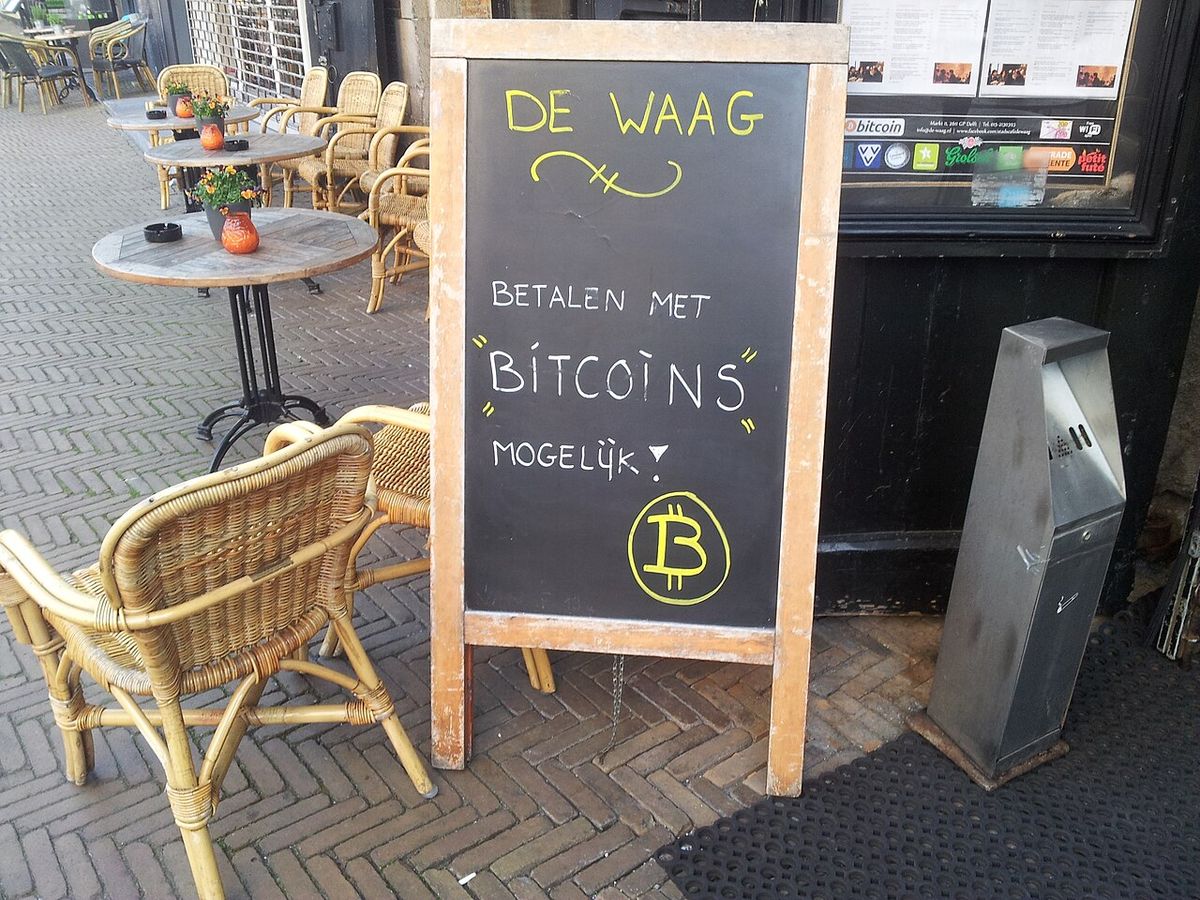
Bitcoin works through a peer-to-peer network of computers, each acting as a node. The system relies on a public distributed ledger called a blockchain, which records all confirmed transactions. This ledger is maintained collectively by the network without central oversight, allowing anyone to create a new Bitcoin address and transact without approval. Each block in the chain contains a cryptographic hash of the previous block, linking them in chronological order and making the history extremely difficult to alter. The integrity and order of the blockchain are protected by cryptography.
To use Bitcoin, an individual needs a digital wallet, which is software that manages cryptocurrency transactions. The wallet generates a Bitcoin address, which is a public key, and holds a secret private key. The private key is used to digitally sign transactions, providing mathematical proof they came from the wallet's owner. This signature also prevents the transaction from being altered after it is issued. Transactions are transfers of value between Bitcoin wallets that get recorded on the blockchain. All transactions are broadcast to the network and must be confirmed through the mining process, which usually takes between 10 to 60 minutes for the first confirmation.
Key Components of a Bitcoin Transaction:- Address: A string that encodes a hash of a public key, used to receive bitcoin.
- Private Key: A secret piece of data used to sign transactions, proving ownership.
- Inputs and Outputs: Transactions reference previous unspent outputs as inputs and specify new recipient addresses and amounts as outputs.
- Transaction Fee: Unallocated input satoshis become a fee paid to miners, determined by transaction size (satoshis per byte).
- Change: If the sum of inputs exceeds the payment, an additional output can return change to the payer.
Losing a private key means losing access to the associated bitcoins permanently, with no other proof of ownership accepted by the protocol. It is estimated that around 20 percent of all bitcoins are lost. The private key must also be kept secret, as exposure can lead to theft. By December 2017, approximately 980,000 bitcoin had been stolen from cryptocurrency exchanges, highlighting the security risks involved in managing digital assets.
Mining and the Proof of Work System
Mining is the distributed consensus process that confirms pending transactions by including them in the blockchain. It enforces chronological order, protects network neutrality, and allows different computers to agree on the system's state. Miners group new transactions into blocks and compete to solve a complex cryptographic puzzle, known as proof of work. This involves finding a nonce that, when combined with the block's data, produces a hash that is numerically smaller than the network's difficulty target. The difficulty is adjusted every 2,016 blocks, or roughly every two weeks, to maintain an average block time of ten minutes.
The miner who successfully creates a new block with a valid proof of work can collect transaction fees from the included transactions and a fixed block reward in new bitcoins. This reward is issued through a special transaction called a coinbase. The block reward is halved every 210,000 blocks until a total of 21 million bitcoins have been issued, which is expected around the year 2140. After that, miners will earn income solely from transaction fees. The proof of work system and the chaining of blocks make modifying the blockchain very difficult, as altering one block requires redoing the work for that block and all subsequent blocks. To successfully tamper with the ledger, one would need to control more than half of the global network's computational power, known as the hashrate.
The environmental impact of Bitcoin mining is a significant controversy. As of 2025, a non-peer-reviewed study estimated Bitcoin mining represented 0.5 percent of global electricity consumption and 0.08 percent of world greenhouse gas emissions, comparable to Slovakia's emissions. About half of the electricity used is generated from fossil fuels. Mining hardware also has a short lifespan, contributing to electronic waste. In October 2025, the United States was the largest mining country with a 38 percent global market share, followed by Russia at 16 percent and China at 14 percent, despite China's 2021 ban on all cryptocurrency trading and mining.
History and Major Developments
The domain name bitcoin.org was registered on 18 August 2008. On 31 October 2008, Satoshi Nakamoto posted the Bitcoin white paper to a cryptography mailing list. The network began on 3 January 2009 when Nakamoto mined the genesis block, which contained a headline from The Times newspaper. The first bitcoin transaction occurred nine days later, when Hal Finney received ten bitcoins from Nakamoto. The first known commercial transaction was on 22 May 2010, when programmer Laszlo Hanyecz bought two pizzas for 10,000 bitcoin, an event later celebrated as Bitcoin Pizza Day. By 2010, Nakamoto had disappeared after mining an estimated one million bitcoins.
In the early 2010s, the first major users of bitcoin were black markets, such as the Silk Road dark web marketplace. Regulatory actions began in 2013, with US authorities establishing guidelines and seizing assets from exchanges like Mt. Gox. In 2017, the SegWit software upgrade was activated to improve scalability and support the Lightning Network. Opponents of this upgrade forked the blockchain to create Bitcoin Cash. The first bitcoin futures began trading on the Chicago Mercantile Exchange in December 2017.
The 2020s saw increased institutional adoption. In 2020, companies like MicroStrategy and Square made major bitcoin investments. In September 2021, El Salvador adopted bitcoin as legal tender alongside the US dollar, though a 2025 reform removed obligations to accept it, effectively ending its practical status. The Taproot upgrade activated in November 2021, improving smart contracts and privacy. In January 2024, the first 11 US spot bitcoin ETFs began trading. In December 2024, the bitcoin price reached $100,000 USD for the first time. In 2025, US President Donald Trump signed an executive order to establish a strategic bitcoin reserve, and some US states like Texas and New Hampshire also instituted their own reserves.
Key Historical Timeline:- 31 Oct 2008: Bitcoin white paper published.
- 3 Jan 2009: Genesis block mined, network launches.
- 22 May 2010: First commercial transaction (Bitcoin Pizza Day).
- Mar 2013: First US regulatory guidelines issued.
- Dec 2017: First bitcoin futures introduced on CME.
- Sep 2021: Bitcoin becomes legal tender in El Salvador.
- Jan 2024: First US spot bitcoin ETFs begin trading.
- Dec 2024: Bitcoin price reaches $100,000 USD.
- Mar 2025: US executive order establishes strategic bitcoin reserve.
Bitcoin in the Canadian Context
In Canada, cryptocurrency transactions are treated as bartering for tax purposes, rather than as direct currency transfers. Bitcoin has been used for various purposes, including as a tool for fundraising when access to traditional financial systems is restricted. A notable example occurred in early 2022 during the Canadian trucker protests opposing COVID-19 vaccine mandates, where organizers turned to bitcoin after traditional financial platforms restricted donations. Proponents highlighted this use case for situations where conventional banking access may be blocked. The adoption of cryptocurrency trading platforms like Coinbase in the 2020s made it easier for Canadians to buy and sell bitcoin.
Bitcoin is the first decentralized cryptocurrency. It was invented in 2008 when an unknown person published a white paper under the pseudonym Satoshi Nakamoto. Bitcoin remains a volatile asset. Research from the University of Cambridge estimated that in 2017, there were 2.9 to 5.8 million unique users using a cryptocurrency wallet, most of them using bitcoin. As of June 2023, River Financial estimated that bitcoin had 81.7 million users, about 1% of the global population. The number of global cryptocurrency owners rose significantly from 295 million at the end of 2021 to approximately 741 million by the end of 2025, with Bitcoin remaining the most popular with an estimated 365 million owners in 2025.
Units, Wallets, and Privacy
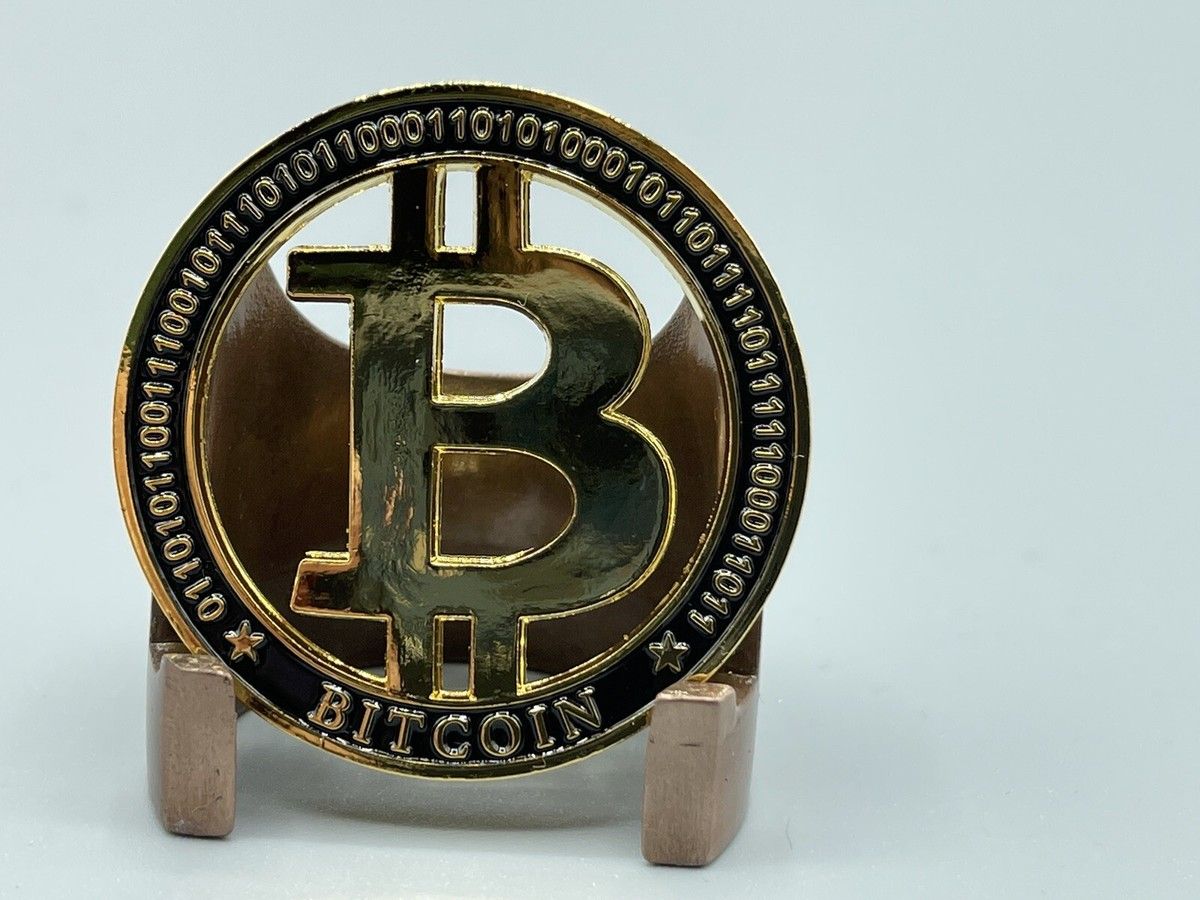
The unit of account is the bitcoin, commonly represented by the symbol ₿ or the code BTC. One bitcoin is divisible to eight decimal places. The smallest unit is the satoshi, representing one hundred millionth of a bitcoin. A millibitcoin (mBTC) equals one thousandth of a bitcoin. For storage, users need a cryptocurrency wallet, which was first invented for Bitcoin. Wallets store the private and public keys necessary for transactions and come in various forms including software, hardware, mobile, and paper wallets. The wallet software can be installed on a computer, smartphone, or even a dedicated USB hardware device.
Bitcoin is pseudonymous, meaning funds are linked to cryptographic addresses rather than real-world identities. While all transactions are public on the blockchain, the owners of addresses are not directly identified. However, analysis of transaction patterns can sometimes reveal connections, and exchanges are often required by law to collect personal data. For enhanced privacy, users can generate a new address for each transaction. While the network treats all bitcoins equally, ensuring basic fungibility, the public history allows for chain analysis, where users or exchanges can identify and potentially reject bitcoins from controversial sources, as happened in 2012 when Mt. Gox froze accounts containing stolen bitcoins.
Risks, Regulations, and Debates
Bitcoin's pseudonymous nature has led to its use by criminals, attracting regulatory attention and bans in several countries. Its price is notoriously volatile, having experienced dramatic crashes, such as in 2018 after China imposed a trading ban and in mid-2022 following the collapse of the TerraUSD stablecoin and Celsius Network. Regulatory responses vary globally, with some countries implementing strict rules or outright prohibitions. The environmental impact of energy-intensive mining is a major ongoing debate, with concerns over electricity consumption and electronic waste.
Other significant risks include the potential for loss if private keys are lost or stolen, the threat of hacks on exchanges, and the possibility of technical issues. Despite these challenges, adoption has grown. Estimates suggest the number of global cryptocurrency owners rose from 295 million at the end of 2021 to approximately 741 million by the end of 2025, with Bitcoin remaining the most popular cryptocurrency with an estimated 365 million owners in 2025. This growth occurs alongside evolving regulatory frameworks and continued public debate about its role in the financial system.
| Year | Key Regulatory or Market Event |
|---|---|
| 2013 | US FinCEN issues first guidelines. China prohibits financial institutions from using bitcoin. |
| 2017 | SegWit upgrade activates. Bitcoin Cash fork occurs. |
| 2018 | Price crashes after China's complete ban on bitcoin trading. |
| 2021 | El Salvador adopts bitcoin as legal tender. Taproot upgrade activates. |
| 2022 | Price falls after collapses of TerraUSD and Celsius Network. |
| 2024 | First US spot bitcoin ETFs begin trading. |
| 2025 | US establishes strategic bitcoin reserve via executive order. |
Frequently asked questions
What is Bitcoin?
Bitcoin is the first decentralized digital currency, created in 2008 by an anonymous entity known as Satoshi Nakamoto. It operates on a peer-to-peer network without a central bank or single administrator. Transactions are recorded on a public ledger called a blockchain, and the system uses cryptography to secure transactions and control the creation of new units. In Canada, cryptocurrency transactions are treated as bartering.
How does Bitcoin work?
Bitcoin works through a network of computers that maintain a shared public ledger, the blockchain. Users have digital wallets containing a public address and a private key. To send bitcoin, the owner signs a transaction with their private key, which is then broadcast to the network. Miners validate and group transactions into blocks by solving complex cryptographic puzzles through a process called proof of work. Once a block is added to the chain, the transaction is confirmed. This process occurs approximately every ten minutes.
What is the Bitcoin price in CAD?
The price of Bitcoin is highly volatile and constantly fluctuates against all fiat currencies, including the Canadian dollar. It has experienced dramatic swings throughout its history. In 2024, the price reached $100,000 USD for the first time. Canadians can check real-time prices on various cryptocurrency exchanges and financial data platforms, which will show the current conversion rate from BTC to CAD.
How does Bitcoin work in Canada?
In Canada, Bitcoin is used as a digital asset, and transactions are considered bartering for tax purposes. Canadians can buy, sell, and hold bitcoin through regulated cryptocurrency exchanges. It has been used for purchases, investments, and in specific situations like fundraising, such as during the 2022 trucker protests when traditional payment channels were restricted. Canadian financial regulations apply to cryptocurrency exchanges operating in the country.
What is the Bitcoin halving?
The Bitcoin halving is a pre-programmed event that occurs every 210,000 blocks, roughly every four years. It cuts the block reward given to miners in half. This mechanism controls the issuance of new bitcoins, ensuring a finite total supply of 21 million coins. The halving reduces the rate of new bitcoin creation and has historically been associated with significant market attention and price volatility.
What is the Bitcoin Lightning Network?
The Lightning Network is a second-layer protocol built on top of the Bitcoin blockchain. It is designed to enable faster and cheaper transactions by creating payment channels between users. The 2017 SegWit software upgrade was activated, which was intended to support the Lightning Network as well as improve scalability. In November 2021, the Taproot soft-fork upgrade was activated, adding support for Schnorr signatures and improved functionality of the Lightning Network.
Sources and further reading
- Bitcoin (Wikipedia) en.wikipedia.org
- How does Bitcoin work? bitcoin.org
- Understanding cryptocurrencies bankofcanadamuseum.ca
- A History of Bitcoin & Cryptocurrency blog.mogo.ca
- Bitcoin | Computer Science | Research Starters | EBSCOhost ebsco.com
This article explains how things work and is not financial, tax or legal advice. Rules, limits and rates change, so check the current figures with the Canada Revenue Agency, your province or your financial institution before you act.