The Canadian two-dollar bill was a paper banknote issued by the Bank of Canada and later by the Dominion of Canada. It was a common form of currency for much of the 20th century, featuring portraits of the monarch and scenes of Canadian life. The note was permanently retired from circulation in 1996, replaced by the two-dollar coin, and lost its legal tender status in 2021. Today, these bills are sought-after collectibles, with their value determined by age, condition, and specific series characteristics.
History and Issuance of the Two-Dollar Note
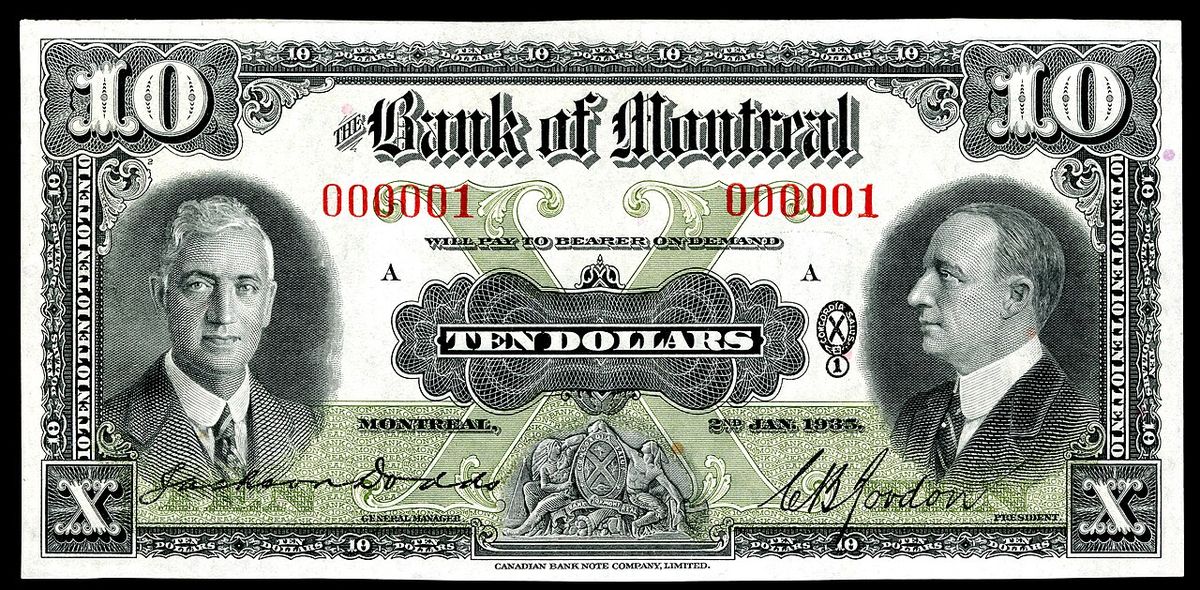
The two-dollar denomination has a long history in Canadian currency, first appearing in notes issued by the Dominion of Canada between 1870 and 1935. The Dominion of Canada issued notes in denominations of 25 cents, $1, $2, $4, $5, $50, $100, $500, and $1,000 during this period. The Bank of Canada, established as the nation's sole issuer of banknotes, began issuing its own two-dollar notes in 1935 as part of its inaugural series. These early notes were part of a broader set of denominations that included $1, $2, $4, $5, $25, $50, $100, $500, and $1,000 bills. The $25 note from 1935 was a commemorative issue for the silver jubilee of King George V and was withdrawn in 1937. The Bank of Canada continued to produce two-dollar notes through several subsequent series, with the final design released in 1986 as part of the Birds of Canada series. The decision to cease production was driven by practical and economic factors, specifically the higher durability and lower long-term cost of coinage for a low-denomination, heavily circulated item.
The printing of the two-dollar paper note officially ended on February 18, 1996, coinciding with the introduction of the bimetallic two-dollar coin, colloquially known as the toonie. This transition marked the end of the bill's active life in daily commerce. For a period, the existing paper notes remained in circulation alongside the new coin, but they became increasingly scarce as they were gradually withdrawn by financial institutions. The Bank of Canada and later the federal government took formal steps to conclude the note's status, culminating in its removal from legal tender. The government announced in the 2018 Federal Budget its plans to make all withdrawn banknotes no longer legal tender, a change that came into effect for the $2 note on January 1, 2021.
Design Evolution and Notable Series
The design of the Canadian two-dollar bill evolved significantly across the decades, reflecting changes in artistic style, security features, and national identity. Early Bank of Canada issues featured formal portraits and classical designs. A major redesign occurred with the 1954 series, which introduced a portrait of Queen Elizabeth II positioned at the right side of the note to reduce wear from folding. This series is particularly famous among collectors for the unintended "Devil's Face" variety, where highlights in the Queen's hair created an illusory image. The portrait was based on a photograph by Anthony Buckley, then photographer for the Royal Family, and engraved by George Gundersen of the British American Bank Note Company. This controversial detail led to a modification of the engraving partway through the print run, creating two distinct portrait types for the same series.
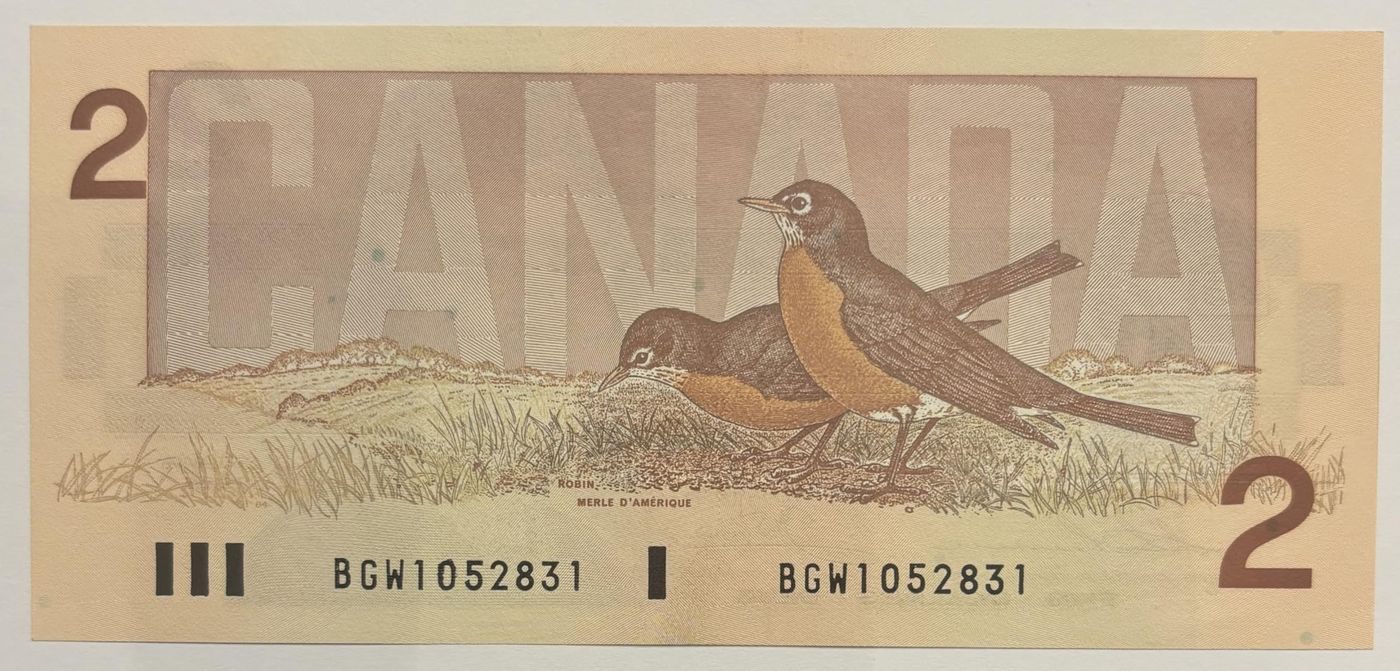
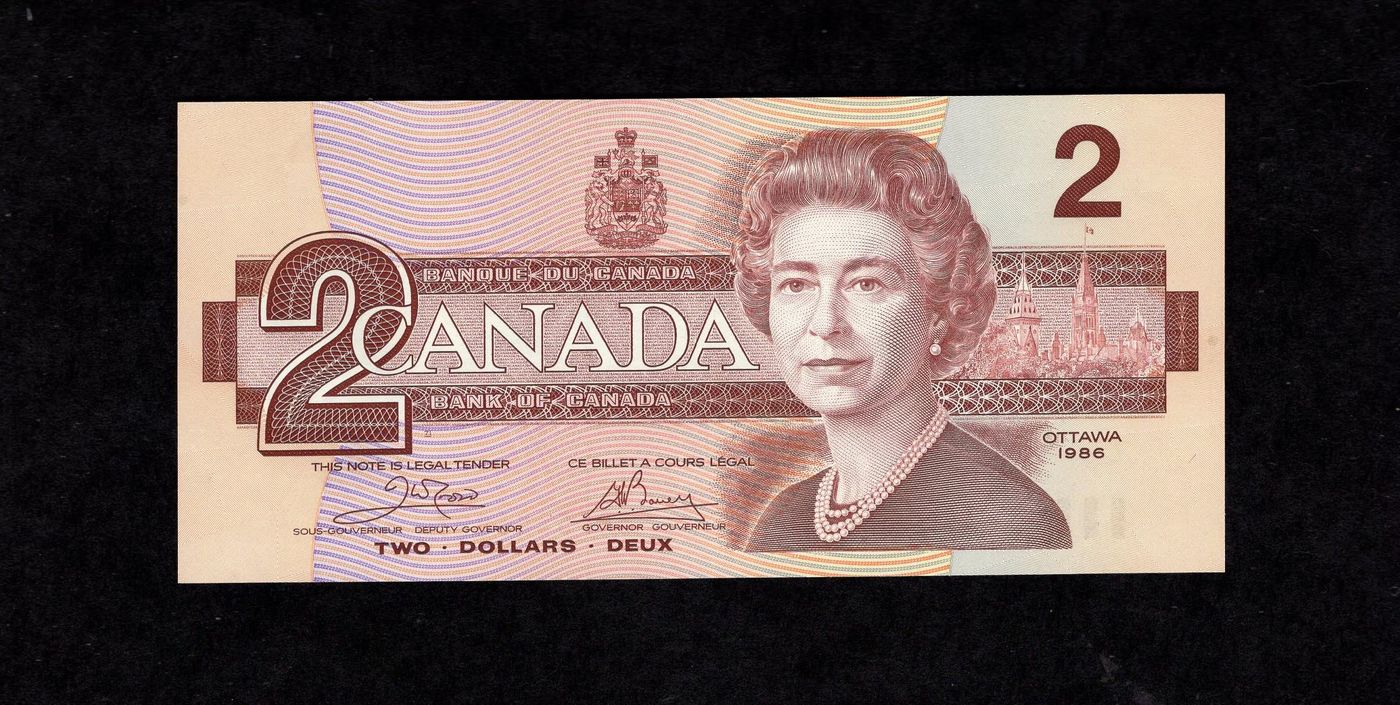
Later series moved towards Canadian landscapes and wildlife. The Scenes of Canada series, with the $2 note issued on August 5, 1974, featured a green and black design with Queen Elizabeth II on the face and a view of Parliament Hill from across the Ottawa River on the back, with log driving activities on the water. The final series, Birds of Canada, issued in September 1986, presented a terra cotta-coloured note. Its face again featured the Queen, with a small engraved vignette of the Parliament Buildings, while the back depicted a meadow scene with two robins. The engraving for the 1986 portrait was done by Henry S. Doubtfire of De La Rue based on a photograph by Anthony Buckley. The back vignette of the 1954 series featured a country valley scene in Central Canada.
Withdrawal from Circulation and Legal Status
The status of the two-dollar bill changed in stages from being actively circulated to being fully demonetized. After printing ceased in 1996, the notes were considered withdrawn from circulation, meaning the Bank of Canada began removing them from the money supply. Withdrawn currency typically remains legal tender, which legally obligates a creditor to accept it to settle a debt, though in practice, businesses are not forced to accept it. These notes could usually be exchanged at commercial bank branches, with some institutions requiring the exchanger to be a customer. The banks would then return the old notes to the Bank of Canada for destruction alongside other worn out currency.
The government announced further changes in the 2018 Federal Budget, planning to formally remove legal tender status from all withdrawn banknote denominations. This plan was enacted, and as of January 1, 2021, the $1, $2, $25, $500, and $1,000 bills from every series are no longer legal tender. It is important to note that this change only affects the note's mandatory acceptance for debt payment. The bills still retain their face value and can be redeemed at financial institutions in exchange for current banknotes. The government has indicated that older series of the current denominations ($5, $10, $20, $50, $100) may also lose legal tender status in the future. The total value of all discontinued provincial, Dominion, chartered bank, and Bank of Canada notes still outstanding was $1.139 billion as of December 31, 2016.
Collector Value and Market Prices
Since its withdrawal, the Canadian two-dollar bill has transitioned from spending money to a collectible item, with its market value often exceeding its original face value. The value is determined by several key factors including the series year, the note's condition or grade, and the presence of rare varieties or serial numbers. Circulated notes from the common 1986 Birds of Canada series typically trade in a range between three and six dollars. Uncirculated examples from the same series, which have never been used in commerce, command higher prices, usually between twelve and twenty-five dollars. Premiums are added for notes with special serial numbers, such as low numbers or repeating patterns often called radar numbers. A difference can be seen on the B's of the serial numbers on some notes, which is a point of interest for collectors.
Older series are generally more valuable due to lower survival rates and greater historical interest. Notes from the 1954 series, especially the Devil's Face variety, are exceptionally sought after by collectors. The 1974 Scenes of Canada series note is also of significant interest as it represents the final design before the aesthetic shift to the Birds of Canada series. The total value of all discontinued Bank of Canada denominations still outstanding was $1.139 billion as of December 31, 2016, a liability that remains on the Bank of Canada's books. For individual collectors, discovering a high-grade example of an older note can represent a find of considerable numismatic value. The 1954 series was withdrawn beginning in 1970 because the prefix letters were almost entirely used up and due to a large number of counterfeits appearing, particularly on the higher $50 and $100 denominations.
- 1986 Series (Circulated): $3 to $6
- 1986 Series (Uncirculated): $12 to $25+
- 1954 Devil's Face Series: Premium value based on condition and demand
- 1974 Scenes of Canada Series: Higher value due to age and design significance
- Special Serial Numbers (e.g., low numbers, patterns): Can add significant premium
- Notes in certified high grades (e.g., UNC): Command the highest prices
- Substitute Notes and Low Print Blocks: Increase value for 1986 series
- Error Notes and Printing Varieties: Can be exceptionally valuable
Production and Notable Varieties
The production of Canadian two-dollar bills involved several security printing companies and careful engraving work. The 1954 issue portrait of Queen Elizabeth II was engraved by George Gundersen of the British American Bank Note Company based on a photograph by Anthony Buckley. The back vignette for that series featured a scene near Mittimatalik (Pond Inlet) on the rugged northeastern tip of Qikiqtaaluk (Baffin Island), engraved by C. Gordon Yorke of BABN based on a photograph by Douglas Wilkinson. The 1986 Birds of Canada series $2 note was printed by both the Canadian Bank Note Company and the British American Bank Note Company. Its portrait was engraved by Henry S. Doubtfire of De La Rue, also based on a photograph by Anthony Buckley. Each note in this series featured an engraved coat of arms on the face and bar codes adjacent to the serial numbers on the reverse.
Several notable varieties exist beyond the famous Devil's Face. For the 1954 series, the modification of the Queen's portrait created two distinct types. The 1986 series has variations related to the printing companies, prefix letters, and serial number styles. Collector interest often focuses on replacement notes, which are issued to replace damaged or imperfect notes from the original print run and carry special serial number prefixes. Low serial numbers, especially those beginning with very early letters or sequences, are also highly desirable. The research and design of bank notes was a formidable challenge focused on developing notes that would foil counterfeiters, and changes in printing techniques over the decades are reflected in the different series.
Key Series and Issue Details
The history of the two-dollar bill can be traced through its major series releases by the Bank of Canada. Each series represents a specific era in Canadian banknote design and production. The first was the 1935 series, which included the two-dollar note as part of the Bank of Canada's initial offerings. The 1954 series followed, notable for its new portrait of Queen Elizabeth II and the subsequent creation of the Devil's Face variety. This issue was itself withdrawn beginning in 1970 due to a combination of exhausted prefix letters and a high number of counterfeits, particularly on the $50 and $100 denominations. The later signature varieties of these higher denominations were replaced quickly and are relatively scarce today.
The next major design was the Scenes of Canada series, with the $2 note released on August 5, 1974. It was the last day issued on September 1, 1986, when it was superseded by the new Birds of Canada series. The final paper two-dollar note was the Birds of Canada issue, released in September 1986 and printed by both the Canadian Bank Note Company and the British American Bank Note Company. This note remained in production until the printing halt in 1996, making it the most recent and commonly encountered two-dollar bill for many Canadians. Uncut sheets of forty 1986 $2 notes were also produced and are available to collectors.
| Series Name | Issue Date | Key Features | Status |
|---|---|---|---|
| 1935 Series | 1935 | First Bank of Canada issue. Separate English/French versions | Withdrawn from circulation |
| 1954 Series | 1954 | First portrait of Elizabeth II. Devil's Face variety. Country valley reverse | Withdrawn starting 1970 |
| Scenes of Canada | August 5, 1974 | Green/black. Parliament Hill reverse. Last issued Sept 1, 1986 | No longer legal tender |
| Birds of Canada | September 1986 | Terra cotta/red. Two robins reverse. Final $2 note design | No longer legal tender |
The Transition to Coin and Cultural Legacy
The replacement of the two-dollar bill with the two-dollar coin was a significant shift in Canadian currency, driven primarily by practical considerations. Coins are far more durable than paper notes, especially for a low-denomination unit that changes hands frequently. The longer lifespan of a coin reduces the long-term production and replacement costs for the central bank. The transition was implemented smoothly, with the new toonie quickly becoming a staple of everyday transactions. This move was part of a broader trend where smaller denominations were replaced by coins, and larger ones like the $500 and $1,000 were felt to be no longer required in an era of electronic transmission of most large transactions.
Culturally, the two-dollar bill holds a nostalgic place for many Canadians who remember using it for small purchases like candy, bus fare, or other daily expenses. A peculiar piece of folklore suggested the bill was considered unlucky, particularly in Western Canada, though no specific link to gambling or vice was substantiated. Today, the bill's legacy is preserved in collections and estates. Its journey from common currency to historical artifact underscores the evolving nature of money and how discontinued items gain new life and value in the collector market, often becoming miniature pieces of national history. The liability for outstanding provincial and Dominion of Canada notes was transferred to the Bank of Canada in 1935, and for chartered bank notes in 1950, ensuring that even these historic notes retained a financial claim.
Redeeming and Selling Old Two-Dollar Bills
For Canadians who find old two-dollar bills, there are specific channels for redemption or sale. Since January 1, 2021, these notes are no longer legal tender, meaning businesses will not accept them. However, the Bank of Canada and most financial institutions will still redeem them for their face value. Individuals can typically bring withdrawn notes to a commercial bank branch to exchange them for current currency. Some banks may require the person making the exchange to be an existing customer. The bank then sends the old notes back to the Bank of Canada for destruction. This process ensures that the holder receives the full $2 value for each note, regardless of its age or series.
The collector market offers an alternative, often providing a price above face value. Coin dealers, numismatic shops, and online auction platforms are common venues for selling these bills. The price obtained depends heavily on the factors previously outlined: series, condition, and rarity. For example, a lot of five circulated Canadian $2 bills from 1954 might be offered for sale online, while a single 1986 $2 bill from the Birds of Canada series in circulated condition might sell for around seven dollars or best offer. High-grade uncirculated examples, especially from older series or with rare serial numbers, can command significant premiums. It is important for sellers to research current market values, which can be found through price guides, auction records for certified notes sold at auctions, and dealer listings.
Frequently asked questions
What is the 1954 Canadian two-dollar bill with the Devil's Face?
The 1954 series two-dollar bill features a portrait of Queen Elizabeth II where certain highlights in the Queen's hair created the optical illusion of a devil's face. This was not an error or prank but a result of faithfully engraving the source photograph. The controversy led to a modification of the portrait mid-production, creating two varieties: the original Devil's Face and the modified version. The Devil's Face note is highly sought after by collectors.
Why was the $2 bill discontinued in Canada?
The $2 bill was discontinued primarily for economic and practical reasons. Coins are much more durable than paper notes, especially for a low-denomination currency that is frequently handled. Replacing the paper note with the two-dollar coin (toonie) in 1996 reduced long-term production and replacement costs for the Bank of Canada. The note was also part of a broader trend of replacing small-denomination notes with coins.
Are Canadian two-dollar bills still worth money?
Yes, Canadian two-dollar bills are still worth money. They retain their face value and can be redeemed at financial institutions for current banknotes. As of January 1, 2021, these bills are no longer legal tender. However, they also hold value on the collector market, often selling for more than their two dollar face value. The specific value depends on factors like the series, condition, and rarity of the note. For example, older issues or notes in uncirculated condition can command significant premiums.
When did Canada stop using the $2 bill?
Canada stopped printing the two dollar bill on February 18, 1996, when the two dollar coin, or toonie, was introduced to replace it. The paper notes continued to circulate but were gradually withdrawn from circulation. The most recent banknote series to include the two dollar bill was the Birds of Canada series in 1986. The denomination was permanently retired, and as of January 1, 2021, these notes are no longer legal tender alongside other discontinued denominations like the one and twenty five dollar bills.
How much is a 1986 Canadian two-dollar bill worth?
A circulated 1986 Canadian two dollar bill from the Birds of Canada series is typically worth between three and six dollars on the collector market. Uncirculated notes in pristine condition can be worth between twelve and twenty five dollars. Factors like rare serial number patterns, specific prefixes, or being part of a scarce print run can increase the value. For instance, uncut sheets of forty notes from this series are available to collectors. The note featured a terra cotta colour, Queen Elizabeth II on the face, and two robins on the back.
Can I still spend an old Canadian two-dollar bill?
No, you cannot actively spend an old Canadian two dollar bill as it is no longer legal tender. As of January 1, 2021, the two dollar bill lost its legal tender status, meaning creditors are not obligated to accept it for payment. However, you can exchange it for its face value at a commercial bank branch, though some banks may require you to be a customer. You can also sell it to a coin dealer or on the collector market, where it may fetch a price above its two dollar face value depending on its condition and series.
Sources and further reading
- Canadian two-dollar bill (Wikipedia) en.wikipedia.org
- 1954 Bank of Canada $2 Dollar Bill Note Devils Face ... coinsunlimited.ca
- How Much Is a Canadian Two Dollar Bill Worth Today? bwcoin.com
- Scenes of Canada Series $2 Note bankofcanadamuseum.ca
- 2 dollars 1986 to 1991 values and prices coinsandcanada.com
This article explains how things work and is not financial, tax or legal advice. Rules, limits and rates change, so check the current figures with the Canada Revenue Agency, your province or your financial institution before you act.