The price of gold in Canada is determined by global markets and converted into Canadian dollars, reflecting its role as a major investment and safe-haven asset. Investors and individuals follow the gold price for bullion, jewellery, and financial products, using it to diversify portfolios and hedge against economic uncertainty. The value is quoted per troy ounce and gram, with purity levels from 24-karat down to 9-karat influencing the worth of physical items. Understanding how the price is set and what moves it helps Canadians make informed decisions about buying, holding, and selling gold.
How the Global Gold Price is Determined
The world price of gold is established through a continuous over-the-counter spot market, with the most common benchmark historically being the London gold fixing. This was a twice-daily telephone meeting of five bullion-trading firms, though modern pricing is derived from trading activity around the clock. The commodity trades under the code XAU, and its price is influenced by global supply and demand, including speculative activity. Unlike many commodities, the vast existing above-ground stock of gold means annual production changes have less impact than shifts in market sentiment. The annual mine production has been close to 2,500 tonnes in recent years, with about 2,000 tonnes going into jewellery and industrial uses and around 500 tonnes to retail investors and exchange-traded funds.
Futures contracts and derivatives are actively traded on exchanges like the New York Commodities Exchange (COMEX) and Euronext.liffe, allowing for speculation and risk management. The spot price is the immediate delivery price, while futures prices reflect expectations for future dates. Central banks hold significant gold reserves and their buying and selling activities can influence the market. The ten-year Washington Agreement on Gold, first established in 1999, limited sales by its member central banks to 400 tonnes annually, a limit that was later adjusted and which expired in 2019. Major sellers in the past have included the Bank of England and the Swiss National Bank, while other nations like Russia and China have at times expressed interest in growing their reserves.
Converting to Canadian Dollars: Spot Price and Karats
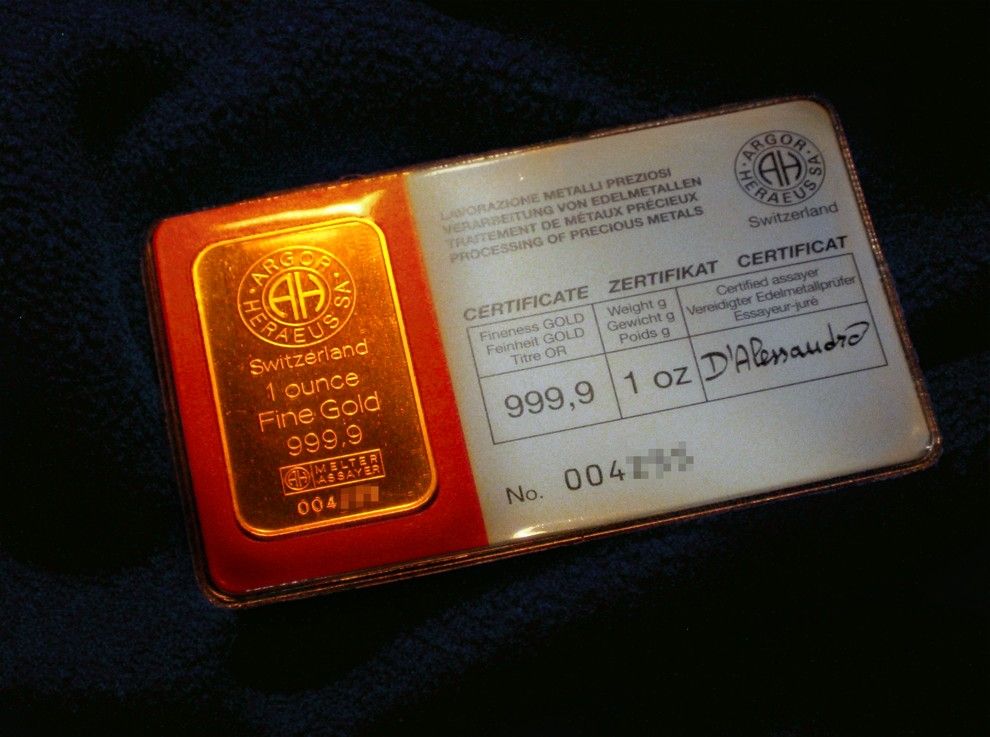
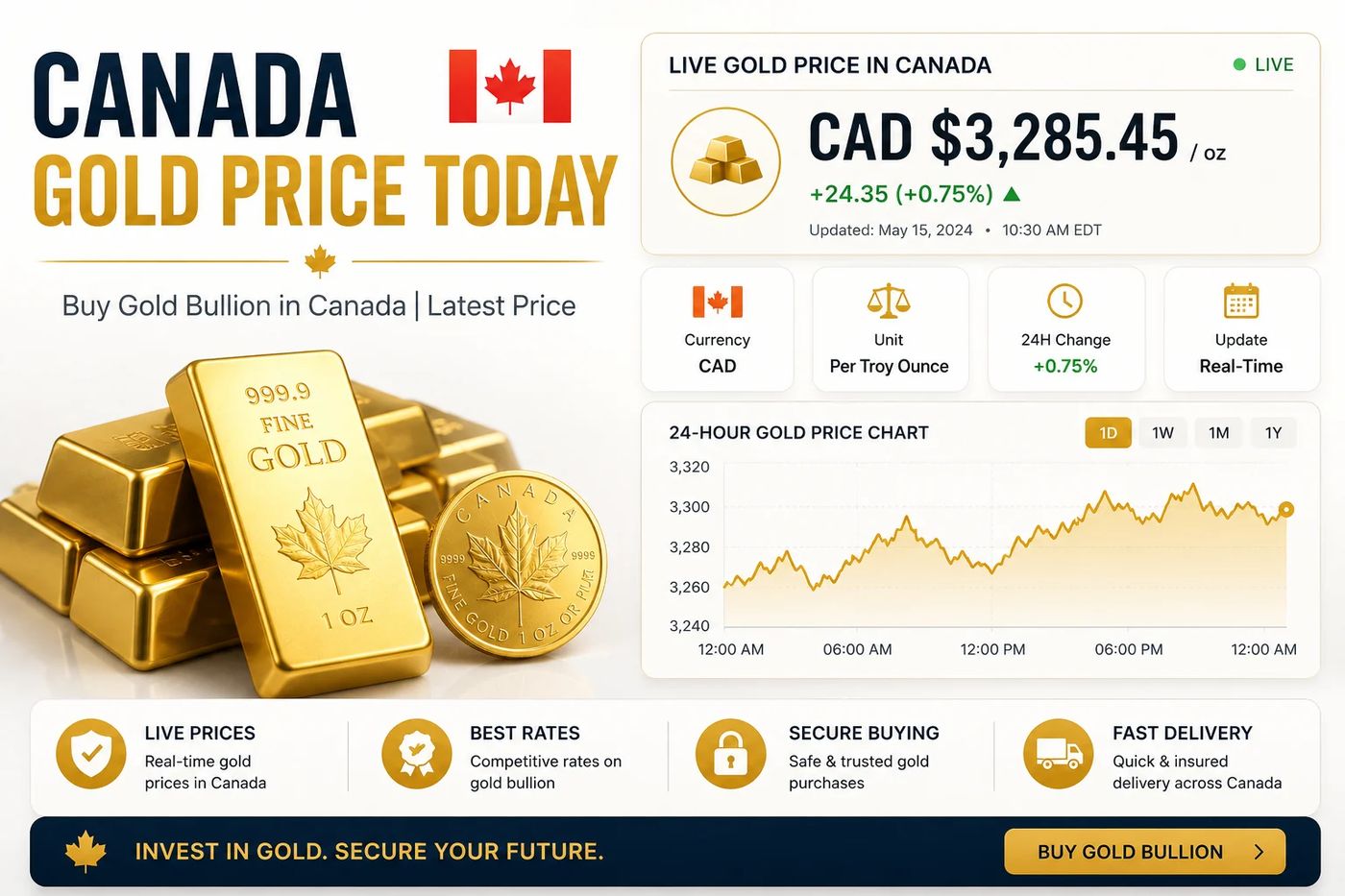
For Canadian investors, the local price is a conversion of the global U.S. dollar spot price using the prevailing USD/CAD exchange rate. This means the Canadian dollar gold price can move due to changes in the metal's U.S. dollar value, fluctuations in the loonie, or both. A strengthening Canadian dollar can suppress the CAD gold price even if the metal rises in U.S. terms, while a weakening loonie can lift it. The price is most commonly quoted per troy ounce, the standard unit for precious metals worldwide, which equals 31.1034768 grams. For smaller transactions, such as jewellery or small bars, the price per gram is more practical.
Gold purity is expressed in karats, with 24 karats representing pure or nearly pure gold. In Canada, 9-karat gold is the minimum quality permitted for a non-plated gold article carrying a gold quality mark. The fineness, such as 417 for 10K or 585 for 14K, may also be stamped on items. Investment-grade bullion, like the Royal Canadian Mint's Gold Maple Leaf coin, is typically 99.99% pure (.9999 fine). The melt value of any gold item is calculated based on its weight and the proportion of pure gold it contains, not its total weight.
Key Factors That Drive the Price of Gold
The price of gold reacts to a complex mix of macroeconomic and geopolitical forces. It is often sought as a hedge against inflation or currency devaluation, as its value is not tied to any single government's monetary policy. Central bank demand is a major factor, with nations like China becoming the world's top gold consumer as of 2013. Other macroeconomic variables include the price of oil, the use of quantitative easing, currency exchange rate movements, and returns on equity markets. Jewelry demand consistently accounts for over two-thirds of annual global demand, with India, China, and the USA being major markets.
Geopolitical tensions and national emergencies have historically driven investors toward gold as a safe-haven asset. For example, gold prices surged to a near two-month high in June 2025 due to heightened tensions between Israel and Iran. During periods described as gold fatigue, when prices rise very high, investors may seek alternatives like platinum or silver, which can impact gold's relative demand. The price can also be influenced by the performance of the U.S. dollar and Treasury yields, as seen in October 2025 when gold first exceeded $4,000 per troy ounce amid a weakening dollar and stubborn inflation.
- Central bank buying and selling agreements, like the Washington Agreement on Gold.
- Jewellery and industrial demand, particularly from emerging markets.
- Geopolitical risks and war, prompting safe-haven flows.
- Inflation expectations and real interest rates.
- Currency exchange rates, especially the USD/CAD pair for Canadian prices.
- Speculative activity in futures and derivatives markets.
- Competition from other assets like platinum during periods of gold fatigue.
Historical Context and Price Records
Gold has been used throughout history as money and has been a relative standard for currency equivalents. Many European countries implemented gold standards in the latter part of the 19th century until these were temporarily suspended in the financial crises involving World War I. After World War II, the Bretton Woods system pegged the United States dollar to gold at a rate of US$35 per troy ounce. This system existed until the 1971 Nixon shock, when the US unilaterally suspended the direct convertibility of the United States dollar to gold. The last major currency to be divorced from gold was the Swiss franc in 2000. Since 1919, a common benchmark for the price of gold has been the London gold fixing, and gold is traded continuously based on the intra-day spot price.
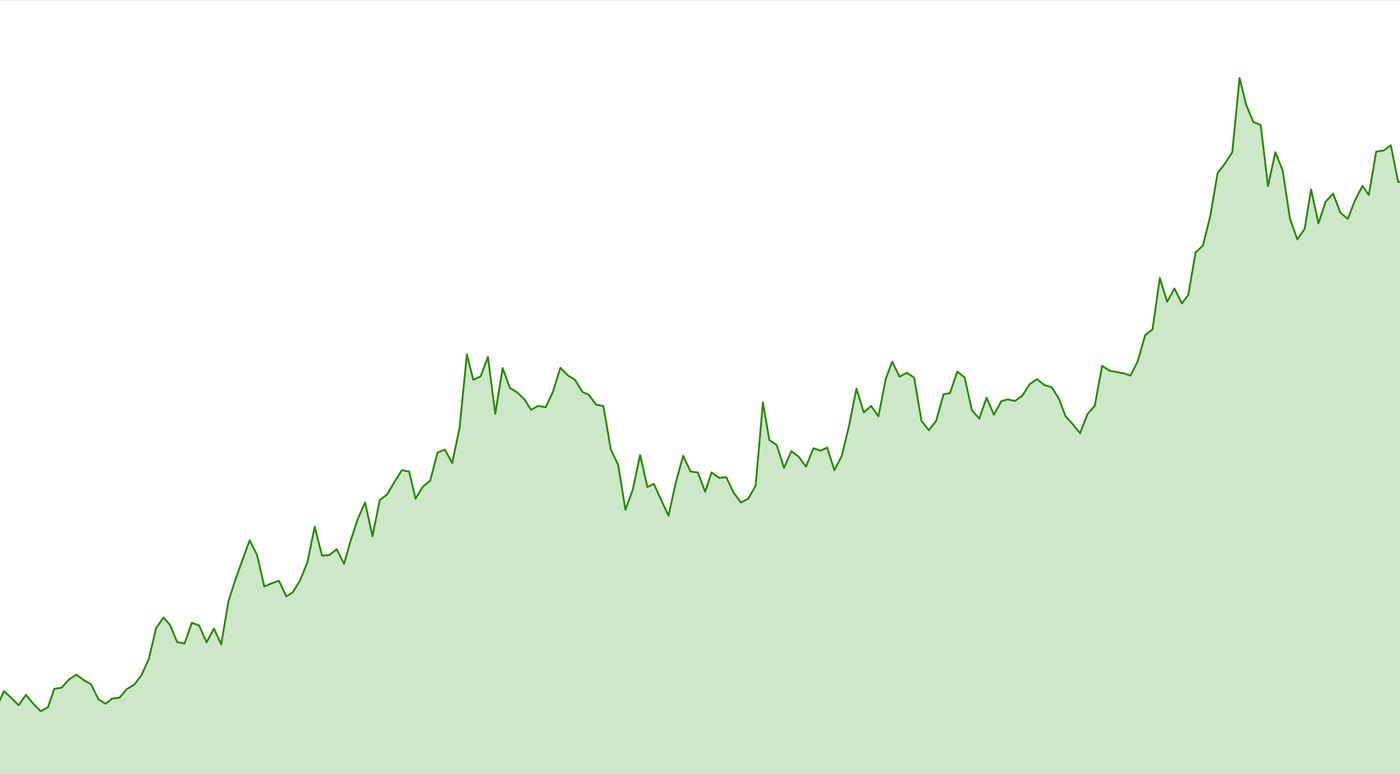
Notable price movements include the surge above $4,000 per troy ounce for the first time in October 2025, representing an increase of more than 50% that year, the highest yearly increase since 1979. Prices reached nearly $5,600 an ounce in January 2026 before dropping to about $4,300 by late September that year. These records highlight the metal's sensitivity to factors like a weakening U.S. dollar, rising Treasury yields, inflation, and robust central bank demand. The historical price provides context for understanding gold's role as a store of value through different economic eras.
How Canadians Buy and Hold Physical Gold
Canadians can acquire physical gold in several forms, primarily through bullion dealers and some major banks. The most traditional method is buying gold bars, which are available in sizes ranging from 1 gram to 400-ounce Good Delivery bars. Smaller bars, like 1 ounce, 10 ounce, and 1 kilogram, are popular with individual investors. Bars generally carry lower price premiums than coins but larger bars carry a greater risk of forgery and often require re-assaying when sold. Good Delivery bars held within the London Bullion Market Association (LBMA) system have a verifiable chain of custody from refiners to vaults.
Gold bullion coins are another common way to own gold, priced mainly by their fine weight plus a premium. Popular coins include the Canadian Gold Maple Leaf, American Gold Eagle, Krugerrand, and Australian Gold Nugget. Sizes typically range from 0.1 to 2 troy ounces, with the 1 troy ounce size being most popular. Gold rounds resemble coins but have no face value and are usually produced by private mints. When purchasing physical gold, recognition matters. Products from trusted refiners like the Royal Canadian Mint, PAMP Suisse, or Johnson Matthey are more liquid and easier to authenticate.
| Investment Vehicle | Key Characteristics | Common Sizes/Examples |
|---|---|---|
| Bullion Bars | Lower premiums, forgery risk in large sizes | 1 oz, 10 oz, 1 kg, 400 oz Good Delivery |
| Bullion Coins | Legal tender, recognizable, higher premiums | 1 oz Gold Maple Leaf, Gold Eagle, Krugerrand |
| Jewellery | Wearable, value based on purity &. Craftsmanship | 10K, 14K, 18K, 22K items |
Financial Products: ETFs, Accounts, and Derivatives
For investors seeking exposure without physical storage, gold exchange-traded products (ETPs) like exchange-traded funds (ETFs) and exchange-traded notes (ETNs) are available. These trade on major stock exchanges and represent an easy way to track the gold price. The first gold ETF, Gold Bullion Securities, launched on the Australian Stock Exchange in March 2003. A well-known example is SPDR Gold Shares (GLD), which became one of the world's largest ETFs by market capitalization. These products typically charge a small annual management fee that covers storage and insurance, which is paid by selling a small amount of the fund's gold over time.
Gold certificates and accounts offer another form of paper gold. Certificates can be allocated, representing specific bars, or unallocated, which is a form of fractional reserve banking. Swiss banks, among others, offer gold accounts where gold can be traded like a foreign currency. Derivatives such as gold futures and options trade on exchanges like COMEX and over-the-counter, allowing for leveraged positions and hedging. Bullion banks typically deal in quantities of 1,000 troy ounces or more for allocated or unallocated accounts, while vaulted gold services may allow ownership starting from as little as one gram.
Selling Gold in Canada: Purity, Testing, and Value
When selling gold in Canada, the payout is based primarily on the item's weight, purity, and the current spot price. Dealers use the live market price to calculate the melt value of the pure gold content. Higher karat items like 22K or 24K contain more gold and thus command higher payouts per gram. Condition, brand, and item type also affect the offer. Premium brand jewellery from companies like Tiffany or Cartier may qualify for higher rates due to resale potential, while vintage or antique pieces might have collectible value. For bullion and coins, products from recognized mints and refiners are paid at higher rates because they are easily authenticated.
Professional buyers typically test items in front of the seller using methods like magnet checks, acid touchstone tests, and XRF scanners. A magnet test helps identify non-magnetic gold, while a touchstone involves rubbing a small streak of metal and applying acids that react to different karats. XRF analysis is a non-destructive scan that reveals the elemental makeup of the metal. This transparent process allows sellers to see the verification of stamps and purity, ensuring the offer reflects the actual gold content. Standard purchase prices are a percentage of the spot price, with higher percentages paid for recognized bullion and premium items.
- Purity is verified through stamped marks and electronic testing.
- Weight is measured in troy ounces or grams on calibrated scales.
- The spot price is the live global market value in Canadian dollars.
- Item type (jewellery, coin, bar) determines the applicable buy rate.
- Condition and brand can add a premium for resaleable items.
- Testing is done transparently, often with XRF or acid tests.
- Payment is based on the confirmed weight and purity at current market rates.
Tax Considerations and Investment Strategy
In Canada, gold held as an investment is generally subject to capital gains tax. When gold is sold for a profit, 50% of the capital gain is included in taxable income and taxed at the individual's marginal rate. If gold is held within a registered account like a Tax-Free Savings Account (TFSA) or Registered Retirement Savings Plan (RRSP), these tax implications may differ, though specific rules apply to holding precious metals in such accounts. It is important for investors to keep records of purchase and sale dates, amounts, and prices to accurately calculate capital gains or losses for tax purposes. Investors use different strategies when incorporating gold into a portfolio, such as fundamental analysis of macroeconomic indicators or using it as a hedge against market downturns.
Gold is often compared to stocks as a different asset class, serving as a diversification tool and a hedge against market downturns and currency devaluation. The metal's performance is influenced by real interest rates, central bank policies, and safe-haven demand during periods of economic or geopolitical stress. For Canadian investors, movements in the USD/CAD exchange rate can be as significant as changes in the global gold price itself. Some investors use fundamental analysis, looking at macroeconomic indicators like GDP growth, inflation, interest rates, and global gold supply versus demand to inform their decisions.
Frequently asked questions
What is the difference between the gold spot price and the price I pay?
The spot price is the live global market value for immediate delivery of pure gold, quoted per troy ounce in U.S. dollars and converted to Canadian dollars. The price you pay to buy physical gold, such as coins or bars, includes a premium over the spot price to cover minting, distribution, dealer margins, and sometimes taxes. When selling, you typically receive an offer based on a percentage of the spot price, which accounts for the dealer's costs and the item's liquidity. Premiums vary based on the product type, size, and market demand.
How is the price of gold in Canadian dollars calculated?
The Canadian dollar gold price is calculated by taking the international spot price of gold in U.S. dollars and converting it using the current USD/CAD exchange rate. This means the price in Canada moves with both fluctuations in the value of gold itself and changes in the value of the Canadian dollar. A weaker loonie will make gold more expensive in CAD terms, even if the U.S. dollar gold price is stable. Financial data providers like Kitco display this converted price in real time, along with per gram and per kilogram equivalents.
What does the karat number mean for gold jewellery?
The karat number indicates the purity of gold in an alloy, with 24 karats representing pure gold. In Canada, the minimum quality permitted for a non-plated gold article carrying a gold mark is 9 karats, which is 37.5% pure gold. The purity can also be expressed as a fineness mark, such as 585 for 14K gold. The value of a jewellery item for selling purposes is based on the weight of the pure gold it contains, which is the total weight multiplied by the karat percentage.
What are the main ways to invest in gold in Canada?
Canadians can invest in physical gold by purchasing bullion bars or coins from dealers or some banks. Popular coins include the Royal Canadian Mint's Gold Maple Leaf. Financial products like gold exchange-traded funds (ETFs) trade on stock exchanges and offer exposure without physical storage. Gold certificates and allocated accounts with bullion banks are other paper-based options. Derivatives such as futures and options are available for sophisticated investors on commodities exchanges. Each method has different considerations regarding liquidity, storage, premiums, and tax treatment.
Why does the price of gold go up and down?
Gold prices fluctuate due to changes in supply and demand, influenced by factors like central bank buying or selling, jewellery and industrial demand, and investment flows. Macroeconomic conditions such as inflation expectations, interest rates, and the strength of the U.S. dollar heavily impact gold. Geopolitical tensions and economic crises often drive safe-haven demand, pushing prices higher. Periods of high prices can also lead to gold fatigue, where investors rotate into other assets like platinum. For Canadians, movements in the USD/CAD exchange rate add another layer of price movement.
How do dealers determine the value of gold I want to sell?
Dealers determine value by first verifying the item's weight using calibrated scales and its purity through testing methods like XRF scanners or acid tests. They then apply the current live spot price of gold in Canadian dollars per gram or ounce to calculate the melt value of the pure gold content. The final offer is a percentage of that melt value, which varies based on the item type. Recognized bullion from major mints earns a higher percentage, while jewellery or unrecognized bars may receive a lower rate due to refining costs or lower liquidity.
Sources and further reading
- Gold as an investment (Wikipedia) en.wikipedia.org
- Live Gold Price in Canada (CAD) kitco.com
- Gold Spot Prices Today canadagold.ca
- Gold Spot Prices Today surreygold.ca
- Gold Spot Prices Today vancouvergold.ca
- Gold Price Today sprottmoney.ca
This article explains how things work and is not financial, tax or legal advice. Rules, limits and rates change, so check the current figures with the Canada Revenue Agency, your province or your financial institution before you act.