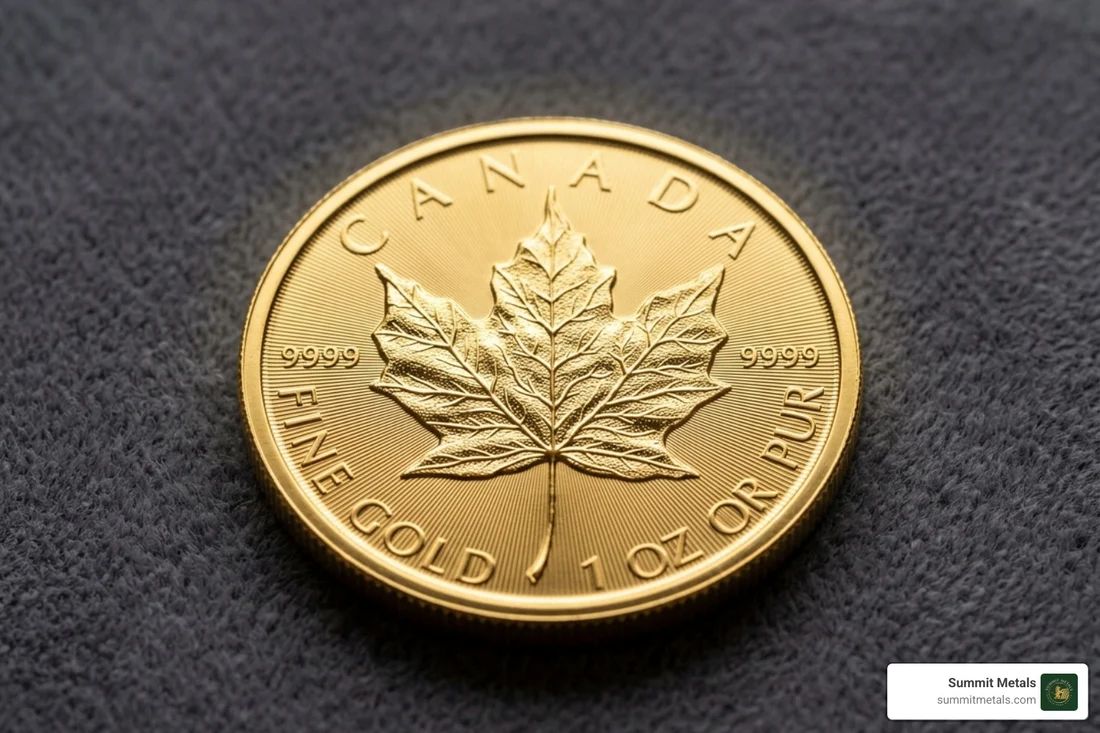
A one ounce gold coin is a physical bullion investment containing 31.1 grams, or one troy ounce, of pure gold. In Canada, the most prominent example is the Royal Canadian Mint's Gold Maple Leaf, which is the official gold bullion coin of the country and has a $50 face value. These coins are valued for their gold content, with their market price primarily based on the fluctuating spot price of gold. For Canadian investors, one ounce gold coins represent a tangible asset that can be held directly, used to diversify a portfolio, and in some cases, held within registered plans like an RRSP.
Understanding One Ounce Gold Bullion Coins
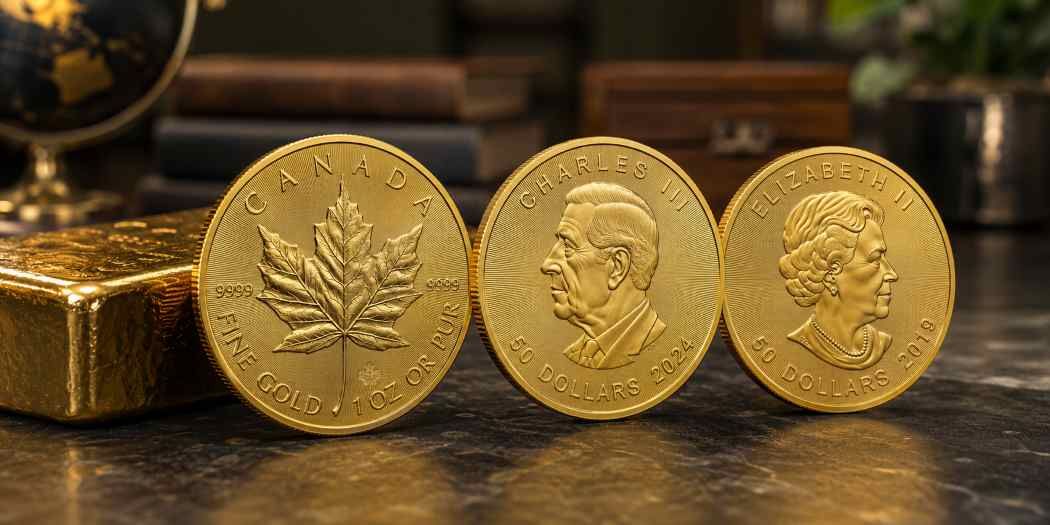
One ounce gold coins are minted by government mints and private refiners around the world as a form of bullion investment. The primary value of these coins comes from their precious metal content, not their nominal face value. The Royal Canadian Mint's Gold Maple Leaf is a leading example, first introduced in 1979. It is struck in 24-karat gold with a purity of 99.99 percent, which is among the highest purities available for bullion coins. The coin features a maple leaf design on the reverse and, historically, the effigy of Queen Elizabeth II on the obverse. The one ounce size is a standard unit in the precious metals market, providing a balance between substantial gold content and liquidity for individual investors. Many dealers offer these coins for sale individually or in larger quantities such as sealed tubes or monster boxes.
Bullion coins are distinct from numismatic or collectible coins, as their value is not tied to rarity or condition but to the underlying metal. The Gold Maple Leaf has a sales record of over 25 million troy ounces since its debut, establishing it as a bestselling modern gold bullion coin in North America. Other government mints produce similar one ounce coins with their own national designs and legal tender status. The consistent weight and purity of these coins make them a fungible commodity that is easily traded on global markets. Dealers typically price these coins by adding a premium to the current gold spot price to cover minting, distribution, and business costs.

Key Features and Security of the Canadian Gold Maple Leaf
The Canadian Gold Maple Leaf holds a special status as the official gold bullion coin of Canada. It carries a legal tender face value of $50, though its market value is many times higher, determined by the daily gold spot price. A significant technological feature is the Royal Canadian Mint's DNA anti-counterfeiting technology, which was added to all one ounce Gold Maple Leaf coins starting in 2014. This security feature involves an encrypted registration code within a privy mark on the coin that can be authenticated with a special reader. The mint produces these coins annually with updated year dates, and they are available directly from the mint and through a network of authorized bullion dealers. The design consistently features a detailed maple leaf on the reverse, a symbol strongly associated with Canada.
The DNA technology, which stands for digital non destructive activation, represents a major advancement in securing bullion products against forgery. The encrypted registration code located within the privy mark can only be read using a Royal Canadian Mint DNA Bullion reader. This provides a definitive method for investors and dealers to verify authenticity. The Royal Canadian Mint started using this DNA technology on all one ounce Gold Maple Leaf coins in 2014, and it has since become a standard feature. The mint also produces special edition one ounce gold coins, such as the 2026 The Majestic Wolf coin, which features different designs but maintains the 99.99 percent pure gold standard. These special coins often have limited mintages, like the 2026 wolf coin with a mintage of 900.
- The coin has a $50 face value as legal tender in Canada.
- DNA anti counterfeiting technology was introduced in 2014.
- The technology involves an encrypted code in a privy mark.
- Authentication requires a special Royal Canadian Mint DNA reader.
- Standard purity for the Gold Maple Leaf is 99.99% gold.
- Special edition coins, like the 2026 Majestic Wolf, have limited mintages.
How Gold Coin Prices Are Determined and Purchased
The price of a one ounce gold coin is not fixed but is derived from the live market price of gold, known as the spot price. Dealers add a premium to this spot price to cover minting, distribution, and their own business costs. Premiums can vary between dealers, coin types, and purchase quantities. For instance, buying a single coin typically carries a higher premium per ounce than buying a pack of ten or more. Real time pricing is common on dealer websites, where prices update frequently to reflect market movements. The final price a Canadian investor pays will be in Canadian dollars, incorporating the US dollar gold price converted at the current exchange rate plus the applicable premium. Market prices for one ounce gold coins can be volatile, changing throughout the trading day.
Purchasing one ounce gold coins in Canada is a straightforward process through various channels. Investors can buy from online bullion dealers, some Canadian banks with precious metals divisions, or directly from the Royal Canadian Mint. The typical steps for an online purchase involve registering for an account, browsing the selection, adding items to a cart, and proceeding to checkout with secure payment options. Many dealers also accept orders over the phone. Dealers often list different pricing tiers based on quantity, offering lower per unit prices for bulk purchases. For example, a dealer may list one price for a single 1 oz Gold Maple Leaf coin, a lower price per coin when buying up to three, and an even lower price when buying four or more.
| Purchase Quantity Example | Potential Price Structure |
|---|---|
| Single Coin | Highest premium per coin |
| Up to 3 coins | Lower premium per coin than single |
| 4 or more coins | Lowest premium per coin |
| Packs of 10 | Bulk discount pricing |
| Boxes of 500 | Special order with direct mint rates |
Payment methods can include direct bank transfers, credit cards, or debit from a linked bank account, with some dealers offering a discount for certain payment types. Once an order is placed, the dealer arranges for secure, insured shipping or allows for local pickup at their physical locations. Some dealers operate multiple locations across Canada, offering local pickup at all their sites. After receiving the coins, investors must decide on a storage strategy, which can range from a home safe to a bank safety deposit box or professional third party storage.
Investment Context and Registered Plans in Canada
Gold coins are often considered by investors as a tangible store of value and a potential hedge against inflation and currency devaluation. They provide portfolio diversification because their price movements do not always correlate directly with traditional financial assets like stocks and bonds. In Canada, certain one ounce gold coins, including the Gold Maple Leaf, are eligible to be held within registered investment plans. This includes Registered Retirement Savings Plans (RRSPs), Tax Free Savings Accounts (TFSAs), and Registered Education Savings Plans (RESPs). Holding eligible gold coins within these plans allows the investment to grow on a tax deferred or tax free basis, depending on the plan type. The rules for holding bullion in registered plans are set by the Canada Revenue Agency and require the use of a qualified custodian or trustee to administer the plan assets.
The process for investing in gold through a registered plan involves working with a financial institution or specialized custodian that offers precious metals within such plans. The investor cannot take physical possession of the coins held in the plan. They must remain in the custody of the plan trustee. This structure maintains the tax advantages while providing exposure to gold. Gold is viewed as a strategic asset during times of market volatility and economic instability, offering protection as a universally recognized and traded tangible asset. The liquidity of major bullion coins like the Gold Maple Leaf ensures they can be readily converted to cash when needed, providing financial security within an investment portfolio.
- Eligible for Registered Retirement Savings Plans (RRSPs).
- Eligible for Tax Free Savings Accounts (TFSAs).
- Eligible for Registered Education Savings Plans (RESPs).
- Coins must be held by a qualified plan custodian, not personally.
- Provides a hedge against inflation and currency devaluation.
- Offers portfolio diversification from traditional assets.
Other Popular One Ounce Gold Coins Available in Canada
While the Gold Maple Leaf is a domestic favourite, Canadian dealers also sell a wide variety of other one ounce gold bullion coins from international mints. These coins compete in the global market and offer investors alternative designs and sovereign guarantees. The American Gold Eagle, minted by the United States Mint, is a prominent competitor containing one ounce of gold, though it is alloyed for durability. The British Gold Britannia, produced by The Royal Mint, has been available since 1997 and is known for its detailed security features. The Austrian Gold Philharmonic coin, representing Europe's most successful investment coin, celebrates that country's musical heritage. Other offerings include coins from the Perth Mint in Australia and various private refiner rounds. Each coin type has its own design, purity specification, and premium structure.
Canadian bullion dealers typically categorize these coins alongside domestic products, providing real time prices and availability. The American Gold Eagle, first released in 1986, has a face value of one dollar and is guaranteed to contain one troy ounce of gold. The Gold Britannia is celebrated for its timeless design and the security it offers to investors. The Austrian Gold Philharmonic was the most sold gold coin in the world in several years, including 1992, 1995, 1996, and 2000 according to the World Gold Council. Dealers may also offer special annual coins like the Perth Mint Year of the Goat coin for 2027. The availability of these international coins provides Canadian investors with a broad selection to meet different preferences and investment strategies.
- American Gold Eagle: US official bullion coin, first released in 1986.
- Gold Britannia: British bullion coin, available since 1997.
- Austrian Gold Philharmonic: Europe's successful investment coin.
- Perth Mint Coins: Australian mint offering, like the Year of the Goat.
- Private Refiner Rounds: .999+ purity from recognized refiners.
Considerations for Storage, Authenticity, and Liquidity
When purchasing one ounce gold coins in Canada, investors encounter several important practical considerations. Liquidity is a key factor, as widely recognized coins like the Gold Maple Leaf can be easier to sell back to dealers compared to more obscure brands. The condition of the coin matters for bullion investors, as coins are typically valued for their metal content, but damage can sometimes affect resale value. Authenticity is paramount, which is why security features like the Royal Canadian Mint's DNA technology have been developed. Buyers should also be aware of the buy sell spread, which is the difference between the price a dealer sells a coin for and the price they are willing to buy it back for. This spread represents a transaction cost. Finally, while gold itself is not subject to HST or GST in Canada, there may be shipping and insurance fees associated with a purchase.
Storage is a critical decision for physical gold owners. Options include home storage in a safe, a bank safety deposit box, or professional third party storage services. Many bullion dealers offer insured storage solutions, both nationally and internationally, with options for allocated and segregated storage. Allocated storage means the specific bars or coins you own are identified and set aside for you, while segregated storage means they are physically separated from other clients' assets. These services prioritize security and accessibility, though they involve ongoing fees. For larger holdings, some investors consider storage in bonded warehouses or specialized vaults. The choice of storage affects insurance, accessibility, and overall peace of mind regarding the safety of the tangible asset.
Verifying a dealer's reputation is another important step. Many Canadian dealers are members of the Better Business Bureau and have numerous customer reviews. Some promote being Canadian owned and operated, with margins up to 50 percent lower than competitors. They may also highlight services like thousands of five star Google reviews, an A+ BBB rating, and local pickup at all their physical locations. Before making a purchase, investors should compare premiums, shipping policies, and buy back terms across multiple reputable dealers. Understanding the full process from purchase to eventual sale helps in managing a gold coin investment effectively as part of a broader financial strategy.
Frequently asked questions
What is a one ounce gold coin?
A one ounce gold coin is a bullion coin containing one troy ounce of pure gold. The most famous Canadian example is the Gold Maple Leaf from the Royal Canadian Mint. It has a face value of fifty dollars but trades at a market price based on gold. These coins are popular for investment and are guaranteed by their issuing government.
How pure is a Canadian Gold Maple Leaf coin?
The Canadian Gold Maple Leaf coin is 99.99 percent pure gold. This is also described as 24 karat gold. This high purity is a key feature of the coin. It consists of 31.1 grams of this fine gold.
Where can I buy one ounce gold coins in Canada?
You can buy one ounce gold coins from bullion dealers across Canada. Purchases can be made online or over the phone. Some dealers offer local pickup at their physical locations. Major Canadian banks with precious metals divisions also sell these coins.
Can I put gold coins in my RRSP or TFSA?
Yes, eligible gold coins like the Gold Maple Leaf can be held in RRSPs and TFSAs. The physical coins must be held by a qualified custodian for the plan. You cannot store these plan eligible coins at home personally. This setup allows the investment to use the tax benefits of the registered plan.
What is DNA technology on a Gold Maple Leaf?
DNA technology is an anti-counterfeiting feature on Gold Maple Leaf coins. It was introduced on the one ounce coins in 2014. The technology places an encrypted registration code in a privy mark. A special Royal Canadian Mint DNA Bullion reader can read this code to authenticate the coin.
Are there other one ounce gold coins besides the Maple Leaf?
Yes, there are many other one ounce gold coins available. Popular options include the American Gold Eagle and the British Gold Britannia. Another well known coin is the Austrian Gold Philharmonic. These coins are produced by their respective government mints and are widely traded.
Sources and further reading
- Gold mint.ca
- Silver Prices and Rates canadagold.ca
- Buy Gold Bullion Coins Online sprottmoney.ca
- 1 oz Gold Maple Leaf Coins online.kitco.com
This article explains how things work and is not financial, tax or legal advice. Rules, limits and rates change, so check the current figures with the Canada Revenue Agency, your province or your financial institution before you act.