The price of silver in Canada is a live figure quoted in Canadian dollars per troy ounce, driven by global commodity markets and the CAD/USD exchange rate. Unlike gold, silver is both a monetary precious metal and a critical industrial input, leading to greater price volatility. Canadian investors and sellers track the spot price to value bullion, coins, jewellery, and inherited holdings. Understanding how the price is set, what moves it, and the tax implications is essential for anyone dealing with silver in Canada.
How the Global Silver Price is Determined
The worldwide benchmark for silver is the spot price, which is the current market value for immediate delivery of one troy ounce of pure silver. This price is set through continuous trading of futures contracts on major international exchanges, primarily in London and New York. The London Bullion Market Association (LBMA) oversees the wholesale over-the-counter market, while the COMEX in New York is a central hub for futures trading. For Canadian investors, the local price is a conversion of the U.S. dollar spot price using the prevailing USD/CAD exchange rate. This means the silver price in Canadian dollars moves from two forces: changes in the underlying value of silver in U.S. dollars and fluctuations in the Canadian dollar's strength. Dealers and financial portals like Kitco provide real-time feeds of this converted spot price, which forms the foundation for pricing all physical silver products across the country. The spot price is often referenced as a bid price, which is the highest price a buyer is willing to pay at that moment, and it changes constantly during market hours. Major Canadian dealers like Canada Gold and AU Bullion use this live rate as the foundation for their buy and sell prices, ensuring quotes are based on true market value.
Understanding Silver Measurements and Purity
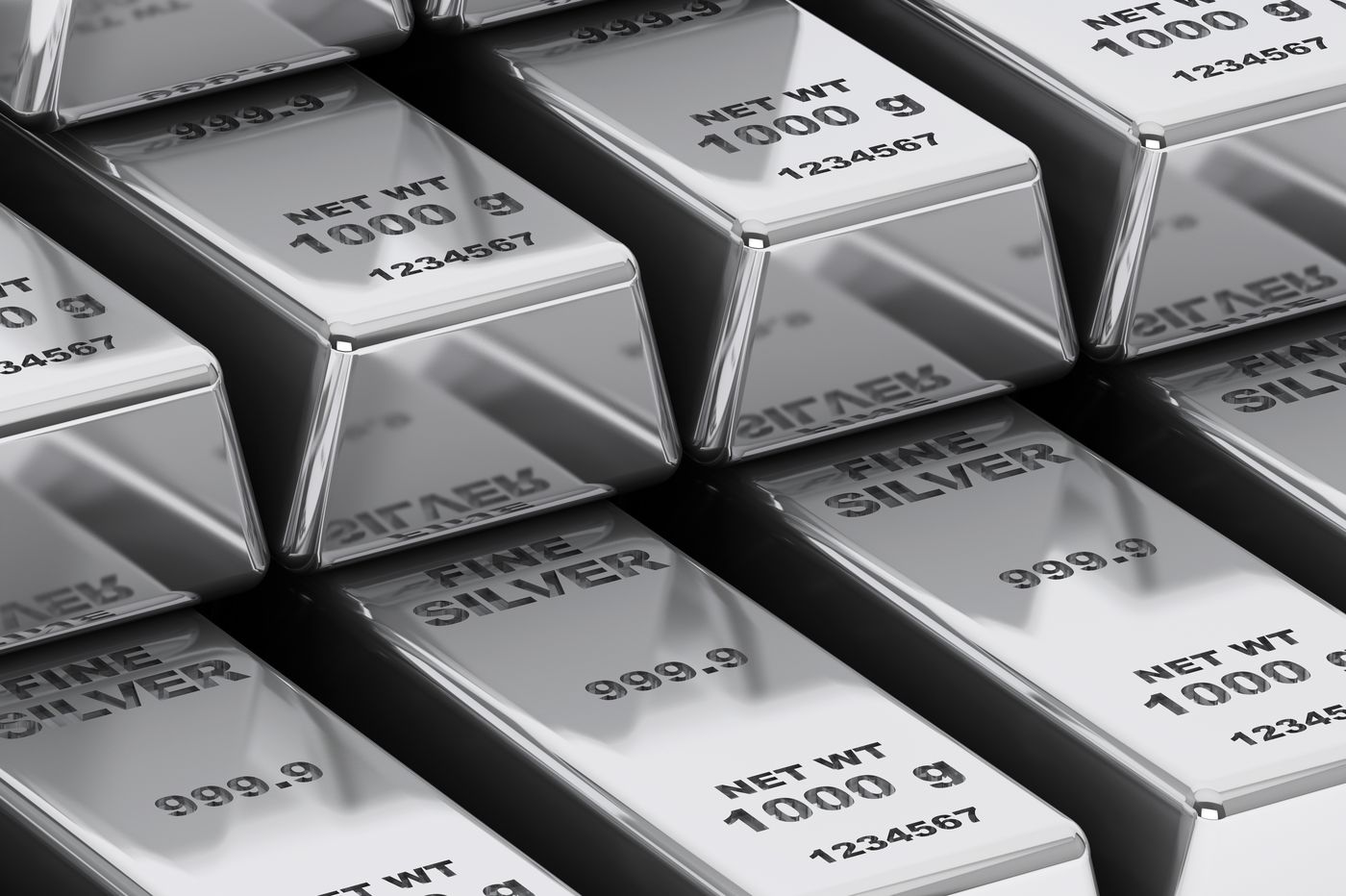
Silver is universally quoted per troy ounce, a unit of measure equal to 31.1034768 grams. Smaller transactions, such as for jewellery or small bars, are often discussed in grams or kilograms, with prices derived from the ounce price. The value of any silver item is directly tied to its purity, which is expressed as fineness. Investment-grade silver, including most bullion bars and the Royal Canadian Mint's Silver Maple Leaf coin, is .9999 fine, meaning it is 99.99% pure silver. Sterling silver, used in jewellery and flatware, is 92.5% pure, marked as .925. Older Canadian circulating coins are another common source. Dimes, quarters, and half-dollars minted from 1920 through 1966 contain 80% silver. The transition away from silver began in 1967, with some dimes and quarters that year containing 50% silver, while 1967 half-dollars remained 80% silver. By 1968, Canada had moved to nickel coinage. The melt value of any item is calculated by multiplying its total weight by its purity fraction and then by the current spot price. Purity is commonly expressed as fineness, which represents the amount of pure silver per thousand parts, and many items carry a quality mark such as 925, 999 or 9999.
The price of silver per gram varies significantly based on its fineness or purity. The live spot price for pure silver is the foundation for these calculations. For instance, the silver price per gram for .9999 fine silver is currently C$2.60. In contrast, the price per gram for .925 sterling silver is C$2.40, and for .800 silver it is C$2.08. These different prices reflect the varying amounts of pure silver contained in each type of metal.
- .9999 fine silver is currently valued at approximately C$2.60 per gram.
- .999 fine silver is valued at approximately C$2.59 per gram.
- .9584 Britannia silver is valued at approximately C$2.49 per gram.
- .925 sterling silver is valued at approximately C$2.40 per gram.
- .900 coin silver is valued at approximately C$2.34 per gram.
- .800 silver, like pre-1967 Canadian coins, is valued at approximately C$2.08 per gram.
The calculated values based on fineness represent the intrinsic metal content or melt value. This is not the same as the retail price or resale value, which includes additional premiums. Premiums account for factors like fabrication costs, brand recognition, and dealer margins. For example, an item marked 925 contains 92.5 percent silver by weight. Its approximate melt value is therefore 92.5 percent of the value of the same weight in pure silver. Many dealer websites provide a calculator that shows this estimated melt value in Canadian dollars using the live silver spot price.
Key Factors That Drive the Silver Price
The silver market is uniquely influenced by its dual role as a financial asset and an industrial commodity. Industrial demand accounts for over half of annual silver consumption, with major uses in electronics, solar photovoltaic panels, medical applications, and batteries. Consequently, the health of the global manufacturing sector and technological adoption rates, such as the expansion of solar energy, are powerful price drivers. Investment demand also plays a major role, with silver often seen as a more volatile, lower-cost alternative to gold during periods of economic uncertainty or high inflation. Supply is relatively inelastic because most silver is mined as a by-product of base metals like copper, lead, and zinc. This means primary silver mine output does not quickly respond to price changes, which can amplify price swings. For Canadians, the USD/CAD exchange rate is a critical secondary factor. Since the global spot price is in U.S. dollars, a weakening Canadian dollar increases the CAD price per ounce, and a strengthening loonie decreases it. Analysts sometimes use tools like the Kitco Global Index (KGX) to isolate silver's pure commodity performance from currency effects. Other factors include geopolitical risks, central bank monetary policies, and market speculation on futures exchanges, where traders buy and sell contracts based on their price expectations.
Silver's price fluctuations are more pronounced than gold's due to this dual nature. When demand for technology and renewable energy rises, silver often follows sharply. Conversely, during global market downturns or manufacturing slowdowns, its price can drop quickly. This volatility is why dealers update their live price pages throughout the trading day, and why investors monitor charts with intraday, weekly, and monthly views to spot trends. The inelastic supply from mining, where output is tied to other metals, means sudden demand shifts are not easily met with new supply, leading to larger price moves. All these elements combine to make the silver market highly reactive to both macroeconomic news and sector-specific industrial data. The price can also be affected by economic indicators, inflation expectations, and its status as a safe haven asset during times of instability.
Historical Price Trends and Notable Records
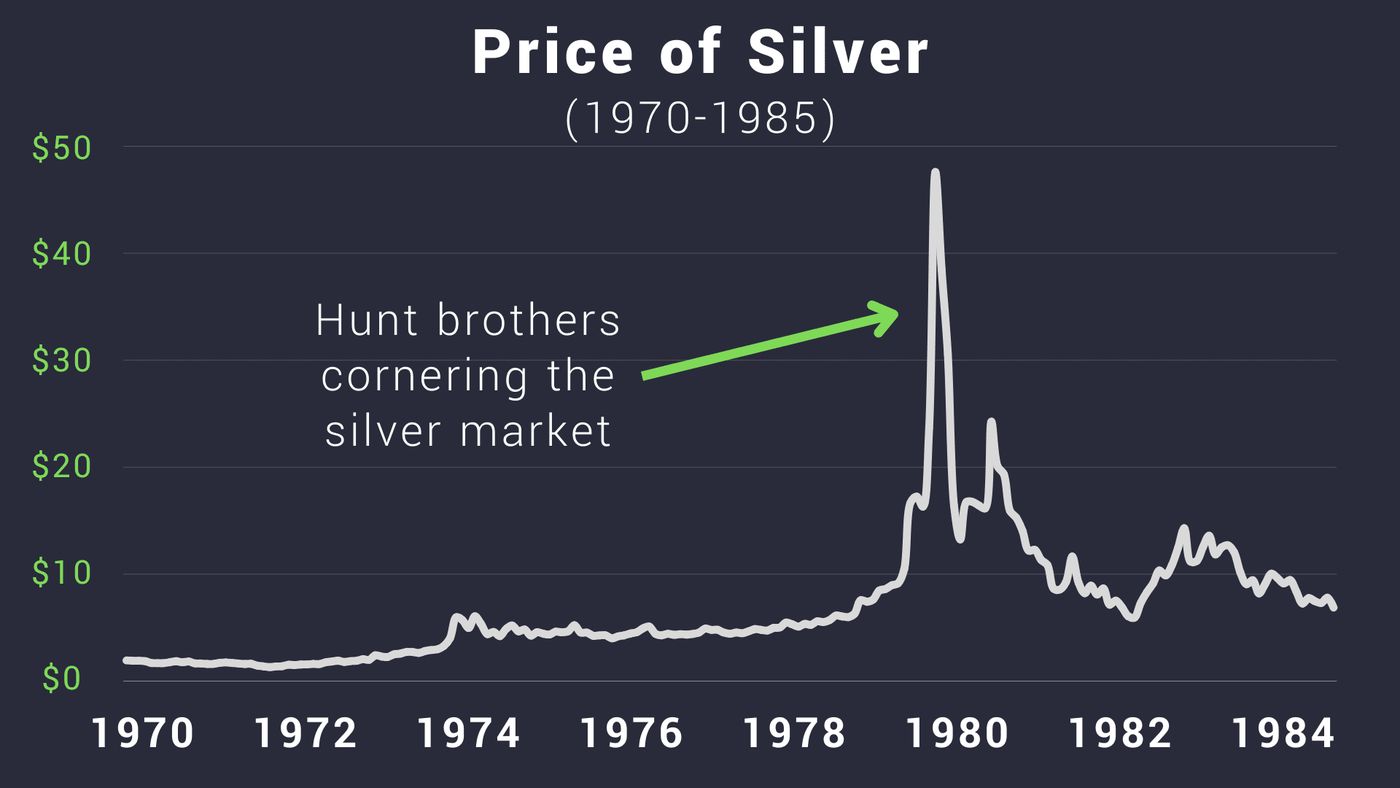
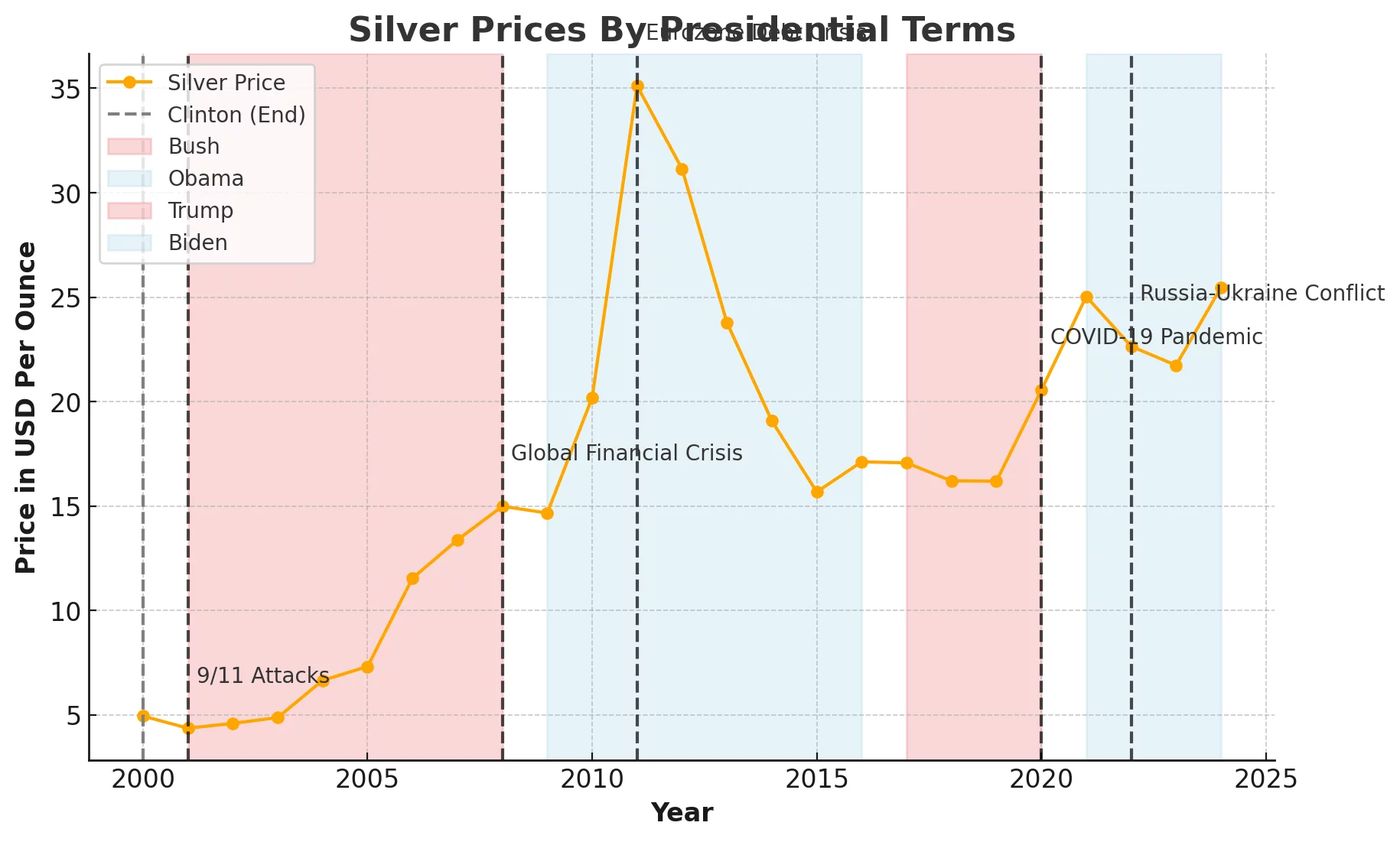
Silver has a long history of dramatic price cycles driven by economic crises, investment manias, and industrial booms. In ancient Egypt, silver was at times more valuable than gold due to its perceived rarity and became a highly sought-after metal for currency and art. The Roman Empire adopted it as standard coinage around 269 BC, solidifying its role in global commerce. Historical charts show that silver often outperforms gold in bull markets but can fall more sharply during downturns. These long-term trends highlight silver's sensitivity to both macroeconomic forces and specific sectoral demand, making its price history a rich study in market psychology and real-world economics.
Tracking silver price charts is essential for understanding these cycles. Historical price charts act as a timeline, showing how industrial trends, crises, and investor sentiment have affected the market. Each major spike or drop correlates with real-world events, from supply shocks to technological revolutions. For Canadian investors, reviewing historical prices in Canadian dollars adds the layer of currency fluctuation, showing how the domestic price experience can differ from the global U.S. dollar narrative. Long-term charts covering five, ten, or more years are particularly valuable for identifying secular bull or bear markets and for contextualizing current price levels within broader historical ranges. The interactive charts on dealer websites track the silver price in Canadian dollars in real time, with views spanning from intraday to ten years, allowing for detailed trend analysis.
How Canadians Buy and Sell Physical Silver
Canadians purchase physical silver primarily as bullion bars, government-minted coins, and private mint rounds. The most recognized Canadian product is the Royal Canadian Mint's Silver Maple Leaf coin, which is .9999 fine. Recognized bars from LBMA-approved refiners like PAMP or Johnson Matthey are also popular for larger investments. Silver can be bought from national online dealers, local coin shops, and some banks. When selling, items are typically evaluated based on weight, purity, and recognizability. Recognized bullion from major mints commands prices closest to the spot price, while unrecognized bars, sterling silver items, and scrap may be bought at a discount. Dealers use tools like XRF scanners and acid tests to verify purity. Common payment methods for buyers include bank wire transfers, Interac e-Transfer, certified cheques, and credit cards. Selling usually results in payment via direct deposit, cheque, or cash at a local shop. It is important for sellers to understand that dealer buy prices are based on the spot bid price and are lower than retail sell prices to account for the dealer's margin, operational costs, and market risk. Dealers like Canada Gold buy almost every form of silver, including bullion, coins, jewellery, and flatware, with marks such as .925 helping to quickly confirm purity for sterling items.
Dealer pricing for common silver products clearly illustrates the relationship between the spot price and retail or buyback values. For example, a one ounce recognized silver bar may have a retail price of C$73.20 per ounce, while the live spot price for pure silver is C$80.75 per ounce. This difference includes the dealer's premium. Similarly, a Silver Maple Leaf coin might be priced at C$78.07 per ounce, which is also above the pure metal's melt value. These premiums reflect the costs and recognition associated with finished bullion products.
| Product Type | Example Price (CAD) |
|---|---|
| Silver Maple Leaf Coin (2015 or later) | Approximately $78.48 per ounce |
| 1 oz Recognized Silver Bar | Approximately $73.20 per ounce |
| 1kg Recognized Silver Bar | Approximately $2,353.60 per bar |
| 100 oz Recognized Silver Bar | Approximately $7,319.70 per bar |
| Unrecognized Silver Bar | Approximately $73.12 per ounce |
| 1919 & Earlier 92.5% Silver Coins | Approximately $36.16 per dollar face value |
| 1920 to 1966 80% Silver Coins | Approximately $31.28 per dollar face value |
| 1967 50% Silver Coins | Approximately $19.55 per dollar face value |
| 1976 Montreal Olympic $10 Coin | Approximately $76.42 per coin |
These prices are examples of how products are valued relative to the spot price, with recognized coins and bars carrying smaller buy-sell spreads than unrecognized or scrap silver. Recognized bars include those from LBMA-approved mints and select vintage bullion in good condition, while unrecognized bars include those from non-LBMA mints, commemorative rounds, or damaged bullion. For coins, some have a premium value due to rarity and condition, and numismatic expertise is often applied during evaluation. Members of dealer staff often have training in numismatics to consult on potentially collectible coins.
Payment, Verification and Selling Process
When buying silver from Canadian dealers, several payment options are standard, each with its own limits and clearing times. Bank wire transfers are common for large orders, while Interac e-Transfer is popular for amounts up to $5,000, with multiple payments allowed to clear a balance. Certified cheques or bank drafts are also accepted but must typically be postmarked within two business days of the order. Credit card payments via Visa, MasterCard, or American Express are often supported, but they usually require Verified by Visa or MasterCard SecureCode authentication, and the shipping address must match the card's confirmed address. Dealers frequently require government-issued photo ID and address verification for orders to comply with regulations and prevent fraud. For sellers, the process involves bringing items to a dealer for evaluation. The dealer assesses purity through marks or testing, weighs the items, and makes an offer based on the current spot bid price for the specific purity. This transparent process allows sellers to watch as items are evaluated using professional tools, providing confidence that the payout is fair and accurate. Sellers should note that payouts for scrap or jewellery are typically lower than for recognized bullion, as they account for refining costs and lower liquidity. The price charts on dealer websites show how much they will pay for different types and purities of silver, updated automatically as markets move.
ETFs, Taxes and Investment Considerations
Beyond physical metal, Canadians can gain exposure to silver through exchange-traded funds (ETFs) that hold bullion in vaults, trade on stock exchanges like the TSX. These provide liquidity and eliminate storage concerns but involve management fees. From a tax perspective, silver is treated differently than gold by the Canada Revenue Agency. Purchases of silver bullion, coins, and bars are subject to the Goods and Services Tax (GST) or Harmonized Sales Tax (HST) at the point of sale. When silver is sold for a profit, the gain is considered a capital gain for tax purposes. Only 50% of the capital gain is included in taxable income. It is crucial for investors to keep records of purchase receipts and sale documents to accurately calculate the adjusted cost base and resulting capital gain or loss. Silver does not qualify for registered account inclusion like Registered Retirement Savings Plans (RRSPs) or Tax-Free Savings Accounts (TFSAs) when held physically, though some silver ETFs may be held in these accounts. Consulting a tax professional for guidance specific to one's situation is always recommended when dealing with precious metals investments. As with any investment, silver carries risk due to its price volatility, and while it is often viewed as a safe haven during economic uncertainty, potential investors should conduct due diligence and consider their financial goals and risk tolerance. The value of silver can fluctuate, so while it can be a profitable investment, it also carries risk, and investors should do their due diligence.
Frequently asked questions
What is the spot price of silver?
The spot price is the current global market value for immediate delivery of one troy ounce of pure silver. It is determined by continuous trading on major commodity exchanges like the LBMA in London and COMEX in New York. For Canadians, this U.S. dollar price is converted to Canadian dollars using the live exchange rate, forming the basis for all local silver pricing. Dealers like Kitco provide real-time feeds of this converted price, which is often referenced as a bid price.
Why is silver quoted per troy ounce and not a regular ounce?
The troy ounce, which equals 31.1034768 grams, is the traditional and global standard unit of measure for precious metals. It has been used for centuries in minting and trading. Using a single standard avoids confusion in international markets and provides consistency when pricing bars, coins, and bulk silver. All major dealer quotes and charts use the troy ounce as the primary unit.
How much are my old Canadian silver coins worth?
The melt value depends on the coin's date, denomination, and silver content. Dimes, quarters, and half-dollars from 1920 to 1966 are 80% silver. Some 1967 coins are 50% or 80% silver, while 1968 coins are 50% silver or nickel. Dealers calculate value by multiplying the coin's total silver weight by its purity and the current spot price. Collector value can exceed melt value for rare dates and conditions, so potentially collectible coins should be evaluated by a numismatist before being sold for melt.
Do I pay tax when buying silver in Canada?
Yes, purchases of physical silver bullion, coins, and bars are subject to the Goods and Services Tax (GST) or Harmonized Sales Tax (HST) at the applicable provincial rate. This tax is applied at the point of sale by the dealer. When you later sell silver, any profit is subject to capital gains tax, with only 50% of the gain being included in your taxable income. Proper record-keeping of purchase and sale documents is essential for accurate tax reporting.
Is silver a good hedge against inflation?
Historically, silver has been considered a hedge against inflation and currency devaluation, similar to gold. As the purchasing power of paper currency declines, hard assets like silver often see their nominal prices rise. However, silver's price is also heavily influenced by industrial demand cycles, which can make its short-term performance more volatile than gold's during inflationary periods. Its value can also rise during times of economic uncertainty as investors seek safe-haven assets.
What's the difference between .999 and .9999 fine silver?
This represents a minute increase in purity. For example, the Royal Canadian Mint's Silver Maple Leaf coin is .9999 fine silver, or 99.99% pure. In practice, both are considered investment-grade pure silver and their market values are virtually identical. The current price per gram for .999 fine silver is C$2.59, while for .9999 fine silver it is C$2.60, a difference of about one cent.
Sources and further reading
- Live Silver Price in Canada (CAD) kitco.com
- Today's Silver Prices canadagold.ca
- Silver Price Canada | Real-Time Chart sprottmoney.ca
- Silver Price Today Per Ounce, Live Silver Price in CAD aubullion.ca
- Today's Spot Silver Price, CanadaGold quebecgold.ca
This article explains how things work and is not financial, tax or legal advice. Rules, limits and rates change, so check the current figures with the Canada Revenue Agency, your province or your financial institution before you act.