The Canadian fifty-dollar bill is a common banknote of the Canadian dollar, often dispensed by ATMs. The current note, introduced in 2012, is part of the polymer Frontier series and features a portrait of former Prime Minister William Lyon Mackenzie King. Its distinctive red colour and advanced security features make it a durable and difficult-to-counterfeit denomination. The bill plays a significant role in everyday Canadian commerce and reflects the nation's history and technological innovation in currency design.
Current Design and Features
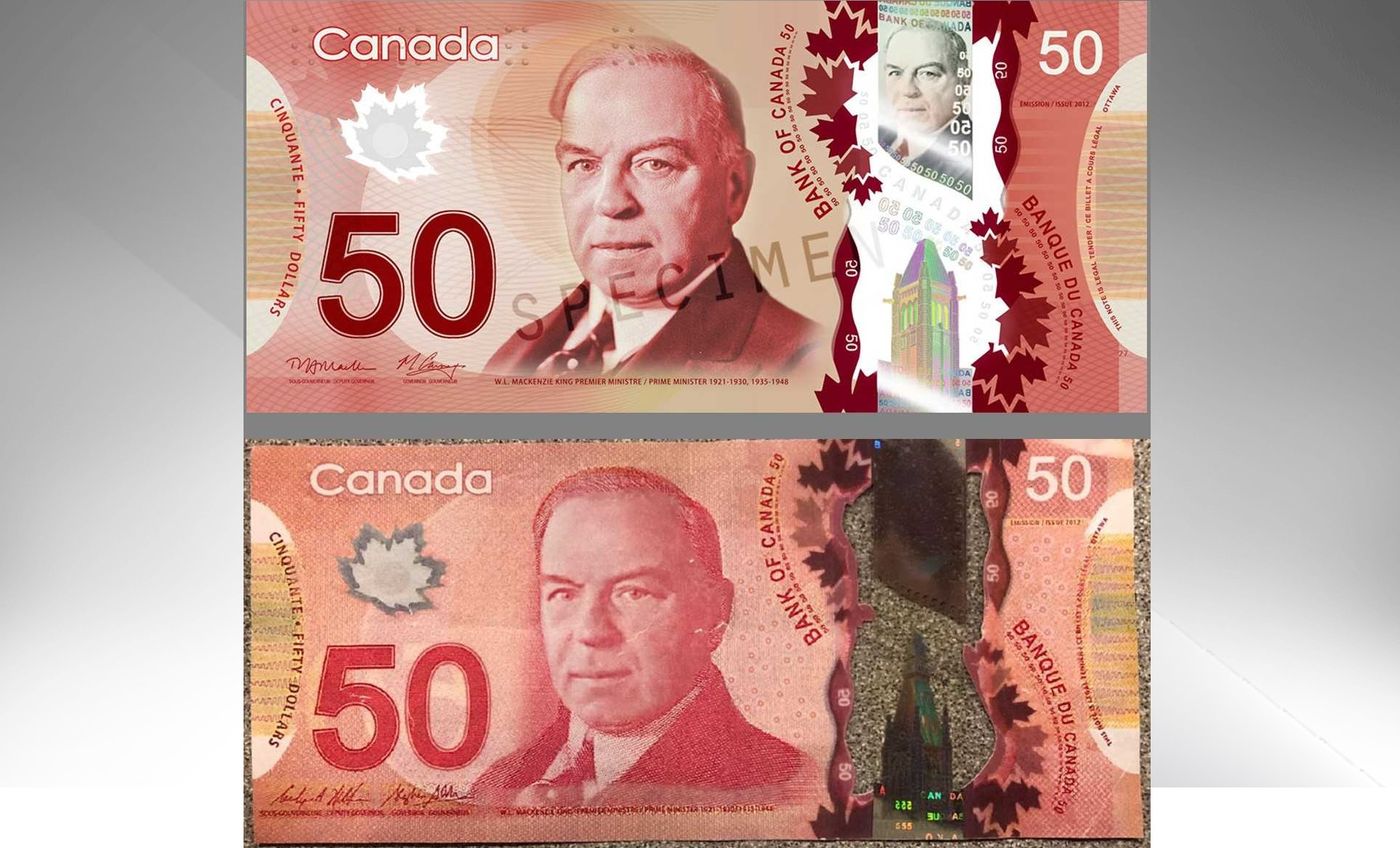
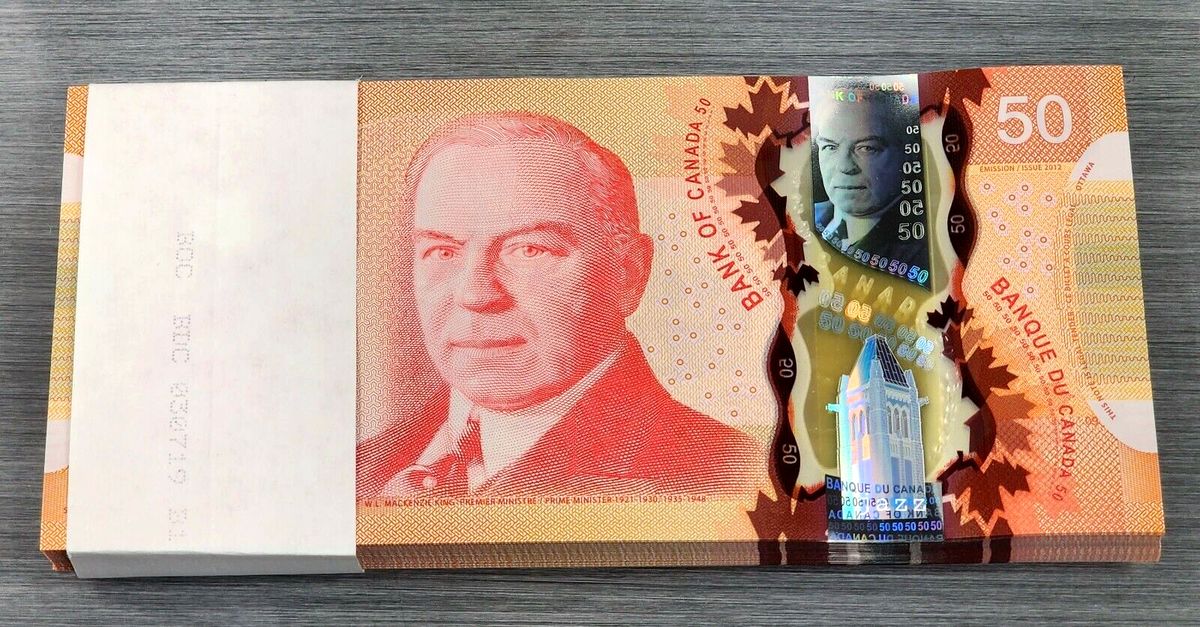
The current Canadian fifty-dollar bill belongs to the Frontier series, first circulated on March 26, 2012. It is printed on a single piece of polymer, making it more durable and secure than earlier paper notes. The front features a portrait of William Lyon Mackenzie King, Canada's tenth prime minister, alongside the coat of arms and a picture of the Centre Block of Parliament. A large transparent window runs vertically on the right side of the front, containing a metallic hologram of King at the top and a hologram of the Parliament buildings at the bottom.
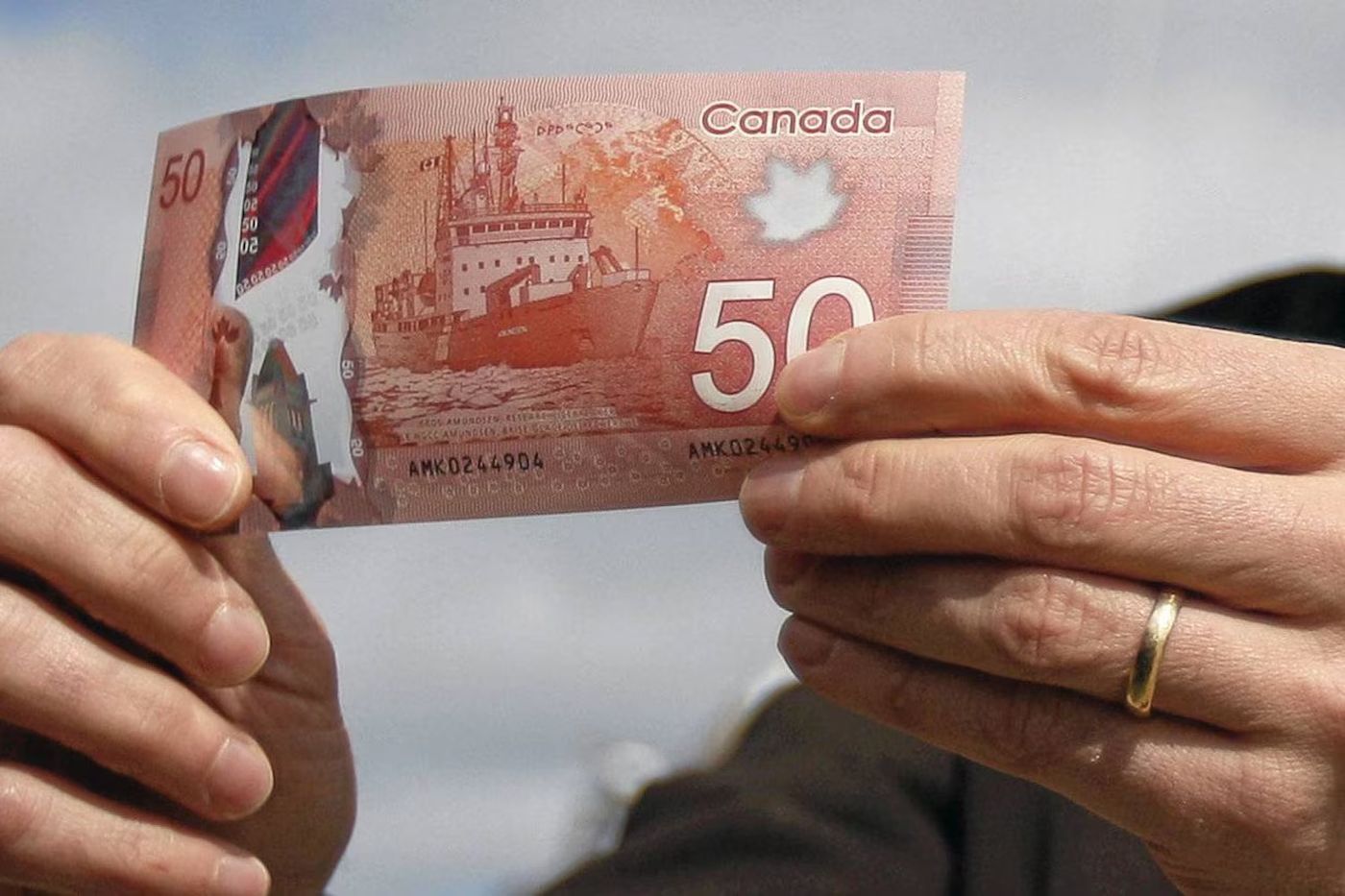
The reverse side depicts the Canadian Coast Guard Ship Amundsen, a research icebreaker, commemorating the 50th anniversary of the Canadian Coast Guard. The polymer construction allows the transparent window and metallic images from the front to be visible on the back as well. The note incorporates several security features designed for public verification. These include raised ink on the large number, the portrait's shoulders, and the words "Bank of Canada" and "Banque du Canada". A special tactile feature, similar to Braille dots, is included to aid the visually impaired in identifying the denomination. The Bank of Canada recommends a "Feel, Look, Tilt and Flip" method to check the note's authenticity.
Security Evolution and Anti-Counterfeiting
Canadian banknotes have undergone significant redesigns to incorporate advanced anti-forgery methods. The shift to polymer notes in the Frontier series represented a major technological leap. Polymer notes are more durable and incorporate complex transparent elements and holograms that are extremely difficult to replicate. Before the polymer series, the fifty-dollar note from the Birds of Canada series (1988) included a holographic sticker in the top left that changed colour from gold to green when tilted. It also featured micro-printed numeral 50s in the background and textured, raised ink.
The Canadian Journey series note (2004) was printed on cotton paper and included a hologram strip along the left side depicting the number 50 alternated with maple leaves. It also had a watermark of King's portrait and a broken-up number 50 that becomes whole when held to light. Earlier, notes from the 1988 series were sprinkled with special green ink dots that glow under ultraviolet light, though these could wear off. Modern polymer notes use more permanent ultraviolet-detected threads and an ink imprint of the coat of arms. All these features are part of a continuous effort by the Bank of Canada and its printing contractors, the Canadian Bank Note Company and BA International Inc., to stay ahead of counterfeiters.
Historical Designs and Series
The portrait of William Lyon Mackenzie King first appeared on the fifty-dollar bill in the Birds of Canada series issued in 1988, marking his debut on Canadian currency. He has since been featured on three consecutive series. The 1988 note had a brown-orange hue initially and depicted a snowy owl in a wilderness scene on its reverse. The design process for this note saw several proposed back vignettes, including a frozen lake and a ballet scene, before the owl was selected. The intended orange colour proved problematic due to ink composition and poor image clarity, leading to the adoption of red.
The Canadian Journey series note, released on November 17, 2004, shifted focus to themes of human rights. Its reverse side depicted the Famous Five celebrating the Persons case, a volunteer medal commemorating Thérèse Casgrain, and a quotation from the Universal Declaration of Human Rights. It also featured the Peace Tower on the front. Each series reflects the artistic and security priorities of its era, with the polymer Frontier series representing the current standard. The historical evolution shows a progression from allegorical and natural imagery to themes of national achievement and, most recently, scientific exploration.
Production and Circulation
Canadian fifty-dollar notes have been produced under contract for the Bank of Canada by specialized security printing firms. Prior to the polymer series, notes were printed on paper composed of pure cotton. The primary contractors have been the Canadian Bank Note Company and BA International Inc., part of the Giesecke & Devrient group. The polymer notes are made from biaxially oriented polypropylene (BOPP), a durable plastic substrate. The front portrait of William Lyon Mackenzie King on the older notes was engraved by George Gundersen of the British American Bank Note Company, based on a photograph by Yousuf Karsh. The fifty-dollar bill is one of the most common banknotes in circulation, though it is dispensed by ATMs less frequently than the twenty-dollar note. It serves as a key denomination for larger cash transactions and savings.
The Bank of Canada monitors circulation and periodically introduces new series of banknotes. These new series replace worn notes and update security features. All modern Canadian banknotes, including the fifty-dollar note, feature text written in both English and French. This reflects the country's official bilingualism.
Key Design Elements by Series
The design of the fifty-dollar bill has evolved significantly across three main series since 1988. These series are the Birds of Canada, the Canadian Journey, and the Frontier series. Each iteration introduced new visual themes and subjects on the reverse side. Each series also introduced new security features and updated production techniques.
- Birds of Canada Series (1988): Front: Portrait of William Lyon Mackenzie King, coat of arms, Centre Block of Parliament. Reverse: Snowy owl in wilderness scene. Security: Holographic sticker, micro-printed background, textured ink, UV-reactive green dots.
- Canadian Journey Series (2004): Front: Portrait of William Lyon Mackenzie King, coat of arms, Peace Tower. Reverse: Human rights themes (Famous Five, Thérèse Casgrain medal, Universal Declaration of Human Rights quote). Security: Hologram strip, watermark, broken-up denomination number, interleaved metallic strip.
- Frontier (Polymer) Series (2012): Front: Portrait of William Lyon Mackenzie King, coat of arms, Parliament, large transparent window with holograms. Reverse: CCGS Amundsen icebreaker. Security: Full polymer substrate, transparent window, matching front/back holograms, raised ink, tactile feature, UV threads.
The consistent use of red as the dominant colour is a unifying element across these series. The portrait of William Lyon Mackenzie King is another unifying element, as he has appeared on the note three times. The shift from paper to polymer marked the most significant change in the note's production. This change greatly improved the note's durability and allowed for more integrated security features.
Future Design and Public Discourse
On December 16, 2024, the Government of Canada announced a forthcoming change to the portrait on the fifty-dollar bill. The image of Wilfrid Laurier, Canada's seventh prime minister, will be used for the next design. This change is part of a broader update that will feature Terry Fox on the five-dollar note. There was no announcement regarding the future use of William Lyon Mackenzie King's image on a different denomination. Such redesigns are periodic and consider historical significance, public sentiment, and the need to maintain modern security standards.
Public discourse around banknote design often involves discussions about which Canadian figures and achievements should be honoured. The selection of the CCGS Amundsen for the current polymer note highlights Canadian scientific research and Arctic sovereignty. Previous series have celebrated human rights and national wildlife. The process involves careful consideration by the Bank of Canada and the federal government. While the fifty-dollar bill is generally accepted and trusted, the primary public concerns revolve around its security against counterfeiting and the durability of the physical note, both of which are addressed by the current polymer design.
Collectibility and Historical Values
Older Canadian fifty-dollar bills are sought after by collectors, with values varying based on series, condition, and rarity. Notes from early series, such as those from 1937 or the 1954 "Devil's Face" series, can command significant prices at auction. For example, a 1937 note with signatures from Governor Gordon and Deputy Governor Towers has been listed for sale. Collectors grade notes on a scale from Good (G) to Uncirculated (UNC), with superior condition dramatically increasing value. Special serial numbers, printing errors, and varieties also attract collector interest and higher premiums.
The market for collectible banknotes is supported by dedicated dealers and auction houses. The fifty-dollar denomination, with its long history and multiple design series, offers a wide field for numismatic study. While current circulating notes are legal tender with a face value of fifty dollars, historical notes are valued as artifacts of Canadian economic and printing history. Their worth is determined by factors such as scarcity, historical significance, and aesthetic appeal.
Frequently asked questions
Is the old paper $50 bill still valid?
All previous series of Canadian fifty-dollar bills issued by the Bank of Canada remain legal tender. This includes the paper notes from the Canadian Journey (2004) and Birds of Canada (1988) series. However, the polymer notes are now the standard issue due to their superior durability and security. Older paper notes can be exchanged at any financial institution in Canada.
What was on the back of the old $50 bill?
The design on the reverse has changed with each series. The Birds of Canada series (1988) featured a snowy owl in a wilderness scene. The Canadian Journey series (2004) depicted themes in Canadian human rights history, including the Famous Five and a quote from the Universal Declaration of Human Rights. Before the polymer note, the reverse designs focused on national symbols and social themes rather than the scientific imagery of the current CCGS Amundsen.
Who is on the current Canadian 50 dollar bill?
The current Canadian fifty dollar bill features a portrait of William Lyon Mackenzie King on the front. He was Canada's tenth prime minister and this marks his third appearance on the fifty dollar note. The reverse side of this polymer bill depicts the Canadian Coast Guard Ship Amundsen, a research icebreaker. It was announced on December 16, 2024, that the image of Wilfrid Laurier would be used for the next fifty dollar banknote design. There was no announcement about King's image being used on a different note following this change.
When did the polymer $50 bill come out?
The polymer fifty dollar bill was introduced into circulation on March 26, 2012. It is part of the Frontier series which began in 2011. This note replaced the paper based Canadian Journey series note that had been placed into circulation on November 17, 2004. The new polymer note is more durable and secure than the previous cotton paper notes. It is printed on a single piece of polymer with transparent areas and advanced security features.
What are the security features on the $50 bill?
The polymer fifty dollar bill has numerous security features. Key elements include a large clear window with a metallic hologram of William Lyon Mackenzie King and the Parliament's Centre Block. There is also raised ink on the large number, the portrait's shoulders, and the words Bank of Canada. The note incorporates a special tactile feature similar to Braille dots for the blind. The Bank of Canada advises checking the note by feeling the raised ink, looking at the transparent windows and metallic images, tilting to see colour changes, and flipping to see matching images on the back.
What colour is the Canadian 50 dollar bill?
The Canadian fifty dollar bill is predominantly red. This has been its signature colour since the Birds of Canada series was issued in 1988. Originally, that series planned to use orange, but the ink proved problematic as it carried heavy metals and showed images poorly. The colour was subsequently changed to red. All later series, including the Canadian Journey and the current Frontier polymer series, have maintained red as the predominant colour for the fifty dollar denomination.
Sources and further reading
- Canadian fifty-dollar bill (Wikipedia) en.wikipedia.org
- $50 polymer note security features bankofcanada.ca
- Canada Banknotes, Tagged "50 Dollars" mkcoins.com
- Canadian Fifty Dollar Bill Stock Photos istockphoto.com
- Scenes of Canada Series $50 Note bankofcanadamuseum.ca
- 50 dollars 1937 values and prices coinsandcanada.com
This article explains how things work and is not financial, tax or legal advice. Rules, limits and rates change, so check the current figures with the Canada Revenue Agency, your province or your financial institution before you act.