The toonie is Canada's two-dollar circulation coin, introduced in 1996 to replace the two-dollar banknote. It is a distinctive bi-metallic coin featuring a polar bear design on its reverse and, since 2023, a portrait of King Charles III on its obverse. As the highest-value circulating Canadian coin, the toonie is a staple of everyday commerce with an estimated lifespan twenty times longer than the paper bill it replaced. Its unique locking mechanism and evolving security features represent significant advancements in Canadian minting technology.
Origins and Introduction
The replacement of the two-dollar banknote with a coin was announced by Finance Minister Paul Martin in the 1995 federal budget. The Royal Canadian Mint spent $17,400 to survey 2,000 households on potential design themes before development began. Under the direction of engineer Hieu C. Truong, the Mint created a pioneering bi-metallic coin that was lighter and thinner than any similar coin produced elsewhere in the world at the time. The coin was officially launched by Minister of Public Works Diane Marleau at Ben's Deli in Montreal on February 19, 1996. The two-dollar bill was withdrawn from circulation just three days prior, on February 16, 1996, ensuring a clean transition to the new coin.
By the end of 1996, the Mint's Winnipeg facility had produced 375 million of the new two-dollar coins. The community of Campbellford, Ontario, which is the hometown of the coin's designer Brent Townsend, later constructed an eight-metre-tall monument to the toonie. The name "toonie" emerged as a popular portmanteau, combining "two" with "loonie," the nickname for the one-dollar coin. While Member of Parliament Jack Iyerak Anawak proposed the name "Nanuq" (the Inuit word for polar bear) to honour Inuit culture, the name "toonie" was overwhelmingly adopted by the public and later trademarked by the Royal Canadian Mint in 2006.
Design and Specifications
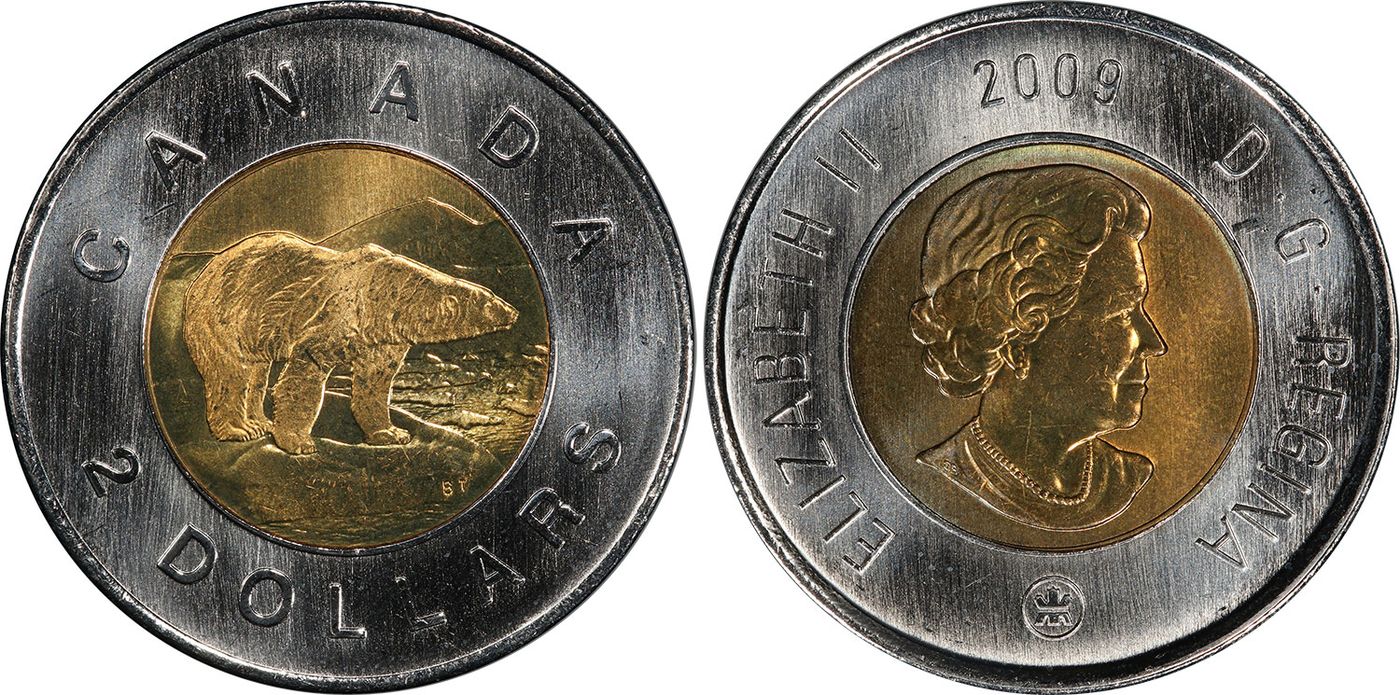
The standard reverse design of the toonie, created by wildlife artist Brent Townsend, features an adult polar bear on an ice floe in early summer. The obverse initially featured a portrait of Queen Elizabeth II designed by Dora de Pédery-Hunt. In 2023, the obverse was updated to feature a portrait of King Charles III with the inscription "Charles III D.G. Rex." The coin's physical specifications were changed in 2012 as part of a security and cost-saving overhaul. Prior to 2012, the coin had an aluminum bronze inner core and a pure nickel outer ring, weighed 7.30 grams, and was 1.8 mm thick.
After the 2012 changes, the toonie's composition switched to an outer ring of steel coated with multi-ply plated nickel and an inner core of aluminum bronze coated with multi-ply plated brass. This change reduced the coin's weight from 7.30 grams to 6.92 grams and its thickness from 1.8 mm to 1.75 mm. The Royal Canadian Mint stated this multi-ply plated steel technology produces an electromagnetic signature that is harder to counterfeit than that of regular alloy coins. The updated coins also incorporated new overt security features announced on April 10, 2012. These features include two laser marks of maple leaves within circles on the reverse and a virtual image of two maple leaves that appears when the coin is tilted.
Commemorative and Special Editions
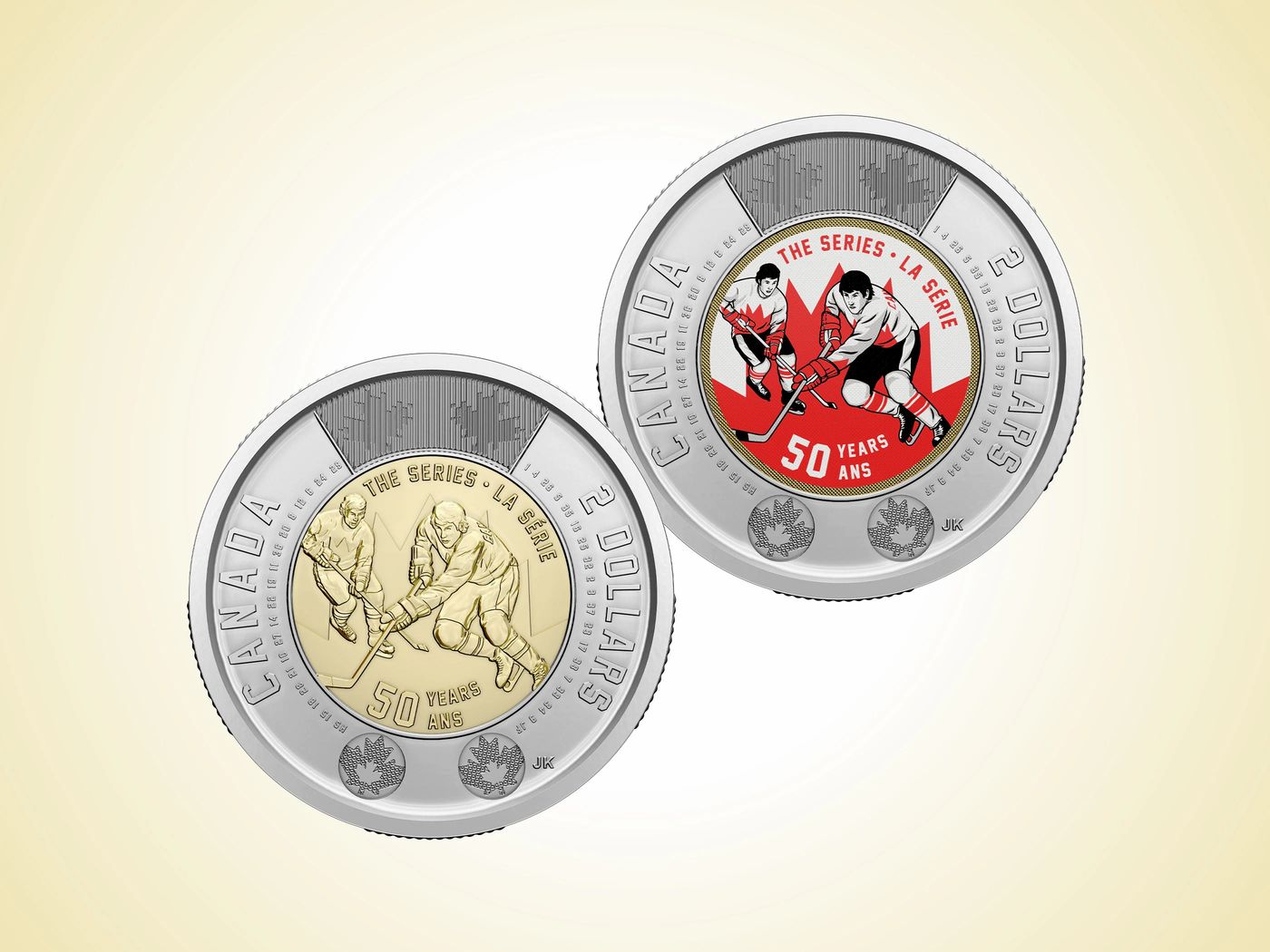
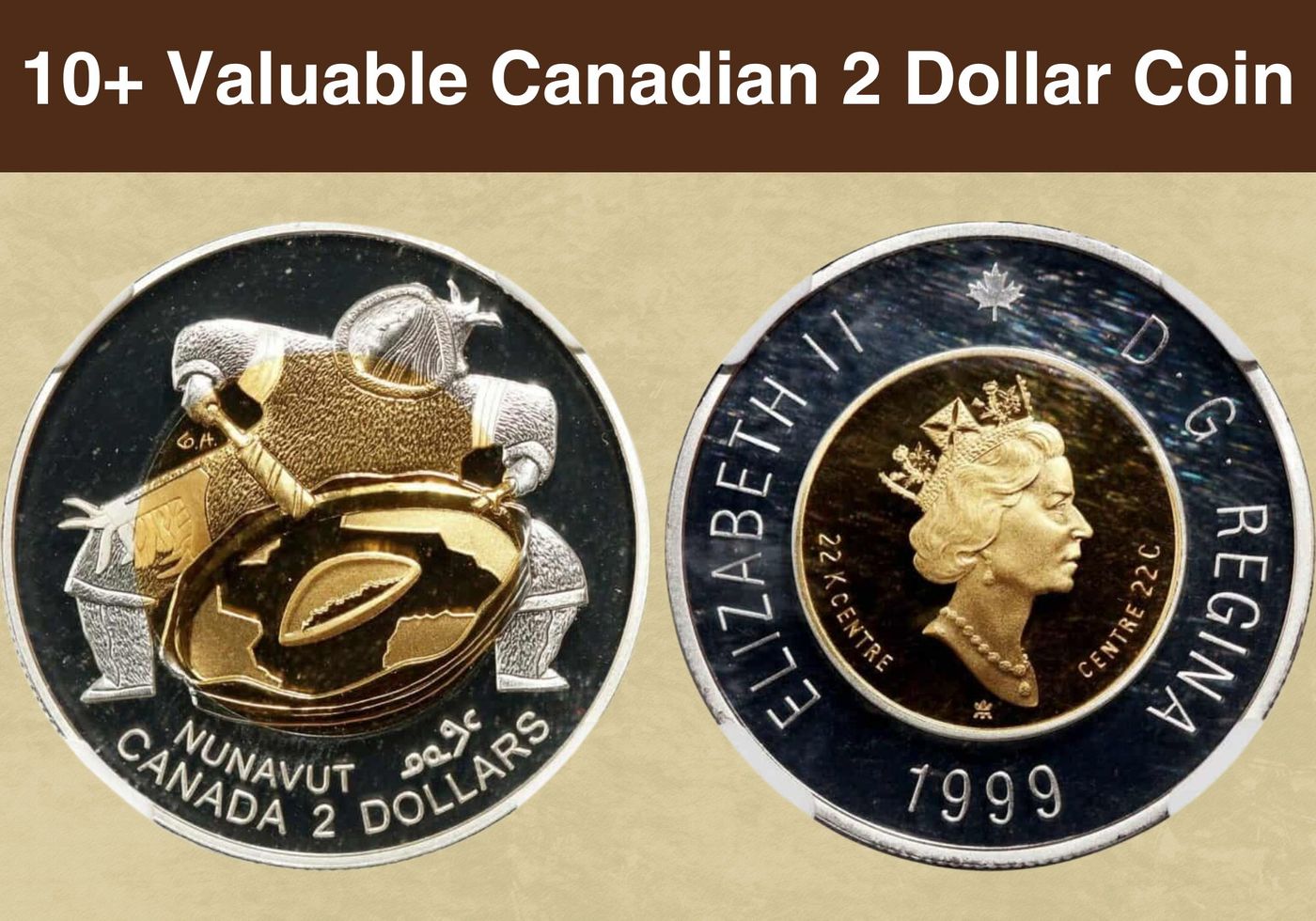
While the standard polar bear design is most common, the Royal Canadian Mint has issued numerous commemorative toonies for circulation. These special editions celebrate historical events and anniversaries, often with limited mintages. For example, the 1999 toonie featured a design by Germaine Arnaktauyok commemorating the founding of Nunavut. The standard polar bear design that year was available only in special collector sets. The 2000 toonie, designed by Tony Bianco, depicted a female polar bear with two cubs to represent the transfer of knowledge, with the rim inscription "Knowledge, Le Savoir."
Another notable commemorative was issued in 2008 for the 400th anniversary of Quebec City, featuring a design by Geneviève Bertrand. Only six million of these coins entered circulation alongside over 17 million standard-issue 2008 toonies. From 2010 to 2015, the Mint issued a series of toonies in specimen sets depicting different young animals on the reverse. These were not intended for general circulation. The table below outlines key commemorative circulation toonies and their themes.
| Year | Commemorative Theme | Designer | Notable Details |
|---|---|---|---|
| 1999 | Founding of Nunavut | Germaine Arnaktauyok | Replaced standard bear design for general circulation. |
| 2000 | Millennium / Knowledge | Tony Bianco | Featured a bear and cubs. Only reverse design for the year. |
| 2008 | 400th Anniversary of Quebec City | Geneviève Bertrand | 6 million minted for circulation. Date moved to reverse. |
| 2012+ | Various Anniversaries & Events | Various | Multiple issues with unique reverse designs alongside standard coin. |
The 2006 toonie celebrated the coin's tenth anniversary with two versions: one with the traditional bear design and an updated version with a bear looking at the Aurora Borealis. This year also saw the introduction of the Royal Canadian Mint's official mint mark on all circulation coinage. The mark, featuring a stylized maple leaf emerging from the letter 'M' within a circle, typically appears beneath the monarch's effigy on the obverse. Since its introduction, the mint mark has replaced the small maple leaf that previously appeared above the Queen's effigy on earlier coins.
Manufacturing and Technical Features
The toonie is produced using a patented bi-metallic locking mechanism that securely joins the outer ring and inner core. This engineering was a significant innovation at the time of the coin's launch. The Mint estimates the coin's circulation lifespan to be approximately 20 years, a substantial increase over the one-year average lifespan of the two-dollar paper bill it replaced. The initial manufacturing process involved carefully joining two different metal alloys to create a durable and distinct coin. The coin's original weight was precisely specified as 7.299 grams, equivalent to 112.64 grains.
In early 2012, the Royal Canadian Mint announced comprehensive design and composition changes to the loonie and toonie to enhance security. The key changes for the toonie involved switching from a solid nickel outer ring to multi-ply plated steel and from an aluminum bronze core to a brass-plated aluminum bronze core. This shift was driven by several factors. The plated steel provides a more consistent and counterfeit-resistant electromagnetic signature. It also resulted in significant cost savings for the Mint and reduced reliance on the volatile nickel market. The new composition is also used in Canada's smaller-denomination coins, creating a standardized production technology across much of the coinage.
Notable Issues and Public Perception
A well-publicized issue affected a very small number of toonies from the first production batch in 1996. A failure in the bimetallic locking mechanism caused the inner core and outer ring to separate if the coin was struck very hard or subjected to extreme cold. Despite media reports, the Royal Canadian Mint stated the odds of a toonie falling apart were about one in 60 million. Deliberately attempting to separate a toonie is considered defacing coin currency, which is a summary offence under section 456 of the Canadian Criminal Code. This early issue was quickly resolved in subsequent production runs.
The public quickly embraced the coin and its nickname. The name "toonie" became so ubiquitous that the Royal Canadian Mint formally secured the trademark rights to it in 2006. That same year, a public contest was held to name the polar bear on the coin, resulting in the name "Churchill." This name references both the town of Churchill, Manitoba, known for polar bear sightings, and the historical figure Winston Churchill. The toonie has become an ingrained part of Canadian culture and daily life, recognized for its unique look and feel. Its introduction marked a successful transition from paper to coin for the two-dollar denomination.
Collecting and Valuation
While most toonies are worth their face value, certain years, mint errors, and commemorative editions can be valuable to collectors. The standard circulation toonie from 1996 to 2012, with the Queen's effigy and polar bear, is common. Special commemorative circulation coins, like the 2008 Quebec City edition with a mintage of six million, are often sought after. Coins from specimen sets, such as the young animal series from 2010 to 2015, were never intended for general circulation and can hold higher value for collectors in pristine condition. These sets were part of an annual series with limited mintages.
Collectors should be aware of several key factors that influence a toonie's collectible value. The primary considerations are mintage numbers, condition, and the presence of any errors. A coin's history is also important. For instance, the 1999 standard polar bear design was only available in collector sets, making it scarcer than the Nunavut commemorative version that year. When assessing a coin, it is crucial to verify its authenticity, as counterfeit toonies do exist. Genuine coins will have the proper weight, magnetic properties (steel rings are magnetic post-2012), and sharp security features like the edge lettering and laser-marked maple leaves. The edge lettering consists of the words "CANADA" and "2 DOLLARS" engraved along the coin's outer edge.
- 1999 Standard Bear: Available only in collector sets, not general circulation.
- 2000 Millennium Coin: The only reverse design for that year, featuring a bear and cubs.
- 2008 Quebec City: Limited mintage of 6 million for circulation.
- Pre-2012 Composition: Coins with nickel outer rings are now out of production.
- Specimen Set Coins (2010 to 2015): Feature unique young animal designs.
- Error Coins: Mis-strikes or separation errors from 1996 can be valuable.
- First Strikes (1996): Early coins from the inaugural year are collectible.
- 2023 Obverse: First year of issue with King Charles III portrait.
Frequently asked questions
What is a black toonie?
The term "black toonie" is not an official designation from the Royal Canadian Mint. It may refer to toonies that have darkened or tarnished over time due to oxidation or exposure to certain elements. This is a natural process and does not typically affect the coin's face value or legality. Some collectors might use the term informally for coins with unusual toning.
How can I tell if a toonie is fake?
Genuine toonies, especially those minted after 2012, have specific security features. Check for the edge lettering that reads "CANADA" and "2 DOLLARS. Look for the two small laser-marked maple leaves within circles on the reverse. Tilt the coin to see the virtual image of two maple leaves near the top. Post-2012 toonies are also magnetic due to their steel outer ring. Counterfeit coins often lack these fine details, may be the wrong weight, or have blurry designs.
Why is the 2000 toonie special?
The 2000 toonie is a commemorative issue for the new millennium. It is the only year where the standard polar bear design was not used for circulation coins. Instead, all 2000 circulation toonies feature a special reverse design by Tony Bianco depicting a female polar bear and her two cubs, symbolizing the transfer of knowledge. The inscription "Knowledge, Le Savoir" is engraved on the coin's outer rim.
When did the toonie come out?
The toonie was officially introduced on February 19, 1996, by Minister of Public Works Diane Marleau. The replacement of the two-dollar banknote with a coin was announced by Finance Minister Paul Martin in the 1995 Canadian federal budget. The two-dollar bill was withdrawn from circulation on February 16, 1996, three days before the coin's introduction. The coin was officially launched at Ben's Deli in Montreal on its introduction date.
Are there any rare or valuable toonies?
Yes, some toonies are more valuable to collectors. These include commemorative circulation coins with limited mintages, such as the 2008 Quebec City edition of which only six million circulated. Other examples are error coins from the first batch that could separate and coins only available in special specimen sets, like the standard polar bear design from 1999. The Royal Canadian Mint has also issued special two-dollar coins in specimen sets from 2010 to 2015 with unique images of young animals on the reverse.
What is the toonie made of?
Since the changes in March to May 2012, the toonie is made with an outer ring of steel coated with multi-ply plated nickel and an inner core of aluminum bronze coated with multi-ply plated brass. Coins minted prior to 2012 had an outer ring of pure nickel and an inner core of aluminum bronze. This multi-ply plated steel technology produces an electromagnetic signature that is harder to counterfeit than that of regular alloy coins. The Mint stated that using steel provides cost savings and avoids fluctuations in the price or supply of nickel. The weight also dropped from 7.30 grams to 6.92 grams, and the thickness changed from 1.8 mm to 1.75 mm.
Sources and further reading
- Toonie (Wikipedia) en.wikipedia.org
- the 2-dollar Coin, Canadian Circulation mint.ca
This article explains how things work and is not financial, tax or legal advice. Rules, limits and rates change, so check the current figures with the Canada Revenue Agency, your province or your financial institution before you act.