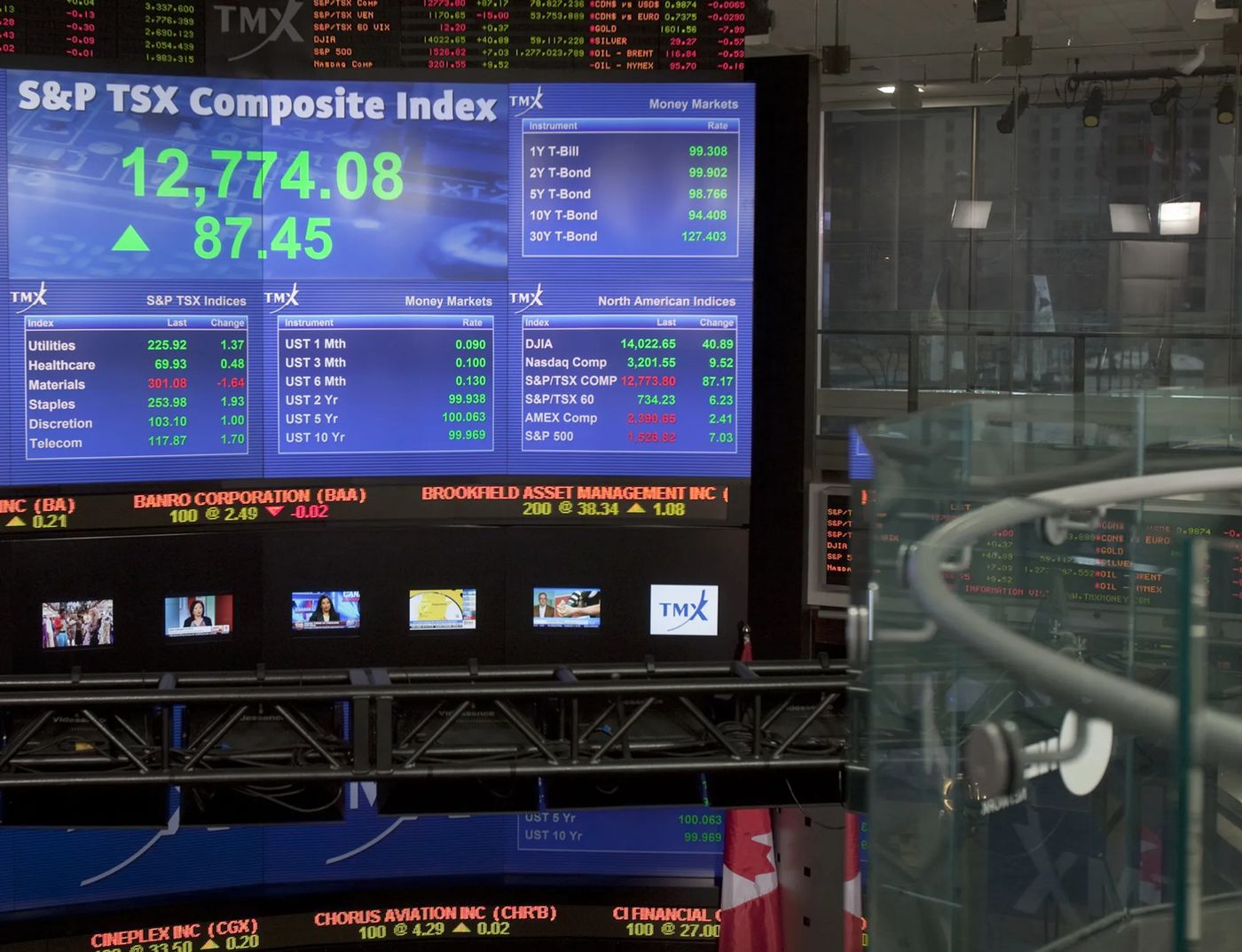
The term 'stock market today' refers to the real-time activity and performance of major equity indices, particularly Canada's S&P/TSX Composite Index. For Canadian investors, monitoring the market today provides a snapshot of economic sentiment, sector performance, and the impact of global events on domestic assets. Key indicators include the level of the TSX, trading volume, and movements in influential sectors like energy and financials. This daily context is crucial for making informed decisions within registered accounts like TFSAs and RRSPs.
What the Stock Market Represents
The stock market today is a collective term for the live trading of company shares on public exchanges. In Canada, the primary benchmark is the S&P/TSX Composite Index, which tracks the performance of the largest companies listed on the Toronto Stock Exchange. This index is market-capitalization weighted, meaning larger companies have a greater influence on its movements. The daily quoted level, such as 36,325, and its change, such as a gain of 0.6 percent, summarize the aggregate value movement of these leading Canadian corporations. Trading activity is measured by volume, which indicates the total number of shares bought and sold during the session. The market's performance is driven by corporate earnings, economic data, commodity prices, and global geopolitical events.

Canada's Primary Stock Exchanges
Canada's equity market structure is built on several distinct trading venues that cater to companies of different sizes and stages. The Toronto Stock Exchange is the senior market, home to the country's largest and most established public companies, including the major banks and resource giants. The TSX Venture Exchange serves as a public venture capital market for emerging companies, particularly in the mining, oil and gas, and technology sectors. The Canadian Securities Exchange offers an alternative listing platform focused on entrepreneurial companies, reporting a total traded volume of 51.1 million shares on a recent day. These exchanges provide the infrastructure for real-time stock pricing, detailed quotes, and market statistics that investors monitor daily. Interlisted stocks, which trade on both Canadian and U.S. exchanges, also play a significant role in cross-border capital flows and liquidity.
Key Sectors Driving the Market
The performance of the S&P/TSX Composite Index is heavily influenced by its sector composition. The financials sector, encompassing Canada's major banks and insurance companies, is traditionally the largest weighting and a primary driver of index movements. The energy sector is another critical component, with its fortunes closely tied to the fluctuating price of crude oil, which can see daily moves such as a 2.82 percent increase. The materials sector, which includes mining companies, is also a major contributor due to Canada's abundant natural resources. On any given day, news specific to these sectors can lift or pressure the broader market. For instance, easing pressure on credit-sensitive stocks or a drop in oil prices can directly impact the index's closing level. Investors tracking the market today often watch these sectoral trends to gauge underlying strength or weakness.

How Global Markets Influence the TSX
The Canadian stock market does not operate in isolation, and its daily performance is frequently affected by international events and major foreign indices. Significant movements in U.S. benchmarks like the Dow Jones Industrial Average, the S&P 500, and the NASDAQ Composite are closely watched by Canadian traders. Geopolitical events, such as reported incidents in the Strait of Hormuz affecting oil tankers, can cause immediate volatility in commodity prices and related stocks. Furthermore, currency fluctuations, particularly the CAD/USD exchange rate, impact the valuation of Canadian exports and multinational companies. Trade policies, central bank announcements from the U.S. Federal Reserve or the Bank of Canada, and international supply chain developments all feed into the daily narrative of market movement. This interconnectedness means that understanding the stock market today requires a view beyond Canada's borders.
Trading and Investment for Canadians
Canadian investors can access the stock market today through brokerage accounts, which allow them to trade shares listed on the TSX, TSXV, and CSE. Many choose to hold Canadian equities within registered accounts like Tax-Free Savings Accounts and Registered Retirement Savings Plans to shelter investment growth and income from taxation. Exchange-Traded Funds that track the S&P/TSX Composite Index or specific sectors provide a popular method for gaining broad market exposure. The market's activity is summarized through daily metrics including the previous close, the day's opening price, the intraday high and low range, and the total volume traded. Real-time stock quotes, charts, news, and research are available through various financial data portals. Monitoring these tools helps investors stay informed about the market's current state and the performance of their holdings.
Risks in the Daily Market
Participating in the stock market involves confronting several inherent risks that are evident in daily trading. Market risk, or systematic risk, refers to the potential for the entire market to decline due to broad economic or geopolitical shocks, which can erase gains quickly. Sector-specific risk is prominent in Canada, where the market's heavy reliance on resources makes it vulnerable to commodity price swings, as seen when energy stocks fall on dropping oil prices. Liquidity risk can affect smaller companies on the TSXV or CSE, where lower trading volumes may make it difficult to buy or sell shares without impacting the price. Currency risk affects investors holding interlisted stocks or those impacted by the value of the Canadian dollar.
Major Canadian Market Indices and Their Components
While the S&P/TSX Composite is the headline index, several other key benchmarks help investors gauge different segments of the market. The S&P/TSX Venture Composite Index measures the performance of the public venture equity market. For broader North American exposure, Canadians monitor major U.S. indices, which often set the tone for trading sentiment. The performance of these indices is driven by their constituent companies and sectors, and tracking them provides a multi-faceted view of equity performance from Canadian blue chips to U.S. technology stocks.
| Index | Primary Focus | Notable Influences |
|---|---|---|
| S&P/TSX Composite | Broad Canadian large-cap market | Financials, Energy, Materials stocks |
| S&P/TSX Venture Composite | Canadian emerging companies | Junior mining, energy, tech sectors |
| S&P 500 | 500 large U.S. companies | Broad U.S. market performance |
| NASDAQ Composite | U.S. technology-heavy stocks | Tech sector growth and valuation trends |
Essential Market Monitoring Tools
To follow the stock market today, investors utilize a suite of digital tools and resources that provide real-time data and analysis. Financial news platforms deliver breaking news on corporate earnings, economic indicators, and geopolitical events that move prices. Real-time quote systems show the current bid and ask prices, last trade price, and volume for any given stock. Interactive charts allow for technical analysis over various time frames, from intraday to multi-year trends. Market summary pages aggregate data on top gainers, top losers, and most active stocks by volume. Many services also offer customizable watchlists and price alerts to track specific securities, and reliable access to these tools is fundamental for any investor wishing to understand the daily dynamics of the market.
- Real-time stock quotes and level II market data.
- Interactive price charts with technical indicators.
- Consolidated news feeds from financial wire services.
- Daily market activity summaries highlighting volume and movers.
- Sector performance breakdowns and heat maps.
- Economic calendars listing key data release dates.
- Earnings calendars for upcoming corporate results.
- Analysis and commentary from market experts.
By leveraging these resources, investors can contextualize daily price movements within larger trends. They can access real time stock market quotes, charts, news and research. This information helps them make more informed decisions aligned with their financial goals. This process is central to active participation in the equity markets. It is also important for managing investments through various market conditions, such as when energy stocks fluctuate with oil prices.
Frequently asked questions
What is the main Canadian stock market index called?
The primary benchmark for the Canadian stock market is the S&P/TSX Composite Index, often referred to simply as the TSX. It tracks the performance of the largest companies listed on the Toronto Stock Exchange, weighted by their market capitalization. This index provides a broad measure of the health and direction of the Canadian equity market. Its daily level and percentage change are key figures reported by financial news outlets.
How can I check the stock market today in Canada?
You can check the Canadian stock market today through financial data websites and brokerage platforms that provide real-time quotes and indices. These services show the current level of the S&P/TSX Composite, its daily change, trading volume, and the day's price range. They also typically display performance data for major sectors, top-moving stocks, and related U.S. market indices. Many platforms offer free access to this basic market data.
What factors most affect the Canadian stock market daily?
The Canadian stock market is affected daily by corporate earnings reports, changes in commodity prices like oil and gold, and economic data releases. Movements in major U.S. stock indices and global geopolitical events also have an immediate impact. Sector-specific news, particularly within the influential financials and energy sectors, can drive the broader market. Additionally, currency fluctuations in the Canadian dollar and central bank policy signals influence investor sentiment.
Can I invest in the whole Canadian stock market?
Yes, you can invest in a broad representation of the Canadian stock market through Exchange-Traded Funds that track the S&P/TSX Composite Index or other broad-market indices. These ETFs hold a basket of stocks designed to mirror the performance of the overall market. This provides a way to gain diversified exposure to Canadian equities with a single transaction. These investments can be held in registered accounts like TFSAs and RRSPs.
What is the difference between the TSX and the TSXV?
The Toronto Stock Exchange is Canada's senior equity market, listing large, established companies that form the S&P/TSX Composite Index. The TSX Venture Exchange is a public venture capital market for emerging, earlier-stage companies, particularly in the resource and technology sectors. Companies often graduate from the TSXV to the TSX as they grow. The TSXV is considered higher risk but offers potential for growth, while the TSX is generally associated with more stability and liquidity.
Why does the price of oil affect the Canadian stock market?
The price of oil significantly affects the Canadian stock market because the energy sector is a major component of the S&P/TSX Composite Index. Many large Canadian companies are involved in oil and gas exploration, production, and services. When oil prices rise or fall sharply, it directly impacts the profits and stock prices of these companies, which in turn influences the overall index. This linkage makes the TSX particularly sensitive to global commodity market movements.
Sources and further reading
- BNN Bloomberg, Canada Business News, TSX Today, Oil ... bnnbloomberg.ca
- The Canadian Securities Exchange (CSE) thecse.com
This article explains how things work and is not financial, tax or legal advice. Rules, limits and rates change, so check the current figures with the Canada Revenue Agency, your province or your financial institution before you act.