The S&P/TSX Composite Index is the headline benchmark for the Canadian equity market, representing the performance of the largest and most liquid stocks on the Toronto Stock Exchange. It provides a comprehensive snapshot of the Canadian economy, covering roughly 70% of the total market capitalization on the TSX. Launched in 1977, the index is the broadest in the S&P/TSX family and serves as a primary indicator of market activity for investors in Canada and globally. Understanding this index is fundamental for anyone tracking the health of Canadian stocks or investing in the domestic market.
What the Index Measures and Represents
The S&P/TSX Composite Index is designed to be the definitive gauge for the Canadian stock market. It tracks the performance of a large basket of companies that are listed on the Toronto Stock Exchange and incorporated under Canadian law. The index is float-adjusted and market-capitalization-weighted, meaning the influence of each company on the index's movement is proportional to its market value that is available for public trading. This structure ensures the index reflects the actual investment opportunity in the market. The index is maintained by S&P Dow Jones Indices in partnership with TMX Group, which operates the Toronto Stock Exchange. Its broad coverage of approximately 70% of the TSX's total market capitalization makes it a reliable barometer for the overall health and trends of the Canadian equity landscape. Investors, fund managers, and analysts worldwide use the Composite Index to evaluate portfolio performance, construct investment products, and develop market strategies.
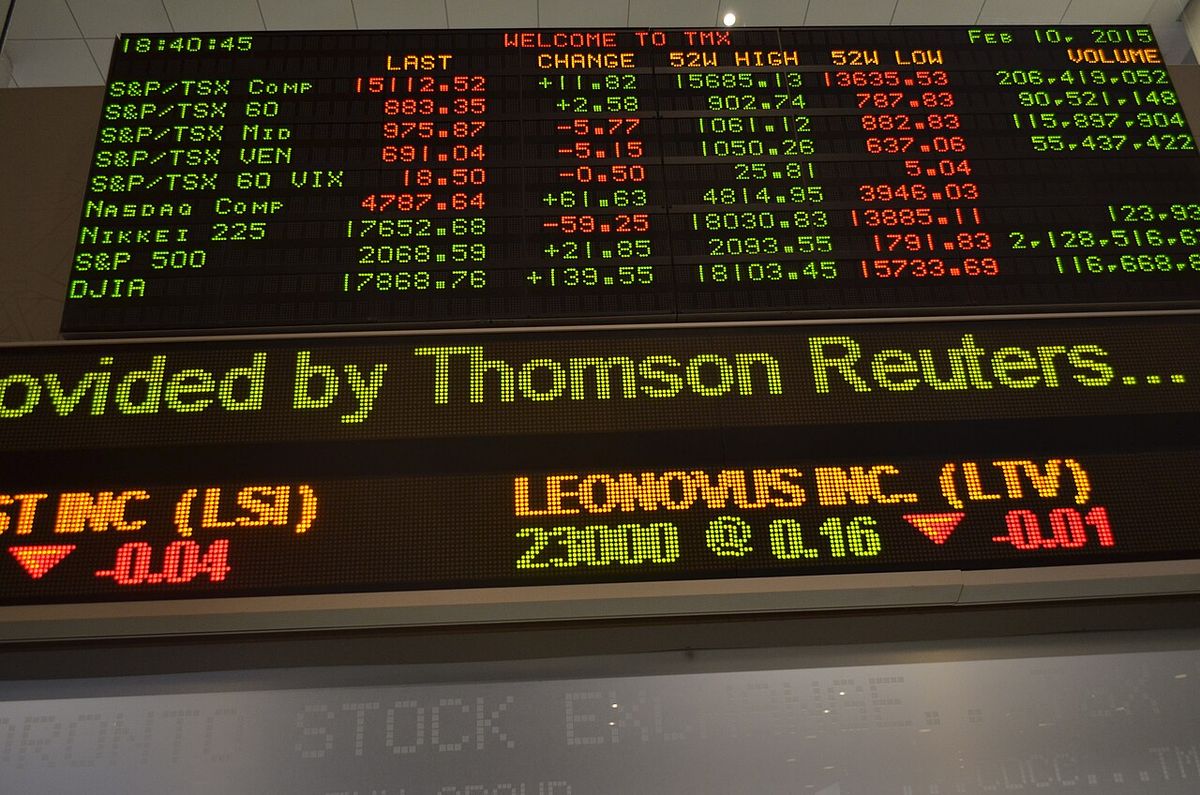
History and Development of the Index
The index was launched in 1977, establishing itself as Canada's premier market benchmark. It succeeded the earlier TSE 300 Composite Index, with the official transition to the S&P/TSX Composite Index occurring on May 1, 2002. This change marked a partnership with Standard & Poor's and introduced enhanced methodology and governance. The index has been calculated back to the year 1945, providing decades of historical data for long-term performance analysis. A significant milestone was reached when the index surpassed 30,000 points for the first time, hitting an intraday high of 30,066 on September 23, 2025. This long history and consistent methodology allow investors to study market cycles, economic impacts, and long-term return trends within the Canadian context.
Strict Eligibility and Inclusion Rules
Not every company on the TSX is included in the Composite Index. A strict set of eligibility criteria ensures the index contains only significant and tradeable securities, maintaining its integrity as a benchmark. The primary rules focus on market capitalization, liquidity, and domicile. For market capitalization, a security must represent a minimum weight of 0.05% of the index to be eligible. It must also have a minimum weighted average price of at least one Canadian dollar over the three months prior to review and over the last three trading days of the month before the exchange's assessment. Liquidity requirements are equally rigorous. A stock's trading volume, measured in dollar value and the number of transactions, must exceed 0.025% of the sum of all eligible securities' trading volume. To prevent any single company from dominating the index's trading metrics, they are capped at a maximum of 15% for value, volume, and transactions. Finally, all constituent companies must be listed on the Toronto Stock Exchange and incorporated under Canadian laws, ensuring the index remains a pure reflection of the domestic corporate landscape.

Key Sector Exposure and Major Constituents
The composition of the S&P/TSX Composite Index gives investors direct exposure to the core sectors of the Canadian economy. While the specific list of 220 companies is rebalanced periodically, the index has historically had significant weightings in financial services, energy, and materials. These sectors reflect Canada's strengths in banking, natural resources, and mining. The financial sector includes major Canadian banks and insurance companies, which are typically among the largest holdings. The energy sector comprises integrated oil and gas producers, while materials include leading mining companies for gold, base metals, and potash. Other important sectors represented are industrials, technology, and real estate through real estate investment trusts (REITs). This sectoral concentration means the index's performance can be influenced by commodity prices, interest rate decisions affecting financials, and broader global economic demand.
How Canadians Can Invest in the Index
While you cannot buy the index directly, Canadian investors can gain exposure through exchange-traded funds (ETFs) that track it. The most direct method is through ETFs that replicate the S&P/TSX Capped Composite Index, a version of the main index where the weighting of any single constituent is capped, typically at 10%, to comply with Canadian mutual fund regulations and reduce concentration risk. The primary ETFs for this purpose are the iShares Core S&P/TSX Capped Composite Index ETF, which trades on the TSX under the ticker XIC, and the BMO S&P/TSX Capped Composite Index ETF, trading under ZCN. These funds seek to replicate the performance of the capped index, net of their management fees, and can be held in registered accounts like Tax-Free Savings Accounts (TFSAs) and Registered Retirement Savings Plans (RRSPs). There are currently no ETFs that track the uncapped S&P/TSX Composite Index exactly, but a combination of the iShares S&P/TSX 60 Index Fund (XIU) and the iShares S&P/TSX Completion Index Fund (XMD) can provide equivalent exposure to the broad market, and all these products trade in Canadian dollars on the TSX.
For targeted exposure, several exchange traded funds track specific sectors within the S&P/TSX Composite Index. BlackRock provides several iShares branded ETFs which provide exposure to segments of the index. These funds include the S&P/TSX Capped Energy Index Fund, known by the ticker symbol XEG. They also include the S&P/TSX Capped Financial Services Index Fund, which uses the ticker XFN. Furthermore, the suite includes the S&P/TSX Capped Technology Index Fund, traded as XIT. Other sector funds are the S&P/TSX Capped Basic Materials Index Fund, with ticker XMA, and the S&P/TSX Capped REIT Index Fund, traded as XRE.
- S&P/TSX Capped Energy Index Fund (XEG)
- S&P/TSX Capped Financial Services Index Fund (XFN)
- S&P/TSX Capped Technology Index Fund (XIT)
- S&P/TSX Capped Basic Materials Index Fund (XMA)
- S&P/TSX Capped REIT Index Fund (XRE)
These exchange traded fund products allow investors to tailor their exposure to particular segments of the Canadian economy. These segments are those represented within the broader S&P/TSX Composite Index. By using these funds, investors can implement specific investment strategies focused on sectors like energy or financial services. This provides a method for gaining focused market exposure based on the index's composition.

Understanding the Index's Dividend Profile
The S&P/TSX Composite Index includes many companies with a history of paying dividends, contributing to the total return for investors. The index itself does not pay a dividend, but the collective dividend income from its constituent stocks is a key component of its long-term performance. Certain sub-indices, like the S&P/TSX Canadian Dividend Aristocrats Index, are specifically designed to track companies with a record of consistently increasing dividends, aiming to capture both sustainable dividends and capital appreciation. This focus aligns with the total return expectations of many investors, as explored in research on the Canadian dividend landscape. The dividend yield of the overall Composite Index fluctuates with market prices and corporate payout policies, but the presence of large, established companies in sectors like financials and utilities provides a foundational level of income. Investors holding broad index ETFs like XIC or ZCN receive distributions that reflect the aggregated dividends paid by the underlying stocks, after fund expenses.
Primary Risks and Considerations for Investors
Investing in the broader Canadian market via the S&P/TSX Composite Index carries inherent market risks. The index's performance is tied to the Canadian economy, which can be influenced by domestic factors like interest rate policy, government regulation, and consumer sentiment. A significant risk is sector concentration, as the index has a heavy weighting in cyclical sectors like financials, energy, and materials. This means it can be more volatile and susceptible to downturns during periods of low commodity prices, a weakening global economy, or financial sector stress, compared to a more diversified global portfolio. Currency risk is another consideration for international investors, as the index is priced in Canadian dollars, though this is not a direct concern for domestic investors holding Canadian-dollar ETFs. Finally, while index investing through ETFs offers diversification, it does not protect against broad market declines, as the fund will mirror the downward movement of the index it tracks.
Frequently asked questions
What is the S&P/TSX Composite Index?
The S&P/TSX Composite Index is the headline and benchmark Canadian stock market index. It represents roughly 70 percent of the total market capitalization on the Toronto Stock Exchange. It is the broadest index in the S&P/TSX family and serves as the premier indicator for the Canadian equity market. The index was launched in 1977.
What companies are in the S&P/TSX Composite Index?
The S&P/TSX Composite Index includes stocks that are listed on the Toronto Stock Exchange and incorporated under Canadian laws. Companies must meet specific eligibility criteria for market capitalization and liquidity. As of April 20, 2026, the index was comprised of 220 companies. In a previous composition, as of September 20, 2021, it comprised 237 of the 3,451 companies listed on the TSX.
How can I buy the TSX Composite Index?
You cannot buy the S&P/TSX Composite Index directly. Investors can gain exposure through exchange traded funds that track it. The iShares S&P/TSX Capped Composite Index Fund, with ticker XIC, and the BMO S&P/TSX Capped Composite Index Fund, with ticker ZCN, match the diversity of the index. In these funds, the relative weighting of each constituent is capped at 10 percent.
Does the S&P/TSX Composite Index pay dividends?
The S&P/TSX Composite Index itself does not pay dividends. However, many of the constituent companies within the index do pay dividends. Exchange traded funds that track the index, such as XIC and ZCN, collect these dividends. They then distribute them to investors as fund distributions, which contribute to the total return.
When was the TSX Composite Index started?
The S&P/TSX Composite Index was launched in 1977. It has provided investors with a premier indicator of market activity for Canadian equity markets since that year. This headline index replaced its predecessor, the TSE 300 Composite Index, on May 1, 2002. While the index itself began in 1977, its annual performance has been calculated and tracked back to the year 1945 for historical reference. This makes it a long standing benchmark for the Canadian stock market.
What is the ticker symbol for the TSX Composite Index?
The S&P/TSX Composite Index is commonly quoted under the ticker symbol ^GSPTSE. It is also represented by the ticker symbol SPTSX:IND on other financial data platforms. These symbols are used to track the index level itself and do not represent a directly tradable security. The index is the broadest in the S&P/TSX family and serves as the flagship benchmark for the Canadian equity market. Investors monitor these tickers for real time data and historical charts on the performance of Canada's premier stock index.
Sources and further reading
- S&P/TSX Composite Index (Wikipedia) en.wikipedia.org
- Market Insights, S&P/TSX Indices tmxinfoservices.com
This article explains how things work and is not financial, tax or legal advice. Rules, limits and rates change, so check the current figures with the Canada Revenue Agency, your province or your financial institution before you act.