The Nasdaq Composite is a major American stock market index that tracks the performance of all common stocks and similar securities listed on the Nasdaq stock exchange. For Canadian investors, it represents a broad benchmark for US technology and growth-oriented companies. While you cannot invest directly in the index, Canadian-listed exchange-traded funds (ETFs) provide accessible exposure. Understanding its composition, history, and the available investment vehicles is crucial for those looking to add US growth stocks to their portfolios.
What the Nasdaq Composite Index Measures
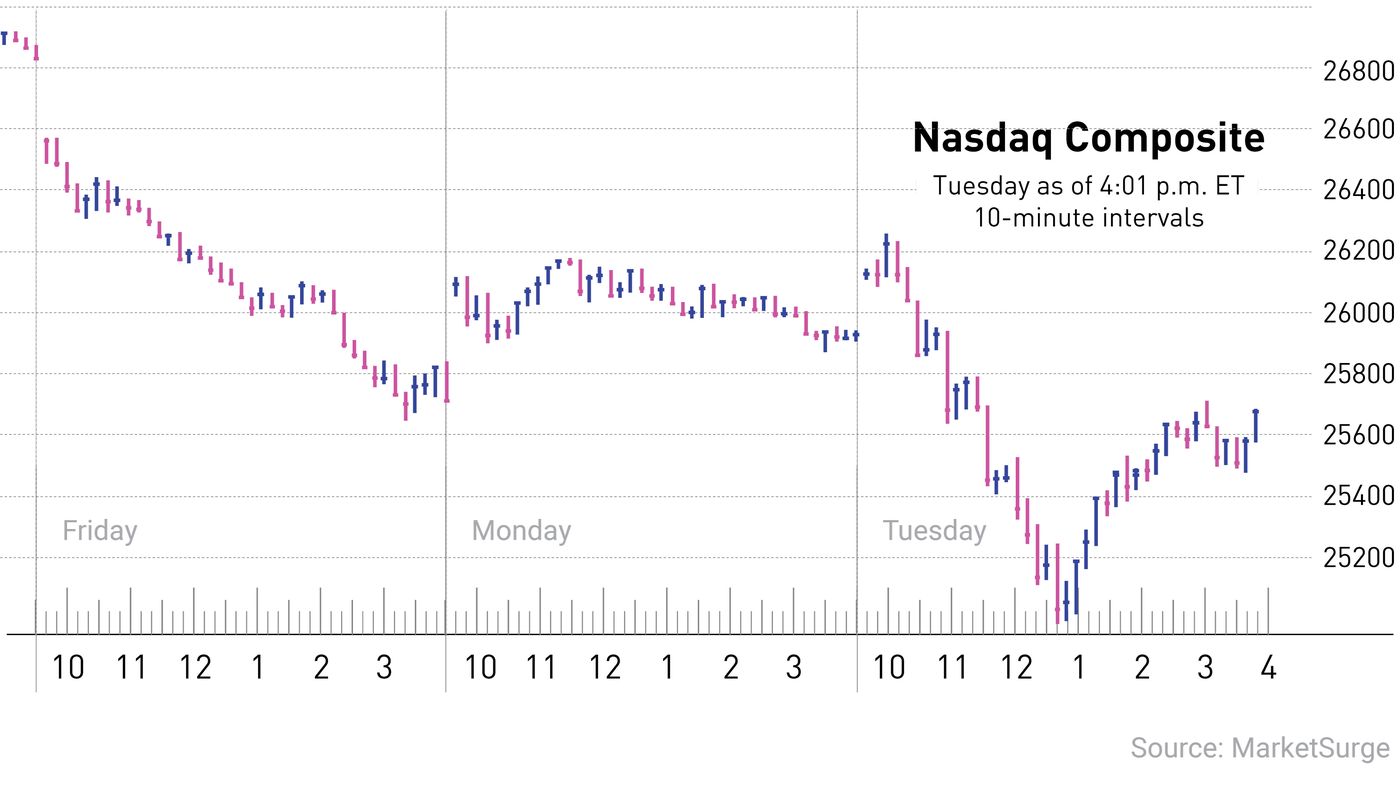
The Nasdaq Composite Index is designed to measure the performance of all common stocks and similar securities listed on the Nasdaq Stock Market. This includes thousands of companies, making it one of the most comprehensive gauges of the US stock market, particularly for the technology and growth sectors. Unlike more selective indices, it encompasses a wide array of industries, though technology firms have historically represented a significant portion of its value. The index is calculated using a market capitalization weighting methodology, meaning companies with larger total market values exert a greater influence on the index's movements. This structure means the performance of the largest constituents, often major technology giants, can significantly sway the overall index return. For investors, it serves as a critical barometer for the health and trends of innovative and technology-driven segments of the American economy.

History and Evolution of the Index
Its inception marked a shift from traditional floor trading to a computerized system, which later became the standard. Initially, the index included mostly over-the-counter stocks but grew rapidly as technology companies began to list on the exchange. Over the decades, it has evolved from a niche indicator to a globally watched benchmark, reflecting the rise of the information technology sector. The composition has continually shifted, with recent years being dominated by companies involved in artificial intelligence, cloud computing, and semiconductors.
The performance of the index is often driven by distinct market themes and leading companies. In recent years, a cohort of large technology stocks, sometimes referred to as the Magnificent Seven, has been a primary driver of returns. The period leading into 2026 saw corporate earnings become a more significant driver of index performance compared to previous cycles dominated by valuation expansion. The semiconductor industry, with leaders like Nvidia, has played a crucial role, described as the backbone of the modern digital economy. This historical context shows the index's dynamic nature and its sensitivity to technological innovation and economic cycles.
Primary Sectors and Major Constituents
The Nasdaq Composite is renowned for its heavy weighting in the technology sector, but it includes companies from a broad range of industries. While it tracks all Nasdaq-listed stocks, a subset known as the Nasdaq 100 Index, which includes the 100 largest non-financial companies on the exchange, is often used as a proxy for its largest and most influential members. Technology firms, particularly in computer hardware, software, and semiconductors, have historically comprised around half of the Nasdaq 100's weight. Other significant industry groups within the broader composite include telecommunications, retail and wholesale trade, and biotechnology. This diversity means the index captures growth across multiple facets of the modern economy, though its fortunes are closely tied to the performance of its largest tech holdings.
The largest constituents are typically household names that are leaders in their respective fields. These companies are central to trends like artificial intelligence, cloud infrastructure, and digital advertising. Their substantial market capitalizations mean their stock price movements have an outsized impact on the index's daily performance. For Canadian investors using ETFs that track the Nasdaq 100, such as the iShares NASDAQ 100 Index ETF (XQQ), more than 50 percent of the portfolio is often invested in these technology giants. This concentration provides targeted exposure to the leaders of the digital revolution but also introduces specific risks related to the performance of a relatively small number of companies.
How Canadians Can Invest in the Nasdaq
Canadian investors cannot purchase the Nasdaq Composite Index directly. Instead, they gain exposure through financial products that track its performance, primarily exchange-traded funds (ETFs) listed on the Toronto Stock Exchange. These ETFs work by holding a basket of securities designed to replicate the index, such as the Nasdaq 100 Index. The primary benefit is the ability to track the index accurately and at a relatively low cost compared to actively managed funds. Canadian-listed Nasdaq ETFs come in two main forms: currency-hedged and unhedged. An unhedged ETF, like the BMO NASDAQ 100 Equity Index ETF (ZNQ), exposes the investor to fluctuations in the US dollar-Canadian dollar exchange rate, which can add to returns or detract from them. A currency-hedged ETF, such as the BMO NASDAQ 100 Equity Hedged to CAD Index ETF (ZQQ) or the iShares NASDAQ 100 Index ETF (CAD-Hedged) (XQQ), uses financial derivatives to mitigate this currency risk, aiming to deliver returns that mirror the underlying index's performance in Canadian dollar terms.
These ETFs charge an annual management expense ratio (MER) to cover operational costs. For example, the iShares NASDAQ 100 Index ETF (CAD-Hedged) has a net expense ratio of 0.39 percent. This means for a $10,000 investment, approximately $39 is deducted annually. Investors can hold these ETFs in registered accounts like a Tax-Free Savings Account (TFSA) or a Registered Retirement Savings Plan (RRSP), though they should confirm specific eligibility with their brokerage. More advanced products, such as leveraged or inverse ETFs that use derivatives, are also available but carry significantly higher risk and complexity. The most popular Canadian Nasdaq ETFs combine low fees, high assets under management, and good trading liquidity, making them accessible for most investors.
- BMO NASDAQ 100 Equity Hedged to CAD Index ETF (ZQQ): The most popular Canadian Nasdaq-100 ETF, with over $2.25 billion in assets.
- iShares NASDAQ 100 Index ETF (CAD-Hedged) (XQQ): Holds over $4 billion in assets and directly holds the index's underlying stocks.
- BMO NASDAQ 100 Equity Index ETF (ZNQ): The unhedged counterpart to ZQQ, exposing investors to USD/CAD exchange rate movements.
- CIBC Nasdaq Index Fund: A mutual fund alternative that aims to approximate the performance of the NASDAQ 100 Index.
Trading and Market Data in Canada
Nasdaq operates a significant trading platform within Canada known as Nasdaq Canada. This platform provides infrastructure for trading Canadian-listed securities and is a key source of liquidity. Nasdaq Canada operates three distinct trading books to accommodate different trading styles and needs. The CXC book is a lit order book providing anonymous or attributed trading with price, broker, and time priority for order matching. The CX2 trading book is designed to offer cost savings and trading efficiencies through a unique pricing model and broker preferencing functionality, and it includes a guaranteed execution facility. The CXD book provides an alternative source of non-displayed liquidity, facilitating size discovery and price improvement opportunities. All books support a variety of advanced order types and smart routing capabilities to meet diverse trading strategies.
For market data, Nasdaq offers Nasdaq Basic Canada, a cost-effective product that provides trade data with 100 percent volume and ticker coverage of major Canadian exchanges, including the Toronto Stock Exchange (TSX), TSX Venture Exchange (TSX-V), Canadian Securities Exchange (CSE), and NEO Exchange (NEO). This data feed is an alternative to more expensive Level 1 data services. Additionally, Nasdaq Canada GLIMPSE is a point-to-point data feed product designed for efficient recovery of depth data and infrastructure cost savings. These services ensure that market participants, including those trading Nasdaq-linked ETFs, have access to reliable and affordable real-time information.
Key Risks for Investors
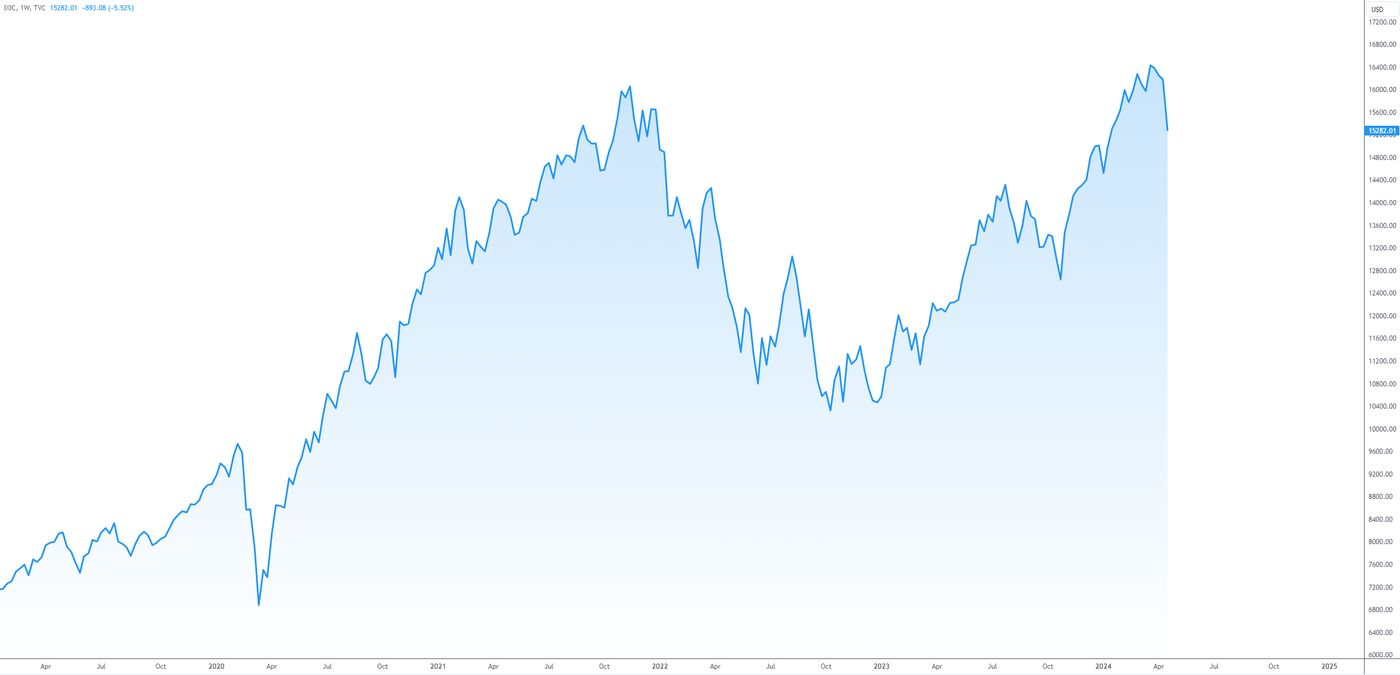
Investing in the Nasdaq Composite, typically through index-tracking ETFs, carries several important risks that Canadian investors must consider. The most prominent is sector concentration risk. Given the index's heavy weighting toward the technology sector, it is more vulnerable to downturns specific to that industry, such as regulatory changes, technological disruption, or cyclical slowdowns. Market volatility is another significant risk. The index has historically experienced periods of sharp declines, as seen during the dot-com bust and other market corrections. For investors using unhedged Canadian ETFs, currency risk is a major factor. If the Canadian dollar appreciates against the US dollar, the Canadian dollar value of the US-denominated assets will decrease, reducing returns even if the underlying index rises.
ETF-specific risks include tracking error, which is the difference between the ETF's performance and the index it follows. This can be caused by management fees, transaction costs, and, for hedged ETFs, the costs and imperfections of currency hedging strategies. The management expense ratio (MER) represents a direct, ongoing drag on returns. Furthermore, some Nasdaq ETFs may hold securities for which trading has been suspended, such as was the case with Russian securities in the past, which can complicate valuation. Finally, while holding these ETFs in registered accounts like TFSAs or RRSPs can provide tax advantages, distributions from the funds are subject to characterization for tax purposes at year-end, and investors receive an official tax statement detailing the type of income to report.
Performance and Dividend Considerations
The Nasdaq Composite is generally considered a growth-oriented index, meaning its constituent companies often reinvest earnings back into the business rather than paying them out as dividends. Consequently, the index itself and the ETFs that track it typically have a lower dividend yield compared to more value-oriented indices like the S&P/TSX Composite. For example, the iShares NASDAQ 100 Index ETF (XQQ) had a yield of 0.21 percent. Distributions from these ETFs can come in various forms, including income and capital gains, and are characterized at year-end for tax purposes. Some distributions may be paid as additional units of the fund rather than cash, which investors must account for by adjusting the cost base of their holdings.
Performance is driven by capital appreciation. Historical returns have been strong over long periods, particularly during technological expansion cycles, but are accompanied by higher volatility. The index's return is not just a function of stock prices but also of corporate earnings, which became a primary driver in the period leading into 2026. The difference between the index's return and an ETF's return, the tracking error, is a key metric for evaluating the fund's efficiency. A low, consistent tracking error indicates the ETF is closely following its benchmark, which is a primary objective for passive index funds.
Frequently asked questions
What is the difference between the Nasdaq Composite and the Nasdaq 100?
The Nasdaq 100 Index is intended to represent the NASDAQ's 100 largest non-financial companies. It includes NASDAQ's largest companies across major industry groups, including computer hardware and software, telecommunications, retail/wholesale trade, and biotechnology. The index is a market-cap weighted index that tracks the performance of 100 large-cap U.S. non-financial sector stocks listed on the NASDAQ exchange. Around 50% of the Nasdaq 100 is composed of U.S. technology sector stocks.
How can I buy the Nasdaq index in Canada?
You cannot buy the index directly. Canadian investors purchase exchange-traded funds (ETFs) that track the index, such as the Nasdaq 100. These ETFs are listed on the Toronto Stock Exchange and come in hedged (e.g., XQQ, ZQQ) and unhedged (e.g., ZNQ) versions. You can hold them in brokerage accounts, including TFSAs and RRSPs, subject to your dealer's rules.
What does 'CAD-Hedged' mean for a Nasdaq ETF?
A CAD-Hedged ETF seeks to provide long-term capital growth by replicating the performance of the NASDAQ-100 Currency Hedged CAD Index, net of expenses. It uses forward derivatives to negate FX fluctuations between the US dollar and the Canadian dollar. This aims to mitigate the higher volatility that comes from exchange rate changes. However, hedged ETFs tend to incur higher tracking errors due to the cost of currency hedging.
What are the risks of investing in a Nasdaq ETF?
Investing in a Nasdaq ETF involves market risk and volatility. Unhedged Nasdaq 100 ETFs have higher volatility as their returns are also influenced by changes in the USD-CAD exchange rate. The funds charge a management expense ratio, which is an annual percentage fee deducted from the investment. There is also tracking error risk, which is the difference between the actual return of the Nasdaq 100 index and the ETF's performance.
What is the Nasdaq Canada exchange?
The Nasdaq Canada exchange operates three trading books for trading TSX, TSX-Venture and CSE listed securities. These books are CXC, CX2, and CXD. It provides a reliable platform for trading Canadian equities with benefits like anonymous or attributed trading and price, broker, and time priority. Nasdaq Canada offers a variety of advanced order types and tools to help market participants manage risk. It also provides market data products like Nasdaq Basic Canada, which is an accurate, cost-effective alternative for Canadian equities data.
Can I trade Nasdaq ETFs in my TFSA?
You should check with your dealer regarding whether a particular class or series is available for purchase within a registered account like a TFSA. Other dealers may have different minimum dollar requirements. For the latest details on specific fund eligibility, you need to explore the fund profile. This is a standard note for many Canadian investment funds, including Nasdaq focused products like the CIBC Nasdaq Index Fund. The note confirms that while these securities are often available in TFSAs, the final determination depends on the specific fund series and the policies of your financial institution. Always verify with your dealer to ensure the specific ETF or mutual fund you want is eligible for your registered account.
Sources and further reading
- Nasdaq Canada nasdaq.com
- CIBC Nasdaq Index Fund | Mutual Funds cibc.com
- iShares NASDAQ 100 Index ETF (CAD-Hedged) - XQQ rbcgam.com
- Top Canadian Nasdaq ETFs of 2026 fool.ca
- Institutional Investors | Invesco Canada invesco.com
This article explains how things work and is not financial, tax or legal advice. Rules, limits and rates change, so check the current figures with the Canada Revenue Agency, your province or your financial institution before you act.