Royal Bank of Canada (RY) is a Canadian multinational financial services company and the largest bank in the country by market capitalization. It provides a comprehensive range of banking, wealth management, insurance, and capital markets services to millions of clients globally. The stock is a core holding in many Canadian investment portfolios due to its long history, significant dividend payments, and role as a bellwether for the Canadian financial sector. Canadians can invest in Royal Bank shares through both the Toronto Stock Exchange and the New York Stock Exchange.
Company Operations and Business Segments
Royal Bank of Canada operates as a diversified financial services company with a global presence. The company structures its operations into five main business segments. The Personal and Commercial Banking segment provides a broad suite of financial products and services to individual and business clients across Canada, the Caribbean, and the United States. This includes chequing and savings accounts, personal lending, home equity financing, auto financing, credit cards, and payment solutions.
The Wealth Management segment provides a suite of wealth, investment, trust, banking, credit, and other advice based solutions to clients. It also offers asset management products to institutional and individual clients. This segment serves clients through its own distribution channels and third party distributors. The Insurance segment offers life, health, travel, wealth, annuities, and property and casualty insurance advice and solutions. These insurance products are provided to individual and business clients. The segment utilizes digital platforms and works with independent brokers and partners.
The Capital Markets segment serves corporations, institutional clients, asset managers, private equity firms, and governments worldwide. Its services include advisory and origination, sales and trading, lending and financing, and transaction banking. The Corporate Support segment encompasses the company's technology and operations services that support the other business lines. This diversified structure allows Royal Bank to generate revenue from multiple streams within the financial sector.

Historical Background and Founding
Royal Bank of Canada was founded in 1864 in Halifax, Nova Scotia. The founding group included J. W. Merkell, Edward Kenny, T. C. Kinnear, James B. Duffus, William Cunard, John Tobin, George P. Mitchell, and Jeremiah Northup. The bank's headquarters is now located in Toronto, Ontario, which serves as the central hub for its national and international operations. The company's long history reflects its ability to adapt to changing economic conditions and regulatory environments.
Its evolution from a regional entity to a global financial institution involved significant milestones such as expanding across Canada and establishing a substantial international presence. The bank's consistent performance and growth have made its stock a foundational component of the Canadian equity market. Many investors view its longevity and stability as key attributes when considering it for long-term investment portfolios. The company's size and history contribute to its status as a major player in the global finance sector.
Stock Trading Information and Listings
Royal Bank of Canada stock trades under the ticker symbol RY on the Toronto Stock Exchange (TSX). The same stock is also cross-listed on the New York Stock Exchange (NYSE) under the identical ticker, RY. This dual listing provides flexibility for investors in both Canada and the United States. The company has a massive market capitalization of approximately $280.49 billion, which classifies it as a mega-capitalization stock within the finance sector. The stock's trading activity shows an average daily volume in the millions, reflecting its high liquidity.
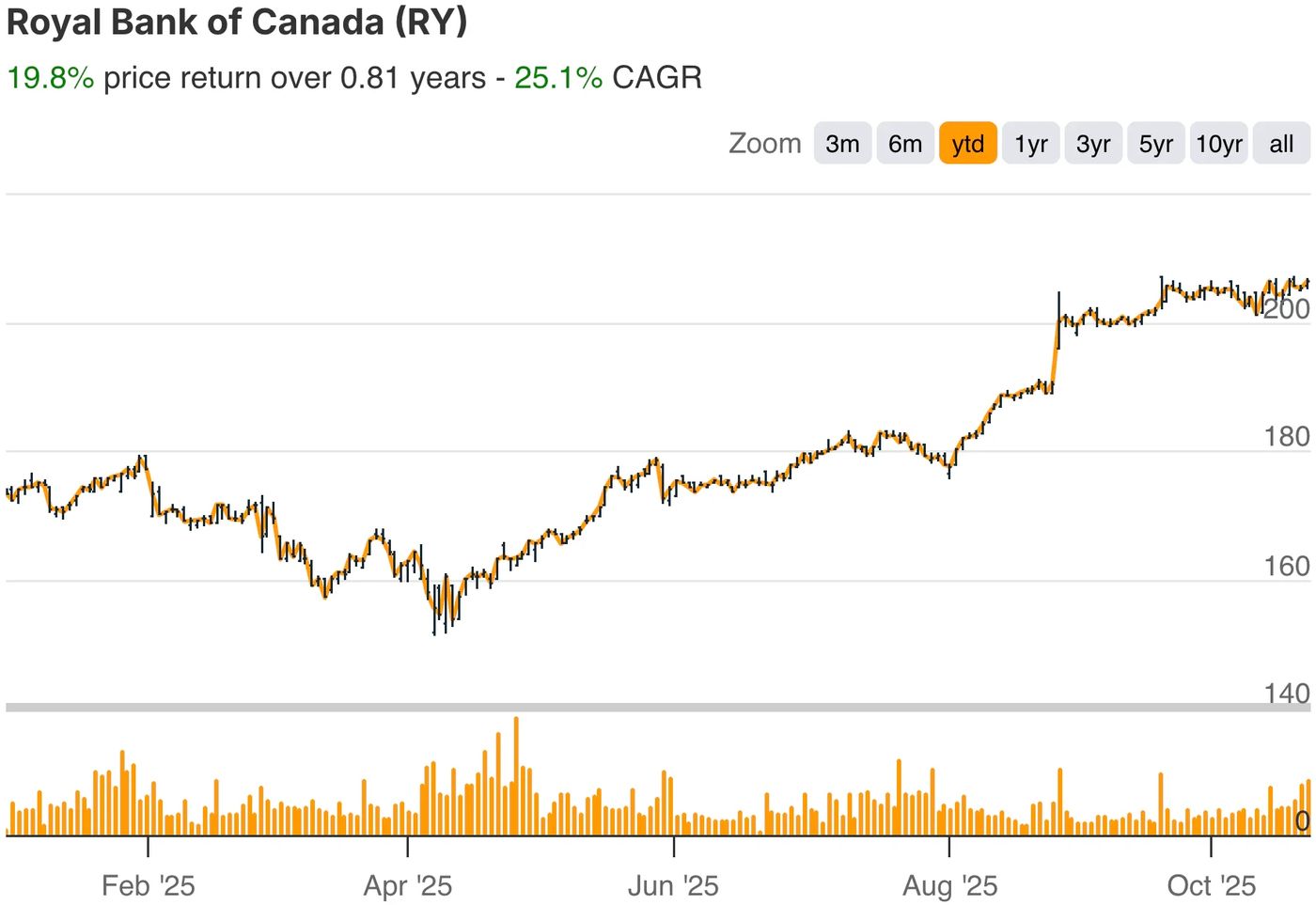
Investors can access real-time price updates, historical charts, and analyst ratings through major financial data providers. The share price has experienced a 52-week range from a low of $143.38 to a high of $218.57. This range illustrates the stock's movement in response to broader market conditions, interest rate changes, and company-specific financial results. The stock is a component of the S&P/TSX Composite index, which serves as a benchmark for Canadian equity performance.
Dividend Record and Shareholder Returns
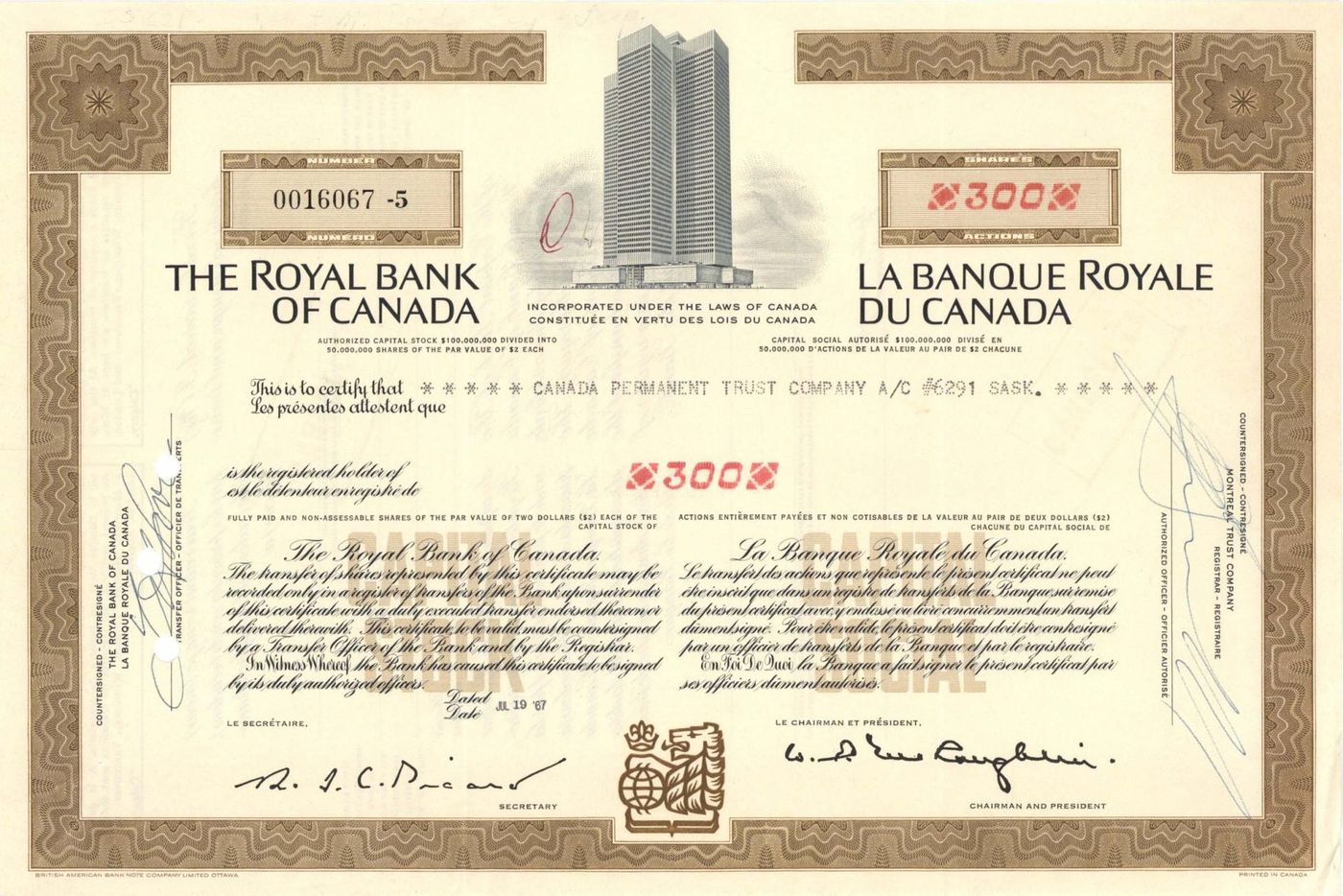
Royal Bank of Canada has a long-standing tradition of paying dividends to its shareholders, making it a popular choice for income-focused investors. The company's dividend yield is reported at 2.39 percent. Dividends are paid on a quarterly basis, providing a regular income stream. The company's commitment to returning capital to shareholders is a central part of its financial policy. The dividend payments are a distribution of a portion of the company's net income, which has shown growth over recent periods.
Net income increased by 21.96 percent year-over-year and by 7.34 percent quarter-over-quarter. Similarly, earnings per share increased by 21.6 percent year-over-year and by 7.88 percent quarter-over-quarter. These improvements in profitability support the sustainability of the dividend. The dividend history is a key factor for many Canadians who hold the stock in registered accounts like Tax-Free Savings Accounts and Registered Retirement Savings Plans to generate tax-advantaged income. The consistent dividend is a significant component of the total return for long-term shareholders.
How Canadians Can Hold Royal Bank Stock
Canadian investors have several options for purchasing and holding shares of Royal Bank of Canada. The most direct method is to buy the stock on the Toronto Stock Exchange under the ticker RY, where it trades in Canadian dollars. This avoids any currency exchange considerations for domestic investors. Shares can be held in various types of investment accounts, including non-registered cash accounts, Tax-Free Savings Accounts (TFSAs), and Registered Retirement Savings Plans (RRSPs). Holding RY stock in a TFSA allows any capital gains and dividend income earned within the account to be completely tax-free, even upon withdrawal.
Holding it in an RRSP provides a tax deduction on the contribution and allows the investment to grow tax-deferred until retirement. Investors can also purchase the US-listed RY shares on the NYSE, which trade in US dollars. This might be relevant for investors holding US currency or for those with US-based brokerage accounts. The fundamental ownership and rights are identical regardless of the exchange on which the shares are purchased.
- Purchase RY on the TSX in Canadian dollars.
- Hold shares in a TFSA for tax-free growth and income.
- Hold shares in an RRSP for tax-deferred growth.
- Purchase the cross-listed RY on the NYSE in US dollars.
- Ownership rights and dividends are the same for both listings.
Financial Performance and Key Metrics
Royal Bank of Canada's financial performance is closely monitored through several key metrics. The company reported a price-to-earnings (P/E) ratio of 17.35, which is a common valuation measure comparing the stock price to its earnings per share. Total revenue held flat year-over-year but increased by 11.84 percent quarter-over-quarter, indicating recent business momentum. The bank's massive scale is reflected in its total revenue and net income figures, which are among the largest in the Canadian financial landscape.
Recent financial performance shows key changes in the company's results. Total Revenue increased 11.84 percent since the last quarter. Net Income increased 21.96 percent since last year and 7.34 percent since last quarter. Earnings Per Share increased 21.6 percent since last year and 7.88 percent since last quarter.
| Financial Metric | Change Since Last Year | Change Since Last Quarter |
|---|---|---|
| Net Income | +21.96% | +7.34% |
| Earnings Per Share (EPS) | +21.6% | +7.88% |
| Total Revenue | Held Flat | +11.84% |
These figures demonstrate the company's ability to grow its profitability even in a stable revenue environment. The improvements in net income and earnings per share are particularly important for assessing the bank's operational efficiency and its capacity to enhance shareholder value. Investors often review these metrics alongside the dividend yield to evaluate the overall return proposition of the stock. The company's financial results are a primary driver of its stock price over the long term.
Principal Risks for Investors
Investing in Royal Bank of Canada stock involves exposure to several types of financial and systemic risks. As a major bank, its performance is heavily influenced by the health of the Canadian and global economies. Economic downturns can lead to higher loan defaults, reduced demand for financial products, and lower fee income from capital markets activity. Changes in interest rates set by the Bank of Canada and other central banks directly impact the bank's net interest margin, which is a core source of profit.
The company operates in a highly regulated industry where changes can increase compliance costs. Competitive pressures come from other large Canadian banks and international financial institutions. Emerging fintech companies also pose a challenge to market share and profitability. Operational risks like cybersecurity threats are significant concerns for a large financial institution.
Specific to its business segments, the Capital Markets division is exposed to volatility in global financial markets, which can affect trading revenues and advisory fees. The Insurance segment faces risks related to mortality rates, catastrophic events, and changes in policyholder behaviour. While the bank's diversification across segments helps mitigate some of these risks, investors should be aware that its stock price will reflect the aggregated impact of these challenges on its earnings and future growth prospects. The stock's 52-week price range from $143.38 to $218.57 illustrates the potential volatility that can result from these risk factors.
Frequently asked questions
What does Royal Bank of Canada do?
Royal Bank of Canada operates as a diversified financial service company worldwide. Its Personal Banking segment offers chequing and savings accounts, personal lending, and credit cards. Its Commercial Banking segment provides lending and deposit products. Its Wealth Management segment offers investment and trust solutions. Its Insurance segment offers life, health, and property insurance. Its Capital Markets segment provides advisory and trading services to corporations and governments.
What is the ticker symbol for Royal Bank stock?
The stock symbol for Royal Bank of Canada is RY. It trades on the Toronto Stock Exchange where it is referenced as RY.TO. It also trades on the New York Stock Exchange under the symbol RY. The same share is listed on both exchanges.
What are the main risks of investing in RY stock?
The main risks include exposure to economic cycles affecting loan demand. Changes in financial regulations can increase costs and limit activities. Competitive pressures from other banks and fintech companies are a constant challenge. Operational risks like cybersecurity threats are significant concerns. Its Capital Markets segment is sensitive to financial market volatility.
Does Royal Bank of Canada pay a dividend?
Yes, Royal Bank of Canada pays a dividend. The company has a dividend yield of 2.39 percent and pays a quarterly dividend of CA$1.76 per share. This dividend is a key component of total returns for shareholders. The company operates as a diversified financial services company with stable revenue streams that support its dividend payments. Dividend payments are a common feature among major Canadian banks like RBC, reflecting their profitability and commitment to returning capital to shareholders.
Can I hold RY stock in my TFSA or RRSP?
Yes, Royal Bank of Canada shares are eligible to be held in both Tax Free Savings Accounts (TFSA) and Registered Retirement Savings Plans (RRSP). These are registered accounts available to Canadian investors. Holding RY in a TFSA shelters all dividend income and capital gains from taxation. Holding it in an RRSP allows for tax deferred growth, meaning taxes are paid upon withdrawal in retirement. This makes the stock a common holding for long term savings plans due to its dividend income and stability as a mega cap company.
When was Royal Bank of Canada founded?
Royal Bank of Canada was founded in 1864. The company is headquartered in Toronto, Canada. Its founders were J. W. Merkell, Edward Kenny, T. C. Kinnear, James B. Duffus, William Cunard, John Tobin, George P. Mitchell and Jeremiah Northup. This long history establishes RBC as one of Canada's oldest and most established financial institutions. Today, it operates globally through segments including Personal and Commercial Banking, Wealth Management, Insurance, and Capital Markets.
Sources and further reading
- Royal Bank of Canada (RY.TO) Stock Price, News, Quote & ... ca.finance.yahoo.com
- Royal Bank of Canada: RY Stock Price Quote & News robinhood.com
- RY Stock Quote Price and Forecast cnn.com
This article explains how things work and is not financial, tax or legal advice. Rules, limits and rates change, so check the current figures with the Canada Revenue Agency, your province or your financial institution before you act.