Bank of Montreal (BMO) is one of Canada's major financial institutions and the country's first chartered bank, founded in 1817. Its stock is a core holding for many Canadian investors seeking exposure to the financial sector and a history of dividend payments. The bank operates diversified financial services across North America through personal and commercial banking, wealth management, and capital markets segments. Understanding BMO's business structure, trading details, and dividend history is key for investors considering this foundational Canadian stock.
Business Operations and Segments
Bank of Montreal provides a comprehensive suite of diversified financial services primarily across North America. The company structures its operations into four main business segments: Canadian Personal and Commercial Banking, U.S. Banking, Wealth Management, and Capital Markets. The Canadian Personal and Commercial Banking segment offers chequing and savings accounts, mortgages, loans, credit cards, and digital banking services to individuals and businesses. It also provides commercial clients with financing, treasury management, and payment solutions alongside various risk management products. The U.S. Banking segment delivers similar retail and commercial banking services through its network in the United States. Approximately 60 percent of BMO's earnings are generated in Canada, with the remaining 40 percent coming from its U.S. operations and other international activities.
The Wealth Management segment caters to individuals, families, and institutional clients with investment management, financial planning, and advisory services. This division offers digital investing platforms, insurance products like individual life and critical illness coverage, and pension de-risking solutions. The Capital Markets segment serves corporate, institutional, and government clients with a full range of financial services. These include raising debt and equity capital, providing merger and acquisition advice, and offering sales and trading solutions for equities, foreign exchange, and commodities. This segment also delivers research, risk mitigation strategies, and specialized hedging services related to interest rates and currency fluctuations.
Trading Information and Listings
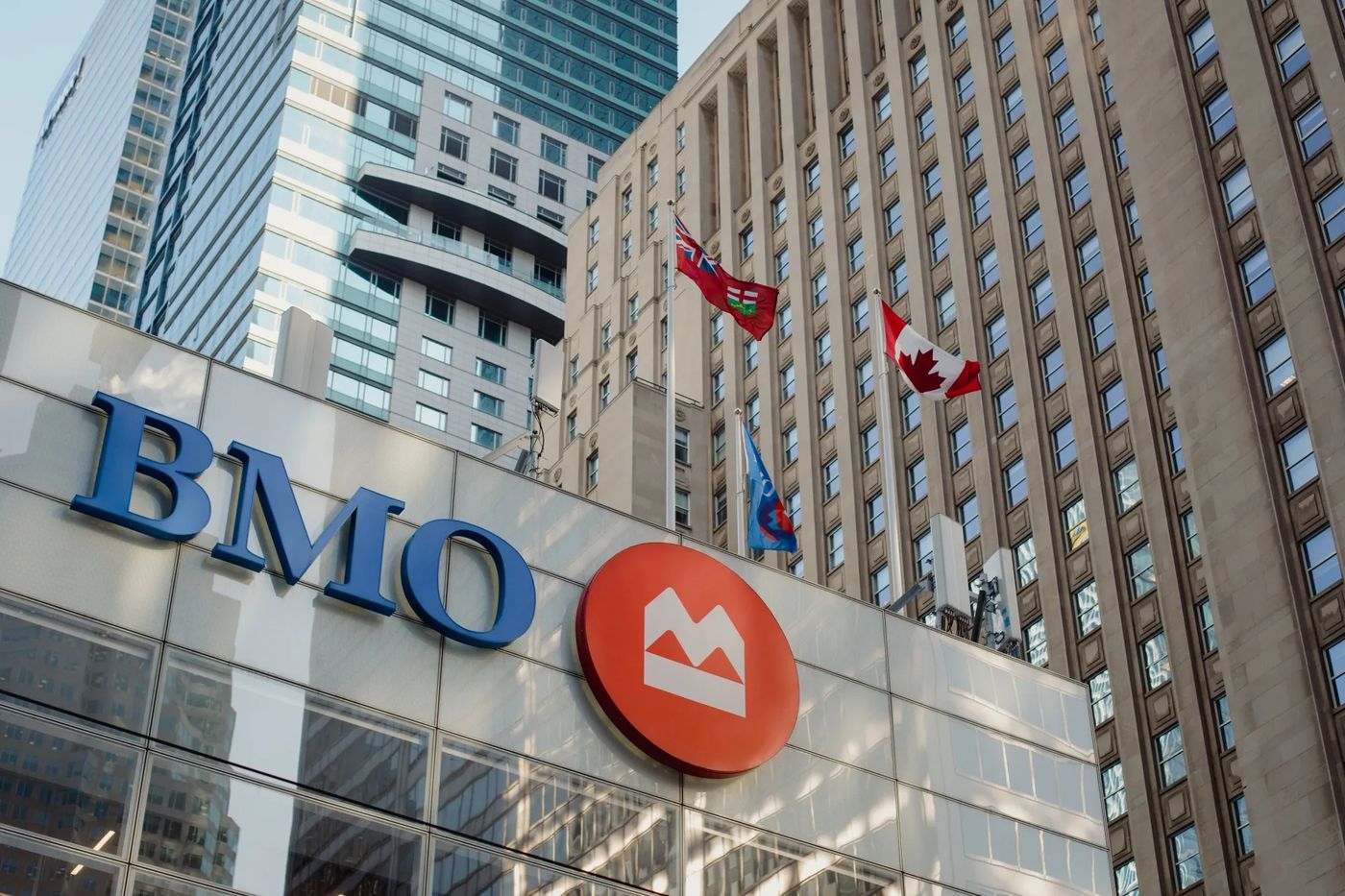
Bank of Montreal's primary listing is on the Toronto Stock Exchange (TSX) under the ticker symbol BMO. The stock also trades on the New York Stock Exchange (NYSE) under the symbol BMO, providing direct access for U.S.-based investors. Canadian investors can purchase shares of BMO through a standard brokerage account, and the stock is a qualified investment for both Tax-Free Savings Accounts (TFSAs) and Registered Retirement Savings Plans (RRSPs). Holding the TSX-listed shares means transactions are conducted in Canadian dollars, which avoids currency conversion fees for Canadian investors. The NYSE-listed shares trade in U.S. dollars, which may be relevant for investors holding U.S. dollar accounts or seeking currency-specific exposure. The stock's market capitalization was approximately $118.46 billion, reflecting its status as one of the larger Canadian banks by market value. The stock's price history shows movement within a 52-week range, with a low of $119.84 and a high of $187.22 for its U.S.-listed shares. Investors should note that the trading symbols, BMO on the TSX and BMO on the NYSE, represent the same underlying company and equity, though prices may differ slightly due to currency exchange rates and local market dynamics.
Dividend History and Shareholder Returns
Bank of Montreal has a long-established practice of paying dividends to its shareholders, which is a significant feature for income-focused investors. The company's trailing dividend yield was reported as 2.88 percent, which is calculated based on the annual dividend payout relative to the stock price. BMO has a history of declaring dividends on a quarterly basis, with specific ex-dividend dates set by the board of directors. For instance, one noted ex-dividend date in recent corporate records was October 30, 2026, indicating the date by which an investor must own shares to be eligible for that period's dividend payment.
The bank's commitment to returning capital to shareholders is a component of its total return, which includes both dividend income and potential capital appreciation. Dividend payments are made from the company's earnings, and the sustainability of the dividend is influenced by the overall profitability of its Canadian and U.S. banking operations. Investors often monitor the payout ratio, which is the proportion of earnings paid out as dividends, to assess sustainability. The dividend is a key reason BMO stock is commonly held within registered accounts like RRSPs and TFSAs, where the income can grow tax-sheltered or tax-free.

Key Historical Milestones
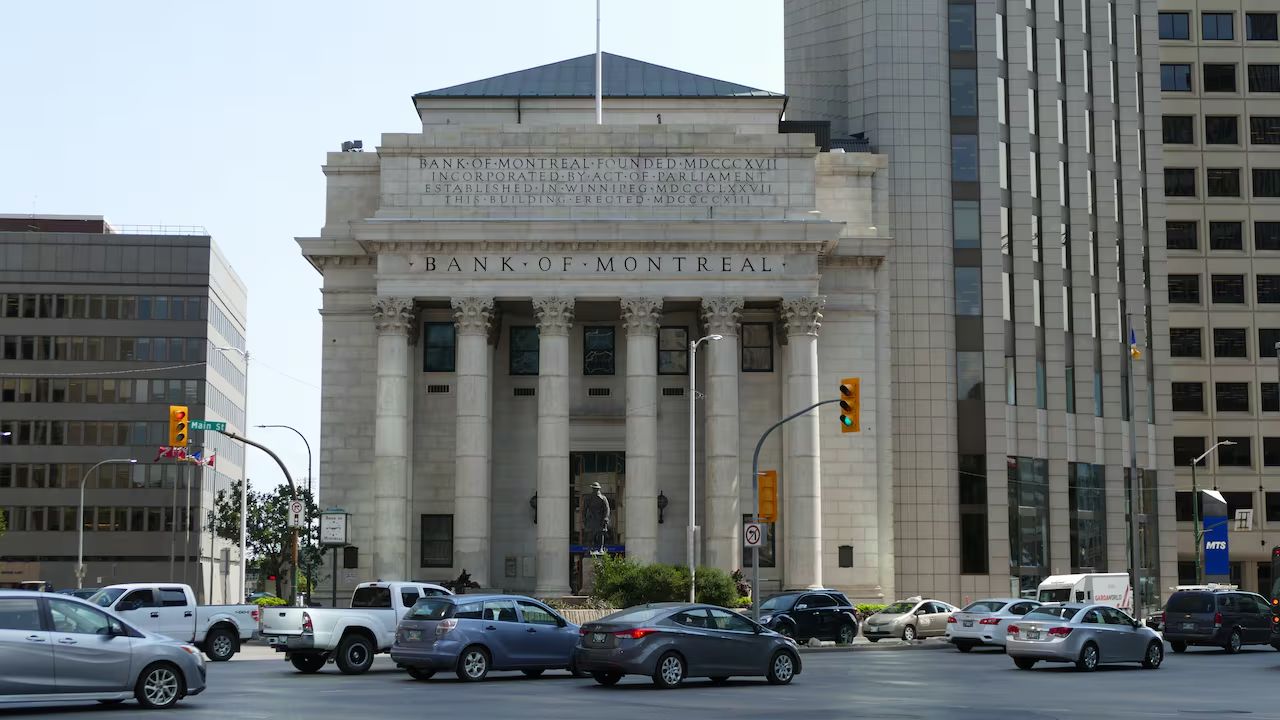
Bank of Montreal's history is integral to the development of Canada's financial system. Founded in 1817, it was the first bank to be chartered in the country, predating Confederation by fifty years. The bank played a crucial role in financing trade and infrastructure projects in early Canada. Over the decades, it expanded its operations both domestically and internationally through organic growth and strategic acquisitions.
Major developments in the bank's history include its expansion into the United States market, which now constitutes a substantial portion of its earnings. More recent corporate actions include executive appointments to manage its growing operations, such as the appointment of Tim Cox as U.S. Country Head of BMO Financial Group and CEO of its U.S. subsidiary. This move underscores the strategic importance of the American market to the bank's diversified earnings profile. The bank's longevity and adaptability through various economic cycles have made it a staple in the Canadian financial landscape.
- 1817: Bank of Montreal is founded, becoming Canada's first chartered bank.
- Expansion into the United States banking market.
- Development of its four-pillar business model: Canadian Banking, U.S. Banking, Wealth Management, and Capital Markets.
- Appointment of Tim Cox as U.S. Country Head and CEO of U.S. subsidiary.
Primary Risks for Investors
Investing in Bank of Montreal stock involves exposure to several risks common to large financial institutions. A primary risk is credit risk, which is the potential for losses if borrowers, including individuals, businesses, or governments, fail to repay their loans or meet their obligations. Economic downturns, rising unemployment, or a decline in real estate values can significantly increase credit losses, particularly in the bank's large mortgage and commercial lending portfolios. Interest rate risk is another major factor, as the bank's net interest income, the difference between what it earns on loans and pays on deposits, can be compressed when interest rate environments change unexpectedly.
Operational and regulatory risks are ever-present in the heavily regulated banking sector. BMO must comply with a complex web of regulations in both Canada and the United States, covering capital adequacy, consumer protection, and anti-money laundering. Failure to comply can result in substantial fines, legal costs, and reputational damage. The bank also faces competitive risks from other large domestic banks, international financial institutions, and emerging fintech companies that may disrupt traditional banking services. Furthermore, given that 40 percent of earnings are generated outside Canada, the bank is exposed to economic and political risks in the United States, as well as currency exchange rate fluctuations that can affect the value of its foreign earnings when converted back to Canadian dollars.
Comparison to Broader Market
Bank of Montreal's stock performance is often compared against broader market indices to gauge its relative strength and investor sentiment. A common benchmark for Canadian stocks is the S&P/TSX Composite Index, which represents the performance of the largest companies listed on the Toronto Stock Exchange. As a major component of the financials sector within that index, BMO's movements can influence the index's direction. The stock's beta coefficient, a measure of its volatility relative to the market, was reported as 0.76, suggesting it has historically been less volatile than the overall market. Analysts and investors also evaluate the stock using valuation metrics like the price-to-earnings (P/E) ratio, which for BMO was 18.84. This ratio helps in comparing the company's valuation to its peers in the banking sector and to the market average. Its diversified revenue streams from personal banking, commercial lending, wealth management, and capital markets provide a different risk and return profile compared to companies focused on a single industry or pure capital markets activities.
Frequently asked questions
What does Bank of Montreal (BMO) do?
Bank of Montreal is a diversified financial services institution operating primarily in North America. It operates through four main segments: Canadian Personal and Commercial Banking, U.S. Banking, Wealth Management, and Capital Markets. The bank offers everyday banking, loans, mortgages, investment advice, insurance, and services for corporate clients like capital raising and merger advice. It was founded in 1817 and is headquartered in Montreal.
What is the BMO stock ticker symbol?
Bank of Montreal's primary listing is on the Toronto Stock Exchange under the ticker symbol BMO. The stock also trades on the New York Stock Exchange under the same symbol, BMO. The TSX listing trades in Canadian dollars, while the NYSE listing trades in U.S. dollars. Both represent shares in the same underlying company.
Does BMO pay a dividend?
Yes, Bank of Montreal pays a dividend. The stock carries a dividend yield of 2.88 percent and has a price to earnings multiple of 18.84. The company has a noted ex dividend date of October 30, 2026. This dividend is a component of the total returns provided to shareholders. Bank of Montreal is a well established Canadian financial institution with a long operating history since 1817. The dividend is supported by the bank's diversified earnings from personal, commercial, wealth, and capital markets businesses.
Can I hold BMO stock in my TFSA or RRSP?
Yes, shares of Bank of Montreal listed on the Toronto Stock Exchange are qualified investments for both Tax Free Savings Accounts and Registered Retirement Savings Plans. The stock trades under the symbol BMO.TO. Holding the stock in these registered accounts allows investment returns, including dividends and capital gains, to grow in a tax advantaged manner. This is a common practice for Canadian investors seeking exposure to major domestic financial institutions. Bank of Montreal is a constituent of the S&P/TSX Composite index.
What are the main risks of investing in BMO stock?
The main risks for Bank of Montreal stem from its core banking operations. Credit risk arises from the potential for customer loan defaults across its personal, commercial, and U.S. banking segments. Interest rate risk can affect the bank's profit margins on loans and deposits. As a large financial institution operating in both Canada and the United States, it faces significant operational and regulatory compliance risks. The bank also operates in a highly competitive financial services sector, which pressures its pricing and market share.
Where does Bank of Montreal make most of its money?
Approximately 60 percent of Bank of Montreal's earnings are generated in Canada. The remaining 40 percent of its earnings come from its operations in the United States. The bank earns money through its four main segments: Canadian Personal and Commercial Banking, U.S. Banking, Wealth Management, and Capital Markets. Revenue sources include interest from loans and mortgages, fees for banking services, and advisory and trading income from capital markets. Its wealth management division also provides investment, insurance, and pension solutions.
Sources and further reading
- Bank of Montreal (BMO.TO) Stock Price, News, Quote & ... ca.finance.yahoo.com
- Bank of Montreal: BMO Stock Price Quote & News robinhood.com
This article explains how things work and is not financial, tax or legal advice. Rules, limits and rates change, so check the current figures with the Canada Revenue Agency, your province or your financial institution before you act.