The Wall Street Crash of 1929, also known as the Great Crash, was a catastrophic collapse of the U.S. stock market that began in October 1929. It marked the start of the worldwide Great Depression, a decade-long economic catastrophe. The crash had an immediate and devastating impact on Canadian financial markets, with the Toronto and Montreal stock exchanges experiencing record-breaking panic selling and billions of dollars in losses. The event shattered the speculative euphoria of the Roaring Twenties and triggered profound economic, social, and political changes across Canada.
The Speculative Bubble of the Roaring Twenties
The 1920s, known as the Roaring Twenties, was a period of industrial expansion and widespread optimism in North America. In both the United States and Canada, the stock market became a symbol of this prosperity, attracting millions of new investors. Many people, disappointed by low bank interest rates, committed their savings to the market. A key driver of the speculative boom was the practice of buying stocks "on margin." This allowed investors to purchase shares by putting down as little as 10% of the price and borrowing the rest from brokers. By August 1929, over $8.5 billion was out on loan for stock purchases, an amount exceeding the total currency circulating in the United States. This leverage meant investors stood to lose immense sums if prices fell. The average price-to-earnings ratio of S&P Composite stocks reached 32.6 in September 1929, far above historical norms, indicating a market dangerously detached from underlying economic value.
In Canada, the frenzy was equally intense. Many Canadians mortgaged homes and emptied savings to invest in soaring stocks like Imperial Oil and British American Oil. The Toronto Stock Exchange became a hub of frenzied activity, with stories of easy profits drawing in people from all walks of life. This created a classic economic bubble, where prices were driven higher by speculation rather than genuine value. The belief that stock prices had reached a "permanently high plateau," as economist Irving Fisher proclaimed, was widespread. However, the broader economy showed ominous signs of trouble. The agricultural sector was depressed due to overproduction, consumer debt was high, and wages had stagnated, limiting purchasing power. Despite these underlying weaknesses, the speculative boom continued almost unabated until early September 1929.
The Crash Unfolds: Black Thursday to Black Tuesday
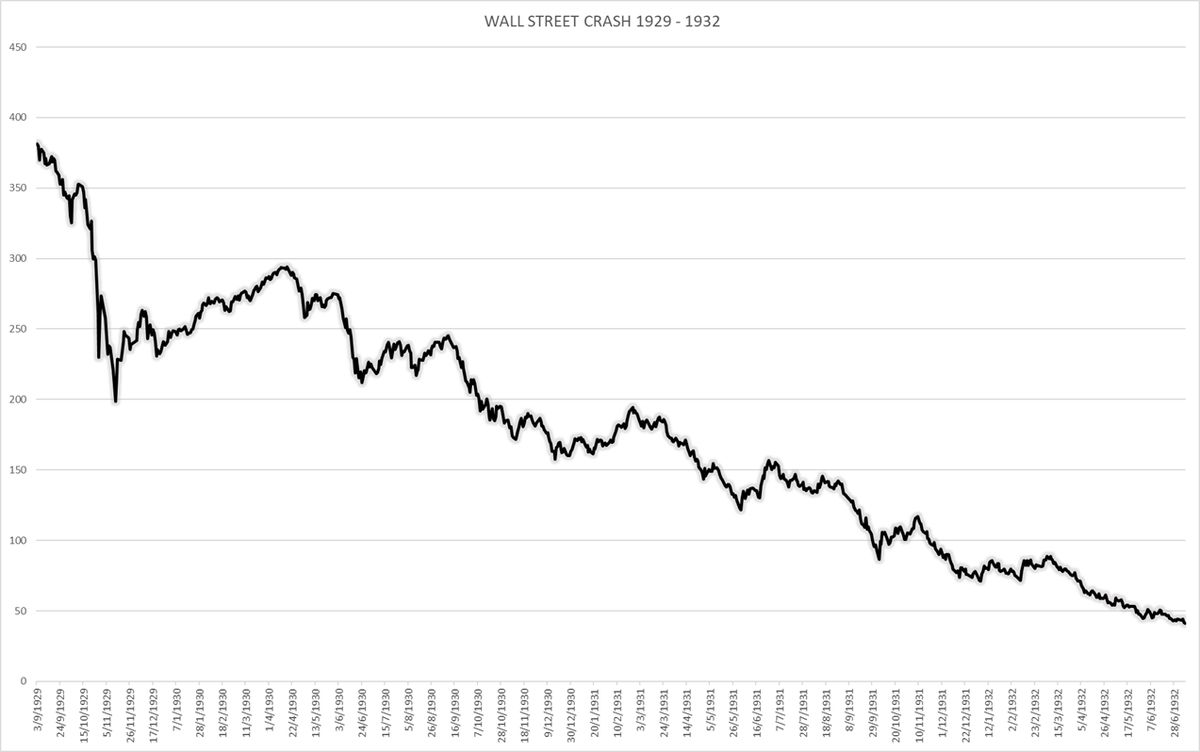
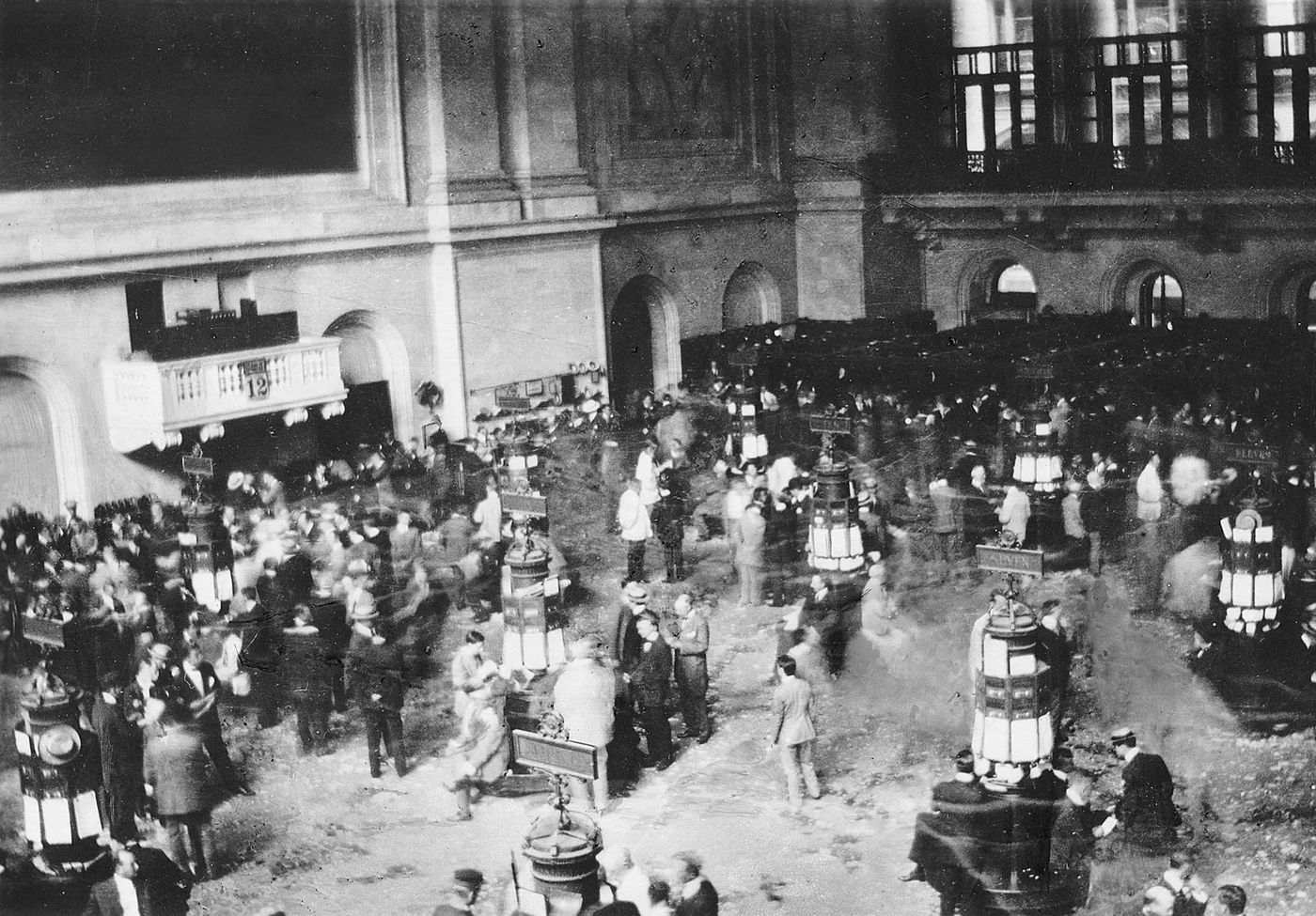
The crash began with a sharp decline on the afternoon of October 23, 1929. The real panic started the next day, October 24, known as Black Thursday. On that day, the New York Stock Exchange lost 11% of its value at the opening bell, with nearly three million shares traded in the first three minutes alone. The volume was so high that ticker tapes fell hours behind, leaving investors in the dark about current prices. In response, leading Wall Street bankers met and devised a plan to restore confidence. They sent Richard Whitney, vice president of the Exchange, to place a bid for 25,000 shares of U.S. Steel at $205, well above the market price. This tactic, reminiscent of one used during the Panic of 1907, succeeded in halting the slide temporarily. The Dow Jones Industrial Average closed down only 6.38 points for the day.
The respite was short-lived. On Black Monday, October 28, the Dow Jones dropped 38.33 points, or 12.82%. The worst was yet to come. On Black Tuesday, October 29, panic selling reached its peak. Approximately 16.4 million shares were traded on the NYSE in a single day, wiping out around $14 billion in stock value. Some stocks had no buyers at any price. The Dow lost an additional 30.57 points, or 11.73%. Efforts by wealthy figures like William C. Durant and members of the Rockefeller family to buy stocks and demonstrate confidence failed to stop the collapse. After a one-day recovery on October 30, the market continued its long, devastating slide. It reached an interim low on November 13, 1929, experienced a bear market rally into April 1930, and then fell steadily until July 8, 1932. By that date, the Dow had closed at 41.22, an 89.2% loss from its September 1929 peak.
The Immediate Impact on Canadian Markets
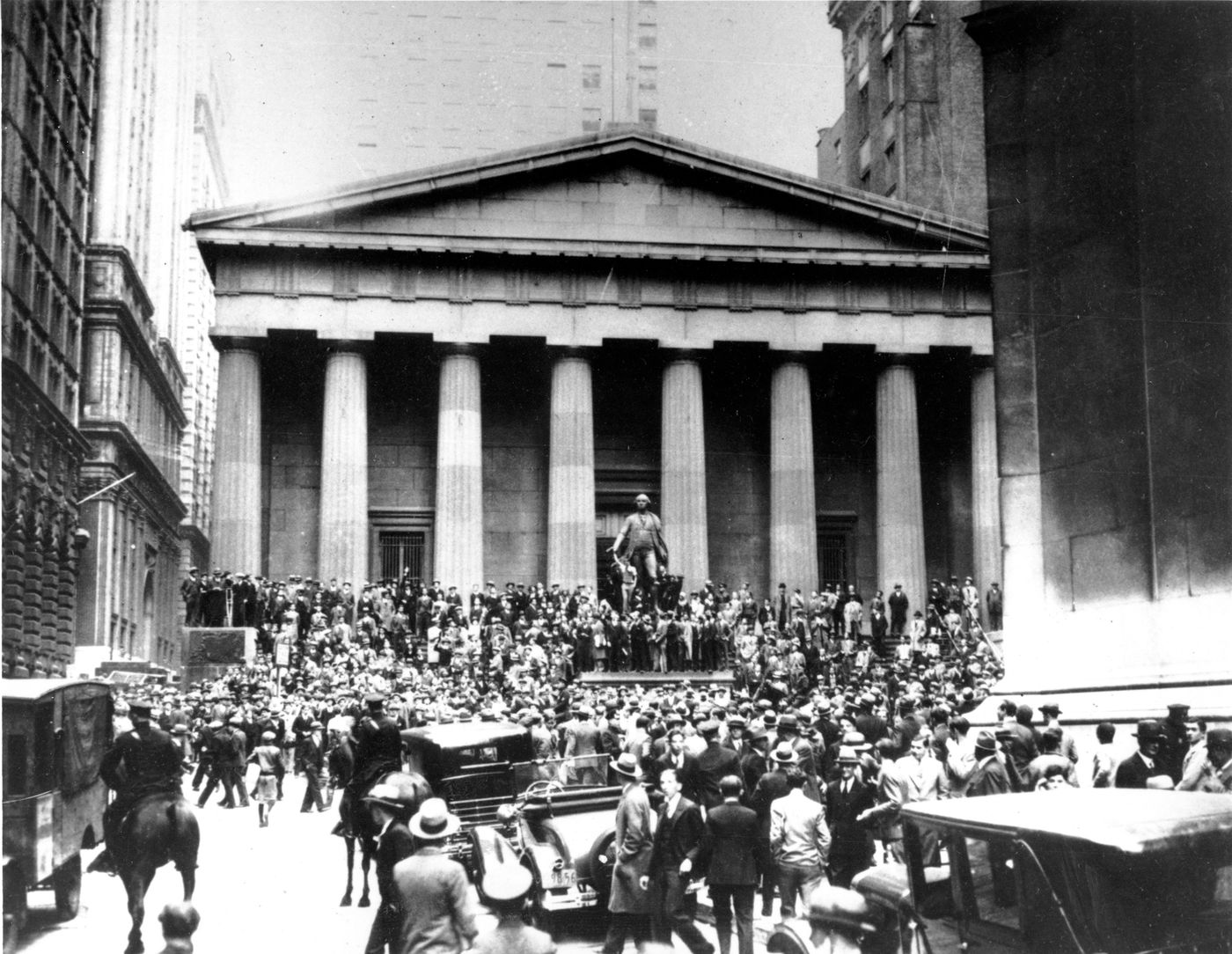
The crash was not confined to Wall Street. Canadian stock exchanges in Toronto and Montreal were rocked simultaneously. On October 4, 1929, a major sell-off hit Bay Street and Wall Street, with the Toronto Stock Exchange suffering losses of approximately $200 million. The dread extended north, with the Toronto Globe reporting that markets were "rocked." On Black Thursday, Montreal’s exchange saw over 400,000 shares traded, far surpassing the usual 25,000, and practically every stock finished the day down. The panic intensified the following week. On Black Tuesday, liquidation records were set in both cities. In Montreal, some 500,000 shares were sold, five times the usual amount. In Toronto, 330,000 shares were sold, thirteen times the usual. The Canadian Annual Review of Public Affairs stated that never before had billions of dollars been lost on Canadian stock exchanges in so brief a period.
The losses were catastrophic for specific companies and investors. From the peak of the bull market in 1929 to mid-1930, the 50 most active Canadian stocks diminished on average to well under half their market value. Shareholders in International Nickel and Imperial Oil lost more than $500 million each. Blue-chip stocks were hammered. In Toronto, mining firm Noranda opened at $37.50 and closed at $27 on Black Tuesday, a drop of 33% in one day. The turmoil was chaotic. Brokers were overwhelmed, and the trading floors were described as smoky and roaring. By the end of the crash, the Canadian stock market had lost over $5 billion in value, an unprecedented financial catastrophe that wiped out countless individual fortunes.
Key Figures and Personal Losses
The crash devastated investors from all levels of society, from ordinary citizens to future political leaders. Many Canadians had invested everything they had. Future Prime Minister Louis St. Laurent lost his investments and was paying off debts from the crash well into the Second World War. R.B. Bennett, who would become Prime Minister in 1930, saw a significant portion of his wealth disappear, though his substantial fortune allowed him to absorb the loss. On the other hand, some investors like Joseph Kennedy sold out before the crash, later amassing a great fortune. In Canada, the human toll was severe. There are accounts of suicides in Toronto, with some individuals jumping off the Bloor Viaduct. Other stories tell of brokers like Harold Crang, who was wiped out as a young man but later rebuilt his career, and Douglas Ward of Dominion Securities, who spent most of the 1930s repaying his clients' losses. The financial ruin was widespread, with tales of economic and personal misery defining the aftermath of the Great Crash across the country.
The stock market crash of 1929 began with a sharp decline in October. The market had peaked on September 3, 1929, with the Dow Jones Industrial Average reaching 381.17. Black Thursday, October 24, 1929, saw a record 12.9 million shares traded and the market lost 11 percent of its value at the opening bell. Black Monday, October 28, and Black Tuesday, October 29, saw further severe losses, with 16.4 million shares traded on Black Tuesday alone.
The market reached an interim low on November 13, 1929. It then experienced a bear market rally to a secondary peak on April 17, 1930. A much longer slide followed from April 1930 to July 8, 1932. By July 1932, the Dow Jones Industrial Average had closed at 41.22, which was its lowest level of the 20th century. This represented a loss of about 90 percent from its pre crash value.
The market did not return to its September 1929 peak close until November 23, 1954. This meant it took 25 years for the market to fully recover from the crash. The crash triggered a rapid erosion of confidence in the United States banking system. It marked the start of the worldwide Great Depression.
| Event/Date | Dow Jones Industrial Average | Key Metric |
|---|---|---|
| Market Peak (Sept 3, 1929) | 381.17 | Pre-crash high |
| Black Thursday (Oct 24, 1929) | Closed down 6.38 pts (2.09%) | ~12.9 million shares traded |
| Black Monday (Oct 28, 1929) | Down 38.33 pts (12.82%) | Record single-day loss at the time |
| Black Tuesday (Oct 29, 1929) | Down 30.57 pts (11.73%) | ~16.4 million shares traded |
| Interim Low (Nov 13, 1929) | 198.60 | Recovery followed |
| Ultimate Low (July 8, 1932) | 41.22 | 89.2% total loss from peak |
| Return to 1929 Peak | November 23, 1954 | 25 years later |
From Crash to Depression: The Canadian Aftermath
The stock market crash was the opening act of the Great Depression in Canada. The economic downturn seemed moderate when R.B. Bennett campaigned in 1930, but it deepened severely after his election. By 1933, the low point, national output and exports were down by a third from late 1920s levels. Nearly a third of the workforce was unemployed. The Prairie farms were in crisis due to drought, and demand for Canadian resources like wheat, lumber, and coal evaporated. Hundreds of thousands of Canadians relied on inadequate financial relief, with monthly rates for a family of five varying from $60 in Calgary to $19 in Halifax. The Depression fostered social unrest and political change. Bennett's government established the Bank of Canada in 1935 and proposed a "New Deal," but it was too late to save his government. He was defeated in the 1935 election. The economy recovered very slowly, and a late-1930s recession interrupted the upward trend. It took the outbreak of the Second World War in 1939 to fully revive Canada's economy.
The crash and the ensuing Depression led to significant financial reforms. In the United States, the Pecora Commission investigated the crash's causes. Congress passed the Glass, Steagall Act in 1933, separating commercial and investment banking. The Securities Act of 1933 and the Securities Exchange Act of 1934 created the Securities and Exchange Commission (SEC) to regulate markets and prohibit practices like insider trading. Stock exchanges worldwide instituted measures to suspend trading during rapid declines to limit panic selling. In Canada, the crisis highlighted the need for a central bank, leading to the creation of the Bank of Canada. These changes aimed to restore stability and prevent a repeat of the speculative excesses that led to the crash.
Historical Analysis and Debate
Economists and historians continue to debate the crash's precise role in causing the Great Depression. Some argue that the stock price swings alone were not severe enough to trigger a total financial collapse. They point to other factors like the contractionary monetary policy of the Federal Reserve, the collapse of thousands of U.S. banks, and a global slide into protectionism, exemplified by the Smoot, Hawley Tariff Act. Others contend that the crash was a critical stage in a broader business cycle, combining with pre-existing economic weaknesses to create a perfect storm. These weaknesses included an oversupply of agricultural commodities, stagnant wages, high consumer debt, and a decline in industrial production. The crash destroyed wealth, shattered business confidence, and led to a sharp reduction in consumer spending and investment, which in turn deepened the economic contraction.
In Canada, the connection between the crash and the Depression is also analyzed. While the crash marked the eve of the Depression, its severity was amplified by Canada's reliance on exports and natural resources. As world trade collapsed, demand for Canadian products dried up. Political responses, including increased tariffs worldwide, further strangled international trade. The crash exposed the fragility of a financial system where ordinary banks were heavily invested in the stock market and where speculative bubbles could form with little oversight. The lessons from 1929 influenced later financial regulations and central banking policies in Canada, shaping the country's economic framework for decades to come.
Frequently asked questions
What caused the Wall Street Crash of 1929?
The main cause was a long period of speculation that created an economic bubble. Throughout the 1920s, millions of people invested heavily in the stock market, often using borrowed money through margin buying. This drove stock prices far above their underlying economic value. By 1929, the economy showed signs of trouble, including a depressed agricultural sector and stagnant wages, but investors continued to buy. When experienced shareholders began selling in September 1929, it triggered a panic that culminated in the October crash.
How did the 1929 crash affect Canada?
The crash had an immediate and devastating impact on Canadian financial markets. On Black Thursday and Black Tuesday, the Toronto and Montreal stock exchanges experienced record-breaking panic selling, with trading volumes soaring to thirteen times the usual amount in Toronto. Billions of dollars in stock value were wiped out, devastating individual investors and major companies alike. The crash marked the beginning of the Great Depression in Canada, leading to mass unemployment, bank failures, and a dramatic decline in exports and national output throughout the 1930s.
What were Black Thursday and Black Tuesday?
Black Thursday was October 24, 1929. On that day, a record 12.9 million shares were traded on the New York Stock Exchange and the market lost 11 percent of its value at the opening bell. Black Tuesday was October 29, 1929. On that day, approximately 16.4 million shares were traded on the exchange. Around 14 billion dollars of stock value was lost on Black Tuesday. These dates saw frenzied panic selling where some stocks had no buyers at any price.
How long did it take for the stock market to recover after 1929?
The stock market did not simply recover after the October crash. After a brief rally, it continued to fall steadily until it reached its lowest point on July 8, 1932, by which time it had lost about 90% of its pre-crash value. The Dow Jones Industrial Average did not return to its September 1929 peak until November 23, 1954, a full 25 years later. This prolonged decline and slow recovery underscored the depth of the economic damage caused by the crash and the ensuing Depression.
What were the long-term consequences of the crash?
The crash led directly to the Great Depression, a worldwide economic slump that lasted through the 1930s. It prompted major financial reforms, including the U.S. Glass, Steagall Act, which separated commercial and investment banking, and the creation of the Securities and Exchange Commission to regulate markets. In Canada, it led to the establishment of the Bank of Canada. The event fundamentally changed attitudes toward speculation, banking regulation, and the role of government in the economy, leaving a lasting legacy on financial systems.
Did the stock market crash cause the Great Depression?
Scholars disagree about the crash's role in the Great Depression. Some argue the price swings were not severe enough by themselves to trigger a major financial collapse. Others contend the crash should be understood as one stage of a broader business cycle. The crash destroyed wealth and eroded confidence, which reduced spending and investment. It combined with other economic problems in the United States in the 1920s to cascade into the worldwide Great Depression.
Sources and further reading
- Wall Street Crash of 1929 (Wikipedia) en.wikipedia.org
- The Great Crash of 1929 in Canada thecanadianencyclopedia.ca
- Lessons from the Great Depression bankofcanadamuseum.ca
- Taking stock of the Great Crash cbc.ca
- 1929 Crash canadahistory.com
- The Stock Market Crash and the Great Depression alloprof.qc.ca
This article explains how things work and is not financial, tax or legal advice. Rules, limits and rates change, so check the current figures with the Canada Revenue Agency, your province or your financial institution before you act.