Mark Carney is the 24th prime minister of Canada and leader of the Liberal Party, serving since 2025. He first gained prominence as the Governor of the Bank of Canada from 2008 to 2013, where he oversaw monetary policy during the 2008 global financial crisis. Carney later served as the 120th Governor of the Bank of England from 2013 to 2020. His transition to the highest political office in Canada followed a career in central banking and finance, including roles at Goldman Sachs and the Department of Finance Canada.
Early Life and Education
Mark Carney was born in Fort Smith, Northwest Territories, at St. Ann's General Hospital. His family moved to Yellowknife when he was four and then settled in Edmonton's Laurier Heights neighbourhood when he was six. His father, Robert J. Carney, was a high school principal and later a professor at the University of Alberta who ran as the Liberal candidate in Edmonton South in the 1980 federal election. His mother, Verlie Margaret Kemper, was a stay-at-home mother who later returned to university to become a teacher. Carney was the third of four children, with an older brother Seán, an older sister Brenda, and a younger brother Brian. He worked as a paper boy for the Edmonton Journal and attended St. Francis Xavier High School, graduating as valedictorian in 1983. Carney then attended Harvard University with a partial scholarship and financial aid, where he lived in Winthrop House and was the backup goalie for the varsity ice hockey team. He graduated magna cum laude with a Bachelor of Arts in Economics in 1987. He pursued postgraduate studies at the University of Oxford, earning a Master of Philosophy in Economics in 1993 and a Doctor of Philosophy in Economics in 1995. His doctoral thesis was titled 'The dynamic advantage of competition.' While at Oxford, he co-captained the Oxford University Ice Hockey Club with fellow Canadian David Lametti.
Financial Career at Goldman Sachs
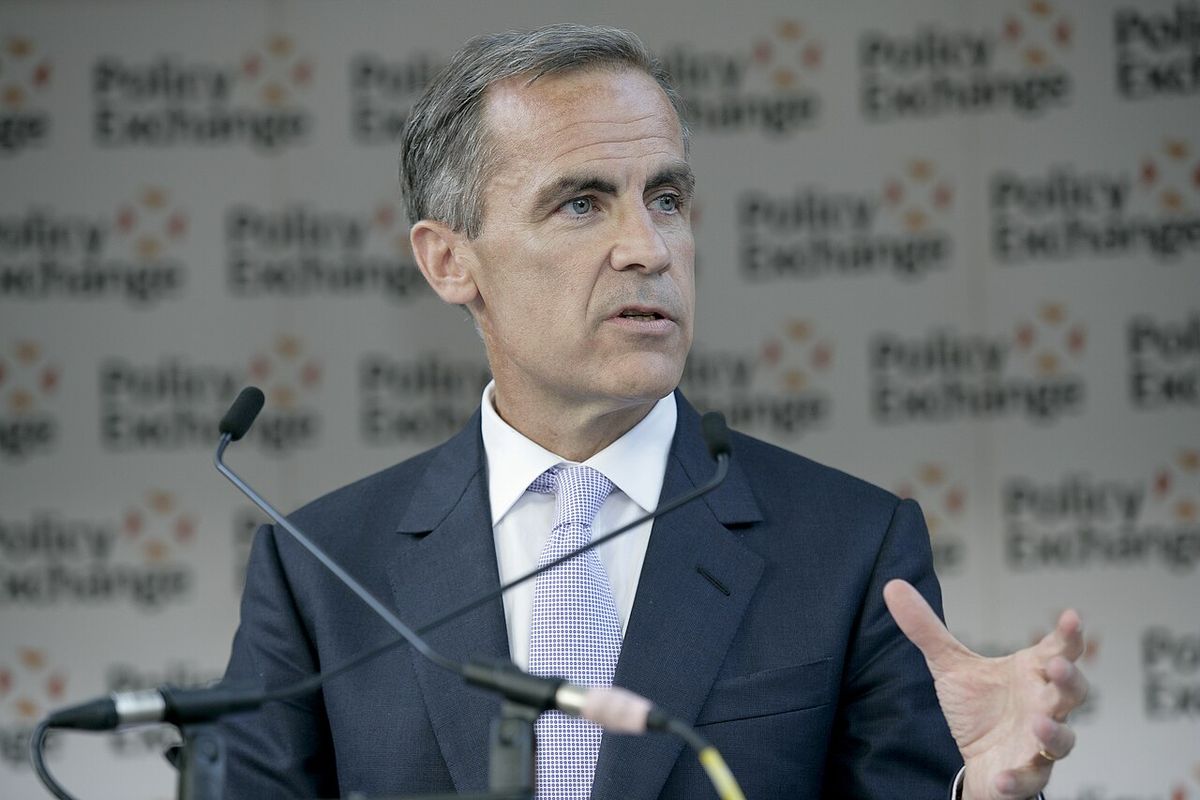
Mark Carney spent 13 years working for the investment bank Goldman Sachs, beginning in 1988. His career there was divided between two periods, from 1988 to 1993 and again from 1995 to 2003, after completing his doctorate. Carney worked in the firm's offices in Boston, London, New York City, Tokyo, and Toronto. He held progressively senior positions, including co-head of sovereign risk, executive director for emerging debt capital markets, and managing director for investment banking. His work involved significant international projects, including South Africa's post-apartheid entry into international bond markets and Goldman's involvement during the 1998 Russian financial crisis. This extensive experience in global finance provided the foundation for his later public service roles in central banking and economic policy.
Public Service and Governor of the Bank of Canada
Mark Carney left Goldman Sachs in 2003 to join the Bank of Canada as a deputy governor. After one year, he was recruited to the Department of Finance Canada, beginning on November 15, 2004, as senior associate deputy minister and G7 deputy. He served under Finance Minister Ralph Goodale, a Liberal, and later under Finance Minister Jim Flaherty, a Conservative. In this role, Carney oversaw the federal government's plan to tax income trusts and managed the profitable sale of the government's 19 percent stake in Petro-Canada. In October 2007, Carney was appointed Governor of the Bank of Canada, formally assuming the role on February 1, 2008. His tenure began at the onset of the 2008 global financial crisis. Carney's decisive actions are widely credited with helping Canada avoid the worst impacts of the crisis. Key monetary policy decisions during his governorship included:
- Cutting the overnight interest rate by 50 basis points in March 2008, one month after his appointment.
- Introducing a 'conditional commitment' in April 2009 to hold the policy interest rate at its effective lower bound for at least one year to boost credit conditions.
- Providing substantial additional liquidity to the Canadian financial system throughout the crisis.
Under Carney's leadership at the Bank of Canada, the Canadian economy was the first among G7 nations to have both its Gross Domestic Product and employment recover to pre crisis levels. In April 2012, Carney acknowledged there were issues in some segments of the housing market and some properties in Canada were probably overvalued. He stated low interest rates were not to blame but placed responsibility on individuals, banks, and federal mortgage rules. For his leadership during the crisis, Carney was named one of Financial Times's Fifty who will frame the way forward, included in Time Magazine's 2010 Time 100 list, and named Central Bank Governor of the Year 2012 by Euromoney magazine.
International Financial Leadership Roles
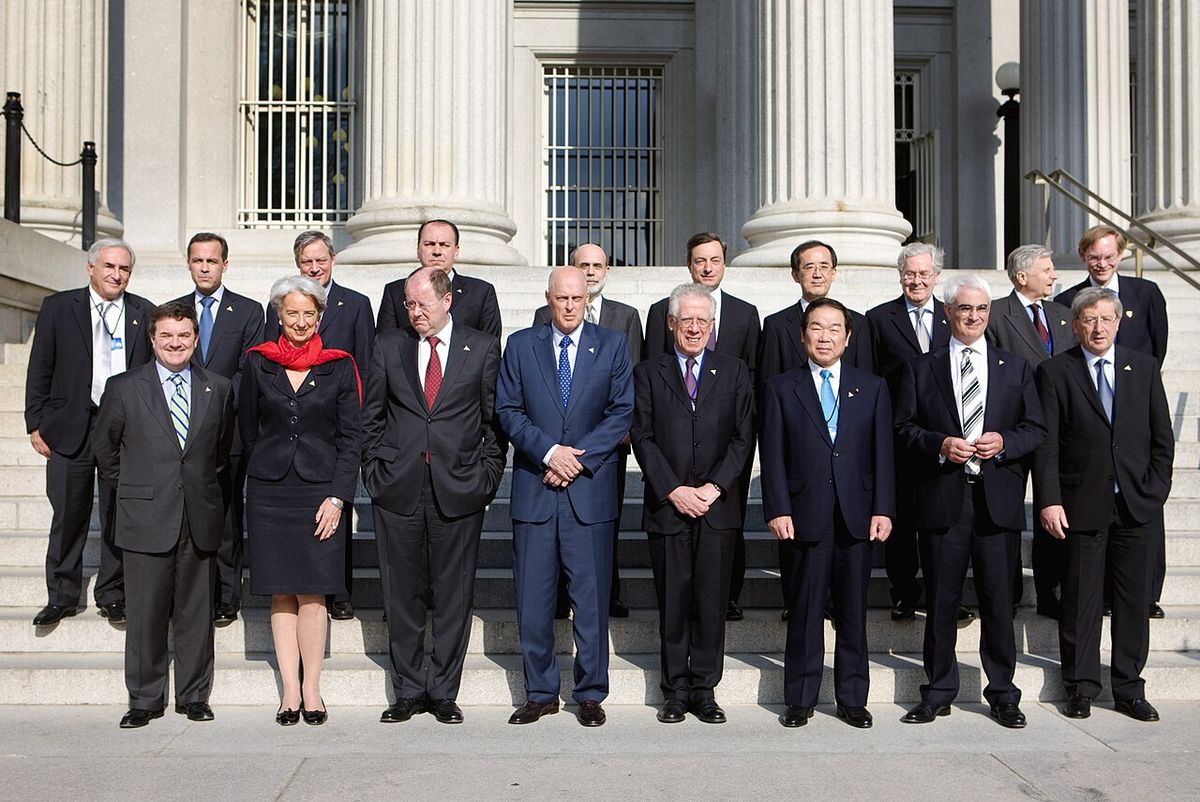
While Governor of the Bank of Canada, Mark Carney assumed significant international positions that extended his influence in global finance. In July 2010, he became chairman of the Bank for International Settlements' Committee on the Global Financial System, serving until January 2012. He was also a member of the Group of Thirty and the Foundation Board of the World Economic Forum. On November 4, 2011, Carney was appointed chairman of the Financial Stability Board, a Basel-based body that coordinates international financial regulatory authorities. His appointment was credited to the strong reputation of Canada's financial system. Carney served two three-year terms as chairman, with his second term ending in 2018. In this role, he laid out key priorities for the board in January 2012 and oversaw the publication of a list of 29 global systemically important banks. His international profile was a key factor in his subsequent appointment to lead the Bank of England.
Governor of the Bank of England (2013 to 2020)
On November 26, 2012, Chancellor of the Exchequer George Osborne announced the appointment of Mark Carney as Governor of the Bank of England. He succeeded Sir Mervyn King on July 1, 2013, becoming the first non-British governor since the bank's founding in 1694. Although the usual term is eight years, Carney initially agreed to serve only five years, until 2018. His pay package was reported to be approximately £624,000 per year. Carney implemented several changes to the bank's operations, including a policy called 'forward guidance' linking interest rates to unemployment, and reducing the number of yearly interest rate meetings from twelve to eight. His tenure involved managing the bank's response to major political events. Key challenges and actions during his governorship included:
- Warning in 2014 that a successful Scottish independence referendum would likely prevent the new country from using the pound sterling without ceding powers.
- Warning before the 2016 Brexit referendum that leaving the European Union could cause a recession.
- Cutting interest rates from 0.5% to 0.25% and restarting quantitative easing after the Brexit vote.
- Extending his term multiple times at the urging of UK Prime Minister Theresa May and Chancellor Philip Hammond to support Brexit negotiations, ultimately serving until March 2020.
- Cutting interest rates by 0.5% at the start of the COVID-19 pandemic in March 2020.
As Governor of the Bank of England, Carney commented on the United Kingdom's housing market. He stated UK housing prices and the lack of affordability were due to limited supply, noting that twice as many homes were built in Canada than in the UK, although Canada had half the population. Carney stated foreign cash buyers in the London market were beyond his control but he believed they did not pose a significant risk to the rest of the country. He assured the public the Bank was monitoring rising property prices and large value mortgages.
Post-Governorship Career and Climate Finance
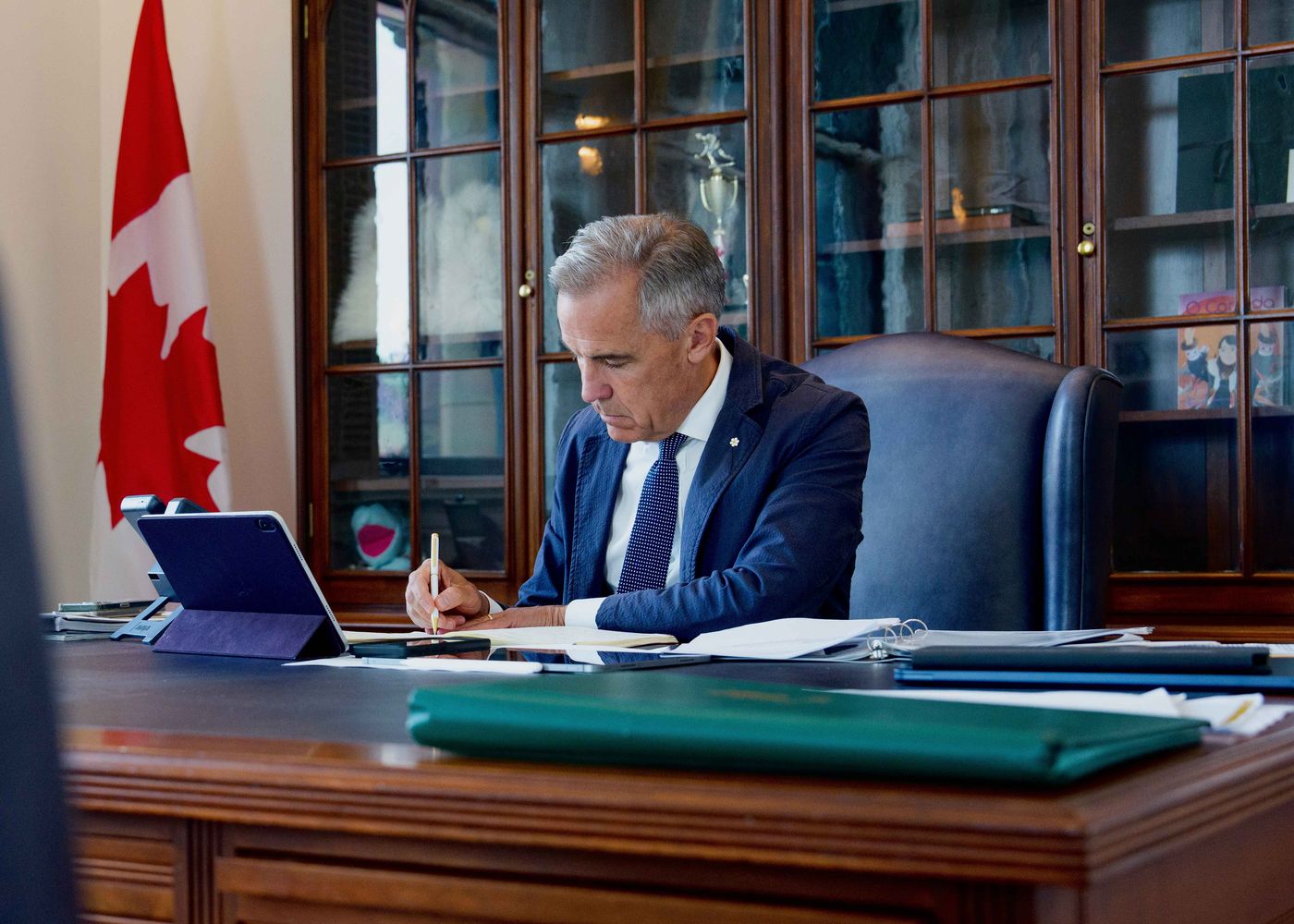
After leaving the Bank of England in 2020, Mark Carney took on several roles bridging the private sector and climate advocacy. He served as the United Nations Secretary-General's Special Envoy on Climate Action and Finance from 2020 onward. In October 2020, he became vice-chair at Brookfield Asset Management, leading its environmental, social, and governance (ESG) and impact fund investment strategy. In February 2021, he retracted an earlier claim that Brookfield's portfolio was carbon neutral after criticism over accounting for avoided emissions. Carney also joined the board of fintech company Stripe in February 2021. He was a key figure in climate finance initiatives, launching the Taskforce on Scaling Voluntary Carbon Markets in 2020 and co-founding the Glasgow Financial Alliance for Net Zero (GFANZ) at the COP26 summit in November 2021, where he served as co-chair. During the early phase of the COVID-19 pandemic, Carney served as an informal advisor to Prime Minister Justin Trudeau on the government's economic response, which fueled speculation about his political future.
Path to the Prime Ministership
The transition of Mark Carney from central banker to party leader was a rapid political development. Following Prime Minister Justin Trudeau's resignation announcement in 2025, Carney entered the Liberal Party leadership race. He won the leadership election in a landslide victory on March 9, 2025. Having never held elected office, he became the first prime minister to ascend directly from outside Parliament. Carney was sworn in as Canada's 24th prime minister on March 14, 2025. He then advised the governor general to dissolve Parliament, triggering a federal election in April 2025. Carney led the Liberals to a minority government victory, winning his own seat in the riding of Nepean, Ontario. A year later, his government achieved a parliamentary majority through opposition MPs crossing the floor and by-election victories. His swift rise from political neophyte to prime minister was unprecedented in Canadian history.
Prime Ministerial Policies and National Challenges
Prime Minister Mark Carney's government has pursued an agenda focused on economic sovereignty, national unity, and domestic affordability under the mantra 'Build Canada Strong.' A central theme has been reducing Canada's economic dependence on the United States amidst a trade war, highlighted by a proposed pipeline to the Pacific coast to reach Asian markets. Key domestic policy initiatives enacted by his government include the removal of the federal consumer carbon tax, the enactment of the One Canadian Economy Act, and the establishment of a Major Projects Office to streamline infrastructure development. His government also launched the Build Canada Homes agency and introduced the Canada Groceries and Essentials Benefit. In foreign policy, the Carney government has overseen a sharp increase in defence spending, formally recognized the State of Palestine, improved relations with China and India, and continued support for Ukraine. Carney has positioned himself as a centrist technocrat, moving the Liberal Party toward the political centre.
A defining early test was the 2025 Alberta separation referendum. Carney campaigned for unity, warning that external forces sought to break Canada. The referendum result saw 75.5 percent of voters choose to remain in Canada. Carney hailed the outcome, stating Albertans chose unity and to build together. The ballot also included nine other questions on provincial powers. Carney's approach to issues like provincial control over immigration, which was one such question, has been to seek federal-provincial cooperation rather than pursue constitutional amendments. He stated that sustainable immigration goals could be accomplished without the lengthy process of constitutional change, though he did not rule it out as a future possibility.
Personal Life and Distinctions
Mark Carney is married to British economist Diana Fox, whom he met at Oxford University. They have four daughters together. Carney is a practicing Catholic and was named Britain's most influential Catholic by the Tablet newspaper in 2015. He holds Canadian citizenship and, upon running for prime minister, began the process of renouncing his British and Irish citizenships. An avid sports fan, he supports the Edmonton Oilers, Edmonton Elks, and Everton FC. He is a marathon runner, having completed the 2011 Ottawa Marathon and the 2015 London Marathon in under four hours. Carney was elected to Harvard University's Board of Overseers in 2021, serving until his resignation in early 2025 when he assumed leadership of the Liberal Party. His godson is the son of Liberal MP Chrystia Freeland, a close friend and fellow northern Albertan with a similar educational background at Harvard and Oxford.
Frequently asked questions
How did Mark Carney become Prime Minister of Canada?
Mark Carney became Prime Minister after winning the Liberal Party leadership election in March 2025, following Justin Trudeau's resignation. He was sworn in as Prime Minister on March 14, 2025, despite never having held elected office before. He then led the Liberals to a minority government victory in the April 2025 federal election, winning a seat in the riding of Nepean, Ontario. A year later, his government achieved a majority through floor-crossings and by-elections.
What is Mark Carney's connection to Brookfield?
Mark Carney served as vice chairman at Brookfield Asset Management. He held this role in the private sector after his term as Governor of the Bank of England ended in 2020. At Brookfield, he led the firm's environmental, social and governance and impact fund investment strategy. This position was part of his career between his central banking governorships and his entry into Canadian politics.
What did Mark Carney do as Governor of the Bank of Canada?
Mark Carney served as the eighth Governor of the Bank of Canada from 2008 to 2013. He oversaw Canadian monetary policy during the 2008 global financial crisis, cutting the overnight rate early in his term. His bank used a non standard tool called conditional commitment to hold the policy rate low for at least one year to boost credit conditions. Under his leadership, the Canadian economy outperformed its G7 peers and was the first to recover its GDP and employment to pre crisis levels.
Was Mark Carney the Governor of the Bank of England?
Yes, Mark Carney served as the 120th Governor of the Bank of England from 2013 to 2020. He was the first non British person to hold the role since the bank's founding in 1694. His tenure included leading the central bank's responses to major events such as the Brexit referendum and the early phase of the COVID 19 pandemic. He extended his initial five year term several times to support stability during the Brexit negotiations.
What are Mark Carney's main policies as Prime Minister?
As Prime Minister, Mark Carney's main policies include removing the federal consumer carbon tax and enacting the One Canadian Economy Act. His government established the Major Projects Office in response to a trade war with the United States and launched the Build Canada Homes agency. Domestically, it introduced the Canada Groceries and Essentials Benefit. In foreign policy, his government oversaw a sharp increase in defence spending and formally recognized the State of Palestine.
Sources and further reading
- Mark Carney (Wikipedia) en.wikipedia.org
- Meet Mark Carney | Liberal Party of ... liberal.ca
- Alberta's decision to stay in Canada gives Carney backing ... bbc.com
- About | Prime Minister of Canada pm.gc.ca
- Carney says Albertans chose unity and to move forward ... cbc.ca
- Mark Carney thecanadianencyclopedia.ca
This article explains how things work and is not financial, tax or legal advice. Rules, limits and rates change, so check the current figures with the Canada Revenue Agency, your province or your financial institution before you act.