Black Monday was a severe and largely unexpected global stock market crash on Monday, October 19, 1987. Worldwide losses were estimated at US$1.71 trillion, sparking fears of extended economic instability. In Canada, the Toronto Stock Exchange experienced a dramatic plunge, with the index dropping 11.32 percent in a single day, erasing billions in market value. The event underscored the new era of financial globalization and led to significant reforms in market structure and central bank crisis response.
The Prelude to the Crash
The five-year period leading up to October 1987 was a powerful bull market. The S&P 500 index tripled from 102.42 in August 1982 to 336.77 by August 1987. The Dow Jones Industrial Average rose from 776 to a peak of 2,722 over the same period. This bullish trend was mirrored globally, with the nineteen largest world markets enjoying an average rise of 296 percent. Concerns grew that stocks were significantly overvalued and due for a correction. In the week before the crash, several events eroded investor confidence. On October 14, the US House Committee on Ways and Means introduced a bill to reduce tax benefits for mergers and leveraged buyouts. That same day, worse-than-expected US trade deficit figures were announced, pushing the US dollar lower and interest rates higher. The DJIA fell 95.46 points that day, followed by further declines on Thursday and Friday. By the close on Friday, October 16, the S&P 500 had fallen 9 percent for the week, setting the stage for panic.
Over the weekend, selling pressure continued to build despite markets being closed. Computer models used for portfolio insurance dictated large sales. Some large mutual fund groups also faced massive customer redemption requests that far exceeded their cash reserves, forcing them to plan large sales for Monday's market open. Traders anticipating these pressures planned to sell aggressively at the opening bell to get ahead of the expected price drop. This confluence of factors created a pent-up avalanche of sell orders waiting for the markets to reopen on Monday, October 19.
The Day of the Crash: October 19, 1987
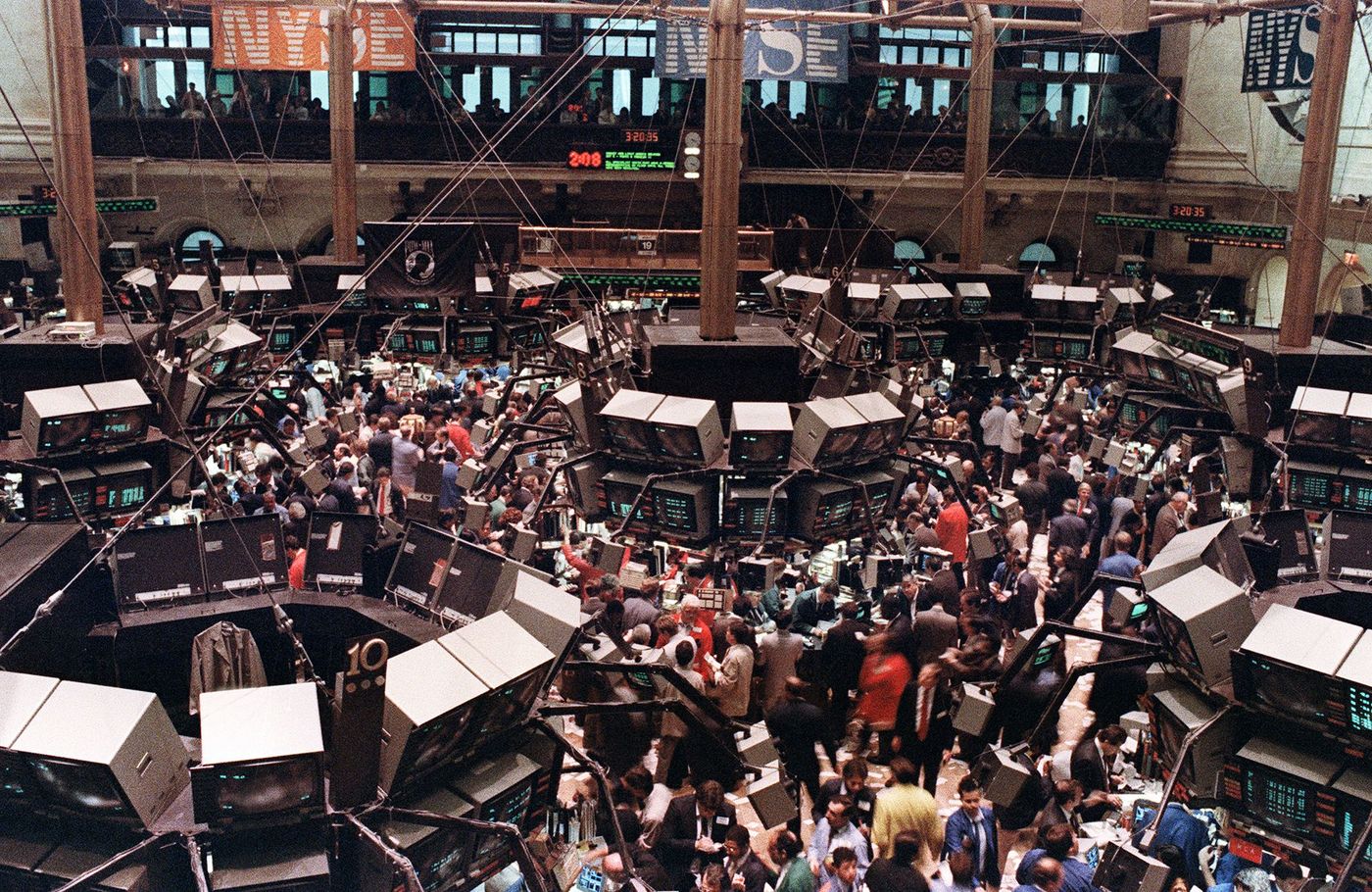
When the New York Stock Exchange opened on Black Monday, a massive imbalance between sell and buy orders placed immediate downward pressure on prices. Regulations allowed specialists to delay trading if order imbalances were too large, and on October 19, 95 stocks on the S&P 500 and 11 of the 30 DJIA stocks opened late. The futures market, however, opened on time with heavy selling. The DJIA fell from 2,246.74 at the open to 1,738.74 at the close, a loss of 508 points or 22.6 percent. This remains the largest one-day percentage drop in the history of the Dow Jones Industrial Average. The S&P 500 fell 20 percent and the Wilshire 5000 fell 18 percent. Selling intensified throughout the day, particularly in the last 90 minutes of trading, and total trading volume was so immense that computer and communications systems were overwhelmed.
Of the 2,257 NYSE-listed stocks, there were 195 trading delays and halts that day. Orders were left unfilled for over an hour due to the volume, and key systems like Fedwire and the NYSE SuperDot shut down for extended periods, compounding confusion. The crash was not confined to the United States. Stock markets crashed worldwide in a chain reaction, first in Asia, then Europe, then the US, and finally Japan. When measured in US dollars, eight markets declined by 20 to 29 percent, three by 30 to 39 percent, and three by more than 40 percent. The severity of the crash sparked immediate fears of extended economic instability or a reprise of the Great Depression.
Impact and Response in Canada
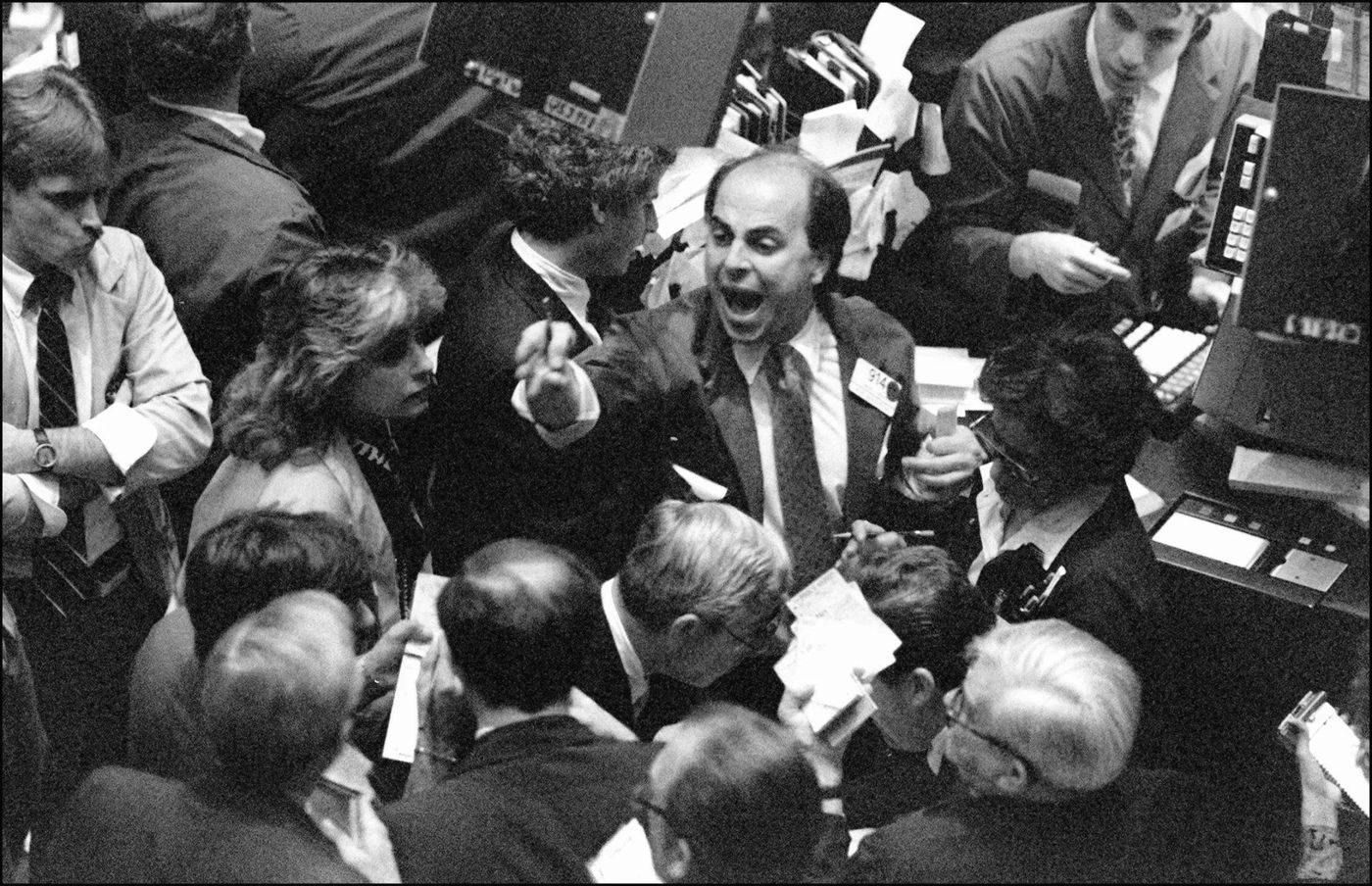
The Canadian market was hit hard on Black Monday. The Toronto Stock Exchange index dropped by 407 points, or 11.32 percent, in a single day. According to CBC reports, $47 billion worth of stock was wiped out on the Toronto Stock Exchange. The pandemonium was captured by media, with cameras showing frantic traders and one man heard shouting "I want to sell too!". Reporter Rae Hull noted that all eyes were glued to screens telling stories no one could believe. Broker Tom Green of Burns Fry described the situation as scary, noting it would take several days before the effects were known. The crash had immediate ripple effects beyond the trading floor, impacting investment clubs and other sectors of the economy.
In rural Ontario, an investment club met to debate how to react to the sell-off, with members questioning how far interest rates would be pushed down. The real estate market also felt a side effect, as panicked clients called agent Eugene Palermo to say they could no longer buy houses because their down payments had been lost in the stock market. Even the gold market, typically a safe haven, did not behave as expected during the sell-off. The event was so significant that it was described as one for the nation's history books. The scale of the Canadian drop was not surpassed until March 2020, when the S&P/TSX Composite Index fell 12 percent due to COVID-19 pandemic fears.
Global Market Reactions and Variations
The crash affected all twenty-three major world markets, but the severity varied significantly by country. The decline highlighted the new interconnectedness of global finance, as investors could watch crises spread from market to market in real time. The response of each nation's monetary policy directly influenced how the crash affected its wider economy. The central banks of the United States, West Germany, and Japan provided market liquidity to prevent debt defaults, which limited the real economic impact. In contrast, the Reserve Bank of New Zealand's refusal to loosen monetary policy had sharply negative and long-term consequences for its financial markets and real economy. Key International Declines on Black Monday:
- Hong Kong: Worst affected, with a drop of 45.8 percent.
- Australia and Singapore: Declines of more than 40 percent.
- Malaysia, Mexico and New Zealand: Declines of 30 to 39 percent.
- United Kingdom: The FTSE 100 fell 14 percent in a day, down 23 percent over two days.
- Japan: The Nikkei 225 fell 14.9 percent on October 20, but recovered within five months.
- Austria: Least affected, with a fall of 11.4 percent.
Japan's October 1987 crash was relatively mild and is sometimes referred to as 'Blue Tuesday' due to time zone differences. The Nikkei 225 Index returned to its pre-crash levels after only five months, a faster recovery than many other major markets. Several distinctive institutional characteristics in Japan helped dampen volatility, including trading curbs that limited price movements, restrictions on short-selling, and actions by the Ministry of Finance. An example of such action occurred when the ministry invited representatives of the four largest securities firms to tea on the day of the crash, after which these firms made large purchases of stock.
In stark contrast, Hong Kong experienced the worst decline among world markets, with share values dropping by 45.8 percent. The severe drop exposed critical flaws in the structure of the Hong Kong Futures Exchange, which was then the world's most heavily traded outside the U.S. The market was composed heavily of small, local investors whose goals were primarily speculative rather than for hedging. Furthermore, the market's guarantee corporation was severely underfunded, with only HK$15 million in capital. Fearing a total collapse, the Hong Kong Stock Exchange and Futures Exchange closed for four working days following the crash.
Systemic Risks and the Federal Reserve Rescue
The greatest economic danger in the days following the crash was not the drop itself but the potential for a spreading collapse of securities firms due to a liquidity crisis. On the day after Black Monday, margin calls were about ten times their average size and three times greater than the highest previous levels. Several brokerage firms had insufficient cash in customer accounts to meet these calls, and 11 firms received margin calls for a single customer that exceeded the firm's adjusted net capital. Banks became wary of extending more credit to brokerages, creating a severe risk that key financial institutions could fail, with spillover effects threatening the entire financial system and the real economy.
The Federal Reserve responded massively and immediately to act as the lender of last resort. On the morning of October 20, Chairman Alan Greenspan issued a brief statement affirming the Fed's readiness to support the financial system. The Fed then injected $17 billion into the banking system through open market operations in a single day, an amount equal to more than 25 percent of bank reserve balances and 7 percent of the nation's monetary base. This pushed the federal funds rate down by 0.5 percent. The Fed paired this liquidity provision with moral suasion, persuading nervous banks to continue lending to securities firms. This two-part strategy was successful in averting a broader financial collapse and set a precedent for central bank crisis management.
Causes and Contributing Factors
Black Monday cannot be attributed to a single cause but rather a combination of complex factors. A primary background condition was the significant overvaluation of stocks following a five-year bull market. Persistent US trade and budget deficits, known as the twin deficits, pushed long-term interest rates higher and undermined confidence. International agreements like the 1985 Plaza Accord and the 1987 Louvre Accord aimed to manage the US dollar's value, but doubts about their viability created a crisis of confidence in currency markets. Another explanation points to a decline of the dollar followed by a lack of faith in governmental attempts to stop that decline.
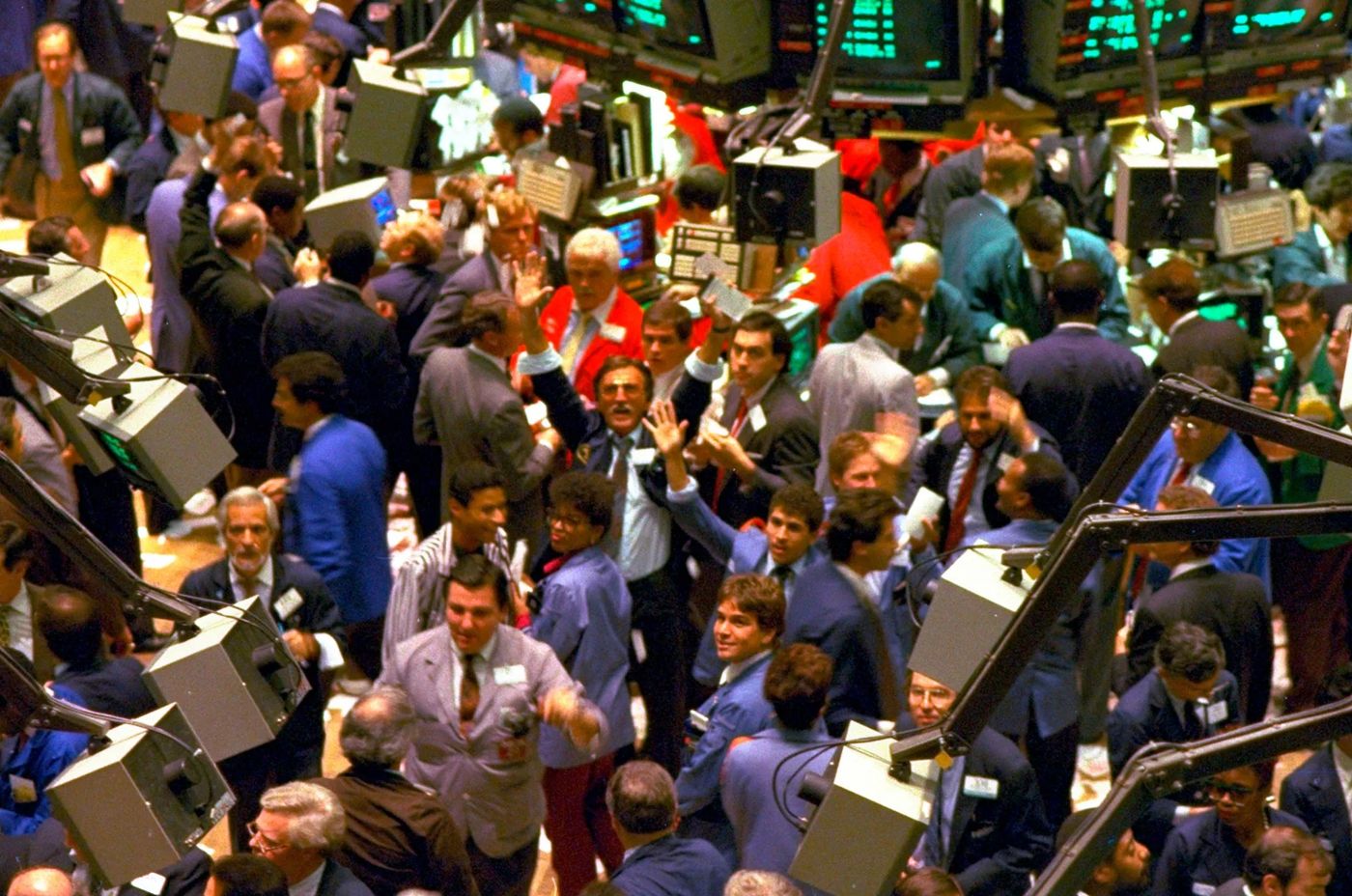
Several mechanisms accelerated the crash once it began. The widespread use of portfolio insurance, a strategy using computer-based models to sell index futures to hedge portfolios, created a self-reinforcing cycle of selling. As prices fell, the models dictated more sales, which pushed prices down further in a self-reinforcing contagion of fear. The structure of the markets themselves also played a role. Different timelines for clearing trades in stocks, options, and futures created the potential for negative account balances and forced liquidations. Furthermore, exchanges had no mechanisms to temporarily halt trading during rapid declines, allowing selling frenzies to proceed unchecked and overwhelming the system.
Aftermath and Lasting Reforms
The recovery from the crash took time but was ultimately achieved without triggering a depression. The S&P 500 index fell to 230.30 by November 1987, a 31.6 percent drop from its August high. It took until July 26, 1989, for the index to recover to its pre-crash peak of 336.77. In the aftermath, regulators identified key structural flaws and implemented reforms to prevent a repeat. A major change was the development of circuit breakers, rules that allow exchanges to temporarily halt trading if prices fall by a specified percentage. The New York Stock Exchange introduced this system, which triggers pauses if the S&P 500 drops 7, 13, or 20 percent compared to the previous day's close.
Trade-clearing protocols were overhauled to bring uniformity across different market products like stocks and futures, reducing settlement risk. The event also cemented the role of central banks, particularly the Federal Reserve, as providers of emergency liquidity during financial crises. This approach would be used again in future crises. For investors, Black Monday became a historic benchmark for market volatility and a stark lesson in the risks of interconnected, technology-driven global markets. The crash demonstrated that a chain reaction of market distress could send global exchanges plummeting in a matter of hours.
Comparative Market Data from the Crash
The global scale of the crash is evident when comparing the performance of major international indices. The table below shows a selection of key markets and their declines during the October 1987 crash period, illustrating the varied impact around the world. The data shows that while the crash was global, its severity was not uniform. Markets in Asia and the Pacific, like Hong Kong, Singapore, Australia, and New Zealand, experienced some of the steepest falls. The response of national authorities, particularly central banks, played a decisive role in the length and depth of each country's recovery period.
| Market/Index | Decline | Notes |
|---|---|---|
| Dow Jones Industrial Average (US) | 22.6% (Oct 19) | Largest one-day percentage drop in its history. |
| S&P 500 (US) | 20.5% (Oct 19) | Broad market index fell sharply. |
| Toronto Stock Exchange (Canada) | 11.32% (Oct 19) | Index dropped 407 points; $47 billion wiped out. |
| Nikkei 225 (Japan) | 14.9% (Oct 20) | Recovered to pre-crash levels within five months. |
| FTSE 100 (United Kingdom) | 14% in one day | Down 23% over two days after storm closure. |
| Hang Seng Index (Hong Kong) | 45.8% | Worst decline among world markets. |
| Straits Times Index (Singapore) | 40.7% | Sharp drop between September and October. |
| New Zealand Market | ~60% | Among the most severe declines globally. |
Frequently asked questions
What exactly happened on Black Monday 1987?
On Monday, October 19, 1987, global stock markets crashed in a severe and largely unexpected sell-off. The Dow Jones Industrial Average fell 508 points, or 22.6 percent, its largest one-day percentage drop in history. Worldwide losses were estimated at US$1.71 trillion. The crash spread rapidly from Asia to Europe and then to North America, highlighting the new interconnectedness of global financial markets.
How did the Canadian stock market perform on Black Monday?
The Toronto Stock Exchange experienced a dramatic plunge on Black Monday. The index dropped by 407 points, representing an 11.32 percent decline. According to contemporary reports, $47 billion in stock value was wiped out on the Toronto exchange. The trading floor was described as pandemonium, with systems overwhelmed and traders reacting with shock to the rapid decline.
What were the main causes of the Black Monday crash?
The crash resulted from a combination of factors. These included significant overvaluation of stocks after a long bull market, concerns over persistent US trade and budget deficits, and rising interest rates. The decline was accelerated by the widespread use of portfolio insurance, which used computer models to automatically sell index futures, creating a vicious cycle. Structural issues in market plumbing, like different settlement times for various products, also exacerbated the selling pressure.
How did authorities respond to prevent a wider economic collapse?
The Federal Reserve took immediate and massive action to provide liquidity and restore confidence. The day after the crash, it injected $17 billion into the banking system and issued a statement affirming its support. The Fed also persuaded commercial banks to continue lending to securities firms. This lender-of-last-resort response was credited with preventing a liquidity crisis from spreading to the broader financial system and real economy.
How long did it take for the stock market to recover after Black Monday?
The recovery period varied by market. In the United States, the S&P 500 index fell to a low in November 1987 and did not recover to its pre-crash high of 336.77 until July 26, 1989, a period of about 21 months. Japan's Nikkei 225 index recovered much faster, returning to its pre-crash levels within just five months. The Toronto Stock Exchange, along with other major markets like London and Frankfurt, took more than a year to achieve a full recovery.
What lasting changes were made to markets after Black Monday?
The crash led to significant financial market reforms designed to prevent a repeat. The most notable was the introduction of circuit breakers, rules that temporarily halt trading during rapid market declines. Regulators also overhauled trade-clearing protocols to create uniformity across stocks, options, and futures markets, reducing settlement risk. These changes aimed to add stability and provide time for rational decision-making during periods of extreme volatility.
Sources and further reading
- Black Monday (1987) (Wikipedia) en.wikipedia.org
- In 1987, a triple-digit-point stock market drop was huge cbc.ca
- Stock Market Crash of 1987 federalreservehistory.org
- The Black Monday Stock Market Crash, This Month in ... guides.loc.gov
- Canadian market meltdown the biggest one-day drop since ... thestar.com
- Black Monday: causes, impact and historical context oanda.com
This article explains how things work and is not financial, tax or legal advice. Rules, limits and rates change, so check the current figures with the Canada Revenue Agency, your province or your financial institution before you act.