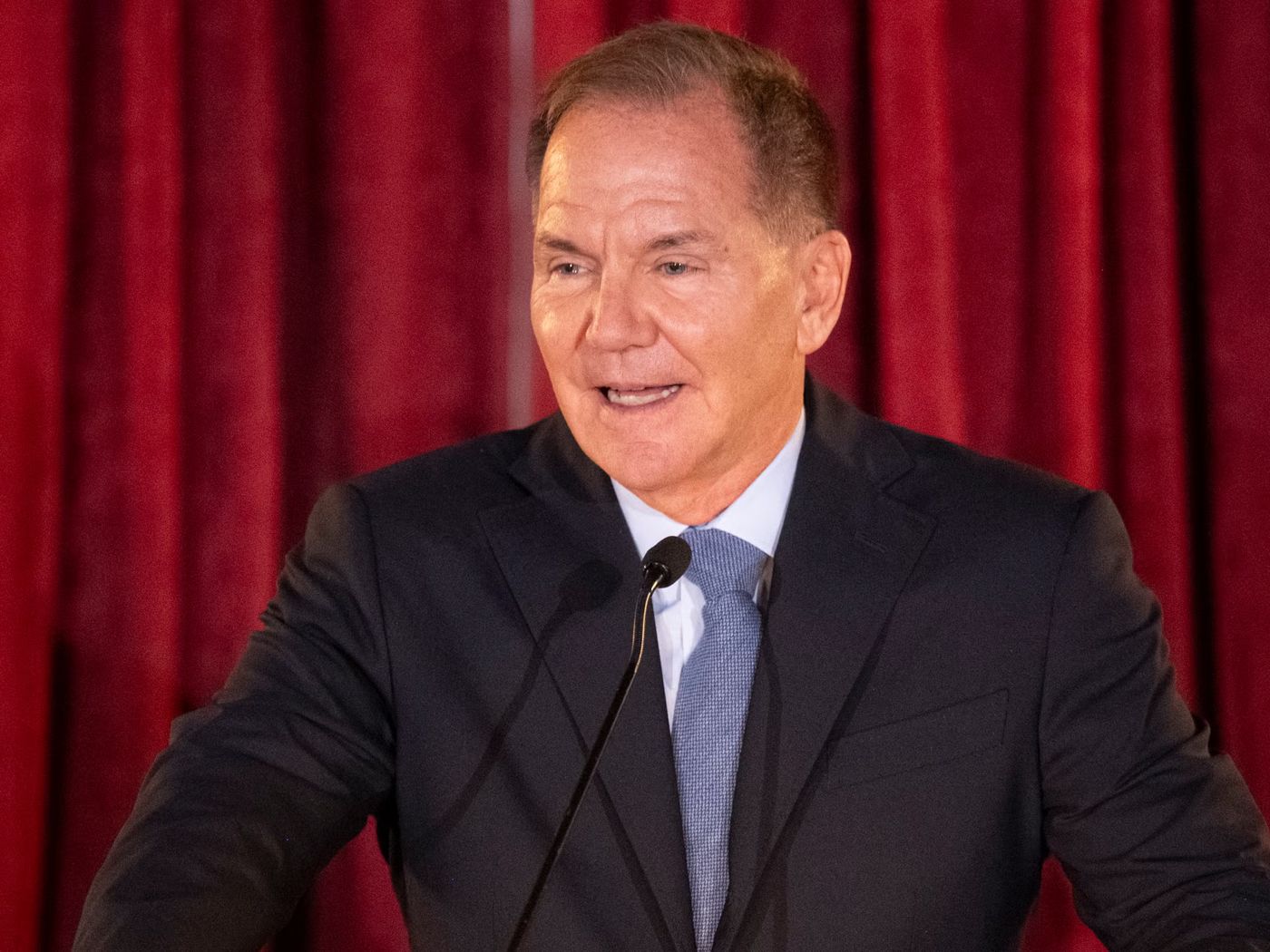
Paul Tudor Jones II is an American billionaire hedge fund manager, best known as the founder of Tudor Investment Corporation. He gained widespread recognition in financial markets for predicting and profiting from the 1987 stock market crash. His career spans over four decades in global macro trading, and his philanthropic work includes co-founding the Robin Hood Foundation. For Canadian investors and finance professionals, Jones represents a significant figure in the hedge fund industry, known for his distinct trading rules and market commentary.
Early Career and Founding Tudor Investment
Paul Tudor Jones began his career in 1976 on the floor of the New York Cotton Exchange after graduating from the University of Virginia. His cousin, cotton merchant William Dunavant Jr., introduced him to commodity broker Eli Tullis, who hired and mentored him. Jones was fired from his first trading job for falling asleep at his desk after a night out, but he later returned to serve as the exchange's treasurer in 1986 and chairman from 1992 to 1995. In 1980, at the age of 26, he founded Tudor Investment Corporation with an initial $30,000 to manage from an external investor. The firm started with Jones's experience in cotton futures and branched into other commodities, stock-index contracts, and currency futures. Early clients included his mentors Dunavant and Tullis, setting the foundation for what would become a multi-billion dollar investment firm.
Investment Philosophy and Major Trades
Paul Tudor Jones's investment style is classified as global macro, primarily based on technical analysis and momentum factors rather than traditional value investing. His approach emphasizes risk management and identifying major market trends. One of his earliest and most famous successes was predicting the 1987 Black Monday stock market crash. His fund, Tudor, returned 125.9 percent after fees that year, earning an estimated $100 million by taking large short positions. This trade was anticipated by mapping the 1987 market against the period preceding the 1929 crash, a analysis led by his colleague Peter Borish. In 1990, Jones again demonstrated his macro prowess by returning 87.4 percent through shorting the Japanese equities market as its bubble burst.
Jones has publicly discussed his investment views on modern assets. In 2020, he stated he owns Bitcoin as a hedge against inflation. More recently, in 2024, he commented that gold and silver might outperform cryptocurrencies through the end of the year, despite previous favouring of Bitcoin. He has expressed concerns about future inflation rekindling in a more serious fashion in about 18 months, citing global fiat money debasement. His firm, Tudor Investment Corporation, manages approximately $12 billion in assets as of 2022. The firm's strategies are broad, including discretionary global macro, quantitative global macro (managed futures), equity long/short, and venture capital.
Business Operations and Fee Structure
Tudor Investment Corporation is the principal entity within the Tudor Group, a collection of affiliated companies engaged in active trading and investing across global fixed income, currencies, equities, and commodities. The firm serves an international clientele. While the hedge fund industry standard for fees is often cited as a two percent management fee and twenty percent of profits, Tudor charges a higher four percent per annum of assets under management and twenty-three percent of the profits. This premium fee structure reflects the firm's track record and Jones's reputation. The Tudor Group's investment capabilities are diverse, encompassing fundamental equity investing in the U.S. and Europe, emerging markets, commodities, event-driven strategies, and technical trading systems.
Jones has held several influential roles in financial markets beyond his firm. He served on the New York Fed Investor Advisory Committee on Financial Markets from 2015 through 2021. He was also a member of the Treasury Borrowing Advisory Committee from May 2010 through December 2011. His early work on the New York Cotton Exchange was instrumental in the creation of its Financial Instrument Exchange (FINEX) subsidiary and the development of the U.S. dollar index futures contract, which provided his firm with greater liquidity and trading flexibility.
Philanthropy and Charitable Foundations
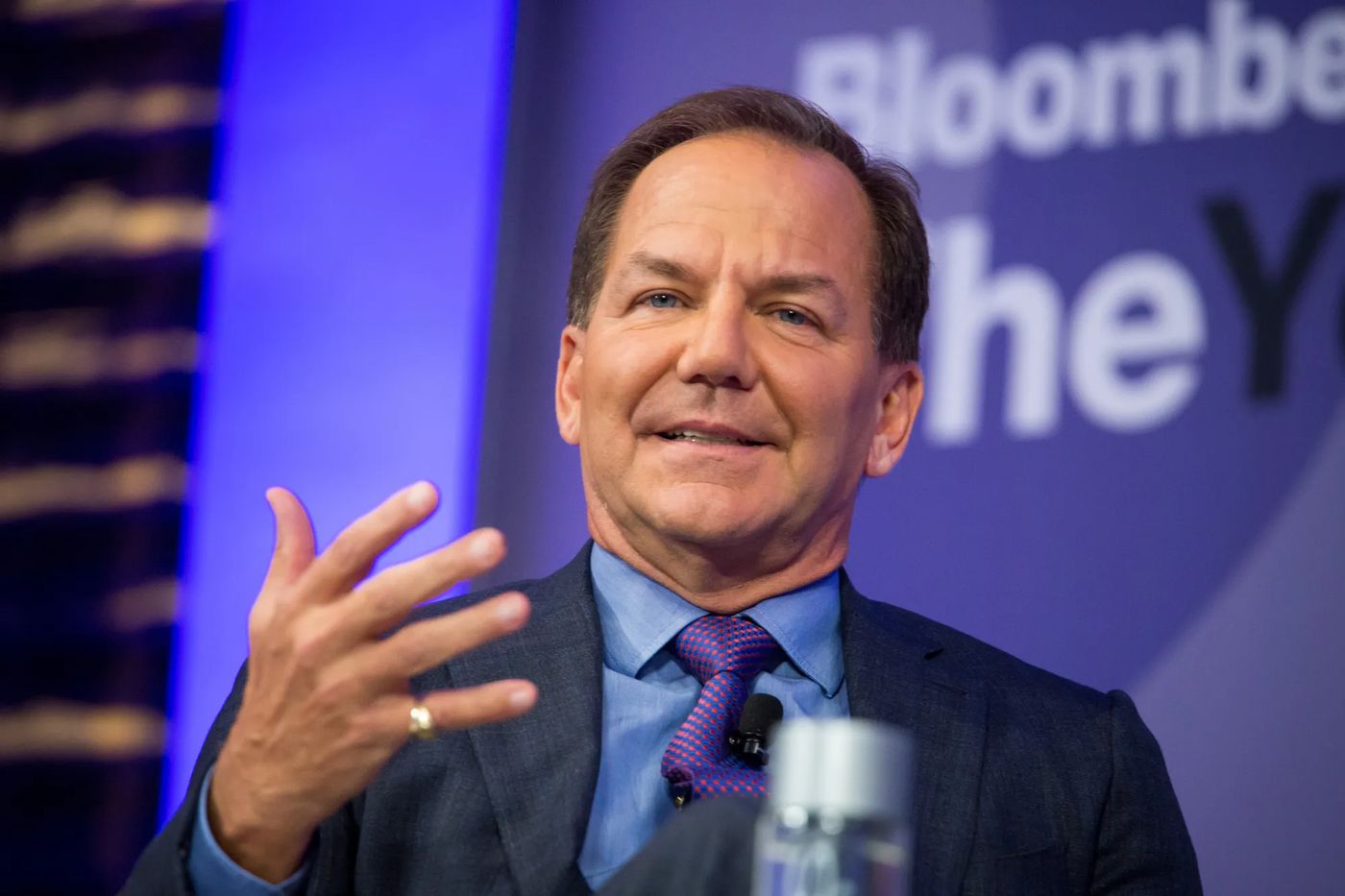
Paul Tudor Jones is a prominent philanthropist with a focus on poverty alleviation, education, and conservation. His first major philanthropic effort was in 1986 when, inspired by a television segment, he adopted a sixth-grade class in Bedford, Stuyvesant, Brooklyn, guaranteeing college scholarships to those who graduated high school. The program was not successful, with only 33 percent of students graduating, but Jones stated it taught him valuable lessons for future efforts. In 1988, he co-founded the Robin Hood Foundation with Peter Borish and Glenn Dubin, a charitable organization backed by hedge fund operators that fights poverty in New York City. In 2004, he founded the Excellence Charter School in Brooklyn, the United States' first all-boys charter school.
Jones and his wife, Sonia, joined the Giving Pledge in 2019, committing to give the majority of their wealth to charity. His philanthropic service is extensive. He is the chairman of JUST Capital Foundation, a nonprofit that ranks companies based on factors Americans deem important like fair pay and ethical leadership. He is a co-founder and board member of The Everglades Foundation, dedicated to conserving the Florida wetlands. He also served as former Chairman and remains a board member of the National Fish and Wildlife Foundation. Jones has made significant donations to his alma mater, the University of Virginia, including a $44 million gift for the John Paul Jones Arena and a $12 million gift to create the Contemplative Sciences Center.
Conservation Work and Environmental Record
Jones has a complex relationship with environmental conservation, being both a noted conservationist and having faced legal penalties for environmental damage. In 1990, he pleaded guilty to illegally destroying 86 acres of protected wetlands on his Maryland estate by depositing 1,400 cubic yards of gravel without a permit. He was ordered to pay a $1 million fine and $1 million in restitution, avoiding a possible jail term. Despite this, he became a significant figure in conservation philanthropy. In 1993, he co-founded the Everglades Foundation and chairs its board, which has included celebrities like Jimmy Buffett.
His conservation efforts extend internationally. In 2002, the Tanzanian government leased him the Grumeti reserve in the Serengeti. His model involved paying the government's hunting fees while nearly eliminating hunting on the land, focusing on photographic safaris and ecological sustainability. For his contributions, the National Audubon Society awarded him the Audubon Medal in 2016 for advancing conservation with economic sustainability. This work aligns with his personal interests, as he is described as having a deep relationship with nature and God.
Public Controversies and Reputation
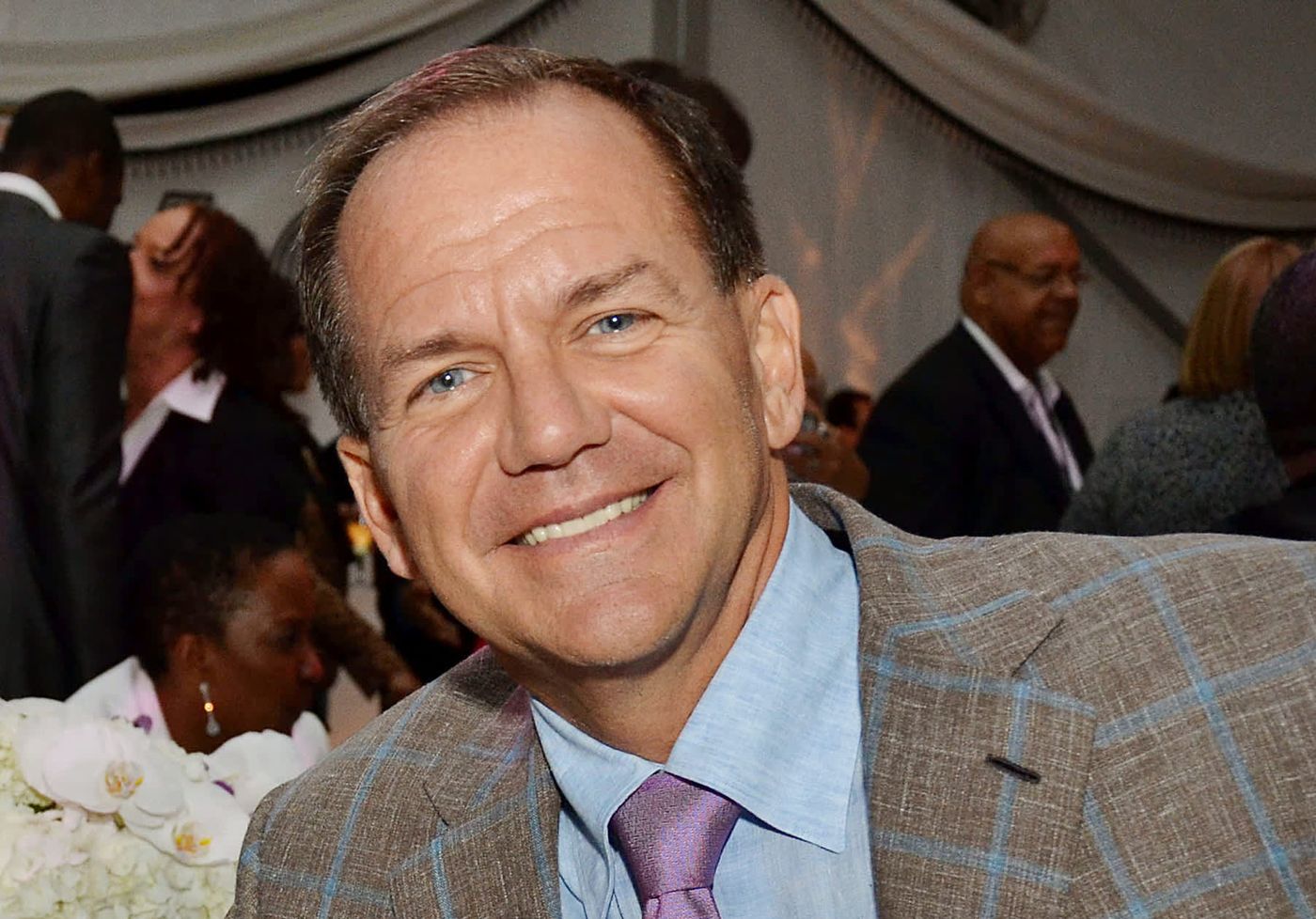
Paul Tudor Jones's career has been marked by significant public controversies alongside his professional acclaim. In 1994, Tudor Investment Corporation paid an $800,000 fine to the Securities and Exchange Commission to settle allegations of violating the uptick rule, without admitting or denying wrongdoing. In 2012, he was a reported key figure in the controversial, though short-lived, ousting of University of Virginia President Teresa Sullivan, penning an editorial supporting her removal before she was reinstated. In 2013, a video from a closed-door University of Virginia roundtable drew widespread criticism for comments Jones made about motherhood and trading focus.
Jones also had associations with controversial figures. He was a friend and board member of The Weinstein Company, emailing Harvey Weinstein support in 2017 before later distancing himself. His hedge fund also gave Jeffrey Epstein $13.5 million in the year before Epstein's death. Despite these incidents, his reputation in finance remains strong. A 1988 Wall Street Journal front-page story called him "the most-watched, most-talked-about man on Wall Street." He was inducted into Alpha magazine's Hedge Fund Manager Hall of Fame in 2008 and is frequently described as one of the greatest macro traders. A 1987 PBS documentary, "Trader," profiled his prediction of the crash, though Jones later requested it be removed from circulation, possibly to protect trading secrets.
Key Trading and Investment Rules
Paul Tudor Jones's global macro trading style is based primarily on technical analysis. His investment philosophy emphasizes momentum factors driving markets. He has suggested he regretted not being more involved with venture investing in technology firms during the 1990s. Jones also stated in 2020 that he owns bitcoin as a hedge against inflation.
- Rule 1: Cut Losers Short & Let Winners Run. Jones advocates for quickly admitting mistakes and exiting losing positions while allowing profitable trades to continue.
- Rule 2: Avoid Investing Without Specific End Goals. Every investment should have a clear objective and thesis from the outset.
- Rule 3: Never Add to a Losing Position. Averaging down on a losing trade is considered a mistake. He has stated "only losers add to losers."
- Rule 4: The Trend is Your Friend. He believes 80 percent of portfolio performance is determined by the underlying market trend, and fighting the major trend is generally an error.
- Rule 5: Protect Capital First. Risk management is the single most important daily task, prioritizing the defense of capital over the pursuit of gains.
- Rule 6: Use Both Fundamental and Technical Analysis. Fundamentals determine the "what" to trade, while technical analysis determines the "when."
- Rule 7: Manage Risk, Not Just Returns. Investors who focus on risk first are less susceptible to greed and major losses.
- Rule 8: Do Not Focus on Being Right Every Time. Consistency and getting "on base" is more important for long-term success than a perfect batting average.
His firm, Tudor Investment Corporation, manages a broad and diverse range of investment capabilities. These include global macro trading, fundamental equity investing, and technical trading systems. One of his earliest major successes was predicting Black Monday in 1987, tripling his money during the event. In 1990, as the Japanese equities bubble was bursting, Jones returned 87.4 percent through shorting the market.
Personal Life and Legacy
Paul Tudor Jones was born in Memphis, Tennessee, and worked for his family's newspaper, The Daily News, to pay for university tuition. He was a welterweight boxing champion at the University of Virginia. In the mid-1980s, media profiles highlighted a lavish lifestyle, with Institutional Investor noting a reputation for "courting models and partying long into the night." He married Australian-born yoga entrepreneur Sonia Klein in 1988 in Memphis. The couple has four children: three daughters and a son. His eldest daughter, Caroline, is a country-pop singer with the Zac Brown Band. The family has resided in Greenwich, Connecticut, and Palm Beach, Florida.
Politically, Jones is an independent who has donated to both major American parties. He hosted a fundraiser for Barack Obama in 2008, donated to Mitt Romney in 2012, and has also contributed to campaigns for John McCain, Rudy Giuliani, and Kathy Hochul. His legacy combines his achievements as a pioneering macro trader, his substantial philanthropic work, and his involvement in public controversies. For the investment community, his enduring influence lies in his demonstrated market acumen, his emphasis on risk discipline, and the set of trading principles that continue to be studied by professionals worldwide.
Frequently asked questions
What is Paul Tudor Jones best known for?
Paul Tudor Jones II is an American billionaire hedge fund manager. He is best known for founding Tudor Investment Corporation in 1980. He is also known for co-founding the Robin Hood Foundation eight years later, which focuses on poverty reduction. One of his earliest and major successes was predicting Black Monday in 1987, tripling his money during the event.
What is Paul Tudor Jones's net worth?
As of July 2024, his net worth was estimated at US$8.1 billion. His wealth is derived from his hedge fund, Tudor Investment Corporation. As of 2022, his firm managed $12 billion. In 2019, Forbes estimated his net worth to be US$5.3 billion.
What philanthropic work does Paul Tudor Jones do?
Jones is a major philanthropist. He co-founded the Robin Hood Foundation in 1988 and the Everglades Foundation in 1993. He founded the Excellence Charter School in 2004 and chairs the JUST Capital Foundation. He and his wife joined the Giving Pledge in 2019, committing to donate most of their wealth to charitable causes.
Has Paul Tudor Jones been involved in any controversies?
Yes, Jones has been involved in several controversies. In 1994, his firm paid an SEC fine for rule violations. In 2013, he faced criticism for comments about mothers in trading. He was also linked to the controversial ousting of a university president and had associations with Harvey Weinstein and Jeffrey Epstein.
What are Paul Tudor Jones's main trading rules?
His investment philosophy is described as a global macro trading style based primarily on technical analysis, with an emphasis on momentum factors driving markets. The notes detail his specific strategies and successes, such as predicting the 1987 Black Monday crash through large short positions. They also mention his firm's diverse capabilities, including global macro trading, fundamental equity investing, and quantitative systems. However, no enumerated set of personal trading rules is provided within the source material.
Sources and further reading
- Paul Tudor Jones (Wikipedia) en.wikipedia.org
- Paul Tudor Jones, Lessons From 50 Years in Markets podcasts.apple.com
- Paul Tudor Jones II sloansportsconference.com
- Paul Tudor Jones sees potential market rally after late ... ca.finance.yahoo.com
- 10 rules of Paul Tudor Jones mitchorr.com
This article explains how things work and is not financial, tax or legal advice. Rules, limits and rates change, so check the current figures with the Canada Revenue Agency, your province or your financial institution before you act.