A tech bubble is a rapid and unsustainable rise in the stock market valuations of technology companies, driven by investor speculation that outpaces the companies' actual profits or fundamental value. The most famous example is the dot-com bubble of the late 1990s, which peaked in March 2000 before collapsing and erasing trillions in market value. In Canada, the phenomenon is highly relevant as the country's major pension funds and stock market are now heavily exposed to a new wave of technology and artificial intelligence stocks. Understanding these bubbles, their causes, and their aftermath is crucial for Canadian investors and anyone concerned with the stability of public pension funds and the broader economy.
What Is a Tech Bubble?
A tech bubble occurs when investor enthusiasm for technology companies drives their stock prices to levels far beyond their intrinsic value or reasonable future earnings potential. This is a specific type of stock market bubble, where asset prices become disconnected from fundamental value due to a change in investor behaviour. The bubble is characterized by widespread speculation, easy access to venture capital, and a focus on rapid growth and market share over profitability. The most documented instance is the dot-com bubble, named for the .com suffix used by many internet-based startups of the era. A dot-com company is one that conducts most of its business on the Internet, typically through a website using the .com top-level domain. The .com domain was created in 1985 as one of the Internet's first seven top-level domains. The bubble phase ends when confidence falters, leading to a sharp correction or crash as prices collapse back toward fundamental values.
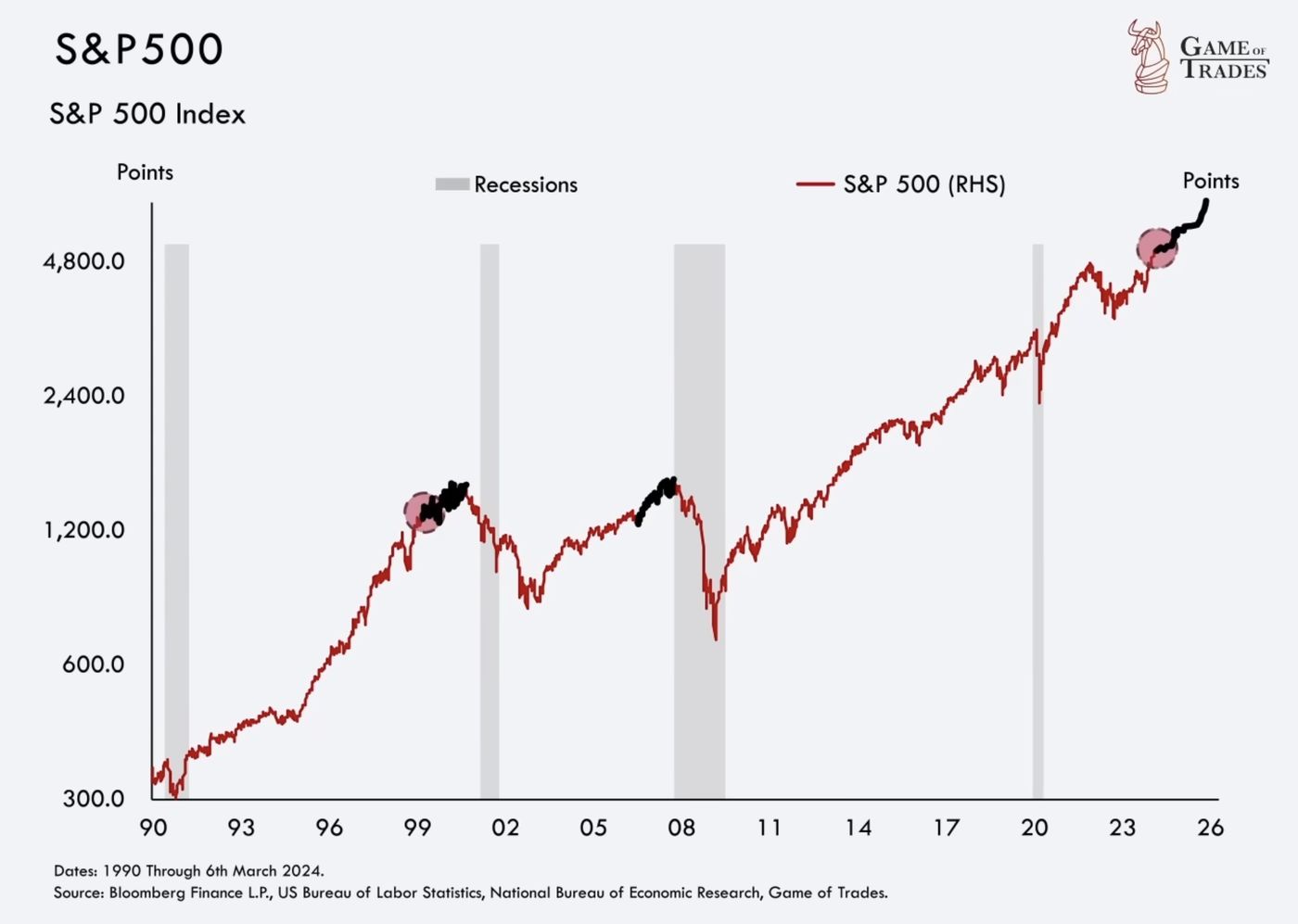
![OC] S&P 500 Comparing Dotcom and AI Bubbles with Two Scales : r/dataisbeautiful](/media/tech-bubble-g2.jpg)
Causes and Buildup to the Dot-Com Bubble
The dot-com bubble developed during the late 1990s against a backdrop of technological innovation and favourable economic conditions. The creation of the World Wide Web in 1991 and the release of the Mosaic web browser in 1993 popularized Internet use, with over 40 million people online by 1995. Pioneering companies like Amazon and eBay launched that same year, demonstrating the potential of e-commerce. Venture capital became exceptionally easy to raise for any company with an Internet-related idea or a .com name. Investors overlooked traditional metrics like price-to-earnings ratios, driven by confidence that these companies would generate future profits. The Nasdaq Composite stock market index, heavily weighted with tech stocks, rose 400% between 1995 and 2000. Contributing factors included a decline in interest rates, the Taxpayer Relief Act of 1997 which lowered capital gains taxes in the United States, and optimistic commentary from figures like Federal Reserve Chair Alan Greenspan. The Telecommunications Act of 1996 also spurred investment in related infrastructure.
Characteristics and Excesses of the Bubble
During the height of the dot-com bubble, companies and investors engaged in several behaviours that signaled unsustainable speculation. Dot-com companies adopted a 'get big fast' mentality, spending heavily on advertising and promotions to build market share, often while offering services for free or at a loss. Lavish spending on elaborate offices and employee perks was common. An unprecedented amount of personal investing occurred, with stories of people quitting jobs to trade stocks. The news media fueled speculation, with some outlets suggesting investors rethink the 'quaint idea' of profits. Many companies went public via initial public offerings without ever having made a profit, or in some cases, without a finished product. Executives and early employees could become paper millionaires overnight, though they were often barred from selling shares immediately due to lock-up periods. The bubble also extended into telecommunications, where companies invested over $500 billion in debt-financed infrastructure like fibre optic cable, far outstripping demand. Key indicators of the bubble's excess included a Nasdaq price-to-earnings ratio over 200 in 1999, Qualcomm shares rising 2,619% that same year, and 17 dot-com companies buying ads for Super Bowl XXXIV in 2000.
Many dot-com companies spent heavily on advertising and promotions to build market share quickly, often using the motto 'get big fast'. They offered services for free or at a discount, expecting to charge profitable rates later. Some companies engaged in lavish spending on elaborate business facilities and luxury vacations for employees. They also organized expensive launch events known as dot-com parties.
- Twelve other large-cap stocks rose over 1,000% in value in 1999.
- Telecom spectrum auctions raised tens of billions, such as £30 billion in Germany in August 2000.
- Super Bowl advertising became a symbol of the boom, with ad spots costing between $1.9 million and $2.2 million for 30 seconds.
- Companies like MicroStrategy saw stock prices rise from $7 to $333 per share in a year before crashing.
- Venture capitalist Sir John Templeton successfully shorted many dot-com stocks at the peak, anticipating executives would sell shares as soon as lock-up periods ended.
The Burst and Immediate Aftermath
The dot-com bubble peaked on March 10, 2000, with the Nasdaq Composite index reaching 5,048.62. The burst was triggered by a combination of events that eroded investor confidence. On March 13, news of a recession in Japan triggered a global sell-off that hit tech stocks hard. A March 20 Barron's cover article titled 'Burning Up' warned that Internet companies were running out of cash, causing many to rethink investments. That same day, MicroStrategy announced a revenue restatement due to aggressive accounting, and its stock fell 62% in a day. The Federal Reserve raised interest rates, contributing to an inverted yield curve. On April 3, 2000, a ruling against Microsoft in an antitrust case led to a one-day 15% drop in its shares and an 8% fall in the Nasdaq. By April 14, the Nasdaq had fallen 25% in a single week. High-profile failures followed, such as Pets.com shutting down in November 2000. The September 11 attacks in 2001 and accounting scandals at Enron and WorldCom further deepened the crisis. By October 9, 2002, the Nasdaq had fallen 78% from its peak, wiping out $5 trillion in market capitalization. The aftermath saw massive layoffs, a glut of office equipment like Aeron chairs being liquidated, and a sharp drop in university enrollments for computer-related degrees.
Legacy and Survivors
While the crash was devastating, it did not erase the Internet's long-term potential. Many companies failed, but 48% of dot-com companies survived through 2004, albeit at much lower valuations. The period forced a shift in operational mentality, with executives focusing on burn rate and a path to profitability. The bubble's burst led to industry consolidation, allowing the strongest companies to dominate their fields. Amazon, eBay, and Google emerged from the wreckage to become giants. The most valuable public companies today are generally in the technology sector. The crash also led to regulatory actions, with the SEC levying large fines against investment firms like Citigroup and Merrill for misleading investors, and executives such as WorldCom's Bernard Ebbers facing fraud convictions. The event left a lasting imprint on investor psychology, shifting many toward more cautious investment positions and diminishing the popularity of high-tech stock forums like Silicon Investor and The Motley Fool.
Tech Bubbles and the Canadian Context
Canada is not immune to tech bubbles, and its economy and pension system face significant exposure today. Historically, bubbles in Canada have included the Vancouver housing market in the late 2010s. Currently, the focus is on a potential bubble in artificial intelligence stocks. Canadian pension funds have heavy concentrations in leading AI and tech companies. The Canadian Pension Plan Investment Board held $8 billion in Nvidia stock as its largest single equity holding at the end of September, with its eight largest holdings all being AI stocks worth a combined $33 billion. Quebec's Caisse de dépôt also reported Nvidia as its largest holding. This concentration means an AI stock correction could profoundly impact the financial security of millions of Canadians. Furthermore, the Canadian technology sector itself shows signs of strain, with wages at the fastest-growing tech companies increasing 20% over the past year, pressuring balance sheets as financing becomes more difficult with rising interest rates. The S&P/TSX Composite Index, heavy with financials and energy, has been less volatile than the tech-heavy Nasdaq, prompting some Canadian investors to diversify into Canadian equity ETFs for stability.
Comparing the Dot-Com Bubble to Today's Market
Analysts frequently compare the current market environment, dominated by AI and big tech, to the dot-com bubble. There are notable similarities and differences. Both periods feature narrow market leadership, where a small number of technology stocks drive broader market returns. In the late 1990s, six of the top 10 firms by capitalization were in tech or telecom. Today, five of the top 10 are in tech or communications, with Microsoft being the only company present in both eras' top tiers. Valuation metrics, however, show key contrasts. While today's largest tech companies trade at a premium to the market, that premium is nowhere near the extremes of the dot-com era when the price-to-sales premium for the largest tech stocks was dramatically higher. The current rise in tech stock prices has also been at a steadier rate compared to the rapid escalation that defined the 1990s bubble. A critical difference noted by economists is that the top companies in the S&P 500 today may be more overvalued based on price-to-earnings ratios than the top companies were in the 1990s, suggesting a potential for a severe correction. The table below summarizes key comparisons.
| Era | Representative Large Tech Stocks | Market Leadership | Valuation Extreme |
|---|---|---|---|
| Dot-Com Bubble (Late 1990s) | Intel, Cisco, Microsoft, IBM, Lucent, Oracle (ICMILO) | Extremely narrow, tech drove most gains | Very high price-to-sales premiums |
| Current Market (2020s) | Facebook (Meta), Apple, Amazon, Microsoft, Alphabet (FAAMA) | Narrow, but less extreme than 1990s | High, but below 1990s peak levels |
Risks and Ongoing Debates
The primary risk of a tech bubble is a sharp correction that destroys wealth and can trigger broader economic slowdowns. For Canada, the specific risk lies in the massive exposure of public pension funds to a handful of AI stocks. Billionaire investors like Peter Thiel and Michael Burry have taken short positions against AI stocks, and SoftBank withdrew a major investment, signaling skepticism. Deutsche Bank has warned that without massive spending on AI infrastructure, the U.S. economy might already be in recession. The Bank of Canada has stated it does not know the wider impact of an AI correction. Meanwhile, the Canadian government is investing heavily in AI infrastructure, which some critics argue increases systemic risk. Within the Canadian tech sector, soaring wages and a tight labour market compound the challenge for companies that may soon face more difficult financing conditions as interest rates rise. The debate centres on whether current market conditions represent a sustainable boom based on real technological change or a speculative bubble doomed to repeat the dot-com crash.
Frequently asked questions
How does a tech bubble affect Canada?
Tech bubbles affect Canada directly through its financial markets and pension system. Currently, major Canadian pension funds like the CPPIB and the Caisse de dépôt have their largest holdings in AI and technology stocks such as Nvidia. A sharp correction in these stocks could significantly impact the value of these pension funds, affecting the retirement security of millions of Canadians. Additionally, Canada's own tech sector faces risks from soaring wages and potential financing difficulties.
Which companies survived the dot-com bubble?
Approximately 48% of dot-com companies survived through 2004. The most notable survivors that went on to dominate their industries include Amazon, eBay, and Google. Microsoft, which was a major player during the bubble, also survived and remains a top company today. These companies succeeded by adapting their business models, focusing on profitability, and consolidating their market positions after the crash.
What was the dot-com bubble?
The dot-com bubble was a stock market bubble that developed during the late 1990s and peaked on March 10, 2000. It was caused by extreme speculation in internet based companies, often with a .com suffix, fueled by widespread adoption of the World Wide Web and abundant venture capital. Between 1995 and 2000, the Nasdaq Composite index rose 400%, but it then fell 78% from its peak by October 2002, giving up all its bubble era gains. The crash resulted in an estimated $5 trillion in lost market capitalization and the failure of many companies like Pets.com and WorldCom.
What causes a tech bubble to burst?
A tech bubble bursts when speculative enthusiasm collapses, often triggered by a combination of factors. For the dot-com bubble, key triggers included a loss of investor confidence after a Barron's cover article warned internet companies were running out of cash. The Federal Reserve raising interest rates made capital more expensive. High profile failures like Pets.com shutting down nine months after its IPO demonstrated the lack of viable business models. Additionally, accounting scandals at companies like MicroStrategy and broader economic events eroded confidence, leading to a massive sell off and a 78% drop in the Nasdaq from its peak.
What are the signs of a tech bubble?
Signs of a tech bubble, as evidenced by the dot-com era, include rapid and unsustainable stock price increases where the Nasdaq Composite rose 600% in five years. There is easy availability of venture capital for companies with thin business plans. A 'get big fast' mentality prioritizes market share over profits, leading to lavish spending on advertising and perks. Traditional valuation metrics are ignored, with the Nasdaq reaching a price to earnings ratio of 200. An unprecedented amount of personal investing occurs, and companies can go public via IPOs without ever having made a profit, creating instant paper millionaires.
Sources and further reading
- Dot-com bubble (Wikipedia) en.wikipedia.org
- The AI bubble may be about to burst. Mark Carney must not ... breachmedia.ca
- Exorbitant growth in wages could be the factor that bursts ... financialpost.com
- Could The Tech Bubble Burst Again? How Today's Market ... russellinvestments.com
- Financial Bubbles in Canada thecanadianencyclopedia.ca
- Is the stock market in an AI bubble? | RCI ici.radio-canada.ca
This article explains how things work and is not financial, tax or legal advice. Rules, limits and rates change, so check the current figures with the Canada Revenue Agency, your province or your financial institution before you act.