Stagflation is a challenging economic condition characterized by the simultaneous occurrence of high inflation, stagnant economic growth, and high unemployment. The term, a portmanteau of 'stagnation' and 'inflation', was popularized in the 1960s and became widely recognized during the global economic shocks of the 1970s. For Canadians, the concept has re-entered public discourse as households face persistent inflation, affordability pressures, and concerns about slowing economic momentum. Understanding stagflation is crucial because it presents a severe policy dilemma where traditional tools for fighting inflation can worsen unemployment, and vice versa, directly impacting living standards and financial planning.
Definition and Economic Challenge
Stagflation is defined as the combination of three adverse economic conditions: high inflation, stagnant or slow economic growth, and high unemployment. This trio of problems is particularly difficult for policymakers because it defies the traditional inverse relationship between inflation and unemployment described by the Phillips Curve. Under normal economic models, a slowdown in growth and a rise in unemployment typically lead to lower inflation as demand for goods and services weakens. Stagflation breaks this relationship, creating a scenario where prices continue to rise even as the economy stalls and joblessness increases. The persistence of these conditions is a key marker, as temporary overlaps do not constitute true stagflation. This economic environment creates a severe policy dilemma, as measures to curb inflation, such as raising interest rates, can further suppress growth and increase unemployment. Conversely, policies aimed at stimulating growth and jobs, like increasing government spending or cutting rates, risk accelerating inflation even more.
Historical Origins and the 1970s Crisis
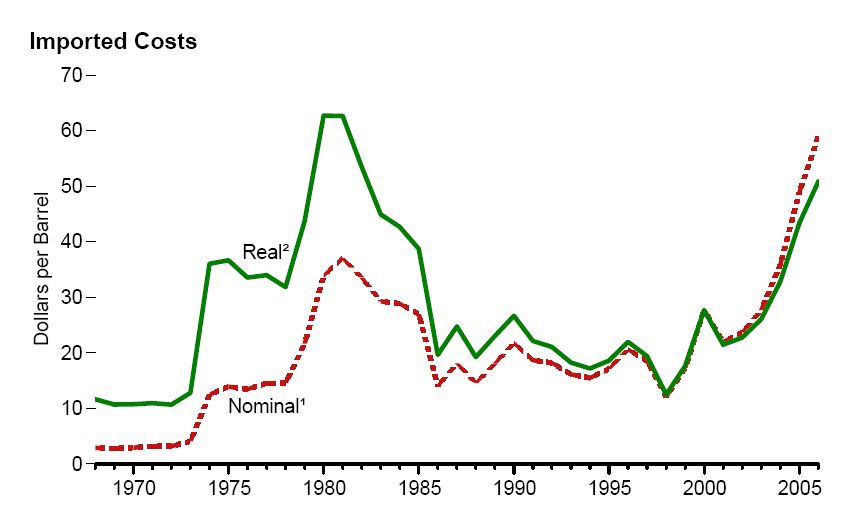
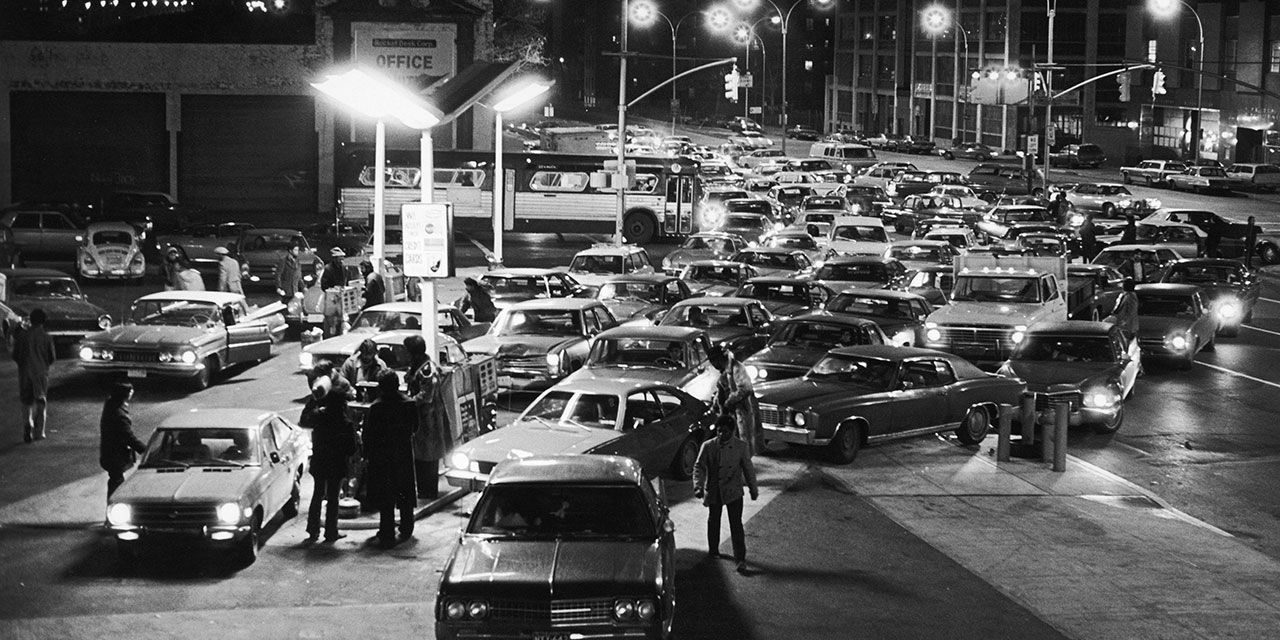
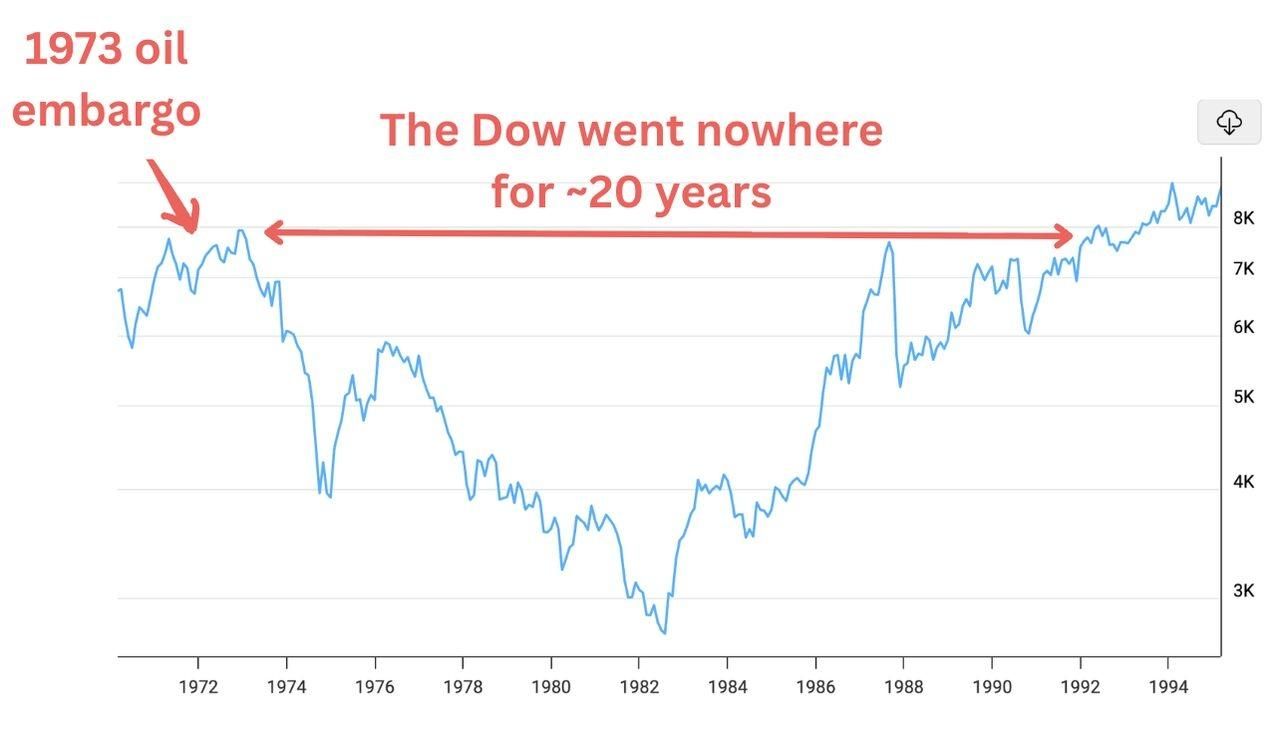
The term stagflation is generally attributed to British Conservative politician Iain Macleod, who used it in a speech to Parliament in 1965. Macleod warned of having the worst of both worlds, stating the UK was in a sort of 'stagflation' situation with both high inflation and economic stagnation. The term gained broader recognition and entered common usage during the severe economic turmoil of the 1970s. This period was defined by a series of global supply shocks that disrupted economies worldwide. The closure of the Suez Canal from 1967 to 1975 and, more prominently, the 1973 oil crisis were major events. The Organization of Arab Petroleum Exporting Countries (OAPEC) imposed an oil embargo and cut production, leading to a sharp, sudden increase in oil prices. This supply shock raised production costs globally, slowing economic growth while pushing consumer prices higher. In the United States, data shows the seeds of stagflation were sown in the late 1960s, with unemployment rising from 3.6 percent to 4.9 percent and Consumer Price Index (CPI) inflation rising from 4.7 percent to 5.6 percent between 1968 and 1970. The crisis led to a fundamental reevaluation of prevailing Keynesian economic policies and contributed to the rise of monetarist and supply-side economic theories.
Theoretical Explanations for Stagflation
Economists primarily offer two explanations for the occurrence of stagflation. The first and most cited is the supply shock theory. This occurs when a sudden, adverse event drastically increases the cost of key commodities or disrupts production. A rapid increase in the price of oil is the classic example, as seen in the 1970s. Such a shock makes production more costly and less profitable, which slows economic growth and reduces output at the same time as it forces consumer prices upward. The second explanation involves misguided government policy. Stagflation can result if a government enacts policies that harm industrial output and productivity while simultaneously expanding the money supply too rapidly. These two actions likely must occur together, as policies that merely slow growth do not typically cause inflation, and policies that cause inflation do not typically slow growth. Neo-Keynesian theory frames this through the lens of cost-push inflation, where increased costs of production shift the aggregate supply curve leftward. Neoclassical economists argue that real factors like regulation affect output and unemployment, while nominal factors like money supply growth affect inflation, and stagflation happens when adverse real shocks and loose monetary policy occur simultaneously.
Stagflation in the Canadian Context
In Canada, stagflation has returned to economic conversations as the economy exhibits mixed signals of slowing growth, persistent inflation, and a softening labour market. While the country is not currently in a textbook stagflation episode, the risks and discomfort associated with it are felt by households. Economic growth has slowed, supported in part by government spending and trade, but private-sector investment and consumer confidence have weakened. The Bank of Canada has acknowledged the difficult balancing act, noting that raising interest rates to dampen inflation could further slow the economy, highlighting a modern stagflation-like dilemma. Inflation has declined from its peak but remains stubbornly high in categories critical to household budgets, such as housing costs, food, services, and insurance. These pressures are often structural or supply-driven, making them less responsive to interest rate changes. The Canadian labour market has cooled unevenly, with some sectors facing layoffs while others remain resilient, and unemployment has risen modestly but remains below crisis levels. The current environment is better described as economic fragmentation, with different regions and income groups experiencing distinct conditions, rather than the broad-based stagnation and breakdown seen in the 1970s.
Key factors differentiate the current Canadian economic situation from historical stagflation episodes. The unemployment rate, while rising, remains relatively low compared to the high unemployment characteristic of classic stagflation. Economic growth has slowed but is not stagnant in the same severe manner seen in the 1970s. Persistent inflation is currently concentrated in specific areas like housing and food, rather than being broad-based across the entire economy due to a major supply shock.
- Inflation is high but not spiralling out of control.
- Unemployment, while rising, remains relatively low by historical standards.
- Economic growth is weak but not absent, avoiding outright contraction.
- Labour market deterioration is not yet broad or sustained enough to meet the classic definition.
Despite these differences, the persistence of high costs in essential areas creates significant economic anxiety for Canadians. This ongoing pressure shapes public perception and fuels discussion of stagflation as a relevant risk framework. The situation leads to concerns about a potential shift into a stagflationary scenario. Therefore, stagflation remains a pertinent topic for analyzing current economic vulnerabilities and policy challenges.
Policy Responses and Central Bank Dilemma
The core policy challenge of stagflation is that the tools to fix one problem tend to worsen the others. Central banks, like the Bank of Canada, face a profound dilemma when growth risks and inflation risks coexist. Tightening monetary policy by raising interest rates is the standard remedy for high inflation, as it cools demand. However, in a stagflationary or slow-growth environment, this action can deepen an economic downturn and lead to higher unemployment. Conversely, cutting interest rates or increasing government expenditure to stimulate growth and jobs can add fuel to inflationary pressures if the root cause is a supply-side problem. This leaves policymakers with unpalatable choices, often opting for a middle path that results in both higher inflation and higher unemployment for a period. The Bank of Canada's recent communications have explicitly noted this tension, stating that raising rates to combat inflation could further slow the Canadian economy. Historical analysis of the 1970s shows that many Western governments chose policies between the extremes of full austerity and full stimulus, which prolonged the period of stagflation. The role of inflation expectations is also critical, as workers and businesses begin to expect continued price rises and build them into wage demands and pricing, giving inflation a momentum that is difficult to halt.
Stagflation Versus Recession
It is important to distinguish stagflation from a recession, as both involve economic hardship but have different characteristics. A recession is typically defined as a significant decline in economic activity lasting more than a few months, reflected in falling GDP, income, employment, and retail sales. During a classic recession, inflation usually levels off or decreases due to weak demand. Stagflation, however, combines the weak growth and high unemployment of a recession with persistently high inflation. Consumer prices continue to increase even though the economy is in a downturn. The table below outlines the key differences between these two economic conditions.
| Economic Condition | Economic Growth | Inflation | Unemployment |
|---|---|---|---|
| Recession | Significant decline | Typically low or falling | High and rising |
| Stagflation | Stagnant or slow | Persistently high | High and rising |
| Normal Expansion | Strong | Moderate | Low |
Confusion between recession and stagflation arises because high unemployment is an outcome of both. The defining difference is the behaviour of prices during the economic slowdown. In a traditional recession, inflation typically falls due to weak demand. The recent discussion in Canada centres on whether a potential recession would be accompanied by stubborn inflation. This scenario would move the economy into a stagflationary condition rather than a traditional deflationary downturn.
Risks and Future Outlook for Canada
The risk of stagflation for Canada centres on the potential for current economic fragments to coalesce into a more sustained and broad-based problem. Persistent inflation in core categories like housing and food could become embedded in expectations, leading to a wage-price spiral even as growth falters. A significant new supply shock, such as another geopolitical event disrupting energy or food supplies, could replicate the triggers of the 1970s. Furthermore, the high level of household debt in Canada makes the economy more sensitive to interest rate changes, potentially causing a sharper slowdown if the Bank of Canada maintains restrictive policy for too long. Some analysts argue the Canadian economy has entered a period of stagflation that will impact market returns in the years ahead. However, other factors mitigate the risk. Modern central banks have more credible inflation-targeting frameworks than in the 1970s, and global supply chains, while stressed, are gradually adjusting. The labour market, though softening, has not broken down. The outlook therefore remains one of heightened stagflation risk and economic discomfort rather than a certainty, requiring careful monitoring of inflation persistence, employment trends, and policy responses.
Frequently asked questions
Why is stagflation so hard to fix?
Stagflation is hard to fix because the standard policy solutions work against each other. If a central bank raises interest rates to combat high inflation, it can further slow the economy and increase unemployment. If the government cuts taxes or increases spending to stimulate growth and jobs, it can pour more money into the economy and make inflation worse. Policymakers are often forced to choose a painful middle ground.
What is stagflation in simple terms?
Stagflation is a combination of high inflation, stagnant economic growth, and raised unemployment. The term is a portmanteau of 'stagnation' and 'inflation' and was popularized by British politician Iain Macleod in the 1960s. It describes a problematic economic condition where prices rise rapidly while the economy does not grow and joblessness remains high. This situation challenges traditional economic theories like the Phillips Curve, which suggested inflation and unemployment were inversely related. Stagflation presents a policy dilemma because actions to reduce inflation can worsen unemployment, and efforts to cut unemployment can fuel further inflation.
What causes stagflation?
Economists offer two principal explanations for stagflation. First, it can result from an adverse supply shock, such as a rapid increase in the price of oil, which raises production costs and slows economic growth simultaneously. Second, stagflation can be caused by misguided government policies that harm industrial output while expanding the money supply too rapidly. These policies are problematic because measures that slow growth rarely cause inflation on their own, and inflationary policies rarely slow growth, but together they can create stagflation. The stagflation of the 1970s, for example, began with the 1973 oil crisis but continued as central banks used excessively stimulative monetary policy.
How is stagflation different from a recession?
Stagflation differs from a recession by including persistently high inflation alongside economic stagnation and high unemployment. In a typical recession, the economy contracts and unemployment rises, but inflation usually falls or remains low. Stagflation combines the weak growth and high unemployment of a recession with the rising prices characteristic of inflation. This combination is particularly challenging because it contradicts the traditional Phillips Curve relationship where inflation and unemployment move in opposite directions. The coexistence of these three adverse conditions creates a difficult policy environment where standard remedies for one problem can exacerbate the others.
When was the last major period of stagflation?
The last major global period of stagflation was in the 1970s and early 1980s. It gained broader recognition after a series of global economic shocks, most notably the 1973 oil crisis when OPEC countries constrained the worldwide oil supply and placed an embargo. This led to soaring energy prices, high inflation, and slowing economic growth in many Western nations. The seeds of this stagflation were sown in the late 1960s, with rising unemployment and inflation. The period led to a reevaluation of Keynesian economic policies and contributed to the rise of alternative theories like monetarism. Stagflation was prevalent among seven major market economies from 1973 to 1982.
Sources and further reading
- Stagflation (Wikipedia) en.wikipedia.org
- Stagflation thecanadianencyclopedia.ca
- Is Stagflation a Real Threat for Canada? nesto.ca
- What stagflation means for your money. creditblog.capitalone.ca
- What is stagflation? TD Economics explains td.com
This article explains how things work and is not financial, tax or legal advice. Rules, limits and rates change, so check the current figures with the Canada Revenue Agency, your province or your financial institution before you act.