Tariffs are taxes imposed by a government on imported goods, paid by the importer and designed to raise the price of foreign products. For Canada, tariffs have historically been a tool of trade policy and a source of government revenue, but they are most prominent today as instruments in ongoing trade disputes with the United States. These disputes have led to escalating countermeasures, including tariffs ranging from 15% to 50% and even outright import bans on certain products. The economic impact of tariffs is complex, affecting consumer prices, supply chains, inflation, and economic growth in both nations.
What Are Tariffs and How Do They Work?
A tariff is a duty or tax imposed by a national government on imports of goods, and it is paid by the importer at the border. The fundamental purpose is to increase the price of imported goods, making them less competitive compared to domestic products. Tariffs can be fixed as a constant sum per unit or as a percentage of the price of the imported goods. By raising costs, tariffs are intended to discourage consumption of foreign goods and stimulate domestic production and industry. Historically, tariffs have been justified as a means to protect infant industries, allow for import substitution industrialisation, and rectify artificially low prices due to practices like dumping or export subsidies.
The economic burden of a tariff is shared among the importer, the exporter, and ultimately the consumer. While the importer pays the tax directly, they often pass some of this cost onto consumers through higher retail prices. However, importers and their suppliers may also absorb part of the cost, reducing their profit margins. This dynamic means consumers do not bear the full cost of the tariff, but they do face higher prices and have less disposable income for other purchases. The increased costs for businesses can reduce investment and slow overall economic growth. There is a near unanimous consensus among economists that tariffs are generally harmful to economic growth and welfare, while free trade and the reduction of trade barriers have a positive effect.
The Historical Context of Tariffs
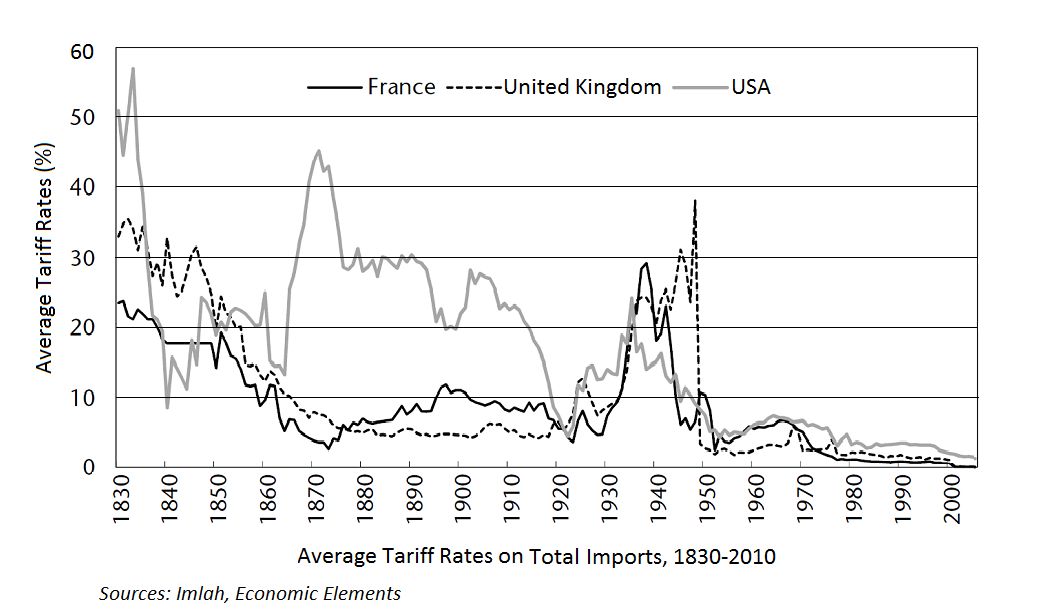
The use of tariffs as an economic tool has a long global history. In ancient Athens, the port of Piraeus enforced levies on goods like grain to raise taxes for the government. In Britain, protectionist policies date back to the 14th century, with Edward III banning woollen cloth imports to develop local manufacturing. A significant turning point came in 1721 under Robert Walpole, who introduced policies to promote manufacturing, including increased tariffs on foreign manufactured goods. Britain remained highly protectionist until the mid-19th century, with average tariff rates on manufactured imports reaching 45 to 55 percent by 1820. The controversial Corn Laws, which imposed tariffs on imported food to protect domestic farmers, were repealed in 1846, marking a decisive shift toward free trade in Britain.
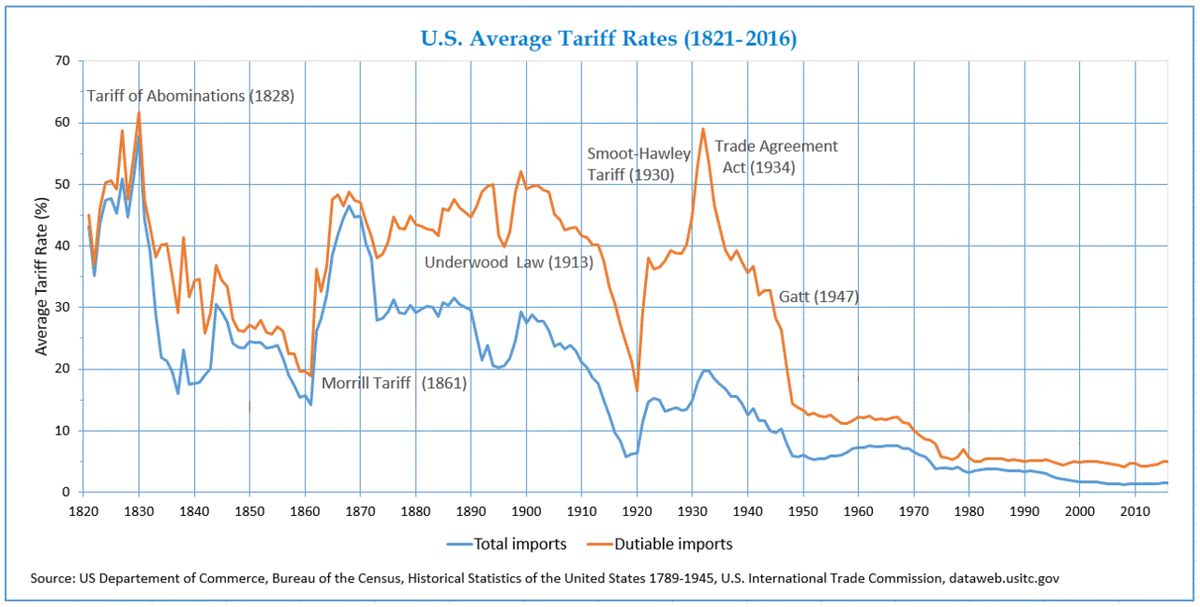
In the United States, tariff policy has evolved through three distinct eras. From 1790 to 1860, tariffs were the primary source of federal government revenue, accounting for about 90 percent of receipts. From 1861 to 1933, following the Civil War, the focus shifted to using tariffs to restrict imports and protect domestic industries, with the Republican Party supporting high rates. From 1934 onward, the primary objective became negotiating reciprocal trade agreements. A common myth is that high tariffs made the United States a great industrial power in the late 19th century. While its share of global manufacturing grew significantly, economic growth was driven more by abundant natural resources, immigration, and imported technologies, with the cost of tariffs estimated at around 0.5 percent of GDP in the mid-1870s.
The Mechanics of Tariffs in Modern Trade
In contemporary trade, tariffs are enforced at the border by customs agencies. When a country like the United States imposes a tariff on goods imported from Canada, American importers pay the duty to their government. To offset this new cost, importers may raise the price of the products for their customers. This process makes imported goods more expensive for the end buyer. Tariffs can be applied to finished consumer goods, such as vehicles or clothing, directly affecting retail prices. They can also be placed on intermediate goods or components used in manufacturing, which increases production costs and can lead to higher prices for a wide range of final products.
The impact of tariffs extends beyond simple price increases. They affect spending patterns, trade flows, government revenue, exchange rates, employment, gross domestic product, and inflation. Tariffs can substantially disrupt international supply chains, especially in highly integrated economies like those of Canada and the United States. For monetary authorities like the Bank of Canada, tariffs present a challenge because they can create both upward and downward pressure on inflation. A tariff can cause a one-time increase in consumer prices, but the resulting reduction in demand for exports can slow economic activity. The Bank's role is to manage inflation expectations and ensure that tariff-related price increases do not lead to persistently high inflation.
The Current Canada-U.S. Tariff Dispute
Since 2025, the United States has engaged in a trade war with Canada, marked by escalating tariffs and retaliatory measures. The dispute escalated significantly in 2026 with a series of tit for tat actions. On July 20, 2026, United States President Donald Trump signed proclamations imposing additional 50 percent tariffs on a broad range of Canadian products, effective August 22, 2026. In response, Canada announced its own counter tariffs of 15 percent, 25 percent, and 50 percent on approximately C$27.6 billion worth of U.S. imports, effective September 8, 2026. Notably, these tariffs apply even to goods that are compliant with the Canada United States Mexico Agreement and have no set expiry date.
The U.S. further retaliated against Canada's counter tariffs by declaring new measures. Effective September 15, 2026, the U.S. added a 50 percent tariff on a new list of Canadian products. More severely, effective September 29, 2026, the U.S. imposed a total import ban on nearly US$1 billion worth of select Canadian products. The banned items include alcoholic beverages, motorcycles, molasses, whey, and other dairy products. This sequence of actions represents a significant deterioration in trade relations, moving beyond tariff increases to outright prohibitions on trade in certain categories.
- August 22, 2026: U.S. imposes 50% tariffs on broad range of Canadian goods.
- September 8, 2026: Canada imposes counter tariffs of 15%, 25%, and 50% on U.S. goods.
- September 15, 2026: U.S. adds new 50% tariffs on additional Canadian products.
- September 29, 2026: U.S. bans imports of specific Canadian products like alcohol and motorcycles.
Goods Subject to Tariffs and Bans
The scope of products affected by the current trade measures is extensive and impacts numerous sectors of both economies. The Canadian counter tariffs apply to over 700 different items, impacting steel, dairy, appliances, agricultural equipment, pulp and paper, and electronics, among others. On the U.S. side, the 50 percent tariffs applied in August 2026 targeted a wide array of Canadian imports across three separate lists. Furthermore, specific sectoral tariffs remain in place, including U.S. tariffs on aluminum, steel, and copper under Section 232 measures. The following table outlines key U.S. measures and their effective dates.
| Effective Date | U.S. Measure | Key Affected Products |
|---|---|---|
| June 8, 2026 | Section 232 Tariffs | Aluminum, steel, and copper articles. |
| August 22, 2026 | 50% Tariffs | Broad range of Canadian imports across three lists. |
| September 15, 2026 | Additional 50% Tariffs | New list of Canadian products. |
| September 29, 2026 | Import Ban | Alcoholic beverages, motorcycles, dairy products. |
Canada has implemented other trade defence measures beyond general tariffs. One specific measure is a temporary 25 percent surtax on imports of certain wood cabinets and vanities. This surtax took effect on July 31, 2026, and applies to imports from most countries. The surtax does not apply to imports from the United States, Mexico, Israel, Chile, and developing nations. Another measure is a provisional 10 percent safeguard tariff on global imports of canned vegetables. Imports of canned vegetables from the United States, Mexico, Chile, Israel and developing countries are exempt from this safeguard tariff. These exemptions are due to Canada's existing trade obligations with those nations.

Economic Impact and Risks for Canada
The imposition of tariffs carries significant economic risks for Canada. U.S. tariffs on Canadian imports reduce demand for those goods, which can slow economic growth in Canada and potentially lead to layoffs and higher unemployment in affected industries. For businesses, higher costs from U.S. tariffs or from increased prices for tariffed American components can squeeze profit margins, reduce investment, and disrupt carefully managed supply chains. The automotive sector is particularly vulnerable, as cars, trucks, and parts are among the main goods traded between the two nations. A U.S. threat to raise tariffs on Canadian vehicles from 25 percent to 50 percent starting January 1, 2027, would deal a further blow to this integrated industry and could lead to higher consumer prices for vehicles in the U.S. market.
For consumers, the most direct impact is through inflation and higher prices. Tariffs can make imported goods more expensive, increasing the overall cost of living. However, the effect on inflation is not straightforward because tariffs put upward pressure on prices while the reduction in economic activity and demand they cause can put downward pressure on inflation. This creates a challenging environment for the Bank of Canada, which aims to keep inflation at around 2 percent. The Bank must ensure that any one time price increases from tariffs do not become embedded in long term inflation expectations, which could trigger a wage price spiral and require more aggressive monetary policy responses.
Government Responses and Support Programs
In response to the trade disruption, the Canadian government has launched several initiatives to assist affected businesses. A key program is the Regional Tariff Response Initiative, which is delivered through Canada's Regional Development Agencies. The RTRI helps small businesses impacted by U.S. tariffs, Chinese tariffs, and Canadian counter tariffs through two main funding streams. The first is Liquidity Assistance, which addresses short term cash flow pressures caused by tariffs. The second is Pivot Projects, which funds investments that improve a business's resilience, such as diversifying markets or supply chains. Eligibility requirements for this program vary by region and more details can be found on the Canadian Federation of Independent Business RTRI webpage.
Provincial governments have also implemented their own countermeasures and support programs. For example, Manitoba has a dedicated webpage outlining its response to U.S. tariffs. Quebec Premier François Legault announced key provincial measures to support local industries affected by the trade dispute. At the federal level, the government has established a remission process for those seeking exceptional relief from tariffs and has launched public consultations on the Canada United States Mexico Agreement, seeking input until November 3. These actions reflect a multi level governmental effort to mitigate the impact of tariffs and advocate for Canadian interests in trade negotiations.
- Federal Program: Regional Tariff Response Initiative (RTRI) for liquidity and pivot projects.
- Provincial Actions: Manitoba and Quebec have announced support measures.
- Policy Change: Canada eliminated its 25% tariffs on some U.S. goods effective September 1.
- Consultations: Public consultations on CUSMA are open until November 3.
- Remission Process: A federal process exists for exceptional tariff relief.
The Path Forward and Key Debates
The future of Canada U.S. trade relations remains uncertain. The Canada United States Mexico Agreement remains in force until 2036, but its first six year joint review did not result in an agreement to extend its term for another 16 years. Consequently, annual joint reviews must be conducted for the remainder of the agreement's term unless the parties subsequently agree to an extension. This introduces ongoing uncertainty into the trade relationship. The core debate revolves around the efficacy of tariffs as a policy tool. Proponents argue they protect domestic industries and jobs, while economists nearly universally agree they are self defeating, harming economic growth and often backfiring on the industries they aim to protect through higher input costs and retaliatory measures.
Another significant development is the U.S. focus on forced labour. In response, it has proposed a tiered tariff system, with a 10 percent duty for countries that have some form of prohibition and a 12.5 percent duty for those that do not. This adds another layer of potential trade friction based on labour standards. The overarching risk is a prolonged period of trade instability, which discourages investment, hampers economic planning, and keeps consumer prices high, ultimately reducing the standard of living for citizens in both countries.
Frequently asked questions
What is a tariff?
A tariff is a duty imposed by a national government on imports of goods, and it is paid by the importer. It is a form of regulation of foreign trade that burdens foreign products. Tariffs are designed to raise the price of imported goods to discourage their consumption. They can be a fixed sum per unit or a percentage of the price, and they provide an incentive to develop domestic production.
How do tariffs affect Canadian consumers?
Tariffs can lead to higher prices for consumers. When the U.S. taxes Canadian imports, American importers may pass those costs onto customers. When Canada imposes tariffs on U.S. goods, Canadian importers may do the same. Tariffs can also disrupt supply chains and reduce economic growth, potentially impacting employment and investment.
Why is the U.S. putting tariffs on Canada?
However, the notes explain that tariffs are generally imposed by governments as a form of trade policy. Historically, tariffs have served purposes such as protecting domestic industries from foreign competition, raising revenue, or responding to perceived unfair trade practices like dumping or subsidies. The U.S. has historically used tariffs for these reasons during different policy eras, shifting from a focus on revenue to industrial protection and then to reciprocity agreements. The notes mention that political support for tariffs often comes from import-competing industries seeking to reduce foreign competition.
What is Canada doing to fight U.S. tariffs?
Canada announced tariffs of 15 percent, 25 percent, and 50 percent on approximately 27.6 billion dollars of U.S. imports, effective September 8, 2026. This action is described as Canada countering with its own tariffs on an equally broad range of goods. The notes indicate that these counter tariffs apply even to goods that are compliant with the Canada United States Mexico Agreement (CUSMA). This retaliatory measure is a common trade policy response, as tariffs can be used to secure reciprocity or respond to other nations' trade barriers.
What are the specific tariff rates Canada imposed on U.S. goods in response?
Canada announced counter tariffs of 15%, 25%, and 50% on approximately C$27.6 billion worth of U.S. imports. These tariffs are a direct response to U.S. tariffs on Canadian goods and apply to a broad range of American products. The Canadian tariffs are set to take effect on September 8, 2026. This action is part of a trade war that began in 2025. The targeted U.S. products include items like carpets, washing machines, furniture, and kitchen utensils. These measures are designed to impose economic costs in retaliation and protect Canadian interests.
When did the recent U.S.-Canada tariff trade war begin?
The recent trade war between the United States and Canada began in 2025. This period marks the start of heightened trade tensions and the imposition of new tariffs by both nations. The U.S. decision to impose a 50 percent tariff on $27.6 billion of Canadian goods is effective from August 22, 2026. Canada's responsive tariffs on U.S. imports are scheduled for September 8, 2026. This timeline outlines a significant escalation in trade policy disputes within a short timeframe. The conflict represents a shift from previous trade agreements and cooperation.
Sources and further reading
- Tariff (Wikipedia) en.wikipedia.org
- Canada-U.S. Trade War cfib-fcei.ca
- U.S., Canada Tariffs: Timeline of Key Dates and Documents blakes.com
- What is a tariff? bankofcanada.ca
- Understanding tariffs and how they can affect your finances scotiabank.com
- What tariffs will really cost Canadians and Americans bbc.com
This article explains how things work and is not financial, tax or legal advice. Rules, limits and rates change, so check the current figures with the Canada Revenue Agency, your province or your financial institution before you act.