A stablecoin is a type of cryptocurrency designed to maintain a stable value relative to a specified asset, most commonly a fiat currency like the Canadian or US dollar. They emerged in 2014 as a tool for cryptocurrency investors to park funds and are now used extensively for trading cryptoassets and making cross-border payments. In Canada, stablecoins are subject to evolving regulatory frameworks, including a proposed federal Stablecoin Act and ongoing oversight by provincial securities regulators. Understanding stablecoins is important for Canadians as their use in payments and commerce grows, carrying implications for financial stability and monetary sovereignty.
What Is a Stablecoin and How Does It Work
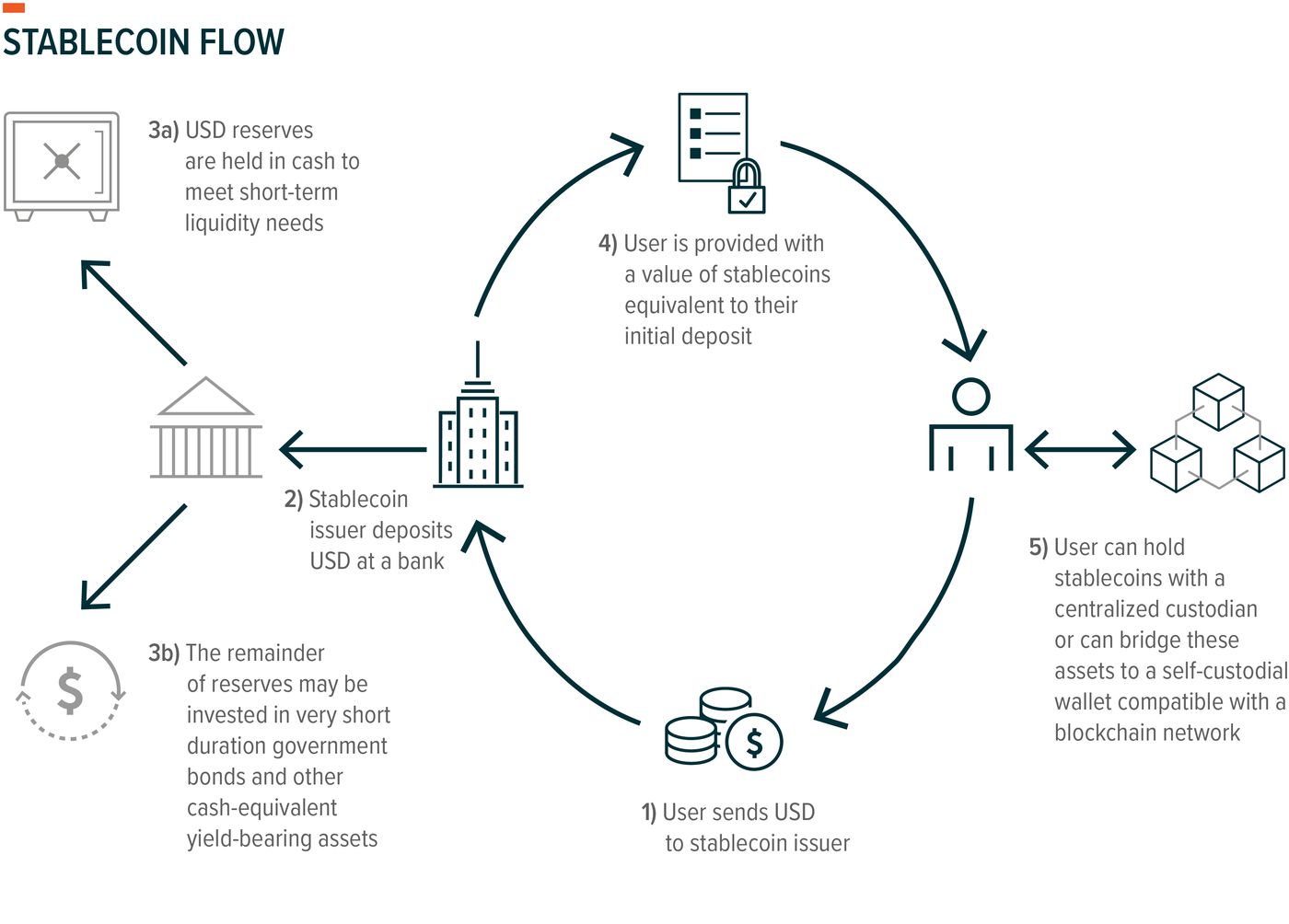
A stablecoin is a digital asset intended to maintain a stable value relative to a specified asset, which could be a fiat currency, a commodity, or a basket of assets. Unlike more volatile cryptocurrencies, payment-focused stablecoins are designed to function as digital money, serving as a medium of exchange, a unit of account, and a store of value over short periods. The stability is maintained through stabilization tools such as holding reserve assets or using algorithms to match supply and demand. For a fiat-backed stablecoin, an issuer creates tokens when an authorized party deposits the reference currency, holding those funds in reserve and investing them in permitted, low-risk assets. For every unit of currency held, one stablecoin is issued, and holders can redeem their tokens at par value, destroying the stablecoin and receiving the underlying currency in return. Stablecoins move on blockchain networks, allowing for direct transfers between users 24 hours a day, seven days a week, without relying on traditional banking infrastructure. This enables fast, programmable, and final settlement of transactions, which is a key feature for their use in payments and cross-border transfers.
Types of Stablecoins
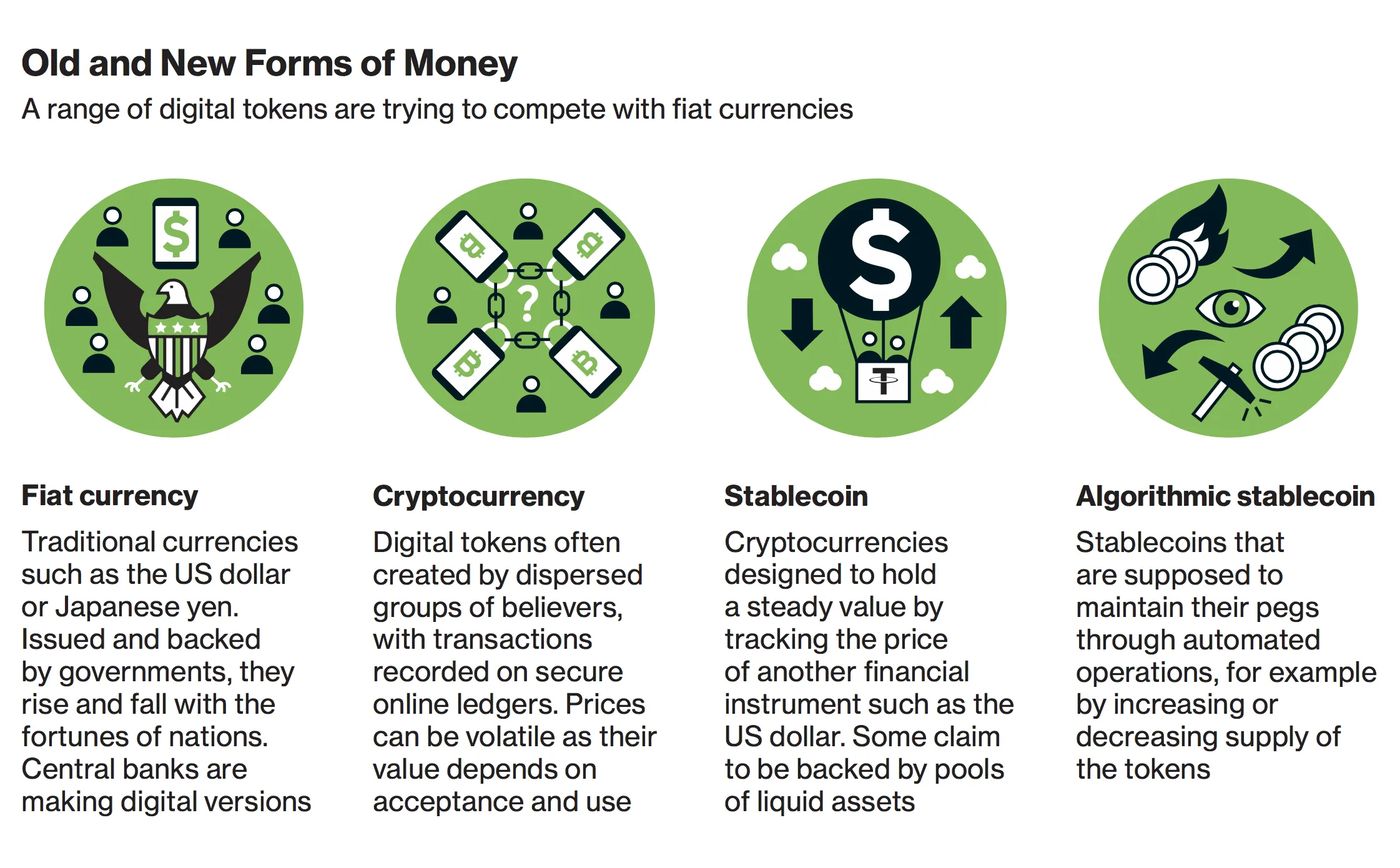
Stablecoins are categorized based on the type of assets backing them and their stabilization mechanisms. The primary types are fiat-backed, cryptocurrency-backed, commodity-backed, and algorithmic stablecoins. Fiat-backed stablecoins are backed by assets denominated in a fiat currency like the US dollar, with the value based on the backing currency held by a third-party custodian. As of October 2025, nearly 97 percent of fiat-backed stablecoins are pegged to the US dollar, with major examples including Tether's USDT and Circle's USDC. The structure of these stablecoins closely resembles money market funds, as they hold short-term assets like treasury bonds and commercial paper. Cryptocurrency-backed stablecoins use other cryptocurrencies as collateral, often utilizing smart contracts to track a target price like the US dollar. Commodity-backed stablecoins are backed by physical commodities, with examples including PAX Gold and Tether Gold. Algorithmic stablecoins, such as Celo Dollar and Tron's USDD, have no reserve assets or only partial reserves, instead using algorithms to match supply and demand to maintain value. The European Central Bank suggests treating algorithmic stablecoins as unbacked crypto-assets due to their inherent risks.
History and Global Market Size
Stablecoins first emerged in 2014 as a method for cryptocurrency investors to park money when investing in other volatile digital assets. Their use has since expanded significantly, primarily for buying and selling cryptoassets and for cross-border payments. According to the Financial Action Task Force, the global market capitalization of stablecoins reached $316 billion in October 2025, with a daily trading volume of $156 billion. The Bank for International Settlements reported in July 2025 that 90 percent of this market capitalization was held in either Tether (USDT) or Circle's USDC. Within the stablecoin market, 95 percent are backed by fiat currency, and among those, 97 percent are denominated in US dollars. This dominance of US dollar-pegged stablecoins has significant implications for global finance, including potential effects on monetary sovereignty in other regions.
Primary Uses and Applications
Stablecoins serve several key functions in the digital economy, with their use extending beyond speculative trading. Their primary application is for trading other cryptocurrencies, providing a convenient and stable medium of exchange within crypto markets, similar to casino chips. A major growing use is for cross-border payments, where stablecoins offer advantages in speed and cost. The International Monetary Fund estimated stablecoin cross-border flow was $1.4 trillion in 2024, with activity highest in the Asia and Pacific region. A 2025 study found that 26 percent of US-based adults who sent remittances used stablecoins for cross-border transfers. The most cited reason for this use is the 24/7 settlement capability, allowing transactions outside traditional banking hours. Stablecoins are also used for currency substitution in economies with high inflation, such as in Venezuela where US dollar-denominated stablecoins help preserve value. Furthermore, they are employed in aid distribution, with organizations like Oxfam and the United Nations Development Programme using them to deliver humanitarian assistance in regions including Vanuatu, Syria, and parts of Africa.
- Trading other cryptocurrencies: Provides a stable medium within volatile markets.
- Cross-border payments: Enables fast, low-cost international transfers, with $1.4 trillion in flow in 2024.
- Currency substitution: Used in hyperinflationary economies to preserve value, as seen in Venezuela.
- Aid distribution: Employed by NGOs and UN programmes for efficient delivery of funds.
Regulation of Stablecoins in Canada
The regulation of stablecoins in Canada involves both provincial securities regulators and a forthcoming federal framework. Currently, activities relating to stablecoins are predominantly regulated under securities law. The Canadian Securities Administrators (CSA) staff consider stablecoins, or value-referenced crypto assets, to generally meet the definition of a security or derivative. Consequently, firms engaged in the business of trading stablecoins, like crypto asset trading platforms (CTPs), must be registered as dealers or rely on an exemption. Registered CTPs are generally restricted from trading in crypto assets that are securities or derivatives, but under an interim framework, they have been permitted to allow clients to buy or deposit certain specific stablecoins where the issuer has filed an undertaking acceptable to the CSA. As of 2026, the only Specified Stablecoins under this interim framework are USDC and QCAD. On July 30, 2026, the Ontario Securities Commission granted exemptive relief to a US-based firm, allowing it to trade Specified Stablecoins on an immediate-delivery basis without dealer registration, subject to conditions. This decision indicates a potential pathway for other regulated entities.
The federal government is advancing the Stablecoin Act, which received Parliamentary approval in March 2026. The Act defines a stablecoin as a digital asset intended to maintain a stable value relative to one fiat currency. It will establish regulatory oversight of stablecoin issuers by the Bank of Canada, focusing on non-financial institutions that issue fiat-backed stablecoins designed for payments, not speculation. Specified prudentially regulated financial institutions like banks are excluded from this issuer regime. On October 24, 2026, the government published proposed Stablecoin Regulations for public comment, providing details on registration, reserves, custody, and redemption. The regulations propose that issuers must maintain reserves in high-quality liquid assets, specifically cash, central bank reserves, and government debt securities, with a market value at least equal to the par value of outstanding stablecoins daily. The government is targeting implementation of the Stablecoin Regulations in fall 2027.
- Current Regulation: Primarily under provincial securities law. Stablecoins generally considered securities/derivatives.
- Interim CSA Framework: Allows registered CTPs to offer specific stablecoins (USDC, QCAD) with issuer undertakings.
- Federal Law: The Stablecoin Act was approved in March 2026, establishing Bank of Canada oversight.
- Proposed Regulations: Published October 2026, detailing rules for reserves, custody, and registration.
- Target Implementation: Fall 2027 for the full federal regulatory framework.
Key Rules Under Canada's Proposed Framework
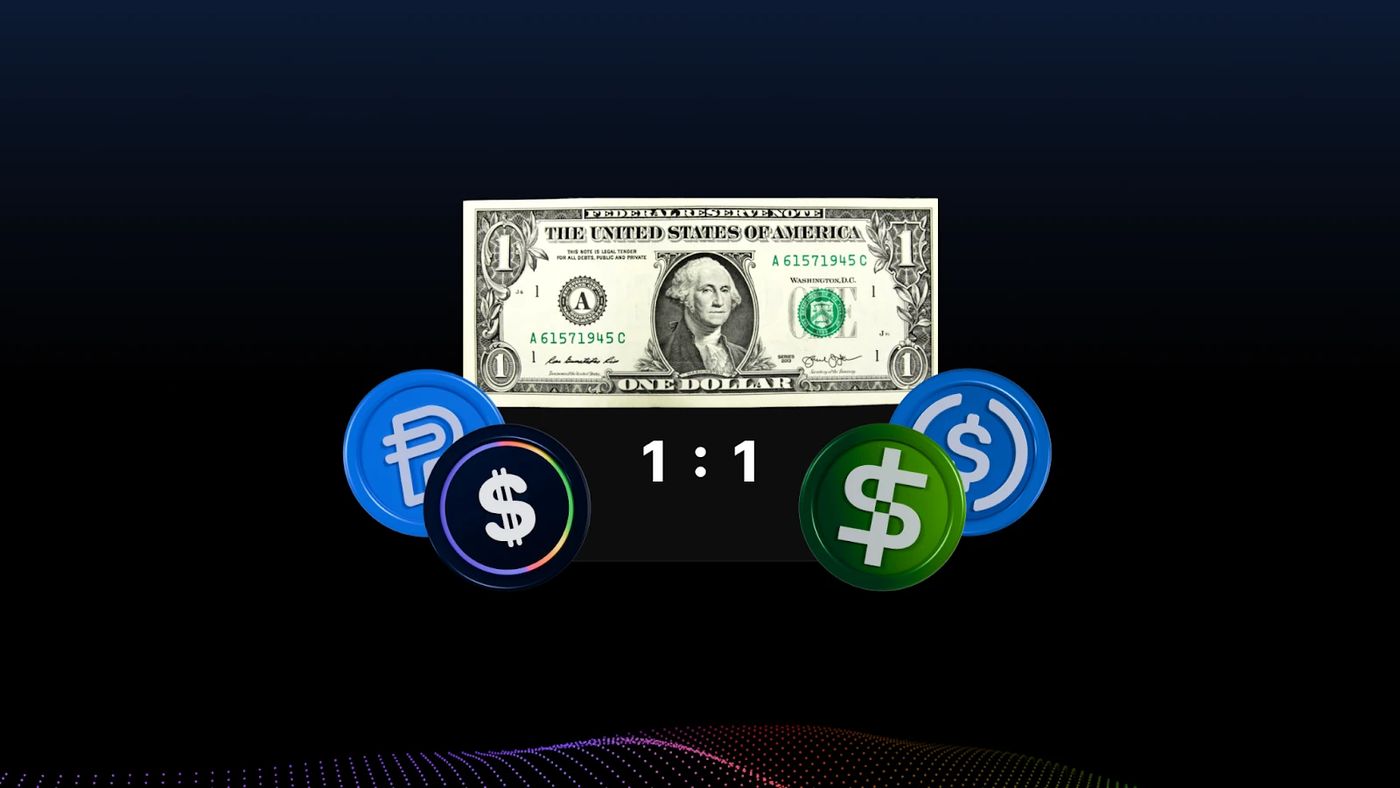
Canada's proposed Stablecoin Act and its accompanying regulations establish a comprehensive set of rules for issuers. A core requirement is that an issuer must redeem outstanding stablecoins in the reference currency, at par value. Issuers will be required to register with the Bank of Canada before issuing stablecoins, and the registration process involves national security screening by the Minister of Finance. The framework applies to both domestic and foreign issuers engaged in issuance activities targeting persons in Canada. The Stablecoin Regulations define key terms like 'create' and 'make available,' emphasizing issuer control over the design, generation, and distribution of stablecoins, even if technical operations are outsourced. Reserve assets must be held with a qualified custodian in segregated, bankruptcy-remote arrangements to protect holders. Eligible reserve assets are limited to cash, central bank reserves, and government debt securities. The Act explicitly states that issuing a stablecoin in accordance with its rules does not constitute dealing in securities or the business of accepting deposit liabilities under other federal financial laws. However, an issuer is considered engaged in the business of dealing in virtual currencies for anti-money laundering purposes under the Proceeds of Crime Act.
| Rule Area | Key Requirement |
|---|---|
| Registration | Mandatory registration with the Bank of Canada for issuers. |
| Reserves | Must hold high-quality liquid assets (cash, gov't debt) equal to par value of outstanding stablecoins daily. |
| Custody | Reserves must be held with a qualified custodian in segregated, bankruptcy-remote accounts. |
| Redemption | Issuer must redeem stablecoins at par value in the reference currency. |
| Eligible Assets | Cash, central bank reserves, government debt securities. |
| Yield | Framework focuses on no-yield, payment-focused stablecoins. |
Risks and Major Debates
Stablecoins carry several significant risks and are at the centre of ongoing policy debates. A primary risk is de-pegging, where a stablecoin's value deviates from its peg due to liquidity stress, mismanagement of reserves, or design flaws. Fiat-backed stablecoins, due to their structural similarity to money market funds, pose a contagion risk where large-scale redemptions could force the sale of underlying assets, depressing their prices and triggering further redemptions. Counterparty risk exists as reserve assets are held by third-party custodians who could fail, as seen in March 2023 when USDC temporarily de-pegged during the collapse of several US banks. Algorithmic stablecoins are particularly vulnerable to a 'death spiral,' famously demonstrated by the collapse of TerraUSD (UST) in May 2022, which wiped out nearly $45 billion in market capitalization. There are also concerns about a lack of reserve transparency, exemplified by Tether's USDT, which was fined $41 million in 2021 for misleading claims about its reserves and has never completed a full audit by an accounting firm.
Major policy debates revolve around illicit finance, monetary sovereignty, and financial stability. Authorities like the United Nations Office on Drugs and Crime report that stablecoins, especially USDT, have become a preferred tool for organized crime and money laundering in East and Southeast Asia. Terrorist groups also use them for fundraising and sanctions evasion. A significant concern for many countries, including those in Europe and Africa, is that widespread adoption of US dollar-denominated stablecoins could erode domestic monetary sovereignty. Central bankers warn this could import foreign monetary policy, weaken local central banks' control over interest rates, and complicate liquidity management. In response to these risks, regulations like the US GENIUS Act, Europe's MiCAR, and Canada's proposed Stablecoin Act explicitly prohibit regulated issuers from offering yield-bearing stablecoins, as providing interest could classify them as financial securities.
Stablecoins Versus Central Bank Digital Currencies
It is important to distinguish stablecoins from central bank digital currencies (CBDCs), as they are fundamentally different instruments. A CBDC is issued directly by a central bank, representing a claim on the central bank itself and forming part of the monetary base (M0). In contrast, a stablecoin is issued by a private entity, such as a commercial company. If issued by a commercial financial institution, a stablecoin would be considered part of the broader monetary aggregate (M2), not the base money supply. The European Central Bank's digital euro project, under consideration since 2021, is an example of a CBDC initiative driven in part as a strategic response to the rise of private stablecoins and US legislation. The key difference lies in the issuer and the associated guarantees: CBDCs carry the full faith and credit of a central bank, while stablecoins rely on the reserves and credibility of a private issuer, introducing different risk profiles for users and the financial system.
Frequently asked questions
What is a stablecoin?
A stablecoin is a type of cryptocurrency that aims to maintain a stable value relative to a specified asset, a pool or basket of assets. The specified asset might refer to fiat currency, commodity, or other cryptocurrencies. Stablecoins rely on stabilization tools such as reserve assets or algorithms that match supply and demand to try to maintain a stable value. They are now mainly used for buying or selling cryptoassets, and for making cross-border payments. According to the Bank for International Settlements in July 2025, 90% of the market capitalization of stablecoins was either in Tether or USDC.
How are stablecoins regulated in Canada?
Stablecoin regulation in Canada is currently handled mainly by provincial securities regulators, who generally treat them as securities or derivatives. The Canadian Securities Administrators have an interim framework allowing registered crypto trading platforms to offer specific stablecoins like USDC and QCAD. A federal Stablecoin Act was approved in March 2026 and will be implemented with supporting regulations targeted for fall 2027. This Act will regulate non-financial institution issuers of fiat-backed stablecoins under the oversight of the Bank of Canada.
What is the difference between USDT and USDC?
USDT (Tether) and USDC (Circle) are the two largest fiat-backed stablecoins, both pegged to the US dollar. A key difference has been transparency and regulatory history. Tether's USDT has faced scrutiny over its reserves, was fined $41 million in 2021 for misleading claims, and has never completed a full audit. USDC is often viewed as having more transparent reserve attestations. In Canada, USDC is one of the Specified Stablecoins permitted for trading by registered platforms under the interim CSA framework.
What are the risks of using stablecoins?
Risks include de-pegging risk where a stablecoin can deviate from its peg due to liquidity stress or mismanagement of reserves. There is contagion risk on the financial market as fiat-backed stablecoins are structurally similar to money market funds. Counterparty risk exists as reserve-backed stablecoins require a third party custodian to hold the reserve assets. Algorithmic stablecoins are vulnerable to a de-pegging process known as a 'death spiral'. There are also risks of stablecoins being used for money laundering and terrorism financing, and their adoption could potentially erode monetary sovereignty.
Can you earn interest on stablecoins in Canada?
Most regulated stablecoins are non-interest bearing. Canada's proposed Stablecoin Act focuses on 'no-yield, fiat-backed stablecoins' designed for payments, not speculation. Regulations in other jurisdictions like the US and Europe also prohibit regulated issuers from offering yield-bearing stablecoins, as providing interest could classify them as financial securities subject to different rules. Some cryptoasset service providers may offer yields, but these are not part of the regulated payment-focused stablecoin framework.
What is Canada's QCAD stablecoin?
The notes detail Canada's proposed Stablecoin Act and regulatory framework but do not mention any specific Canadian stablecoin issuers or products by name. They explain that stablecoins are digital assets designed to maintain a stable value relative to an underlying asset, such as a fiat currency. In Canada, the proposed rules focus on regulating issuers of fiat backed stablecoins intended for payments. The notes also cover general global stablecoin usage, types, and risks, but specific details about QCAD are not included.
Sources and further reading
- Stablecoin (Wikipedia) en.wikipedia.org
- Trading in Stablecoins in Canada: New OSC Decision ... blakes.com
- Stablecoins 101: What Are They, How Do They Work, And ... web3canada.ca
- Stablecoin Act, Justice Laws Website laws.justice.gc.ca
- Stablecoin regulation in Canada: A guide for businesses gowlingwlg.com
- Stablecoins bankofcanada.ca
This article explains how things work and is not financial, tax or legal advice. Rules, limits and rates change, so check the current figures with the Canada Revenue Agency, your province or your financial institution before you act.