An interest rate cut is a reduction in a central bank's key policy rate, used as a primary tool of expansionary monetary policy to stimulate economic activity. In Canada, the Bank of Canada executes this by lowering its target for the overnight rate, which influences borrowing costs throughout the economy. These cuts are typically deployed when inflation is too low or economic growth is weakening, with the goal of encouraging spending and investment. The decision to cut rates directly affects variable mortgage rates, business loans, and savings account returns, making it a critical factor for Canadian households and businesses.
What is an Interest Rate Cut?
An interest rate cut is a deliberate reduction in the key policy interest rate set by a nation's central bank. It is a core instrument of expansionary monetary policy, designed to lower the cost of borrowing money across the economy. By making credit cheaper, a central bank aims to stimulate aggregate demand, encouraging businesses to invest and consumers to spend on goods and services. This action is typically taken when economic indicators suggest weakening growth or when inflation is persistently below the central bank's target, signalling a potential economic downturn.
The mechanics involve the central bank lowering its administered rates, which are the rates it charges commercial banks for short-term loans or pays on their deposits. In a system like Canada's, this establishes a new, lower target for the overnight rate, which is the interest rate at which major financial institutions borrow and lend one-day funds among themselves. This target then serves as the benchmark for virtually all other short-term interest rates in the country, creating a transmission channel to the broader economy. The ultimate goal is to increase economic activity, support employment, and guide inflation back towards a stable target level.
How Interest Rate Cuts Work: The Transmission Mechanism
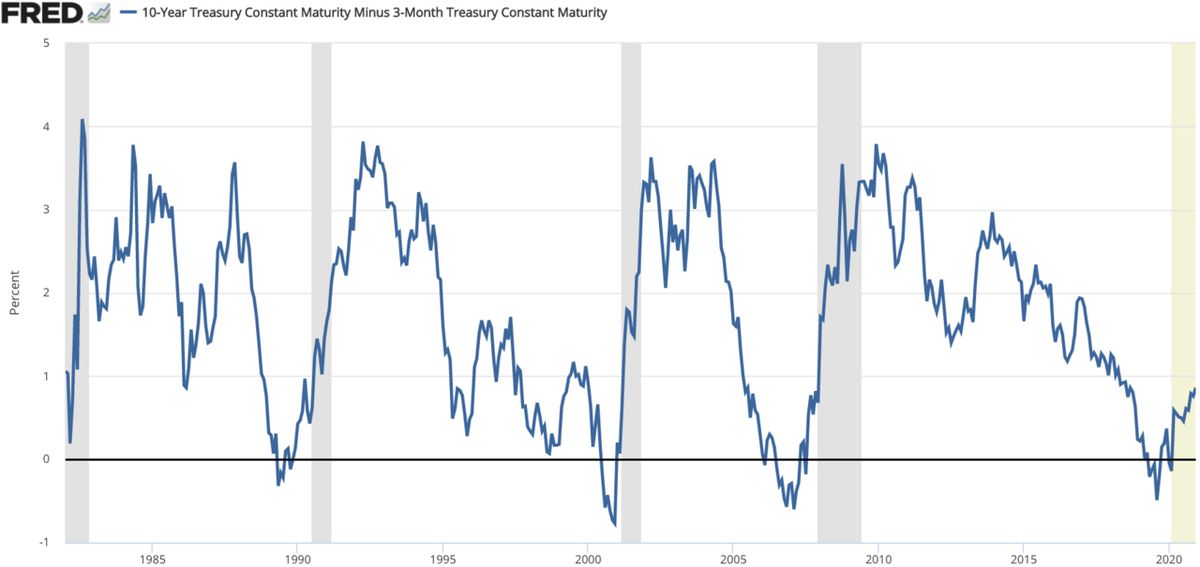
When the Bank of Canada cuts its policy rate, the effect ripples through the financial system via several interconnected channels known as the monetary transmission mechanism. The first and most direct effect is on bank funding costs. A lower overnight rate reduces the cost for banks to borrow money, which in turn leads them to lower their prime lending rates. This prime rate is the benchmark for variable-rate loans, including variable-rate mortgages, lines of credit, and some business loans. Consequently, borrowers with these products see their interest payments decrease, freeing up disposable income for other spending.
Lower borrowing costs also incentivize new spending and investment. Businesses facing cheaper financing are more likely to borrow for expansion, new equipment, or hiring, which boosts economic activity and job creation. Consumers may be more inclined to finance large purchases like homes or cars. Furthermore, lower domestic interest rates can affect the exchange rate. As the return on Canadian dollar assets falls relative to other currencies, the Canadian dollar may depreciate. This makes Canadian exports cheaper and more competitive internationally, while making imports more expensive, thereby stimulating net exports. All these factors consumption, investment, and net exports work together to increase aggregate demand in the economy.
There are also effects on asset prices and consumer psychology. Lower interest rates tend to increase the present value of future income streams, making assets like stocks and real estate more attractive, which can boost their prices. Rising asset prices create a wealth effect, where owners feel more financially secure and increase their spending. It is important to note that these effects do not happen instantly. The process is complex and can be influenced by global economic conditions, consumer confidence, and fiscal policy.
Historical Context of Monetary Policy and Rate Setting
The concept of using interest rates as a central tool of monetary policy is a relatively modern development. For centuries, monetary policy was limited to actions like debasing metal coinage or printing paper money, with little coordination of interest rates. The establishment of central banks, beginning with the Bank of England in 1694, began to formalize monetary authority. The period from 1870 to 1920 saw industrialized nations, including Canada, establish central banking systems, with the role of the lender of last resort becoming clear. During the era of the gold standard, central banks adjusted interest rates frequently to maintain their currency's fixed value in gold, a practice that constrained their ability to respond to domestic economic conditions.
The collapse of the Bretton Woods fixed exchange rate system in the early 1970s led major currencies to float freely. In the subsequent high-inflation environment, some central banks, influenced by monetarist theory, attempted to target money supply growth. This approach, tried by the U.S. Federal Reserve under Paul Volcker starting in 1979, proved difficult due to unstable relationships between money aggregates and economic variables. The modern era began in 1990 when New Zealand became the first country to formally adopt inflation targeting. This framework, where the central bank adjusts interest rates to steer inflation toward a public target, has since been adopted by most developed nations, including Canada. The Bank of Canada's mandate is to keep inflation low, stable, and predictable, with a specific target of 2 percent.
Key milestones in the evolution of monetary policy frameworks include:
- 1694: Creation of the Bank of England, beginning the formalization of central banking.
- 1870 to 1920: Industrialized nations establish central banking systems.
- 1913: Creation of the U.S. Federal Reserve.
- 1944: Establishment of the Bretton Woods fixed exchange rate system.
- 1971: Suspension of the U.S. dollar's convertibility into gold.
- 1979: U.S. Federal Reserve begins experiment with money supply targeting.
- 1990: New Zealand becomes the first country to adopt official inflation targeting.
The Process of Rate Decisions in Canada
The Bank of Canada follows a rigorous and transparent schedule for making interest rate decisions. The Governing Council, which includes the Governor and Senior Deputy Governors, meets eight times a year on predetermined dates to set the target for the overnight rate. These meetings are typically spaced six to seven weeks apart, with announcements made at 09:45 Eastern Time. The Bank can also call emergency meetings outside this schedule to respond to significant economic shocks, as it did during the 2008 financial crisis and the COVID-19 pandemic in 2020. Each decision takes effect the business day after its announcement.
During these meetings, the Council examines a wide array of economic data. Key indicators include the current inflation rate, core inflation measures, GDP growth, employment figures, household spending, business investment, and global economic developments. The Council's primary objective is to assess whether the current policy stance is likely to bring inflation back to the 2 percent target over the medium term. If the economy is growing too slowly and inflation is below target, the case for a rate cut is strengthened. Conversely, if the economy is overheating and inflation is above target, the case for a rate hike is stronger. The decision is always forward-looking, based on the Bank's projection of where the economy is headed, not just where it has been.
The Bank communicates its decision and reasoning through a press release. Four times a year, this release coincides with the publication of a more detailed Monetary Policy Report, which provides the Bank's comprehensive outlook for inflation and economic growth. Following the announcement, the Governor typically holds a press conference to answer questions from journalists. This transparent process is designed to manage market expectations and enhance the effectiveness of monetary policy. The Bank's current target for the overnight rate is 2.25 percent, a level maintained since a 25-basis-point cut on October 29, 2025.
The Bank uses several specific interest rates as tools within its framework:
- Overnight Rate Target: The main policy rate, set at 2.25% as of 2026.
- Bank Rate: The rate at which the Bank lends to financial institutions, set at the upper limit of the operating band (target + 0.25%).
- Deposit Rate: The rate financial institutions receive on deposits at the Bank, set at the lower limit of the operating band (target - 0.25%).
- CORRA: The Canadian Overnight Repo Rate Average, the actual market transaction rate that closely tracks the target.
Impact on Canadian Borrowers and the Economy
The immediate impact of a Bank of Canada rate cut is felt most directly by holders of variable-rate debt. When the policy rate falls, financial institutions lower their prime rate, which is the basis for pricing variable-rate mortgages, home equity lines of credit, and variable-rate business loans. Borrowers with these products will see their interest costs decrease, potentially lowering their monthly payments if they have an adjustable-rate mortgage. This increase in disposable income can support consumer spending. For businesses, cheaper borrowing costs can improve cash flow and make new investments more attractive, supporting economic growth and job creation.
The effect on fixed mortgage rates is less direct but still significant. Fixed mortgage rates are priced off longer-term bond yields, particularly the five-year Government of Canada bond yield. While these yields are influenced by expectations for future Bank of Canada rate moves, they are also swayed by global bond markets and inflation expectations. Therefore, a rate cut may lead to a decline in fixed mortgage rates if it reassures markets about future inflation, but the relationship is not automatic. Savers and investors feel the opposite effect. A rate cut typically leads to lower interest paid on savings accounts, Guaranteed Investment Certificates (GICs), and other fixed-income investments, reducing the returns on these safe assets.
The broader economic impact unfolds over time. By stimulating demand, a rate cut helps to close a negative output gap, where the economy is operating below its potential. This supports employment and wages. The exchange rate channel is also important. A lower interest rate can lead to a depreciation of the Canadian dollar, which boosts the competitiveness of Canadian exports while making imports more expensive. This shift can benefit export-oriented industries. However, the Bank must carefully balance these stimulative effects against the risk of reigniting inflation if the economy begins to overheat. The timing and magnitude of rate cuts are therefore critical decisions based on complex economic forecasts.

Current Outlook and Risks for Canada
As of late 2026, the Bank of Canada's policy rate stands at 2.25 percent, having been held steady for seven consecutive announcements. The prevailing market and analyst view is that the Bank concluded its rate-cutting cycle in 2025, with no further cuts expected in the near term. Instead, the focus has shifted to the potential for rate hikes. This outlook is driven by several factors, including inflation that has persisted above the Bank's 1-3 percent preferred range, with headline inflation at 3.1 percent in September 2026, driven by higher energy prices. Furthermore, business and consumer inflation expectations are rising, suggesting inflation could stay higher for longer.
Several specific risks are shaping the monetary policy debate. Sustained high energy prices due to geopolitical conflicts, such as the situation in the Middle East, create ongoing inflationary pressure. New trade tensions and tariffs between Canada and the United States have increased economic uncertainty. While these tensions could damage growth, they can also be inflationary by disrupting supply chains and increasing costs. This creates a challenging environment of potential stagflation, where the Bank might feel compelled to raise rates to combat inflation even as economic growth slows. Governor Tiff Macklem has indicated the Bank will act to 'nudge the path for inflation back towards the target' if it does not look likely to come down on its own.
The financial markets are already pricing in this shift. As of October 2026, money markets priced in roughly 100 basis points of Bank of Canada rate increases over the following 12 months. The five-year Government of Canada bond yield, which influences fixed mortgage rates, hit a 52-week high near 3.73 percent in late September 2026, leading major banks to raise select fixed mortgage rates. Most economists at Canada's largest banks, however, expect the policy rate to hold through the end of 2026, with the first potential increase not coming until 2027. The Bank's next decisions will hinge on whether energy-driven inflation spreads into broader price increases and how it weighs that risk against signs of moderating economic growth.
Key data points from 2026 illustrate the economic landscape:
- September 2026 Headline Inflation: 3.1%, above the Bank's 1-3% preferred range.
- Q2 2026 Real GDP Growth: 0.8% quarter-over-quarter, or 3.3% annualized.
- Severe Mortgage Delinquency (90+ days) in Q2 2026: 0.30% of balances, up 33.8% year-over-year.
- 5-Year GoC Bond Yield (Sept 28, 2026): A 52-week high near 3.73%.
- Mortgage Holders Facing Higher Payments by end-2026: Approximately 33%.
- Average Payment Increase for Renewing Fixed-Rate Mortgages: Around 20%.
Major Debates and Considerations in Monetary Policy
Central banking is not an exact science, and several ongoing debates shape how interest rate decisions are made. A primary debate centres on the appropriate inflation target. While Canada and many developed nations target 2 percent, some economists argue this may be too low, especially following crises when rates hit the effective lower bound near zero. A slightly higher target could provide more room to cut rates during downturns. Another debate involves the balance between responding to data and providing forward guidance. Clear communication about future policy intentions can help stabilize markets, but overly rigid guidance can tie the central bank's hands if conditions change unexpectedly.
The separation of the central bank from direct government influence is a fundamental principle of modern monetary policy. This separation is believed to help central banks make politically difficult decisions, like raising rates to curb inflation, without short-term electoral pressure. However, this requires the central bank to be transparent and accountable for its decisions to maintain public trust. The challenge of balancing multiple objectives is also significant. While the Bank of Canada's primary mandate is price stability, it must also consider financial stability, employment, and the exchange rate. For example, prolonged low interest rates, while good for inflation and growth, can encourage excessive risk-taking and asset bubbles.
The global interconnectedness of economies presents another layer of complexity. The Bank of Canada must constantly account for monetary policy decisions by other major central banks, like the U.S. Federal Reserve, as these affect global capital flows and the Canadian dollar. Furthermore, the rise of unconventional policy tools, such as quantitative easing (large-scale asset purchases), used extensively during the COVID-19 pandemic, has expanded the central bank's toolkit but also introduced new debates about long-term effects on government debt and market functioning. Finally, the potential for fiscal policy (government spending and taxation) to work at cross-purposes with monetary policy is a constant consideration, requiring careful, though independent, coordination to effectively manage the economic cycle.
Common tools and instruments used by central banks globally include:
- Interest Rate Targeting: Setting short-term administered rates like the overnight rate.
- Open Market Operations: Buying or selling government securities to influence liquidity.
- Forward Guidance: Public communication about the likely future path of policy.
- Reserve Requirements: Mandating the reserves banks must hold (less common in Canada).
- Lending Facilities: Providing liquidity to banks as the lender of last resort.
Frequently asked questions
How does a Bank of Canada rate cut affect my mortgage?
A Bank of Canada rate cut directly affects variable-rate and adjustable-rate mortgages. When the policy rate falls, banks lower their prime lending rate, which reduces the interest cost on these mortgages, potentially lowering your monthly payment. Fixed-rate mortgages are not directly affected, as their rate is locked in for the term. However, future fixed-rate offerings may become cheaper if the cut leads to lower bond yields, which lenders use to price fixed mortgages.
Are more rate cuts expected in Canada?
As of late 2026, financial markets and economists do not expect further rate cuts. The prevailing view is that the Bank of Canada concluded its cutting cycle in 2025. The current discussion has shifted to the potential for future rate hikes, given that inflation remains above the Bank's preferred range and inflation expectations are rising. Most bank economists expect the policy rate to hold at 2.25 percent through the end of 2026.
What is the difference between the overnight rate and mortgage rates?
The overnight rate is the Bank of Canada's key policy interest rate, targeting the cost at which major financial institutions lend to each other overnight. This rate directly influences the banks' prime rate. Variable mortgage rates are typically set as the prime rate plus or minus a margin. Fixed mortgage rates are determined by longer-term bond yields, especially the five-year Government of Canada bond yield, which are influenced by but not directly set by the overnight rate.
What is the Bank of Canada's current interest rate?
The Bank of Canada's current interest rate is 2.25 percent as of September 2, 2026, which is its target for the overnight rate. This rate has been held steady for seven consecutive policy announcements, following a cut from 2.50 percent. The central bank influences short term interest rates as its primary monetary policy instrument to affect broader financial conditions and achieve its inflation target. Interest rate adjustments are a key tool within an inflation targeting framework, which is the strategy followed by most developed countries including Canada. The Bank carries out monetary policy by adjusting this target on eight fixed dates each year.
When is the next Bank of Canada interest rate announcement?
The next Bank of Canada interest rate announcement is scheduled for October 28, 2026. The Bank makes these announcements on eight predetermined dates each year, with the most recent one being on September 2, 2026. The prevailing market and analyst view suggests the Bank is likely done cutting rates in 2025, with the policy rate expected to be held at 2.25 percent into 2026. Central banks use these scheduled announcements to communicate their policy stance, which is a key part of modern monetary policy tools alongside interest rate setting and open market operations.
Why would the Bank of Canada cut interest rates?
The Bank of Canada would cut interest rates as an expansionary monetary policy action to stimulate economic activity and support employment. This is done when inflation is falling persistently below its target or economic growth is slowing. Lowering interest rates makes borrowing cheaper, which encourages spending by consumers and investment by businesses. This increase in aggregate demand for goods and services helps guide inflation back up to the bank's target level. Interest rates are a primary tool affecting the economy through the monetary transmission mechanism, influencing consumption, investment, and net exports.
Sources and further reading
- Monetary policy (Wikipedia) en.wikipedia.org
- Mortgage Rate Forecast (2026 to 2030) truenorthmortgage.ca
- The Bank of Canada holds its interest rate on September 2 stories.td.com
- Mortgage Rates Forecast Canada 2026 to 2030 nesto.ca
- When is the next Bank of Canada rate announcement? equalsmoney.com
- Canadian Interest Rate Expectations Tool m-x.ca
This article explains how things work and is not financial, tax or legal advice. Rules, limits and rates change, so check the current figures with the Canada Revenue Agency, your province or your financial institution before you act.