Canada, China relations encompass a complex and evolving diplomatic and economic partnership. Formal diplomatic ties were established in 1970, and China is now Canada's second-largest trading partner after the United States. The relationship has experienced significant strains, notably over human rights and the 2018 detention of Huawei executive Meng Wanzhou, but has seen a pragmatic recalibration under Prime Minister Mark Carney. For Canadians, this relationship directly impacts trade, investment, and geopolitical positioning in an increasingly multipolar world.
Historical Foundations and Early Diplomacy
Canada's connections with China predate formal diplomacy, beginning with the arrival of Chinese immigrants during the Fraser River Gold Rush in 1858. Between 1881 and 1885, more than 17,000 Chinese labourers worked on the Canadian Pacific Railway, facing exploitation and dangerous conditions with over 700 deaths. Canada established its Department of External Affairs in 1909, formalizing its capacity for foreign relations, and posted its first ambassador to the Republic of China in Chongqing in 1942. Following the Communist victory in the Chinese Civil War in 1949, Canada maintained relations with the Republic of China government in Taiwan for two decades, keeping its embassy in Nanjing open with a chargé d'affaires until 1951. The outbreak of the Korean War in 1950, where Canadian and Chinese forces were adversaries, led to the closure of Canada's embassy in Nanjing on 26 February 1951 after China asked the Canadian diplomat to leave.
Prime Minister Lester Pearson later pursued a multilateral approach to bring the People's Republic of China into the United Nations under a possible two-China policy, seeing China's isolation as a threat to world peace. In November 1966, Canada's Secretary of State for External Affairs, Paul Martin Sr., voted for abstention on the Albanian Resolution to seat the PRC in the UN, breaking with the United States. The outbreak of the Cultural Revolution in China, however, resulted in foreign officials being attacked and stalled recognition efforts, as the Ministry of Foreign Affairs fell under the control of radical groups. During this period, Canada continued to trade with China without formal recognition, with Prime Minister Pearson believing the country reaped most benefits of the relationship already.
Establishment of Formal Relations and the Trudeau Era
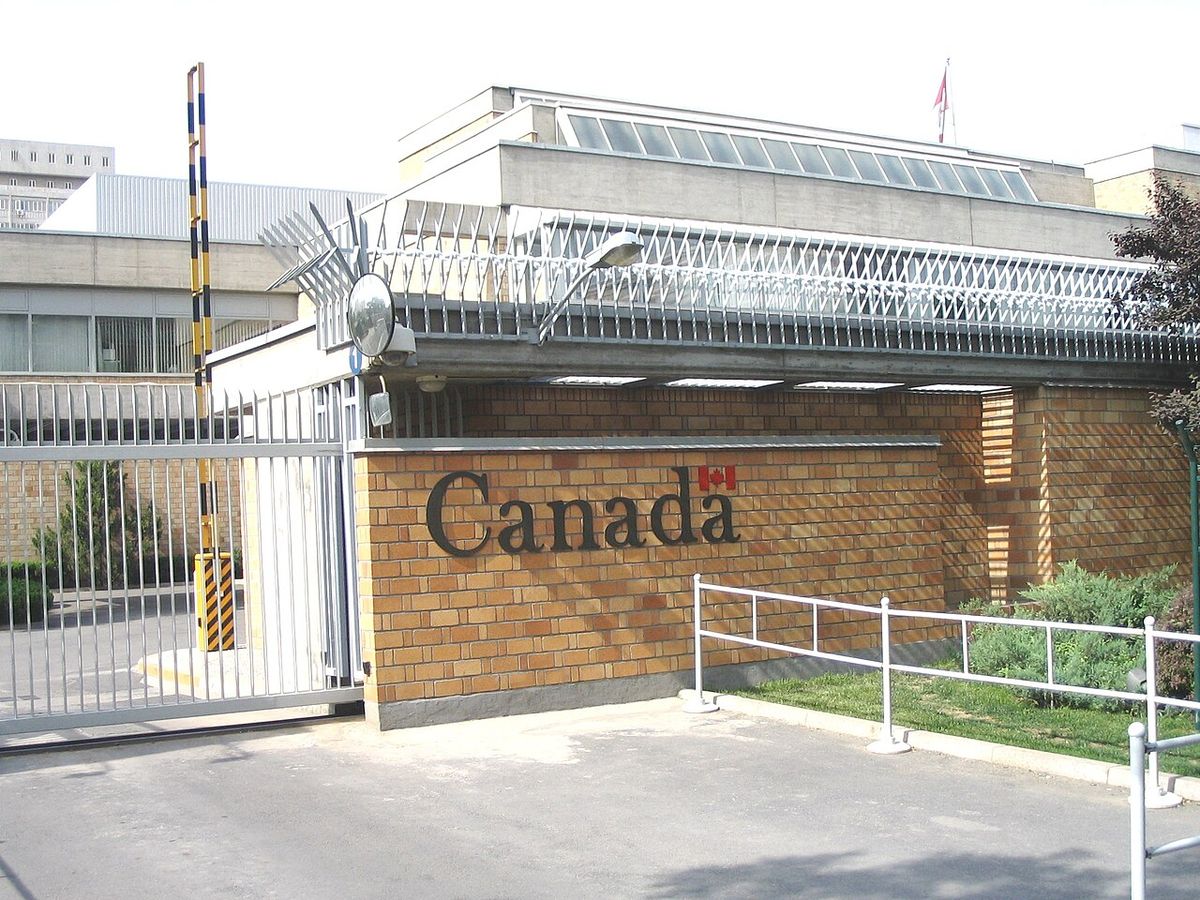
Prime Minister Pierre Trudeau, who had visited China in 1949 and 1960, made recognizing the People's Republic of China a priority upon taking office, campaigning on the policy. After negotiations at the Stockholm Conference, Canada formally recognized the PRC as the government of China on 13 October 1970, establishing diplomatic ties while leaving the status of Taiwan unresolved. This made Canada one of the first Western nations to do so, a move facilitated by China's eagerness to end its isolation and its view of Canada as close to but somewhat independent of the United States. In 1971, Canada supported the UN Albanian resolution that transferred China's seat from the Republic of China to the People's Republic of China. Trudeau became the first Canadian prime minister to pay an official visit to China in October 1973, meeting Chairman Mao Zedong and expressing empathy for China's revolution.
A significant bilateral family reunification agreement was also signed in 1973, following a 1972 PRC policy shift to assist emigration, which sought to allow multinational families split between the countries to reunify. Trade flourished during this period, with a major Canadian trade exhibition in Beijing in 1972 producing a windfall for business and sustained Chinese demand for Canadian wheat supporting the market. The two nations agreed to exchange engineers and scientists as part of a foreign exchange programme, and the trade balance in 1973 was heavily weighted in Canada's favour. The Canada-China Scholars' Exchange Program (CCSEP) was established in 1973, becoming Canada's longest-standing bilateral scholarship initiative and supporting over 1,400 scholars in five decades.
Economic Engagement from the 1980s to the 2000s
In 1983, the two nations signed the Agreement on Developing Cooperation. Chinese Premier Zhao Ziyang visited Canada in 1984, becoming the first senior Chinese leader to address Parliament, and signed the Agreement on the Protection of Investment. The Mulroney government signed the Agreement on Prevention of Double Taxation and Tax Evasions in 1986. Under Prime Minister Jean Chrétien, Canada actively pursued commercial ties, exemplified by a November 1994 Team Canada trade mission of 300 business leaders that secured $9 billion in orders. Chrétien strongly supported China's accession to the World Trade Organization, which was achieved in 2001, believing economic engagement and the rule of law would lead to human rights advances.
The Chrétien era saw numerous memoranda of understanding signed on tourism, consular affairs, and environmental cooperation. In November 1997, agreements included the Consular Agreement, a tourism MOU, three MOUs on development assistance, and an exchange on establishing more consulates-general. In April 1999, further agreements covered environmental cooperation, crackdowns on crime, and protocols for Chinese imports of Canadian animal products. This period was defined by Chrétien's 'Four Pillars Policy' aimed at diversifying trade away from the United States, with engagement with China as a central pillar. International Trade Minister Roy MacLaren stated that getting China into the WTO was fundamental to Canadian trade policy and would draw China into the liberal international order.
Periods of Strain and the Harper Government
Prime Minister Stephen Harper's government, elected in 2006, initially adopted a more values-driven foreign policy critical of China's human rights record. The government awarded honorary citizenship to the Dalai Lama and criticized China's commercial espionage, delaying planned high-level meetings. Harper did not attend the opening ceremonies of the 2008 Beijing Olympics, and at the 2006 APEC Summit only had a brief informal meeting with Chinese leader Hu Jintao. The global financial crisis of 2008 prompted a shift, as Canada sought to repair economic relations, leading to visits by several Canadian ministers to China in 2009. Harper made his first official visit to China in December 2009, visiting Beijing, Shanghai and Hong Kong, after which both sides agreed to build stronger economic relations.
This agreement facilitated major investments like the 2012 $15.1 billion takeover of Alberta-based Nexen by China's state-owned CNOOC, which concerned many in the Conservative Party. After approving the takeover, Harper tightened foreign investment rules under the Investment Canada Act specifically for state-owned enterprises. The CCPRPIA was approved by the Harper cabinet for a 1 October 2014 commencement date. Chinese officials had suggested the next logical step would be a free trade agreement after the CCPRPIA, which Canadian officials promised to study.
Recent Deterioration and the Carney Reset
Relations deteriorated significantly after Canada's detention of Huawei CFO Meng Wanzhou in December 2018 at the request of the United States. China subsequently detained two Canadian citizens, Michael Spavor and Michael Kovrig, in what was widely seen as retaliation, holding them until 2021. Canadian intelligence also reported Chinese efforts to interfere in the 2019 and 2021 federal elections, further straining ties. Under Prime Minister Mark Carney, elected in 2025, Canada pursued a pragmatic reset of the relationship, framing it as part of a strategy to diversify trade away from over-reliance on the United States amid uncertainty under a second Trump administration. Carney visited Beijing in January 2026, the first Canadian prime minister to do so since 2017, and met with President Xi Jinping, Premier Li Qiang, and National People's Congress Chairman Zhao Leji.
The two leaders announced a new strategic partnership focused on energy, clean technology, and climate competitiveness. A central component was an agreement to allow up to 49,000 Chinese electric vehicles into the Canadian market annually at a most-favoured-nation tariff rate of 6.1%, a rollback of a previous 100% surtax imposed in 2024 in lockstep with Washington. The quota corresponds to import volumes from 2023 to 2024 and represents less than 3% of the Canadian new vehicle market, with an expectation it will drive Chinese joint-venture investment in Canadian production within three years. The partnership also included agreements to collaborate on combating narcotics trafficking, transnational crime, and money laundering, and to increase cultural exchanges and tourism, with China committing to introduce visa-free access for Canadians.

Current Economic and Trade Relationship
China is Canada's second-largest single-country trading partner after the United States. Services trade reached $13.8 billion in 2025, a 3.6% increase since 2024. The Joint Economic and Trade Commission (JETC) serves as the main annual bilateral consultation mechanism, last meeting in Ottawa in August 2025. Key commercial opportunities for Canadian companies exist in agriculture, consumer products, natural resources, energy, and environmental technology. The 2026 reset yielded several immediate trade concessions from China designed to unlock nearly $3 billion in export orders.
The 2026 agreements created new frameworks in several key sectors. For electric vehicles, a quota for 49,000 Chinese EVs at a 6.1% tariff was set, with the quota expected to rise to 70,000 vehicles by 2030 and an expectation that over 50% would be affordable models under $35,000 within five years. In agriculture, China cut tariffs on Canadian canola seed from 84% to about 15%, reopening a $4 billion market, and suspended tariffs on canola meal, lobster, crab, and peas through year-end 2026, restoring another $2.6 billion in trade, though these suspensions are not permanent. A new Ministerial Energy Dialogue was launched to support trade in clean energy, oil, LNG, and uranium, though it had not held its first meeting as of mid-2026. China also pledged to prioritize Canadian softwood lumber for its low-carbon urbanization projects, providing an alternative market for British Columbia producers facing U.S. tariffs. These initiatives are at varying stages of implementation, with some dialogue mechanisms yet to hold their first meetings.
Canada manages its relationship with China using professionals from various federal departments. The government acknowledges the commercial potential of the relationship. It also identifies persistent risks such as market access barriers and opaque regulations. Other noted risks are intellectual property theft and the diversion of civilian technology for military use. A goal to increase exports to China by 50 percent by 2030 was set. As of 2026, this target remained ambitious and far from being realized.
People-to-People and Cultural Ties
Strong societal links form a bedrock of the bilateral relationship. Over 1.8 million Canadian residents are of Chinese origin, making it one of the largest immigrant groups, with immigration history marked by the head tax starting at $50 in 1885 and rising to $500 by 1903, and the Chinese Immigration Act of 1923 which virtually banned Chinese immigration until 1947. As of December 2024, approximately 100,000 Chinese citizens held valid study permits for long-term study in Canada for six months or longer. Mandarin is the fourth most spoken language in the country after English, French, and Spanish. The Canada-China Scholars' Exchange Program, established in 1973, is Canada's longest-standing bilateral scholarship initiative, having supported more than 1,400 scholars over five decades.
Tourism and cultural exchanges are actively promoted, with Destination Canada and China Media Group agreeing to facilitate more Chinese tourism to Canada, especially ahead of the co-hosted FIFA World Cup in 2026. President Xi also committed to introducing visa-free access for Canadians travelling to China. These connections are supported by Canadian diplomatic posts in Beijing, Chongqing, Guangzhou, Hong Kong, and Shanghai. Canada supports work in China on issues like women and children, peaceful pluralism, climate change, and biodiversity through initiatives like the Canada Fund for Local Initiatives, which provides small grants for environmental sustainability and good governance projects. The two countries also collaborate in multilateral fora like the United Nations, the World Bank, and the International Monetary Fund, where Canada aided China's entry after 1971.
Key Agreements and Milestones in the Relationship
The bilateral relationship has been shaped by formal agreements and high-level visits. These events have defined cooperation and set the terms of engagement between the two countries. The milestones mark an evolution from tentative recognition to a complex partnership. The following list highlights some of the most significant agreements and diplomatic events in this history.
- 13 October 1970: Canada formally recognizes the People's Republic of China and establishes diplomatic relations.
- October 1973: Prime Minister Pierre Trudeau makes the first official visit to China by a Canadian PM, meeting Mao Zedong.
- 1984: Chinese Premier Zhao Ziyang visits Canada, addresses Parliament, and signs the Agreement on the Protection of Investment.
- 1994: Prime Minister Jean Chrétien leads a Team Canada trade mission to China, securing $9 billion in orders.
- February 2012: Prime Minister Stephen Harper signs the Canada-China Promotion and Reciprocal Protection of Investments Agreement (CCPRPIA) and a uranium export treaty.
- 1 October 2014: The CCPRPIA investment agreement comes into force.
- January 2026: Prime Minister Mark Carney visits Beijing, meets President Xi Jinping, and announces a new strategic partnership, including the EV import quota.
These events represent key turning points in the relationship. They range from the foundational recognition of the People's Republic of China. They include a major economic pact signed under Prime Minister Stephen Harper. More recently, a pragmatic reset under Prime Minister Mark Carney aimed to diversify Canada's trade partnerships.
Challenges and Strategic Debates
The Canada-China relationship is defined by a persistent tension between economic opportunity and strategic risk. Human rights concerns, including China's treatment of the Uyghurs, its crackdown in Hong Kong which Canada's Special Committee condemned, and its detention of the two Michaels, remain a major point of contention and domestic political debate. Allegations of Chinese foreign interference in Canadian elections and society have eroded public trust and prompted government investigations. From a trade perspective, Canada's deepening engagement with China has drawn scrutiny from the United States, with U.S. Trade Representative Jamieson Greer warning in July 2026 that Beijing could use Canada as a back door into the U.S. market, citing concerns over auto rules of origin and transshipped aluminum.
Prime Minister Carney has ruled out pursuing a free trade agreement with China, seeking instead to manage the relationship through sectoral deals and dialogue as a calculated hedge against U.S. trade unpredictability. The central challenge for Canadian policy is balancing the pursuit of economic diversification with the need to uphold democratic values and maintain its critical alliance with the United States. The durability of Carney's reset will be measured by whether both sides can translate renewed engagement into sustained commercial gains, particularly given that implementation of agreed frameworks has been uneven. Canada also faces the challenge of managing a relationship where the Chinese party-state exercises control over all major institutions, a factor that complicates cooperation and increases risks for Canadian businesses and citizens operating in China.
The Canadian government has identified specific risks for businesses operating in or trading with China. These include several persistent issues that complicate the commercial environment. Market access barriers are one such persistent risk. Opaque regulations with arbitrary implementation present another challenge. Intellectual property theft is also a noted concern for companies.
- Market access barriers and restrictive licensing requirements.
- Opaque regulations with uneven and arbitrary implementation by local authorities.
- Prevalent and persistent intellectual property theft and forced technology transfer.
- The risk of diversion of sensitive goods and technologies intended for civilian use for military purposes (dual-use).
- Geopolitical tensions that can lead to arbitrary trade sanctions or detentions, as seen with canola and the Two Michaels.
- Competition with heavily subsidized Chinese state-owned enterprises.
- Data security laws and censorship requirements that conflict with Canadian norms.
These identified risks require a cautious and well-informed approach from Canadian companies. They also necessitate a proactive management strategy from the Canadian government. The government employs its in-country trade commissioner service to assist businesses. It also uses interdepartmental teams to manage the relationship and address these commercial challenges.
Frequently asked questions
What are the current tariffs between Canada and China?
Following the 2026 reset, Canada applies a most-favoured-nation tariff rate of 6.1% on up to 49,000 Chinese electric vehicles annually. China, for its part, cut tariffs on Canadian canola seed from 84% to about 15% and suspended tariffs on canola meal, lobster, crab, and peas through the end of 2026. These are specific concessions. General tariff levels vary by product category under WTO rules. The 6.1% rate on EVs is a dramatic rollback from the 100% surtax imposed in 2024 in coordination with the United States.
How much trade does Canada do with China?
China is Canada's second-largest trading partner. In 2025, total two-way merchandise trade was $125.7 billion, a 5.7% increase from 2024. Bilateral services trade added another $13.8 billion in 2025, a 3.6% increase. Merchandise exports to China accounted for 4.5% of Canada's total merchandise exports in 2025.
What is the Meng Wanzhou affair?
The Meng Wanzhou affair began in December 2018 when Canada arrested Huawei CFO Meng Wanzhou at the request of the United States. China subsequently detained two Canadian citizens, Michael Spavor and Michael Kovrig, on espionage charges. This incident caused a severe diplomatic crisis between Canada and China. Relations only began to thaw after all individuals were released in 2021 following a deferred prosecution agreement for Meng with U.S. authorities.
Is there a Canada-China free trade agreement?
No, there is no comprehensive free trade agreement between Canada and China. The Harper government signed the Canada-China Promotion and Reciprocal Protection of Investments Agreement in 2012. This agreement came into force on 1 October 2014. Prime Minister Mark Carney has explicitly ruled out pursuing a full free trade deal. Instead, his government opts for targeted sectoral agreements and dialogue mechanisms like the Joint Economic and Trade Commission.
How many Chinese people live in Canada?
Over 1.8 million Canadian residents are of Chinese origin. This group forms one of the country's largest immigrant communities. The population stems from waves of immigration beginning in 1858. Additionally, as of the end of 2024, approximately 100,000 Chinese citizens held valid study permits for long-term studies in Canada for six months or longer.
What are the main Canadian exports to China?
Key Canadian exports to China include agricultural products like canola, peas, and seafood. Natural resources such as softwood lumber, potash, and uranium are also major exports. Energy products including oil and liquefied natural gas are exported to China. The 2026 reset specifically aimed to boost exports in agriculture, clean technology, and forestry products. Canola seed alone represents a multi-billion dollar market that was reopened with tariff reductions in 2026.
Sources and further reading
- Canada–China relations (Wikipedia) en.wikipedia.org
- Canada-China relations international.gc.ca
- Prime Minister Carney forges new strategic partnership with ... pm.gc.ca
- Mark Carney's Pragmatic Reset to China-Canada Relations apcoworldwide.com
- Canada-China Relations thecanadianencyclopedia.ca
This article explains how things work and is not financial, tax or legal advice. Rules, limits and rates change, so check the current figures with the Canada Revenue Agency, your province or your financial institution before you act.