The Bank of Canada is Canada's central bank, established as a Crown corporation in 1934. Its core mandate is to promote the economic and financial welfare of Canada, primarily by keeping inflation low, stable, and predictable. The bank achieves this mainly by setting its key policy interest rate, which influences borrowing costs across the economy. It also issues all Canadian banknotes, acts as the government's banker, and works to ensure a stable financial system.
History and Establishment
The Bank of Canada was created against a backdrop of economic uncertainty and a desire for greater financial independence. Prior to its founding, the federal Department of Finance printed government notes, and the Bank of Montreal acted as the government's banker. In 1933, Prime Minister R.B. Bennett established the Royal Commission on Banking and Currency, motivated in part by a wish to lessen Canada's dependence on American banks in New York. The commission, which included figures like Scottish jurist Lord Macmillan and former Finance Minister William Thomas White, recommended establishing a central bank. The Bank of Canada Act received royal assent in March 1935, and the bank began operations shortly thereafter. Initially chartered as a privately owned corporation to ensure freedom from partisan influence, it was designated a federal Crown corporation in 1938 under Prime Minister William Lyon Mackenzie King, with share capital held by the Minister of Finance.
During World War II, the bank's role expanded as it operated the Foreign Exchange Control Board and the War Finance Committee to raise funds through Victory Bonds. In 1944, it became the sole issuer of legal tender banknotes in Canada. The post-war period saw its mandate broaden to include encouraging economic growth, leading to the creation of the subsidiary Business Development Bank of Canada. In the early 1960s, Governor James Coyne reduced the money supply to combat rising inflation. Since the 1980s, the bank's main priority has been keeping inflation low, a focus formalized with the adoption of a 1% to 3% inflation target range in 1991.
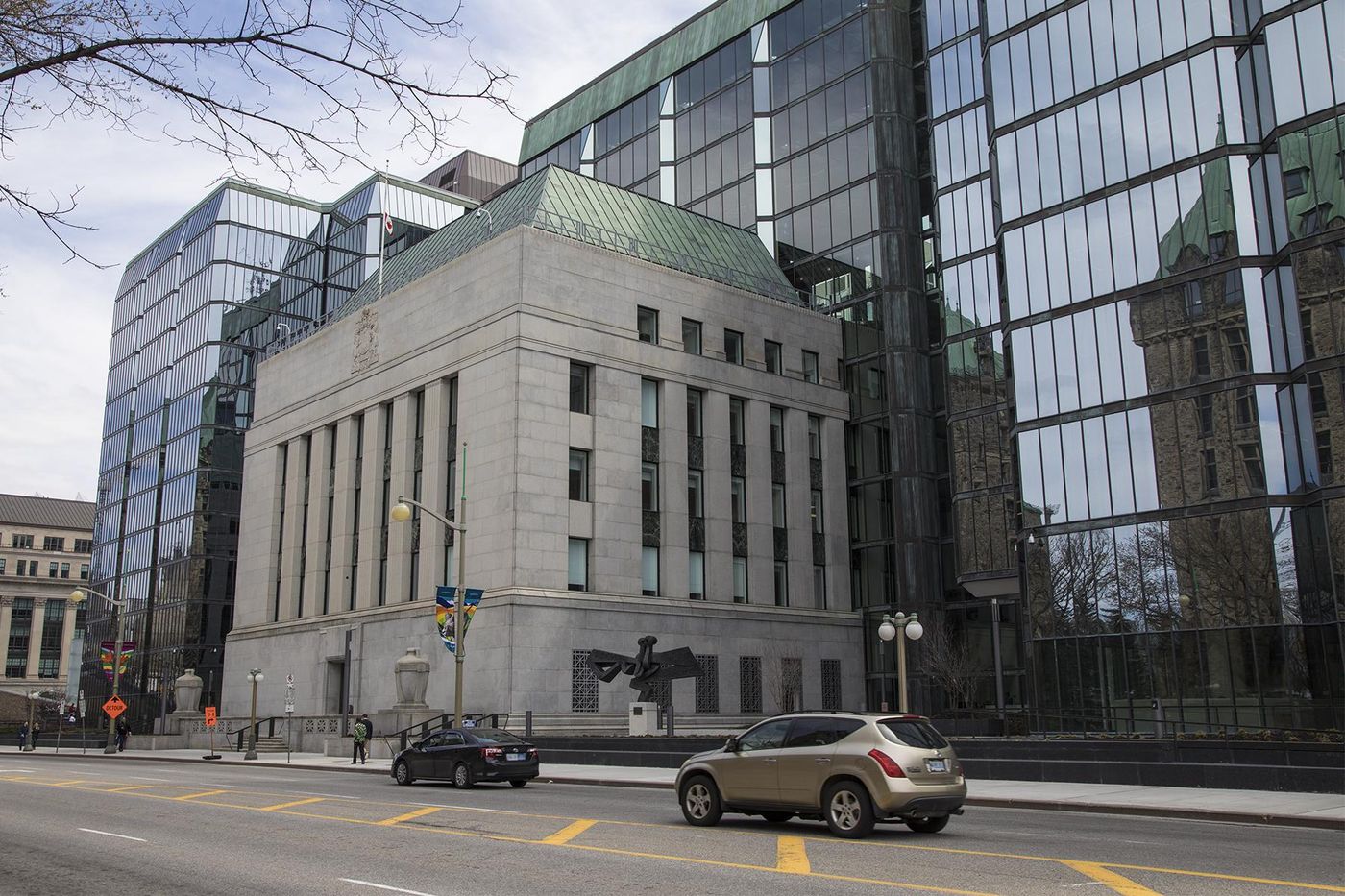
The bank's headquarters in Ottawa underwent major renovations between 2013 and early 2017, temporarily relocating to 234 Laurier Avenue West. Its policy responses to major economic events have defined recent decades. Following the 2008 financial crisis, it lowered interest rates but avoided quantitative easing, fearing hyperinflation. This stance changed dramatically in March 2020 in response to the COVID-19 pandemic, when it cut its policy rate to 0.25% and began a large-scale quantitative easing program. This contributed to inflation reaching 4.8% in 2021, the highest in over 30 years. The bank ended quantitative easing in October 2021 and began a series of interest rate hikes in March 2022 to combat inflation, marking its first increase in over three years.
Mandate and Core Responsibilities
The Bank of Canada's mandate is formally set out in the preamble to the Bank of Canada Act. Its purpose is to regulate credit and currency in the best interests of the nation's economic life, control the external value of the Canadian dollar, and mitigate fluctuations in production, trade, prices, and employment. In practical terms, this broad mandate is internally defined by a more specific and narrow goal: to keep the rate of inflation, as measured by the Consumer Price Index, between 1% and 3%. Since adopting this target in 1991, the average inflation rate up to 2019 was 1.79%. The bank's most potent tool for achieving this goal is its ability to set the interest rate for borrowed money, specifically its target for the overnight rate.
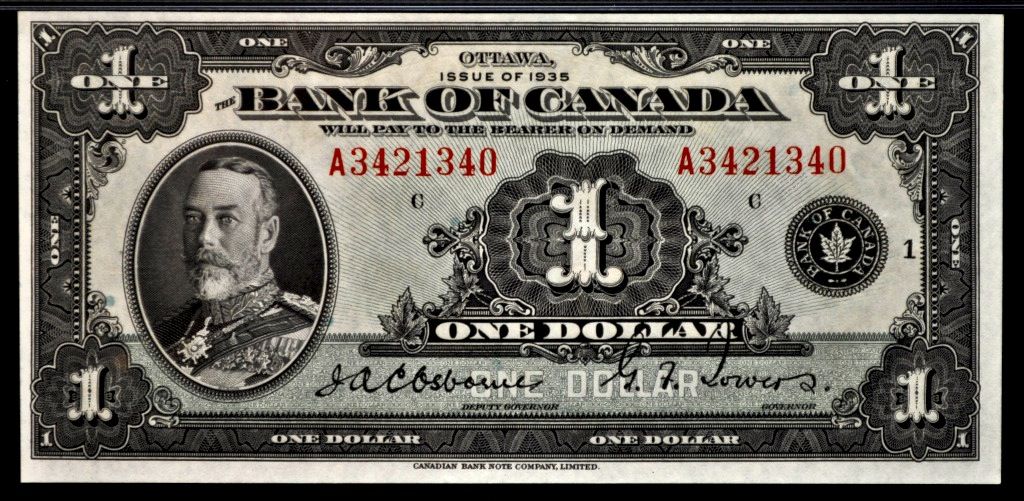
Beyond monetary policy, the bank has several other key responsibilities. It is the sole entity authorized to issue currency in the form of bank notes in Canada, a role it has held exclusively since 1944. The contract to produce these banknotes has been held by the Canadian Bank Note Company since 1935. Coins are issued separately by the Royal Canadian Mint. The bank also provides banking services and money management for the Government of Canada and loans money to Canadian financial institutions. Furthermore, it promotes a safe and sound financial system within Canada and internationally. It is important to note that Canada no longer requires banks to maintain fractional reserves with the Bank of Canada. Instead, banks must hold highly liquid assets equal to 30 days of normal withdrawals, while leverage is tied to adequate loss-absorbing capital like tier one equity.
Structure and Governance
The Bank of Canada is structured as a Crown corporation, not a government department. Its shares are held in the name of the Minister of Finance on behalf of the Crown. The bank's earnings go into the federal treasury. A board of directors, appointed by the government, manages the bank under the leadership of a governor. Each director swears an oath of fidelity and secrecy before taking office. The Deputy Minister of Finance sits on the board but does not have a vote. The bank submits its spending to its board of directors, unlike government departments which submit estimates to Parliament. Employees of the bank are regulated by the bank itself and not by federal public service agencies.
The head of the bank is the Governor, who is appointed by the board of directors, though in practice the board approves the government's choice. The governor serves a fixed seven-year term which may be renewed, though recent governors have typically served only a single term. The Bank of Canada Act provides the Minister of Finance with the final authority on monetary policy through the power to issue a directive to the bank, but such a directive has never been issued in the bank's history. The bank maintains a zero book value policy on its balance sheet, matching total assets to total liabilities, and transfers any equity above this amount as a dividend to the Government of Canada.

Monetary Policy Tools and Framework
The Bank of Canada's primary monetary policy tool is its target for the overnight interest rate, which is the rate at which major financial institutions borrow and lend one-day funds among themselves. Changes to this target influence other interest rates throughout the economy, affecting consumer borrowing, business investment, and the exchange rate. The bank announces its interest rate decisions eight times a year. Because of the large volume of trade between Canada and the United States, specific adjustments to interest rates are often influenced by monetary policy decisions in the US. The bank also uses communication, or forward guidance, about the likely future path of interest rates to influence economic expectations.
In extraordinary circumstances, the bank has a framework for using unconventional monetary policy measures. This framework was developed following the 2008 global financial crisis and was utilized during the COVID-19 pandemic. The four main tools in this framework are forward guidance on the policy rate path, large-scale asset purchases (quantitative easing), funding to ensure credit is available to key sectors, and moving the policy rate below zero into negative territory. Quantitative easing, introduced in 2020, involves the bank creating new money to purchase large quantities of government bonds and other securities to increase the money supply and lower long-term interest rates. By February 2022, about 15% of the bank's assets were related to such unconventional measures.
Key Policy Decisions and Interest Rate History
The Bank of Canada's interest rate decisions are closely watched indicators of the country's economic direction. Its policy rate has fluctuated significantly in response to economic cycles. In the 1990s, interest rates were kept at a low level for almost seven years to support the economy. Following the 2008 recession, the bank lowered rates but did not engage in quantitative easing. By mid-2017, with inflation at 1.6% below its 2% target but with strong predicted GDP growth, the bank began raising its benchmark rate from 0.5%, reaching 1.75% by the end of 2018. Rates remained at that level throughout 2019.
The most dramatic shift occurred in 2020 with the COVID-19 pandemic. In March 2020, the bank quickly slashed its policy rate to 0.25% and launched a quantitative easing program for the first time. This contributed to a surge in inflation, which reached 4.8% in 2021. In response, the bank ended quantitative easing in October 2021 and began a rapid hiking cycle. In March 2022, it raised its benchmark rate for the first time in over three years, to 0.50%, citing inflationary pressures worsened by the Russian invasion of Ukraine. This made it the second Group of Seven central bank, after the Bank of England, to raise rates since the pandemic began. The aggressive rate hikes that followed led to a novel outcome for the bank: in the third financial quarter of 2022, it reported a loss of $522 million, the first loss in its history, attributed to the interest it pays on deposits increasing as rates rose.
| Period | Major Policy Context |
|---|---|
| Mid-2017 | Start of hiking cycle from post-2008 lows |
| End of 2018 | Rates peaked after series of hikes |
| March 2020 | Emergency cut due to COVID-19 pandemic |
| March 2022 | First rate hike in over three years to fight inflation |
| 2022 Q3 | Bank reports its first-ever quarterly loss ($522M) |
Financial Role and Balance Sheet
The Bank of Canada operates within the financial system beyond setting interest rates. It acts as the lender of last resort to financial institutions, providing liquidity through its standing liquidity facility. During the 2008 financial crisis, its balance sheet expanded by roughly 50% to $78.3 billion as it created new money to fund emergency loans to major banks by temporarily purchasing their assets. These assets were later unwound from its balance sheet. The bank's balance sheet operates on a zero book value policy, meaning it matches total assets to total liabilities. Any equity above this amount is transferred as a dividend to the Government of Canada.
As of 30 December 2015, the bank owned $95 billion in Government of Canada debt. Its liabilities primarily consisted of $76 billion in currency outstanding and $23 billion in deposits from the government. Banknotes in circulation increased from $70 billion at the end of 2014 to $76 billion at the end of 2015. The bank's books are audited by external auditors appointed by the Governor in Council on the recommendation of the Minister of Finance. The bank's role in funding government spending became particularly prominent during the COVID-19 pandemic through its quantitative easing operations, which involved large-scale purchases of government bonds.
Public Communication and Financial Literacy
The Bank of Canada places a strong emphasis on clear communication and public education. It announces its interest rate decisions and publishes a detailed Monetary Policy Report eight times a year, explaining its analysis of the economy and the rationale for its policy stance. The bank also uses forward guidance to shape market expectations about the future path of interest rates. Beyond formal policy communications, the bank engages in public outreach to promote financial literacy. It provides resources to help Canadians check their bank notes for authenticity and protect themselves from fraud, using the "feel, look, tilt, and flip" method. The bank also announces new bank note designs, such as the upcoming vertical $20 note featuring King Charles III.
The bank maintains an active presence on social media platforms to share information and updates. Its public communications aim to demystify its role and explain how its actions affect the everyday financial lives of Canadians. By providing data, charts, and analysis on its website, the bank seeks to make economic information accessible. This transparency is a key part of its framework for maintaining credibility and achieving its inflation-targeting goals, as public expectations about inflation are a critical factor in the actual inflation rate.
Frequently asked questions
What is the Bank of Canada's current interest rate?
The Bank of Canada's interest rate, known as the target for the overnight rate, changes over time based on economic conditions. Historically, it has ranged from a low of 0.25% set in March 2020 during the COVID-19 pandemic to a high of 1.75% in late 2018. In March 2022, the bank began a series of hikes from 0.25%, raising the rate to 0.50% in its first increase in over three years. For the most current rate, individuals should check the bank's official website or news announcements following one of its eight yearly decision dates.
Does the Bank of Canada print money?
Yes, the Bank of Canada is the sole issuing authority for Canadian banknotes. It has held this exclusive role since 1944. The physical production of the notes has been contracted to the Canadian Bank Note Company since 1935. The bank does not issue coins. That responsibility falls to the Royal Canadian Mint. The bank decides how much currency to put into circulation based on public demand and its monetary policy objectives.
What is quantitative easing and when did the Bank of Canada use it?
Quantitative easing is an unconventional monetary policy tool where a central bank creates new money to purchase large quantities of assets, like government bonds, from the financial market. The Bank of Canada avoided using it during the 2008 financial crisis but introduced it in early 2020 in response to the economic shock of the COVID-19 pandemic. The goal was to lower long-term interest rates and stimulate the economy. The bank ended its quantitative easing program in October 2021 as it shifted to fighting high inflation.
Who owns the Bank of Canada?
The Bank of Canada is a Crown corporation, meaning it is owned by the federal government on behalf of the Canadian public. It was designated a federal Crown corporation in 1938. The entire share capital is held in the name of the Minister of Finance. Despite being government-owned, it operates with a high degree of independence in setting monetary policy to avoid short-term political influence.
What is the Bank of Canada's main job?
The Bank of Canada's primary responsibility is to preserve the value of money by keeping inflation low, stable, and predictable. Its formal mandate, as defined in the preamble to the Bank of Canada Act, is to regulate credit and currency, control the external value of the Canadian dollar, mitigate economic fluctuations, and promote the economic and financial welfare of Canada. In practice, it has a specific internal target to keep the rate of inflation, as measured by the Consumer Price Index, between 1% and 3%. Its most potent tool to achieve this goal is its ability to set the interest rate for borrowed money.
Sources and further reading
- Bank of Canada (Wikipedia) en.wikipedia.org
- Bank of Canada bankofcanada.ca
This article explains how things work and is not financial, tax or legal advice. Rules, limits and rates change, so check the current figures with the Canada Revenue Agency, your province or your financial institution before you act.