OTTAWA
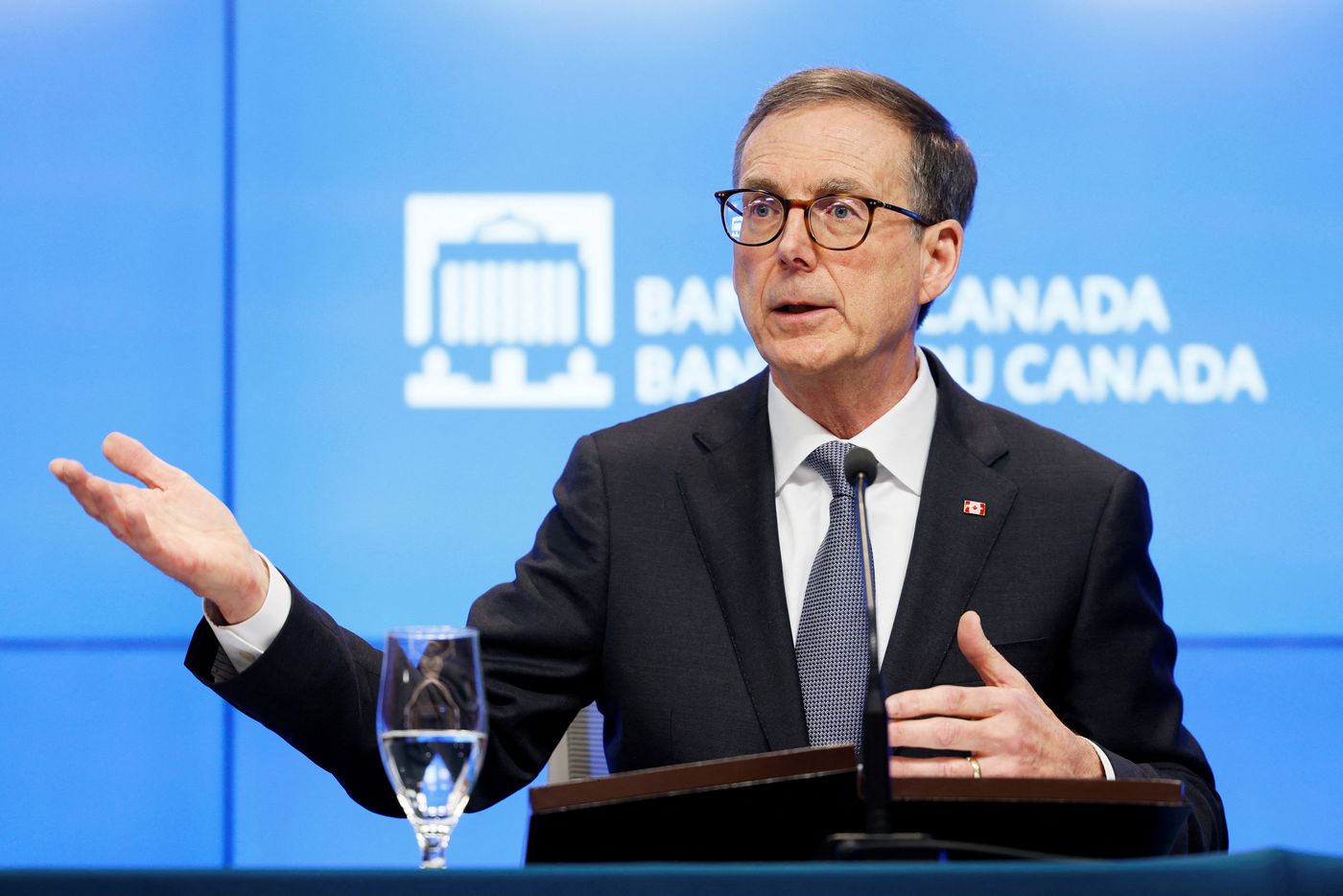
Bank of Canada governor Tiff Macklem will step down from the top job at Canada's central bank when his term expires on June 2, 2027.
The bank announced Monday that Macklem will not seek a second term as governor when his current seven-year term ends in June.
"It has been the highlight of my career to serve as the 10th governor of the Bank of Canada," Macklem said in a news release.
The central bank says it has begun its search for his successor and hopes to complete the process by spring 2027.
The 12 independent directors on its board have formed a search committee to select the next governor, with Zurich-based recruiting firm Egon Zehnder providing assistance.
While the new governor will be technically selected by this board, the final decision will rest with Prime Minister Mark Carney and Finance Minister François-Philippe Champagne.
"My time as governor has seen Canada handle a more fragmented, shock-prone world," Macklem, 65, stated.
"The Bank has faced these challenges by acting decisively, by using sound judgment in the face of uncertainty, and by serving Canadians with humility and a steadfast commitment to its mandate."
Macklem's retirement was widely expected, as the last time a Bank of Canada governor served a second term was in 1980.
He was named governor in May 2020 and took over the job in June of that year, during the early days of the pandemic.
During his tenure, Macklem faced unprecedented challenges, including the inflation shock resulting from the COVID-19 pandemic, and the ongoing Canada-U.S. trade war.
After Canadian inflation peaked at 8.1 per cent in mid-2022, Macklem executed one of the most aggressive rate tightening cycles in the central bank's history, raising its policy rate from 0.25 per cent to five per cent.
This involved 10 consecutive rate hikes over 16 months.
On Monday, Statistics Canada reported the annualized consumer price index reading for October was 3.1 per cent.
The Bank of Canada aims to keep inflation at two per cent, the mid-point of its target range.
While Macklem appears to now have tighter control over runaway inflation, he arguably misread the trend in 2021.
At the time, he and peers, such as then-U.S. Federal Reserve chair Jerome Powell, characterized rising prices as "transitory," or effectively driven by short-lived pandemic-related bottlenecks that would abate quickly as the economy reopened.
"Getting monetary policy right is not easy, and we won’t get it right at every point in time," Macklem reflected in a February 2024 speech to the Montreal Council on Foreign Relations.
"Monetary policy works to control inflation, not perfectly, not quickly, and not without pain. But it works."
A 14-page document about the job says candidates must hold Canadian citizenship, have a PhD or other graduate-level degree in economics, speak both official languages at a high level and have experience "at the highest levels of central banking, public policy, financial regulation, financial markets, academia, and/or international institutions."
The board's choice will be subject to approval by the minister of finance and the federal cabinet.
This story was written by the e2gold.ca newsroom from reporting by CBC News, BNN Bloomberg, CityNews and https://unpublished.ca/. Quotes are checked word for word against that reporting.