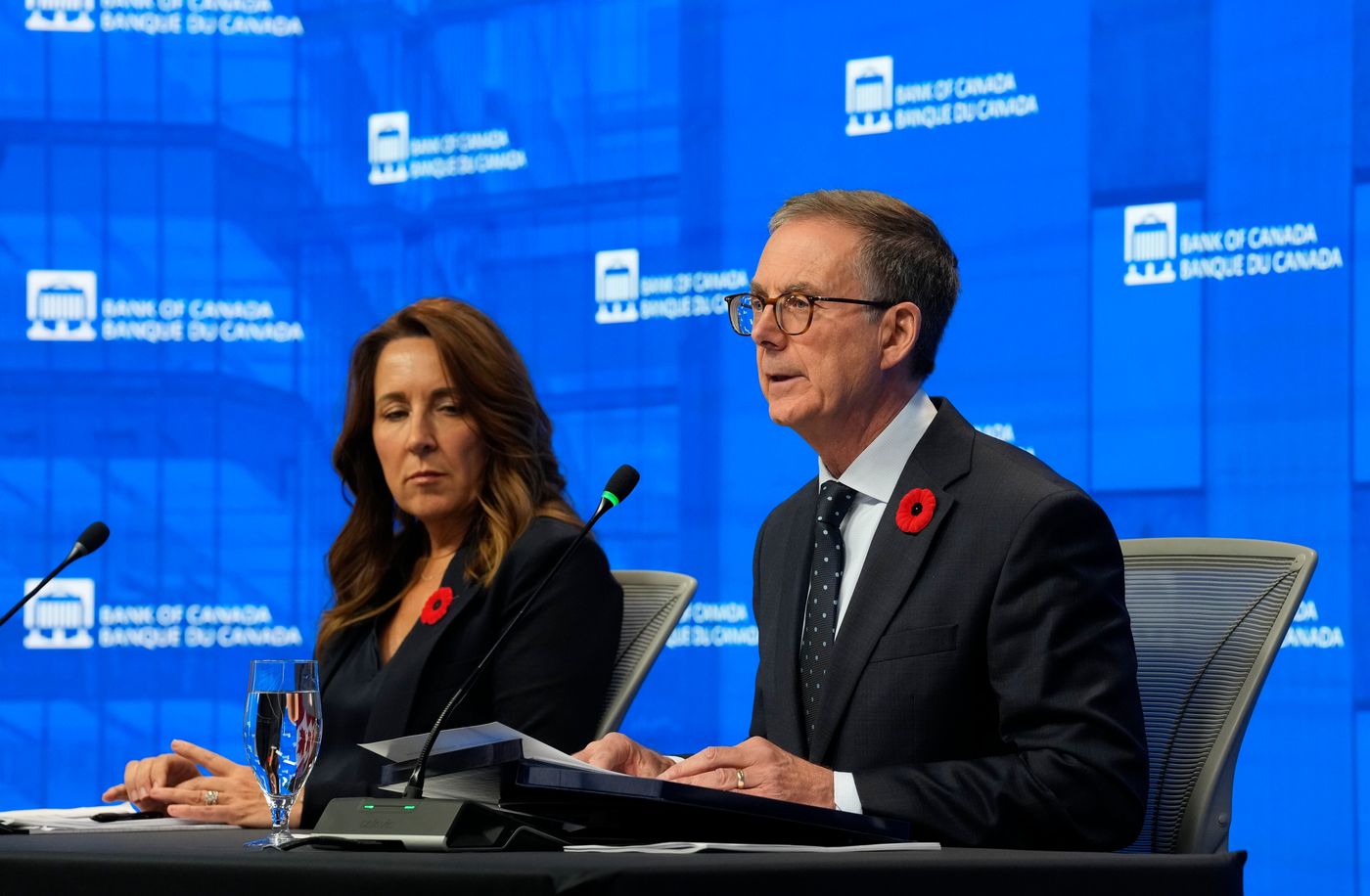
The Bank of Canada's first interest rate hike in three years is expected to further slow the country's slumping residential real estate market by raising borrowing costs for homebuyers.
The central bank raised its benchmark interest rate by a quarter-point to 2.5 per cent on Wednesday, a move that will make mortgages more expensive.
"It will put additional pressure on an already cautious market," said Keisha Johnson, a mortgage broker with RTS Mortgage Financial.
Bank of Canada senior deputy governor Carolyn Rogers agreed that borrowing costs and economic uncertainty are weighing on the housing market.
"People don't tend to make big purchase decisions like housing in that kind of an environment," she said, describing a "subdued" outlook for the sector.
The increase means variable-rate mortgages, which move with the central bank's benchmark, will become more expensive immediately.
Johnson said the increase means borrowers will qualify for a smaller mortgage and potentially face higher monthly payments.
Fixed-rate mortgages have also become more expensive this year, with the average five-year fixed rate rising to 4.54 per cent in early October from 3.91 per cent in January, according to MortgageLogic.news data.
Home purchases have been tepid since late 2022, and sales resumed their decline this year amid economic uncertainty from the U.S.-Canada trade dispute and high oil prices due to the war in the Middle East.
The typical home price across the country is $651,400, according to Canadian Real Estate Association data, putting it out of reach for many.
In the Toronto region, the typical price was about $918,000 last month, and in the greater Vancouver area, it was $1,076,000.
"Higher borrowing costs add to already significant affordability challenges," said Kari Norman, a senior economist with Desjardins Group.
The market slowdown has led the Canadian Real Estate Association to downgrade its home sales forecast three times this year.
The association now forecasts 2026 sales to be 5.2 per cent lower than last year. In January, it predicted sales would be 5.1 per cent higher.
Housing is expected to drag down Canada's average annual economic growth this year by 0.1 percentage points, according to the central bank's quarterly monetary policy report.
Phil Soper, president and CEO of Royal LePage, said the sector's "prolonged weakness is already weighing on economic growth, and higher borrowing costs will only deepen that challenge."
Some brokers believe the immediate impact of a quarter-point hike may be limited.
"It's not like we are in a market like we were back in 2022 where the prices are increasing substantially on a regular basis," said Shawn Zigelstein, a broker for Royal LePage Signature Realty.
"A quarter-point adjustment really shouldn't make too much of a difference on someone's mortgage payments at this point."
Zigelstein said clients are more concerned about other day-to-day costs, tariffs and job security.
While Canada "is not facing a broad mortgage crisis," there are signs of financial pressure in specific regions such as the Greater Toronto and Hamilton Area and southwestern Ontario, said Aled ab Iorwerth, deputy chief economist for Canada Mortgage and Housing Corp.
He said trade tensions are weighing on key manufacturing sectors in those areas, leading to labour-market uncertainty and softer housing market conditions.
CMHC said Ontario's mortgage arrears rate reached 0.32 per cent in the second quarter, which is still below historical peaks but expected to continue rising through mid-2027.
"The mortgage system is adjusting, but these early warning signs, particularly in parts of Ontario, need to be monitored closely," ab Iorwerth said.
The central bank also warned that higher energy and import costs are expected to raise the costs of housing construction and maintenance through higher prices for materials and equipment.
Nicole Emmett of the Canadian Construction Association said higher borrowing costs will also affect the ability to build new housing and supporting infrastructure.
"A home isn't a home without the roads, sewers and watermains that support it, and higher borrowing costs put pressure on the margins of the contractors building them," she said.
The Bank of Canada may raise its benchmark interest rate by another 25 basis points at its next scheduled announcement in December.
e2gold.ca reported in October that a Desjardins report predicts a nearly five per cent rise in existing home sales in Ontario next year, though activity remains below long-term norms.
This story was written by the e2gold.ca newsroom from reporting by The Globe and Mail and CTV News. Quotes are checked word for word against that reporting.