SHENZHEN
Prime Minister Mark Carney secured new trade concessions from China valued at more than $400 million, benefiting Canadian pork and seafood producers.
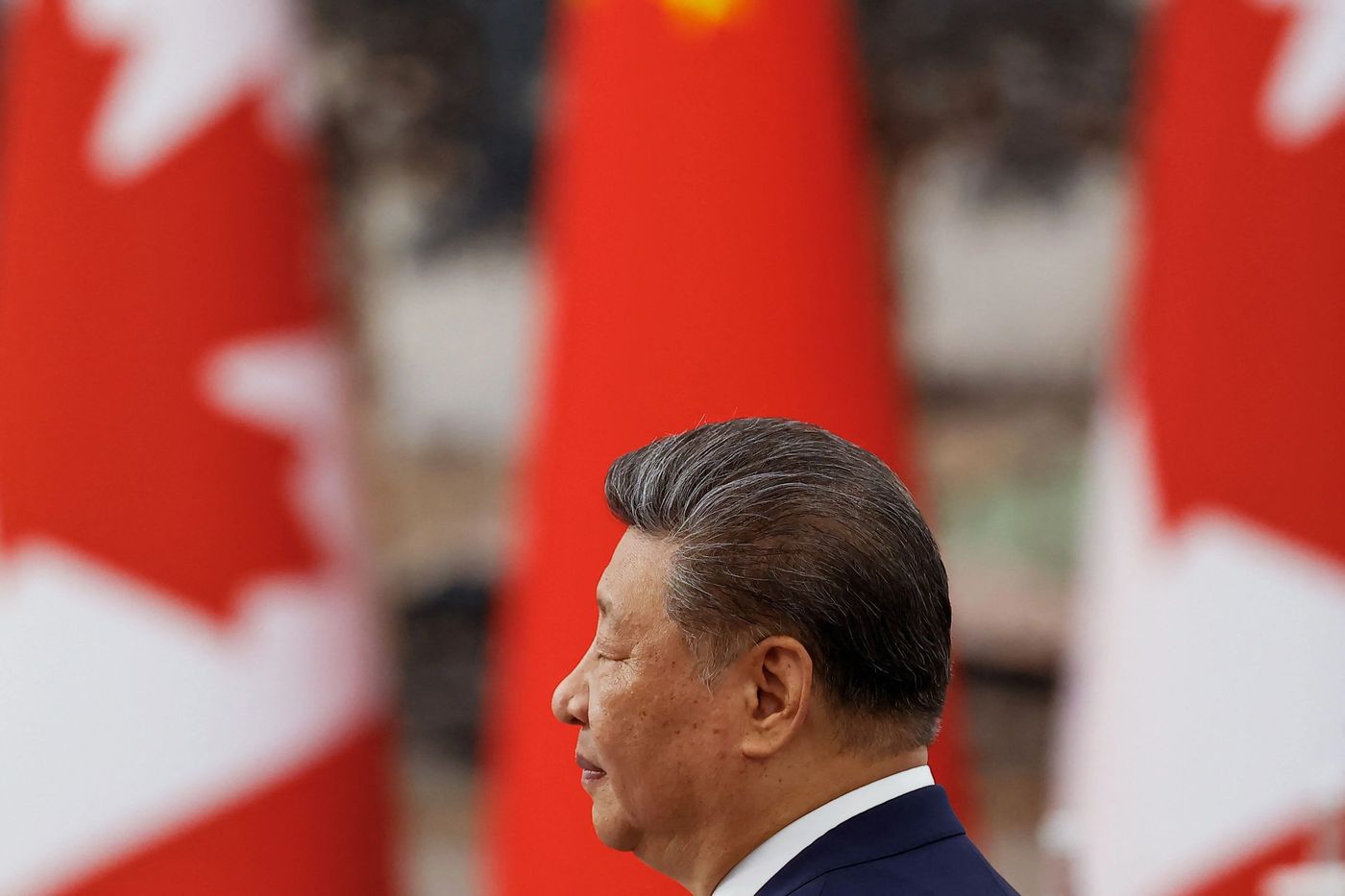
The two countries announced the measures on Tuesday as the Asia-Pacific Economic Cooperation summit got underway in Shenzhen. Chinese President Xi Jinping declared that China’s relationship with Canada had “fully resumed.”
“China is one of the most critical markets for pork processors and exporters,” said Kyle Larkin, president and CEO of the Canadian Meat Council.
Canadian officials said the extended tariff relief includes $116 million in frozen pork cuts, $96 million in Greenland halibut, and various frozen cold-water prawns and shrimp.
“It’s really great news for the Canadian pork industry, and more importantly for a thousand farmers and workers in Canada,” said Karan Sangfai, CEO of HyLife, one of Canada’s top pork producers.
Kody Blois, parliamentary secretary to the prime minister, said agreements were also reached for market access to geoduck and mollusk. “This is a major seafood market and one of the largest for us in the world, and we needed to make sure we get that market access back,” he said.
Blois added that Canada is now “just shy of $8-billion worth of Canadian exports back into the Chinese marketplace.”
The trade gains are part of Carney’s broader effort to diversify Canada’s economy and reduce its reliance on the United States. Since his visit to Beijing in January 2026, the two countries have made progress on several trade issues.
Canadian merchandise exports to China rose 31.4 per cent in the first half of 2026 to $21.5 billion, according to Global Affairs Canada. Crude oil shipments to China have also increased by approximately 37 per cent this year.
China has suspended additional tariffs on Canadian canola meal, peas, lobster and crab, with both countries agreeing on Nov. 4 to extend those market-access concessions through the end of 2028. China has also restored access for Canadian beef from 20 registered meat establishments.
Push for Chinese auto investment
However, the push to deepen trade ties has a more contentious dimension: Carney wants Chinese automakers to consider investing in Canadian manufacturing, potentially creating opportunities for autoworkers affected by U.S. tariffs.
There was no new announcement on Chinese electric vehicles entering Canada, with the two countries maintaining the agreement reached in January 2026. That deal opened the Canadian market to a limited number of Chinese electric vehicles, replacing a previous 100 per cent surtax with the standard 6.1 per cent most-favoured-nation tariff, subject to an annual quota of 49,000 vehicles.
“We have the best autoworkers in the world, and we want them fully deployed, full opportunity, in an integrated North American market,” Carney told reporters in Phnom Penh, Cambodia. “If they are not fully utilized in a North American context, that provides other opportunities.”
Peter Navarro, the White House trade adviser, responded to Carney’s comments on social media. “Are u really threatening to play China off the U.S.? This is offensive in the extreme. You should be far more worried China is going to eat Canada alive,” Navarro wrote.
Carney has said any Chinese automotive investment in Canada must involve genuine domestic manufacturing, rather than simply assembling vehicles from imported Chinese parts. “It’s not just about kit cars. There has to be a manufacturing aspect involved,” he said.
Beyond trade, the relationship remains complicated by disagreements over foreign interference, cybersecurity, human rights and national security. Carney has said closer economic engagement with China does not mean Canada is setting aside those concerns.
The prime minister’s trip follows a recent shift in U.S. politics, as Democrats' control of Congress after the midterm elections has created a new opening to restore free trade, analysts say.
This story was written by the e2gold.ca newsroom from reporting by BNN Bloomberg and CTV News. Quotes are checked word for word against that reporting.