OTTAWA
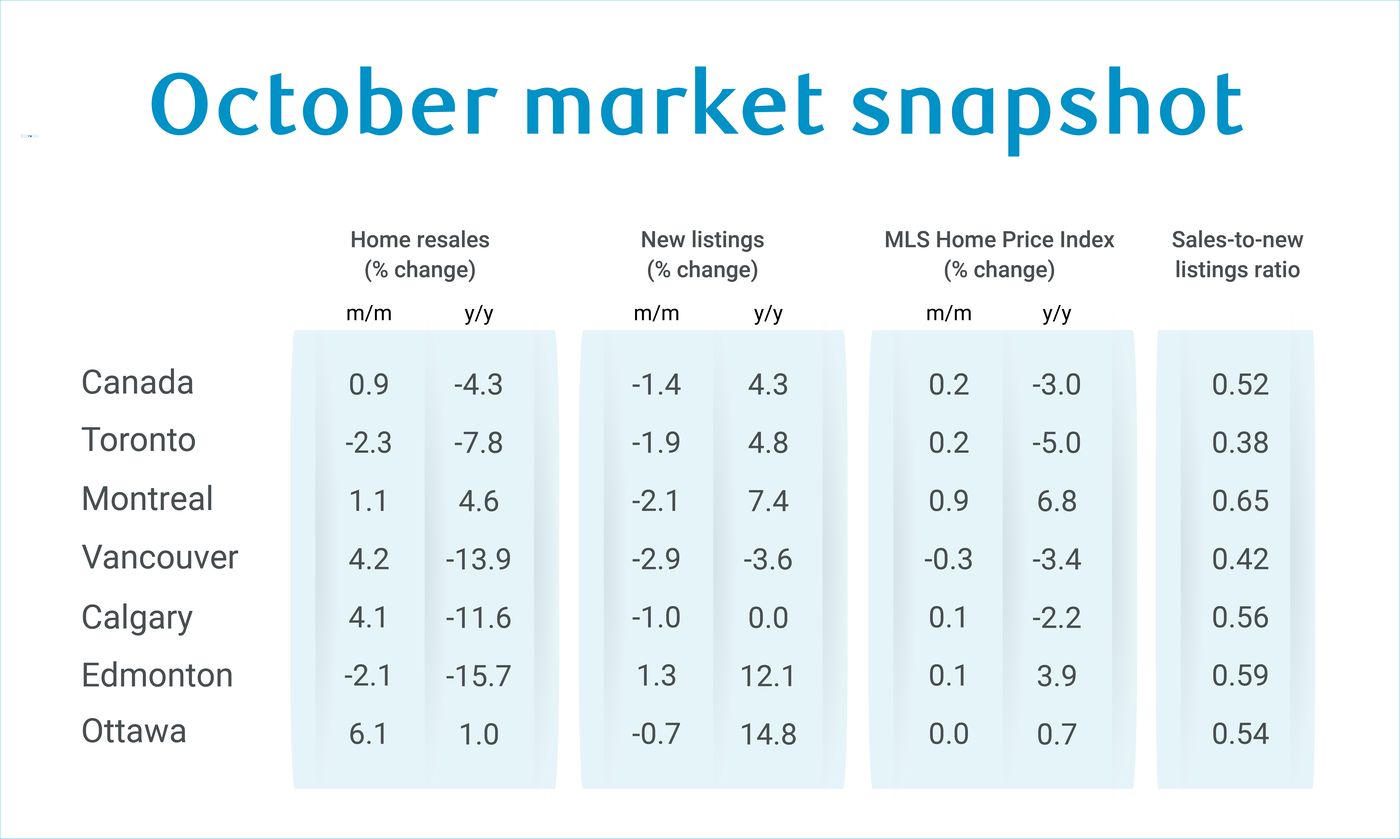
The Canadian Real Estate Association says home sales in October edged up slightly from September but were still down more than 10 percent from a year ago.
National sales last month totalled 37,827, down 10.6 percent from October 2025.
On a seasonally adjusted basis, activity edged up 0.3 percent compared with September.
"Not much activity between September and October," said CREA senior economist Shaun Cathcart. "But the remarkable part about that is that it ran counter to … a lot of analysts', including ours, expectations."
The national average sale price in October ticked down 1.6 percent from a year ago to $678,584.
New listings fell 5.5 percent to 75,814, but on a seasonally adjusted basis, were up 0.8 percent from the month before and outpaced sales activity.
CREA chair Garry Bhaura said the numbers signal there’s been only a slight slowdown in housing activity from the summer to the fall, even as interest rates rose in late October.
Cathcart expected already slow housing sales to slump into the end of the year after the Bank of Canada raised its benchmark interest rate a quarter-point to 2.5 percent last month, the first rate change in a year and the first rate hike since 2023.
Real estate experts have predicted the hike will keep cost-conscious potential buyers worried about the potential of rising mortgage payments on the sidelines.
Cathcart said he still expects sales will remain relatively flat nationally in the coming months while potential buyers perhaps wait to make a purchase until they get a better sense of where rates are going.
"It could be that we only get another maybe one or two hikes, and that once things sort of settle and we get a little bit more certainty next year, you can see the market come back stronger," he said.
The national composite benchmark home price was $656,200, down 3.1 percent from a year ago.
The markets in Ontario and British Columbia continue to be slow, while the prairies and East Coast have been "hotter" than many people might be aware, Cathcart said.
But with one rate hike already and potentially more to come, he said, "I think you're going to see everyone sort of cooling off a little bit more."
Benchmark prices varied across major cities. Greater Toronto's benchmark fell 4.4 percent annually to $928,800, while Greater Vancouver's declined 5.2 percent to $1,077,700.
Winnipeg recorded a 3.1 percent increase to $396,100, while Montreal's benchmark rose 1.4 percent to $591,400.
There were 197,000 homes listed through MLS platforms country-wide at the end of October, slightly above the long term average, according to CREA.
e2gold.ca reported last week that Bank of Canada governor Tiff Macklem will not seek a second term.
This story was written by the e2gold.ca newsroom from reporting by The Globe and Mail, CBC News, CityNews and Yahoo News. Quotes are checked word for word against that reporting.