OTTAWA
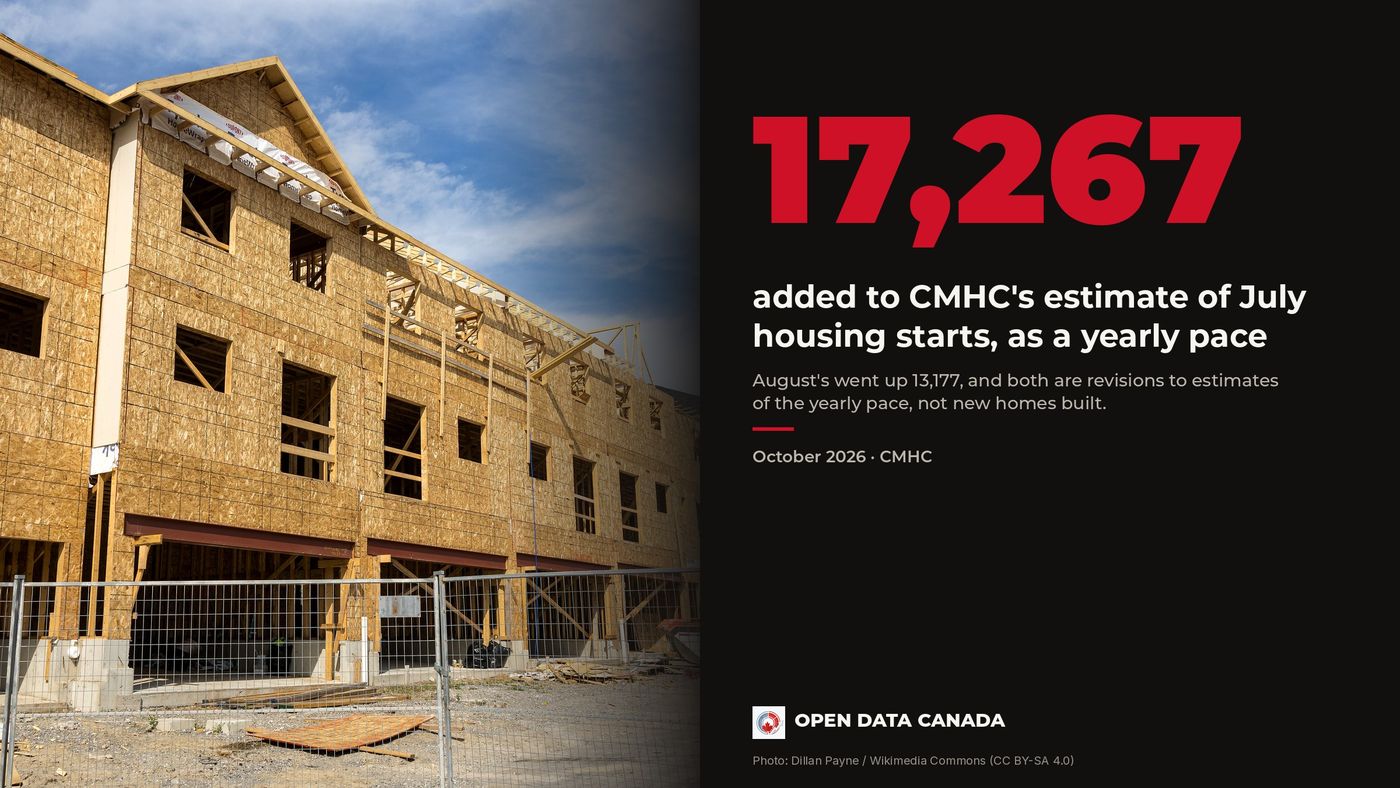
The annual pace of housing starts in Canada edged down two per cent in October, signalling reduced momentum for construction, the national housing agency says.
Canada Mortgage and Housing Corp. said the seasonally adjusted annual rate of housing starts came in at 244,558 units in October compared with 250,072 in September.
"The results for October signal reduced momentum for housing construction, with the national trend decreasing, driven by declines in Ontario, British Columbia, and the Atlantic provinces," said Kevin Hughes, deputy chief economist at CMHC.
The six-month moving average of the seasonally adjusted annual rate was down 1.7 per cent in October at 246,231.
Actual monthly housing starts in communities with a population of 10,000 or more rose six per cent year over year to 21,059 in October, compared with 19,806 in October 2025.
The annual rate of rural starts was estimated at 13,675 units for October.
Resale market shows modest activity
The housing data comes as the resale market also showed modest activity in October.
The Canadian Real Estate Association said home sales last month totalled 37,827, down 10.6 per cent from October 2025.
On a seasonally adjusted basis, activity edged up 0.3 per cent compared with September.
"Despite most forecasters sharpening their pencils and lowering their predictions, so far we’ve only seen a slight slowdown in housing activity from the summer to the fall, probably less than many would have predicted in an environment of rising interest rates," said Garry Bhaura, CREA’s chair.
The national average sale price in October ticked down 1.6 per cent from a year ago to $678,584.
New listings fell 5.5 per cent to 75,814, but on a seasonally adjusted basis, were up 0.8 per cent from the month before and outpaced sales activity.
CREA said there were about 197,000 properties listed for sale on all Canadian MLS systems at the end of October, up slightly from the long-term average of 190,000.
Cailey Heaps, CEO at Heaps Estrin Real Estate Team in Toronto, said deals are coming together when sellers have realistic expectations about pricing and buyers are willing to act.
"The first-time buyer market is very active, incredibly active," Heaps said.
She is expecting a "fairly flat" market through the winter as concern over job security and tariffs weigh on confidence.
"And then I do think that spring will start to see an uptick, not only in pricing but also in volume."
The Bank of Canada raised its policy interest rate by a quarter of a percentage point to 2.5 per cent last month, prompting Canada’s big banks to raise their benchmark prime rates.
Michael Davenport, senior economist at Oxford Economics, wrote in a report that Canada’s resale housing market had a quiet October and is heading into "hibernation" for the winter.
"Rising mortgage rates, a soft labour market and raised job insecurity from the trade war with the United States will likely cause housing demand to weaken in the near term, pushing home sales and prices modestly lower before a tepid recovery gets underway next spring," he wrote.
He added that he does not expect the recent softness in the housing market to deter the Bank of Canada from hiking its policy rate to 2.75 per cent in December.
e2gold.ca reported earlier this month that the U.S. midterm election results could create a new opening for Canada to push for an end to the trade war.
This story was written by the e2gold.ca newsroom from reporting by BNN Bloomberg, Canadian Mortgage Trends and Investment Executive. Quotes are checked word for word against that reporting.