The Bank of Canada is forecast to hold its policy interest rate at 2.25% through the end of 2026, with potential increases expected in early 2027. This outlook is based on current economic projections from major Canadian banks and financial markets. The central bank's decisions directly influence lenders' prime rates, which affect variable mortgage rates, lines of credit, and other floating-rate loans. Understanding this forecast helps Canadians anticipate changes in borrowing costs and manage their personal finances.
Current Interest Rate Environment and Key Benchmarks
Canadian interest rates are shaped by two primary benchmarks set by the Bank of Canada. The policy interest rate, also known as the overnight rate, is the rate at which major financial institutions borrow and lend one-day funds among themselves. This rate influences the cost of borrowing across the entire economy. Lenders use the overnight rate to set their own prime rates, which are the reference rates offered to their most creditworthy customers. The prime rate directly determines the cost of variable-rate mortgages, home equity lines of credit, and other floating-rate loans. As of September 2026, the Bank of Canada's policy rate is 2.25%, and the prime rate at most major Canadian lenders is 4.45%. The central bank has held its overnight rate at 2.25% since October 2025, which has kept most lenders' prime rates unchanged at 4.45%. Fixed mortgage rates follow a different path, as they are primarily influenced by Government of Canada bond yields rather than the central bank's policy decisions. The five-year Government of Canada bond yield is a key benchmark for five-year fixed mortgage rates, and it reached a 52-week high near 3.73% in late September 2026. According to TD Economics, the five-year Government of Canada bond yield was 3.09% in their latest forecast tables, illustrating the volatility in this key rate.
Detailed Forecast for the Bank of Canada Policy Rate
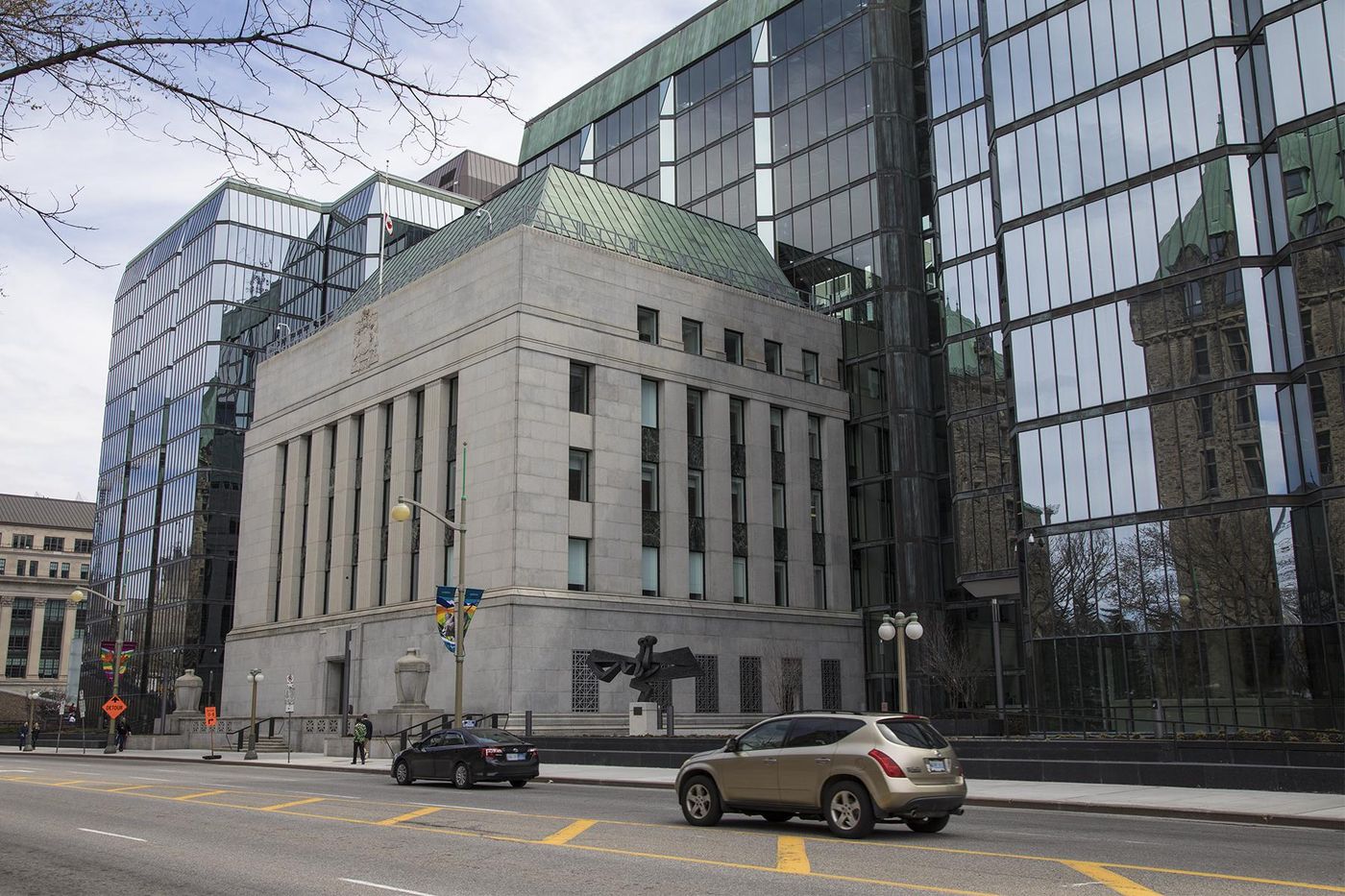
Financial institutions and economists provide forecasts for the Bank of Canada's policy rate based on economic models and market data. The consensus among Canada's largest banks is for the overnight rate to remain at 2.25% through the end of 2026. BMO, CIBC, National Bank, RBC and TD all forecast the policy rate to stay at 2.25% through year-end, while Scotiabank expects gradual rate increases beginning in July if inflation proves more persistent than expected. National Bank specifically expects the rate to hold at 2.25% through 2026, rise to 2.50% in the first quarter of 2027, and then increase again to 2.75% in the second quarter of 2027. Trading Economics global macro models suggest the interest rate in Canada could reach 2.50 percent by the end of the current quarter. Market expectations, as implied by the CORRA forward curve data from the Montréal Exchange, also point to a gradual increase in the overnight rate over the next few years. The Bank of Canada itself provides economic projections, and its July 2026 forecast anticipated economic growth of 0.7% for 2026, rising to 1.8% in both 2027 and 2028. The central bank's decisions are data-dependent, meaning future rate moves will hinge on incoming information on inflation, employment, and GDP growth. As of early October 2026, money markets priced in roughly 100 basis points of Bank of Canada increases over the next 12 months, and after the September jobs report, they priced in about a one-in-four odds of a quarter-point hike on October 28.
Economic Factors Driving the Rate Forecast
The Bank of Canada's Governing Council considers a wide range of economic indicators when making interest rate decisions. Their primary mandate is to preserve the value of money by keeping inflation low, stable, and predictable, with a target range of 1% to 3%. Headline inflation was reported at 3.1% in September 2026, driven primarily by higher oil and fuel prices, placing it above the target range. The bank's preferred core measure, the three-month annualized rate, rose from 2.3% in August to 2.6% in September. Business and consumer inflation expectations suggest inflation will stay higher for longer, which is a worrying economic sign for the central bank. Economic growth is another critical factor, with real GDP growing at an annualized rate of 3.3% in the second quarter of 2026, the fastest pace in more than three years. Statistics Canada's September 29 release showed real GDP was unchanged in July after June was revised up to 0.4%, and its advance estimate points to a 0.2% gain in August. The labour market's strength and consumer spending patterns also play a significant role. Global events, such as geopolitical conflicts affecting energy prices and international trade dynamics, add layers of uncertainty to the forecast. Governor Tiff Macklem has stated the bank will act to nudge the path for inflation back towards the target if it does not look likely to come down on its own. The bank may consider raising rates if inflation remains above target and expectations become unanchored, or cutting rates if the economy weakens substantially and inflation falls decisively back to target.
Impact on Variable and Fixed Mortgage Rates
Changes to the Bank of Canada's policy rate have a direct and almost immediate impact on variable mortgage rates. When the bank changes its overnight rate, lenders typically adjust their prime rates by an equivalent amount. A borrower with a variable-rate mortgage will see their interest rate, and thus their payment, change in accordance with these prime rate movements. With the policy rate expected to hold at 2.25%, variable mortgage rates are also forecast to remain stable in the near term. The lowest available five-year variable mortgage rate as of June 2026 was 3.45%, which reflects a discount below the prevailing prime rate of 4.45%. Fixed mortgage rates operate differently, as they are tied to Government of Canada bond yields in the longer-term debt markets. These yields move in anticipation of future economic conditions and Bank of Canada actions. The rise in the five-year bond yield to near 3.73% has already prompted major banks to raise select fixed mortgage rates. This decoupling means fixed rates can increase even when the Bank of Canada holds its policy rate steady, which has been the recent trend. According to TD Economics, the two-year Government of Canada bond yield was 2.82% and the three-month Treasury bill rate was 2.31% in their latest outlook, showing the broader movement in the yield curve that influences fixed-term lending. Variable rates are likely to rise by year-end, and fixed rates are still under pressure according to industry analysis, reflecting the split outlook for different mortgage products.
Mortgage Renewal Outlook and Financial Stress Indicators
A significant number of Canadian mortgage holders are facing renewal in a higher interest rate environment. By the end of 2026, approximately 33% of mortgage holders are expected to face higher monthly payments upon renewal. About 75% of borrowers facing a payment increase have five-year fixed-rate mortgages. For those with fixed-rate mortgages renewing in 2026, payment increases are expected to average around 20%. This reflects the shift from the ultra-low pandemic-era rates to today's higher borrowing costs. Borrowers with variable-rate mortgages face a wider range of outcomes at renewal. About 10% of borrowers renewing a variable-rate mortgage are projected to see payments rise by more than 40%, while roughly 25% could see payments fall by at least 7%. The spread largely reflects how borrowers managed the tightening cycle, as those who raised their monthly payments to keep principal and interest covered face smaller adjustments. The financial stress from these renewals is becoming evident in economic data. Equifax Canada reported that severe mortgage delinquency rates (90 or more days past due) rose by 33.8% in the second quarter of 2026 compared to a year earlier, reaching 0.30% of balances. Ontario and British Columbia were noted as outliers, with missed payments on non-mortgage debt among Ontario mortgage holders up 27% by balance. Equifax also reported insolvencies at their highest rate since 2009, with a sharp increase among homeowners. Statistics Canada’s national balance sheet shows the total dollar value of mortgage interest paid by households rising as renewals take hold, even though the mortgage interest cost component of the Consumer Price Index has eased year over year.
Bank of Canada Announcement Schedule and Neutral Rate Framework
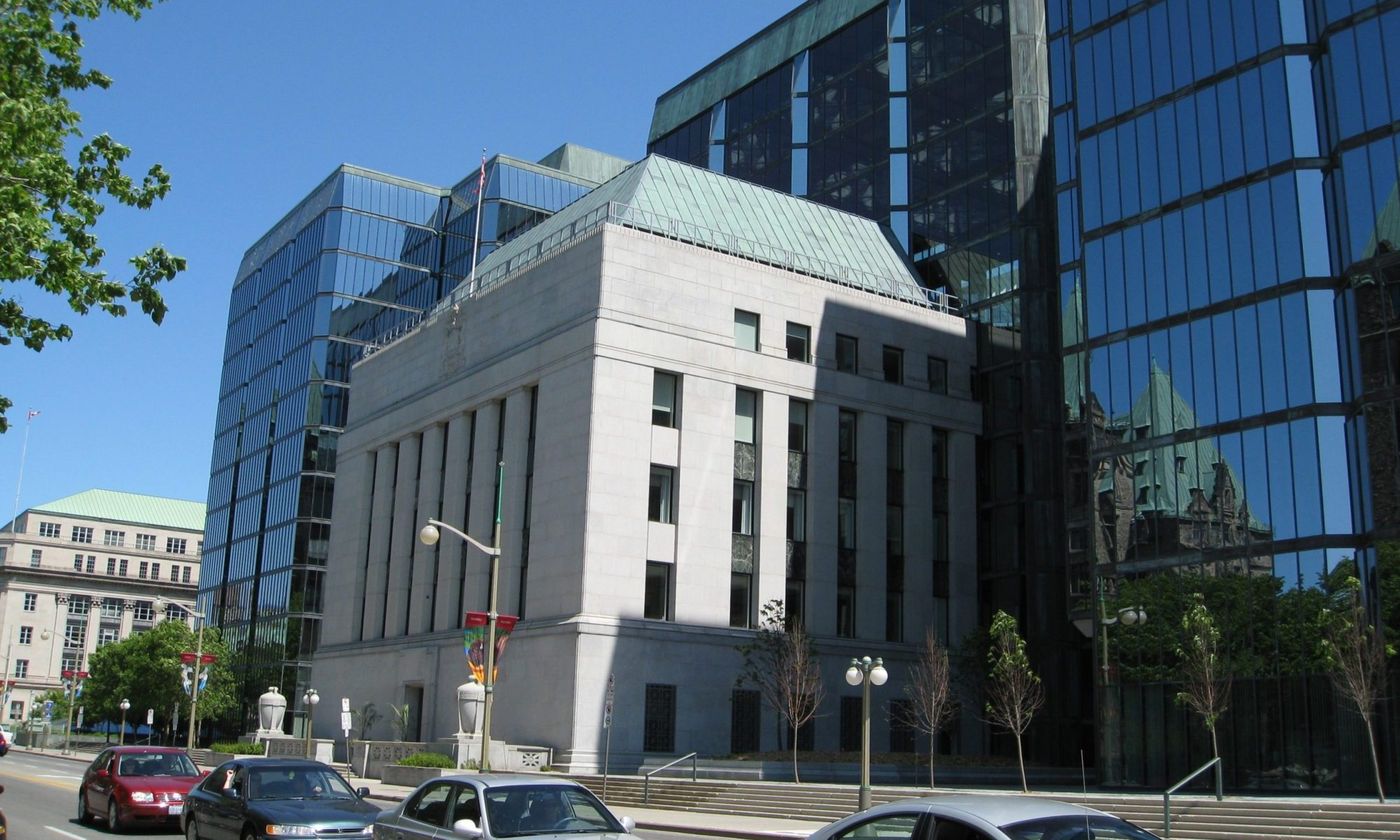
The Bank of Canada follows a predetermined schedule for interest rate announcements, typically making eight scheduled decisions per year. These announcements are closely watched by financial markets, lenders, and borrowers. The next scheduled announcement is on October 28, 2026, following the previous decision on September 2, 2026, where the rate was held at 2.25%. The decision is made by the bank's Governing Council after reviewing the latest economic data. Following the announcement, the bank publishes a statement explaining the rationale for its decision. Four times a year, these announcements are accompanied by a full Monetary Policy Report, which provides detailed economic analysis and forecasts. The bank's neutral rate, estimated to be between 2.25% and 3.25%, represents the theoretical level where monetary policy is neither stimulating nor slowing the economy. With the current policy rate at 2.25%, the bank is at the lower end of this neutral range. This positioning limits the scope for further rate cuts unless the economy weakens significantly, while also providing room for increases if inflationary pressures persist. The neutral rate helps explain why interest rates may remain relatively stable and are unlikely to return to the ultra-low levels seen during the pandemic. The Bank of Canada is on the precipice of another rate hike cycle according to some analysis, as inflation faces underlying and growing pressures that stack the deck against interest rate cuts.
Key Economic Data and Indicators to Monitor
Canadians watching for clues on future interest rate moves should pay attention to several key economic releases. The Consumer Price Index report, published monthly by Statistics Canada, is the primary gauge of inflation. The Bank of Canada closely monitors both headline inflation and core measures that strip out volatile components. Labour Force Survey data, also released monthly, provides insight into employment, unemployment, and wage growth. Gross Domestic Product reports measure the overall pace of economic expansion or contraction. The bank also watches business and consumer sentiment surveys for indications of inflation expectations. Global factors, such as oil prices on futures markets and international trade data, are increasingly important given Canada's position as a trading nation. The current account balance, which swung to an $8.8 billion surplus in the second quarter of 2026 from a revised first-quarter deficit of $8.3 billion, reflects the nation's external economic strength. Foreign investors bought a record $80.8 billion of Canadian government bonds in the second quarter of 2026, which matters directly for fixed mortgage rates. Monitoring these indicators can provide context for the Bank of Canada's decisions and the subsequent forecasts from financial institutions.
Key economic indicators and their recent values include the Bank of Canada's policy interest rate, which was 2.25% on September 2, 2026. Total CPI inflation was reported at 3.1%. Real GDP grew 0.8% in the second quarter, which is an annualised rate of 3.3%. This was the fastest pace in more than three years. Statistics Canada also revised first-quarter growth to an annualised gain of 0.3% from an initial decline of 0.1%.
| Indicator | Recent Value | Source/Date |
|---|---|---|
| Bank of Canada Overnight Rate | 2.25% | September 2, 2026 |
| Headline CPI Inflation | 3.1% | September 2026 |
| Real GDP Growth (Q2, annualized) | 3.3% | Q2 2026 |
| 5-Year Government of Canada Bond Yield | ~3.73% | September 28, 2026 |
| Prime Rate (Major Lenders) | 4.45% | September 2026 |
| Current Account Balance | $8.8 Billion Surplus | Q2 2026 |
| 3-Month T-Bill Rate | 2.31% | TD Economics Forecast |
| 2-Year Government Bond Yield | 2.82% | TD Economics Forecast |
These figures collectively paint a picture of an economy with firming growth and persistent inflationary pressures. Headline inflation of 3.1% was above the Bank of Canada's target range of 1-3%. The trade-in-goods balance moved from a $6.4 billion deficit to a $12.2 billion surplus in the second quarter. This was driven by record energy and auto exports. The revised first-quarter growth means Canada did not enter a technical recession.
Scenarios for Future Rate Moves and Market Sentiment
The future path of interest rates is not predetermined and depends on how economic conditions evolve. The Bank of Canada may consider raising interest rates if inflation remains above target and expectations become unanchored, if economic growth remains too strong and adds to inflationary pressures, or if global inflationary pressures from energy prices or supply chains persist. Conversely, the bank may consider cutting interest rates if the economy weakens substantially and inflation falls decisively back to target, if the labour market deteriorates significantly, or if a major external shock, such as an escalation in trade disruption, severely damages economic growth. Market sentiment, as measured by tools like the CORRA Futures, is directly influenced by the Bank of Canada's overnight rate decisions. As of October 19, 2026, market analysis suggested that with the Middle East conflict keeping energy prices higher for longer, and global debt levels adding pressure, the uncertainty is pointing rates in one direction, which is up. The magic number in calling the rate-decision odds is usually 60%, according to market sources. Many analysts agree with market expectations that the Bank of Canada will likely need to raise rates by year-end, even though a U.S.-Canada trade war could further damage Canada's economy, illustrating the complex trade-offs the central bank faces. A BoC rate hike before year-end or in early 2027 could help calm markets and potentially moderate Canada's five-year bond yield, giving fixed mortgage rates room to dip slightly.
Frequently asked questions
What is the Bank of Canada interest rate forecast for 2026?
The Bank of Canada has held its overnight rate at 2.25% since October 2025. National Bank expects the policy rate to remain at 2.25% through 2026. TD Economics forecasts the overnight target rate to be 2.25% for the period. Most bank economists expect the first increase to occur in 2027.
How does the Bank of Canada interest rate affect my mortgage?
The Bank of Canada's policy rate affects bank prime rates, which move variable mortgage rates. Fixed mortgage rates follow the bond market. The policy rate was 2.25% on September 2, 2026, and most big bank prime rates remained at 4.45%. Variable rates are likely to rise by year-end, while fixed rates are under pressure.
When is the next Bank of Canada interest rate announcement?
The next rate decision is on October 28, 2026. The Bank of Canada held its policy rate at 2.25% for the seventh straight decision on September 2, 2026. The bank typically makes eight scheduled announcements per year. Stay tuned for the next rate decision on October 28, 2026.
Why are fixed mortgage rates rising if the Bank of Canada is holding rates?
Fixed mortgage rates follow the bond market, not the Bank of Canada's policy rate. The five-year Government of Canada bond yield hit a 52-week high near 3.73% on September 28, 2026. Bond yields are rising due to inflation risks and global factors. This has prompted lenders to raise select fixed rates independently.
What happens to my variable mortgage rate when the Bank of Canada changes rates?
When the Bank of Canada changes its policy rate, it affects bank prime rates. Variable mortgage rates move with changes to the prime rate. If the policy rate holds, variable mortgage rates should stay where they are. The policy rate was held at 2.25% on September 2, 2026.
What is the neutral interest rate in Canada?
The Bank of Canada currently estimates Canada's neutral interest rate range to be 2.25 percent to 3.25 percent. The neutral rate is the theoretical interest rate that neither stimulates nor slows down the economy. As of the information provided, the Bank's policy rate is at 2.25 percent, which is the lower end of this estimated neutral range. This positioning suggests the central bank may have limited room to cut rates further unless the economy weakens more than expected. For borrowers, this concept helps explain why interest rates may remain relatively stable and are unlikely to return to the ultra low levels seen during the pandemic.
Sources and further reading
- Mortgage Rate Forecast (2026 to 2030) truenorthmortgage.ca
- Bank of Canada bankofcanada.ca
- Latest Forecast Tables, TD Economics economics.td.com
- Mortgage Rates Forecast Canada 2026 to 2030 nesto.ca
- Canada Interest Rate Forecast (2026 to 2030) ratehub.ca
This article explains how things work and is not financial, tax or legal advice. Rules, limits and rates change, so check the current figures with the Canada Revenue Agency, your province or your financial institution before you act.