The Bank of Canada's interest rate decisions set the target for the overnight rate, which directly influences borrowing costs across the economy. These decisions are announced on eight predetermined dates each year, typically on Wednesdays at 9:45 a.m. Eastern Time. As of September 2026, the policy interest rate is 2.25%, a level maintained since October 2025. Understanding these announcements helps Canadians anticipate changes in mortgage rates, loans, and broader economic conditions.
What the Bank of Canada Interest Rate Decision Is
The Bank of Canada interest rate decision is the formal announcement by which the central bank sets its target for the overnight rate, also known as the policy interest rate. This is the interest rate at which major financial institutions borrow and lend one-day funds among themselves. The Bank carries out monetary policy by influencing these short-term interest rates, adjusting the target on eight fixed dates each year. The decision is communicated via a press release that explains the economic factors and analysis behind the Governing Council's choice. Four times a year, this announcement coincides with the publication of the Monetary Policy Report, which presents the Bank's base-case projection for inflation and growth. The policy rate serves as the foundational benchmark for interest rates throughout the Canadian financial system.
When the Bank of Canada changes its target overnight rate, it directly influences the prime rate set by commercial banks and other lenders. The prime rate is the benchmark used to set interest rates for products like variable-rate mortgages, lines of credit, and business loans. Consequently, a change in the policy rate leads to adjustments in borrowing costs for consumers and businesses across the country. The Bank Rate, which is the rate the Bank of Canada charges financial institutions for overnight borrowing, is automatically set a quarter of a percentage point above the policy rate. Conversely, the deposit rate, paid on settlement balances held at the Bank, is set five basis points below the policy rate. These three rates are all announced simultaneously during the scheduled decision.
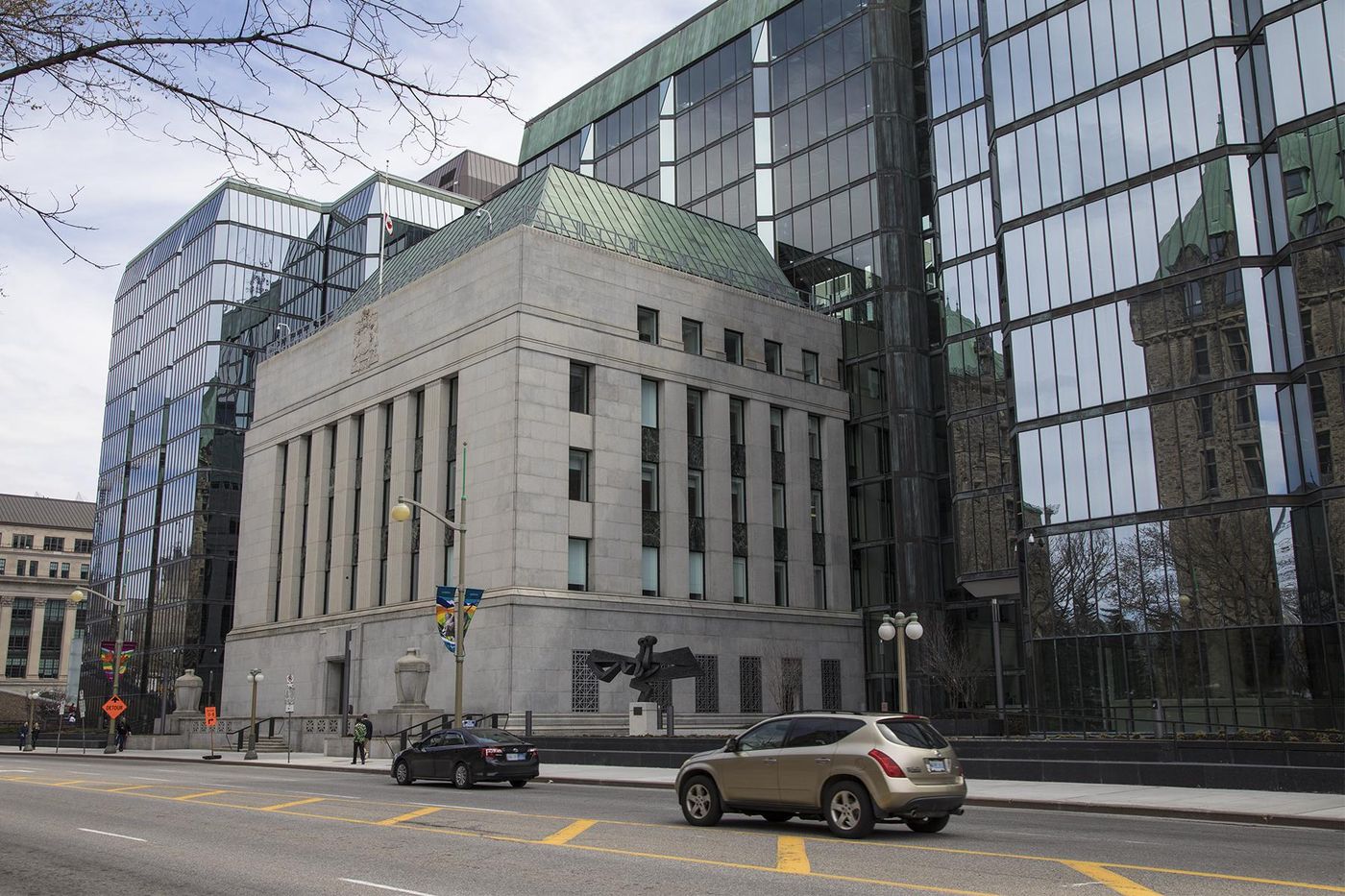
The 2026 and 2027 Announcement Schedule
The Bank of Canada publishes its full schedule of interest rate announcement dates well in advance, typically releasing the upcoming year's calendar in August of the prior year. All announcements occur on Wednesdays at 9:45 a.m. Eastern Time. For 2026, the remaining scheduled announcement dates are October 28 and December 9. The Bank has also published its schedule for 2027, which was released in July 2026. The schedule ensures transparency and allows financial markets, businesses, and consumers to anticipate when monetary policy updates will occur. The Bank adheres strictly to this predetermined calendar under normal economic circumstances.
While the schedule is fixed, the Bank of Canada retains the ability to call emergency reviews outside of these dates in response to significant economic shocks. An example of this was during the onset of the COVID-19 pandemic in 2020, when the Bank held unscheduled meetings to adjust rates. Such events are rare and underscore the Bank's role in maintaining financial stability during crises. For each scheduled meeting, the Governing Council assesses a wide range of economic data, including inflation trends, employment figures, GDP growth, and global economic conditions. Their deliberation process culminates in the public announcement, which includes the decision to raise, lower, or maintain the target for the overnight rate.
- The 2026 schedule was published in August 2025.
- All announcements in 2026 and 2027 occur at 09:45 Eastern Time.
- The Monetary Policy Report accompanies the January, April, July, and October decisions.
- The Bank can hold emergency reviews, as it did in 2020.
- The 2027 schedule was published in July 2026.
- The next decision after October 28, 2026 is December 9, 2026.
How the Decision Affects Canadian Borrowers and Savers
The Bank of Canada's policy interest rate is the primary reference for pricing credit throughout the economy. When the Bank announces a change to the overnight rate target, commercial banks typically adjust their prime lending rate by a corresponding amount. This prime rate is then used as the reference point for variable-interest financial products. For homeowners with a variable-rate mortgage or a home equity line of credit, their interest payments will increase or decrease following a Bank of Canada rate change. Similarly, businesses relying on floating-rate loans for operations or expansion will see their financing costs move in tandem with the central bank's decisions.
For savers, the impact is felt through the interest rates offered on savings accounts, guaranteed investment certificates, and other deposit products. While these rates do not move as directly or immediately as borrowing rates, they generally follow the trend set by the policy rate over time. A higher policy rate environment typically leads to better returns on savings, while a lower rate environment suppresses them. The Bank's decisions also influence the Canadian dollar's exchange rate, which can affect the cost of imported goods and the competitiveness of Canadian exports. Ultimately, the goal of these adjustments is to manage inflation, keeping it low, stable, and predictable to support sustained economic growth and job creation.
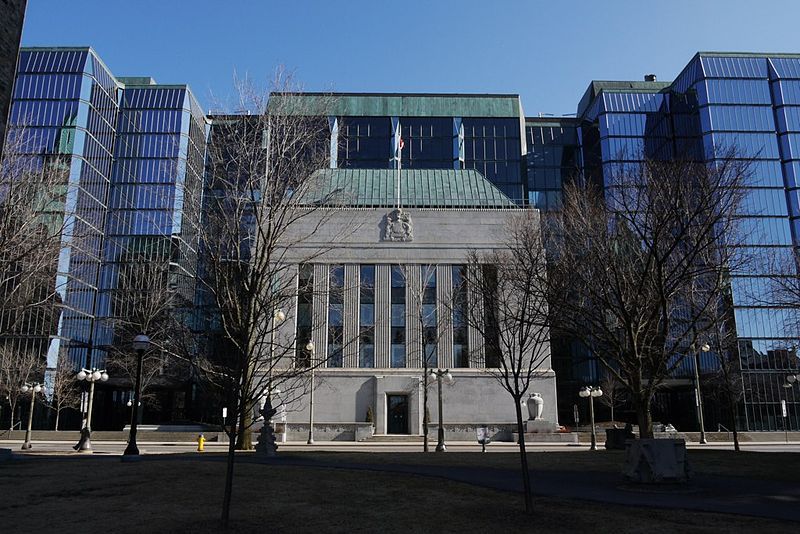
Factors the Bank of Canada Considers Before a Decision
The Governing Council of the Bank of Canada evaluates a comprehensive set of economic indicators before each interest rate decision. The primary mandate is to maintain inflation at the 2% target, as measured by the Consumer Price Index. In September 2026, total CPI inflation was reported at 3.1%, while core inflation measures like CPI-trim and CPI-median were at 1.8%. The Council closely monitors whether inflation pressures are broadening or remain isolated to specific sectors, such as the persistently high gasoline prices noted in mid-2026. They assess the balance of risks to the inflation outlook, which can be influenced by global events like conflict in the Middle East affecting oil shipments.
Other critical data points include Gross Domestic Product growth, employment figures, and wage growth. For instance, following the September 2026 decision, the Bank noted second-quarter GDP growth of 3.3% but also a cooling labour market with the unemployment rate at 6.4%. The Council also considers household spending, business investment, housing market activity, and global economic conditions, including trade policies such as US tariffs and Canadian countermeasures. The summary of deliberations, published two weeks after each decision, provides the closest public view into the Council's reasoning and the relative weight given to these various factors.
- Total CPI inflation, which was 3.1% in September 2026.
- Core inflation measures like CPI-trim (1.8% in September 2026) and CPI-median.
- GDP growth, such as the 3.3% annualised rate in Q2 2026.
- The unemployment rate, which was 6.4% in July 2026.
- Wage growth, measured by average hourly earnings.
- Global risks, including geopolitical conflict and trade tariffs.
- Household spending and business investment data.
- Housing market activity and price trends.
Key Documents Released with Rate Announcements
The Bank of Canada publishes several important documents alongside its interest rate decisions. Every announcement is accompanied by a press release that states the new target for the overnight rate and provides a concise explanation of the decision. Four times a year, in January, April, July, and October, a full Monetary Policy Report is released concurrently. This report presents the Bank's detailed economic projections for inflation and growth, along with its assessment of risks to the outlook. It forms the core analytical foundation for monetary policy and includes forecasts several years into the future.
Approximately two weeks after each decision, the Bank publishes a Summary of Deliberations. This document offers insights into the discussions held by the Governing Council during their policy meeting. Additionally, the Bank conducts and releases other regular surveys that inform its decisions, such as the quarterly Market Participants Survey and the Senior Loan Officer Survey. The Bank also holds a press conference with the Governor and Senior Deputy Governor at roughly 10:30 a.m. ET on the four Monetary Policy Report release dates. These conferences allow for detailed questioning from media on the rationale behind the decision and the economic outlook.

Recent Rate History and Current Economic Context
The Bank of Canada's policy interest rate has undergone significant changes in recent years. After a period of increases starting in March 2022 to curb high inflation, the Bank began cutting rates in June 2024. The most recent change occurred on October 29, 2025, when the rate was cut by 25 basis points from 2.50% to 2.25%. As of September 2026, the rate has been held at 2.25% for seven consecutive decisions. The prevailing market and analyst view is that the Bank of Canada is likely done cutting rates for 2025, with expectations that the rate will be held at 2.25% into 2026.
The current economic context as of late 2026 shows a broadening recovery but with increased uncertainty. The Bank has noted solid consumer spending, a rebound in housing activity, and gains in exports and business investment. However, upside risks to the inflation forecast have increased due to factors like high gasoline prices and global geopolitical tensions. The Bank has given no explicit forward guidance on the direction of future rates, stating only a readiness to adjust monetary policy as needed. This stance reflects the delicate balance between supporting economic growth and ensuring inflation returns sustainably to the 2% target, which the Bank expects by early 2027.
Common Mistakes in Interpreting Rate Announcements
One common mistake is assuming that a rate decision will immediately and uniformly change all interest rates across the economy. While the prime rate typically moves in lockstep with the Bank of Canada's change, the adjustment of other lending and deposit rates can vary in timing and magnitude between financial institutions. Another error is overlooking the importance of the accompanying statement and economic projections. The direction of future policy is often signalled more clearly in the Bank's qualitative assessment and the Monetary Policy Report than in the rate change itself. Focusing solely on the headline rate number provides an incomplete picture.
Many Canadians also mistakenly believe the Bank of Canada directly sets mortgage rates. While the policy rate heavily influences variable and adjustable-rate mortgages, fixed mortgage rates are more closely tied to long-term bond yields, which are influenced by different factors including global investor sentiment. Finally, it is a mistake to view a single data point, such as one month's inflation or employment figure, as definitive for the next decision. The Governing Council considers a wide array of indicators and trends, and its decisions are based on the medium-term outlook rather than any single report. The publication of the Summary of Deliberations two weeks later is a valuable resource for understanding the full context of their decision.
- Assuming all interest rates change instantly and equally after an announcement.
- Overlooking the policy statement and Monetary Policy Report details.
- Believing the Bank of Canada directly sets fixed mortgage rates.
- Focusing on a single economic data point to predict the next decision.
- Ignoring the Summary of Deliberations published two weeks later.
Frequently asked questions
When is the next Bank of Canada interest rate announcement?
The next scheduled Bank of Canada interest rate announcement is on Wednesday, October 28, 2026, at 9:45 a.m. Eastern Time. This announcement will coincide with the release of the quarterly Monetary Policy Report. Following that, the next scheduled announcement in 2026 is on Wednesday, December 9, 2026.
What is the difference between the policy rate and the prime rate?
The policy rate, or overnight rate target, is set directly by the Bank of Canada. The prime rate is set by individual commercial banks and is their benchmark lending rate. The prime rate moves in close correlation with changes to the Bank of Canada's policy rate. As of September 2026, following a policy rate of 2.25%, the prime rate was 4.45%.
What is the Bank of Canada's key interest rate right now?
As of September 2026, the Bank of Canada's target for the overnight rate, or policy interest rate, is 2.25%. This rate was last changed on October 29, 2025, when it was cut from 2.50%. The Bank has held the rate steady at 2.25% for seven consecutive announcements as of its September 2026 decision. The Bank Rate is set a quarter point above this at 2.50%, and the deposit rate is 5 basis points below it. The next opportunity to review this rate is scheduled for October 28, 2026.
How often does the Bank of Canada make interest rate decisions?
The Bank of Canada makes interest rate decisions on eight predetermined dates each year, which are published in an annual schedule. These announcements occur approximately every six to seven weeks and are always made at 09:45 Eastern Time. Four of these annual announcements, specifically those in January, April, July, and October, are accompanied by the full Monetary Policy Report and a press conference. This report presents the Bank's projections for inflation and economic growth.
Does the Bank of Canada ever change rates outside the schedule?
Yes, the Bank of Canada can hold emergency reviews to adjust interest rates outside its normal schedule in response to significant economic shocks. A historical example was in 2020 at the onset of the COVID 19 pandemic. Under normal circumstances, however, the Bank strictly adheres to its published calendar of eight meetings per year. The schedule for the entire year is typically published the previous August, providing transparency about the fixed decision dates.
What is the Bank of Canada's inflation target?
The Bank of Canada's primary mandate is to maintain inflation at the 2% target, as measured by the Consumer Price Index. The main goal of monetary policy is to preserve the value of money by keeping inflation low, stable, and predictable. As of September 2026, total CPI inflation was reported at 3.1%, which is above the target. The Bank uses adjustments to the overnight rate as its primary tool to influence economic conditions and steer inflation back toward its 2% goal.
Sources and further reading
- Upcoming events bankofcanada.ca
- Bank of Canada Interest Rate Schedule 2026 myperch.io
- Bank of Canada Policy Interest Rate Schedule 2026 nesto.ca
- When is the next Bank of Canada rate announcement? equalsmoney.com
- What is the Bank of Canada's key interest rate right now? scotiabank.com
This article explains how things work and is not financial, tax or legal advice. Rules, limits and rates change, so check the current figures with the Canada Revenue Agency, your province or your financial institution before you act.