Youth unemployment in Canada refers to the joblessness rate among Canadians aged 15 to 24, a key indicator of labour market health for new entrants. The rate has risen sharply in recent years, reaching levels not seen since the mid-1990s outside of recessionary periods. This situation represents a significant economic and social challenge, affecting hundreds of thousands of young Canadians and indicating broader labour market softness. Understanding the trends, causes, and impacts of youth unemployment is crucial for assessing the future of Canada's workforce and economy.
Recent Trends and Current Rates of Youth Unemployment
The youth unemployment rate in Canada has experienced significant volatility and a marked increase since 2022. In September 2025, the unemployment rate among youth aged 15 to 24 reached 14.7%, which was the highest rate for that month since 2010, excluding the anomalous pandemic year of 2020. This represented a notable increase from the levels observed in spring 2023. The situation varies considerably within the youth cohort itself. The labour market has been particularly harsh for teenagers aged 15 to 19. In the third quarter of 2025, their average unemployment rate soared to 20.8%, a sharp rise from 12.6% in the same period in 2022. For young adults aged 20 to 24, the increase was more moderate, rising by 3.2 percentage points to 11.3% in Q3 2025. This disparity suggests that the youngest workers are bearing a disproportionate share of the labour market slowdown.
The gap between youth and adult unemployment rates has widened significantly. In 2025, the unemployment rate for youths was 13.8 percent while the rate for adults was 5.7 percent, creating a gap of 8.1 percentage points, which was near an all-time high. This widening gap is a traditional feature of economic slowdowns, as youth are often the last hired and first affected when hiring weakens. The unemployment rate for recent postsecondary graduates has also risen. Among young adults aged 20 to 29 with a bachelor’s degree or higher who were not students, the unemployment rate was 8.1% in September 2025, up from 6.4% in 2022 and 5.9% in 2019. Interestingly, young people in the same age group with college degrees, trades certificates, or university certificates below a bachelor’s typically had a lower unemployment rate of 6.4% in September 2025, though this was still up from 4.9% in 2019.
Historical Context and Comparison to Past Decades
Current youth unemployment levels are high by historical standards, though not at the absolute peaks recorded in the late 20th century. The highest recorded youth unemployment rate in recent Canadian history was 19.2 percent in 1983. Significant peaks also occurred in 1992 and 1993 when the rate rose to 17.2 percent, periods associated with economic recession and real wage declines. The rate seen in September 2025 (14.7%) was the highest for that month since 2010, excluding the pandemic. More broadly, the pre-pandemic average from 2017 to 2019 was a much lower 10.8%. The increase to 14.2% in April of a recent year marked the highest rate since 1997 outside of a recession, representing a 57% jump in just three years according to Statistics Canada data. This places the current situation among the most challenging for young workers in about a quarter-century.
The structural trend over decades shows a gradual decline in the youth share of total employment since the late 1980s. This long-term shift reflects demographic changes, rising educational attainment, and broader economic transformations. That declining trend paused between the mid-1990s and the Global Financial Crisis before resuming, with the COVID-19 pandemic accelerating the decline. The current cycle has been particularly harsh for teenagers relative to historical patterns. Economic modelling suggests that for young adults aged 20-24, the current labour market weakness is roughly where one would expect based on the performance of the broader economy. For teenagers aged 15-19, however, the actual unemployment rate is higher than what macroeconomic conditions alone would predict, indicating additional, sector-specific factors are at play.
- The highest youth unemployment rate was 19.2% in 1983.
- Rates reached 17.2% in 1992 and 1993.
- The pre-pandemic average (2017 to 2019) was 10.8%.
- The rate in April of a recent year was 14.2%, the highest since 1997 outside a recession.
- There was a 57% jump in the youth unemployment rate over three years according to recent data.
Economic and Labour Market Drivers
Several interconnected economic factors have driven the rise in youth unemployment. A primary driver is the traditional amplified deterioration in the youth labour market when economy-wide job prospects weaken. Youth are often the first to feel the effects of a slowdown as employers stop adding entry-level positions. The current conditions reflect a rise in overall labour supply combined with this cyclical sensitivity. The population surge, particularly in the Gen Z and millennial working-age cohorts following pandemic-era immigration increases, has expanded the pool of young job seekers. Simultaneously, economic confidence deteriorated due to high inflation beginning in mid-2021 and subsequent aggressive interest rate hikes by the Bank of Canada, leading businesses to delay or freeze hiring.
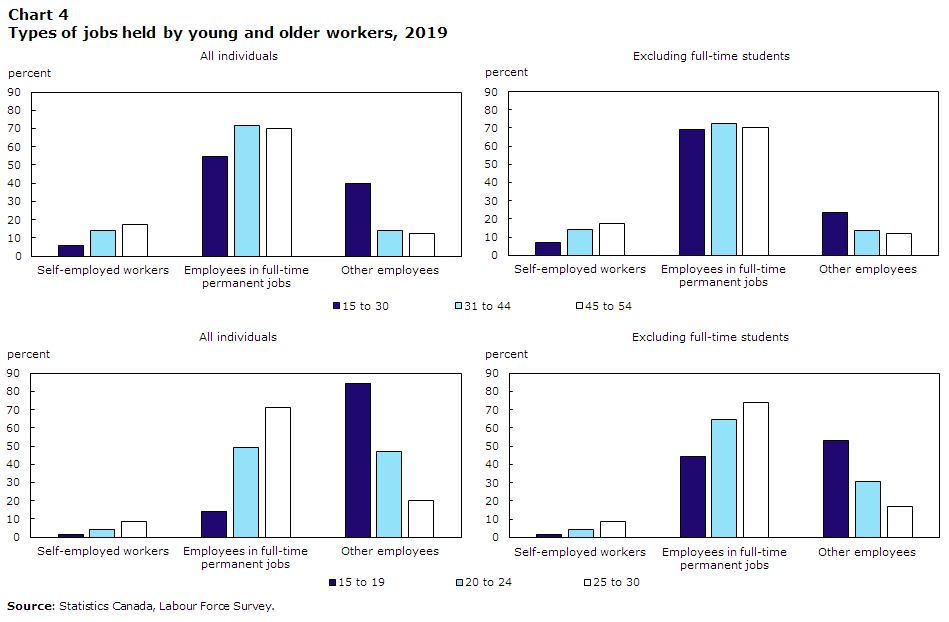
The types of jobs teenagers and youth typically hold make them vulnerable. These are often first jobs, part-time positions, and roles requiring less experience, which are concentrated in a relatively small number of cyclical industries. The deterioration in youth employment since 2019 has been concentrated in specific sectors. The two industries responsible for most of the recent decline in the youth share of employment are accommodation and food services and retail trade. These industries combine two critical characteristics: they are among the most cyclical in the economy, and they employ the highest concentration of young workers. When consumer spending softens, these sectors cut back sharply.
- High inflation beginning in mid-2021 reduced consumer spending.
- Aggressive interest rate hikes by the Bank of Canada slowed business hiring.
- A population surge increased the supply of young job seekers.
- Accommodation and food services lost a significant number of youth jobs.
- Retail trade lost a significant number of youth jobs.
Impact on Students and Recent Graduates
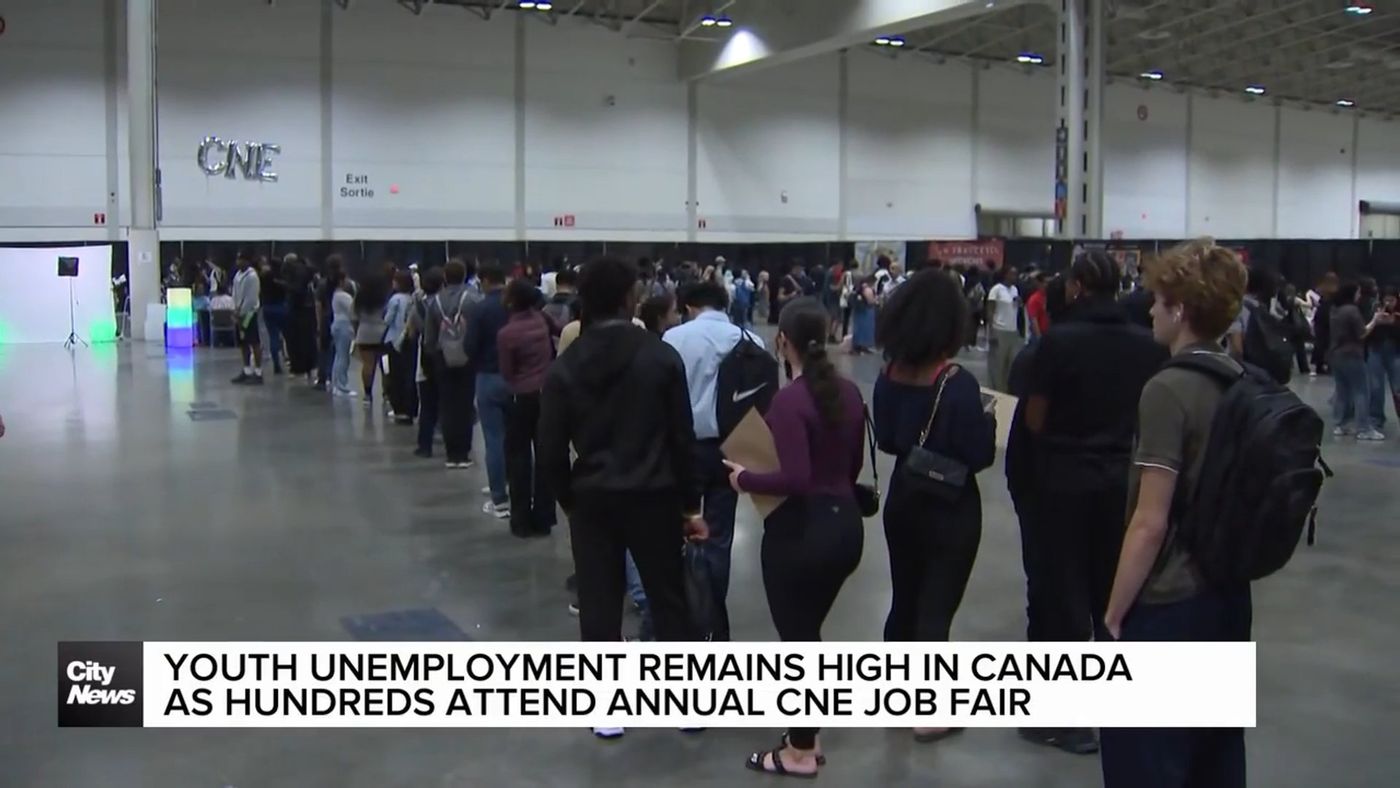
The difficult labour market has severely impacted students seeking summer and part-time work. In the summer of 2025, the unemployment rate for returning students aged 15 to 24 was 17.9% on average from May to August. This was the highest summer rate since 2009 (18.0%), excluding the pandemic year of 2020. The labour force participation rate of students, the share who were either employed or actively looking for work, hit a record low in both the summer of 2024 (57.5%) and the summer of 2025 (57.3%). Difficulties persisted into the fall, with the unemployment rate among youth attending school reaching 17.1% in September of a recent year, up 3.1 percentage points from the same month in 2024.
For those students who did find work, the relevance to their studies was mixed. According to a July 2025 survey supplement, just over two in five (42.5%) employed postsecondary students aged 18 to 24 were working at a job somewhat or closely related to their field of study. This share was little changed from July 2023. There was a gender divergence, however, as the share of female students in related work increased by 5.6 percentage points to 44.1%, while the share among male students declined by 4.8 percentage points to 40.5%. The challenging conditions are prompting many young people to consider significant changes. In June 2025, 20.0% of youths in the labour force indicated they were likely to move to a different region, and 36.5% of employed youth were likely to look for a job in a different industry. Among unemployed non-students, more than one in four (27.3%) said they were very likely to return to formal education.
Sectoral Analysis and Where Jobs Are Declining
The decline in youth employment is not uniform across the economy but is heavily concentrated in sectors that traditionally employ large numbers of young people. Industry-level data highlights where the weakness is most pronounced. The accommodation and food services sector and the retail trade sector have been the primary drivers behind the recent decline in the youth share of employment. These sectors can reduce youth employment in two ways: either by employing fewer workers overall due to weaker demand or productivity gains, or by maintaining employment levels but hiring fewer young people relative to other age groups. The concentration of youth job losses in these areas underscores how cyclical consumer-facing industries disproportionately affect new labour market entrants.
The vulnerability of these sectors to broader economic cycles means that youth employment often acts as a leading indicator for the wider labour market. When the economy slows, these industries feel the impact quickly, and hiring freezes or layoffs affect the large cohort of young workers they employ. This dynamic explains why the unemployment rate for teenagers (15-19) is less closely tied to the general business cycle than the rate for those aged 20-24. Teenagers are more likely to be employed in the most volatile, entry-level positions within these sectors. The long-term structural decline in the youth share of total employment suggests that, beyond cyclical factors, there may be enduring shifts in how these industries operate and whom they hire.

Social and Economic Consequences
High youth unemployment carries significant long-term economic and social costs for Canada. Research indicates that inaction on this issue will have devastating consequences for all Canadians. One major concern is the rise in the number of young people not in education, employment, or training, known as the NEET rate. Reports indicate a staggering 850,000 young people were in this category in a recent period, with the rate rising among youth in their early 20s, mainly driven by non-students having trouble finding work. Prolonged periods of joblessness early in a career can lead to scarring effects, including lower lifetime earnings, reduced future employability, and adverse impacts on mental health and well-being.
The economic costs are substantial, including lost productivity, reduced tax revenues, and increased public spending on income support and social services. Furthermore, a generation facing weak job prospects may delay major life decisions such as forming households, purchasing homes, or starting families, with ripple effects throughout the economy. The situation also risks exacerbating existing inequalities, as those facing barriers to employment, whether due to education, geography, or other factors, are hit hardest. The wide gap between youth and adult unemployment rates signals a labour market that is not efficiently integrating new entrants, which can stifle innovation and economic dynamism in the long run.
Policy Discussions and Proposed Solutions
Various policy recommendations have been proposed to address the youth unemployment crisis. A landmark report from Deloitte commissioned by The King’s Trust Canada outlined several areas for government action. One key recommendation is to modernize employment policies for the 21st-century workforce, which includes accounting for the gig economy and potential displacement from artificial intelligence. Another proposal is to incentivize youth hiring through the enhancement of targeted tax rebates that encourage businesses to hire young people, especially those facing barriers to employment. Implementing a youth lens across all government policies, similar to the Gender-Based Analysis Plus (GBA+) framework, is also suggested to ensure decisions consider impacts on younger Canadians.
Further recommendations focus on investment and data. Investing in community partners and in youth skills development and employment programs is seen as crucial for helping to close the gap. There is also a call to prioritize data collection on youth underemployment and unemployment, ensuring it accounts for the different experiences of groups who face systemic barriers. The expectation from economic analysts is that as the national unemployment rate eventually falls, younger workers should benefit disproportionately from the recovery, just as they absorbed a disproportionate share of the slowdown. However, targeted policies may be needed to address the specific challenges facing teenagers and to ensure the recovery is inclusive and effective at integrating all young people into the labour force.
- Modernize employment policies for the gig economy and AI displacement.
- Enhance targeted tax rebates to incentivize hiring youth.
- Implement a youth lens across all government policies.
- Invest in community partners and youth skills development programs.
- Prioritize data collection on youth underemployment.
- Ensure data accounts for groups facing barriers to employment.
Frequently asked questions
How does today's youth unemployment compare to the past?
Current rates are among the highest in about a quarter-century, outside of recessionary periods. The peak was 19.2% in 1983, with another high of 17.2% in 1992 to 1993. The rate of 14.2% in April of a recent year was the highest since 1997 outside a recession. The pre-pandemic average from 2017 to 2019 was notably lower at 10.8%.
Are students or graduates more affected by unemployment?
Both groups are facing challenges. In the summer of 2025, the unemployment rate for returning students aged 15-24 averaged 17.9%, the highest since 2009 excluding the pandemic. For recent graduates aged 20-29 with a bachelor's degree or higher, the unemployment rate was 8.1% in September 2025, up from 5.9% in 2019. Those with college or trades credentials typically have a slightly lower rate.
What is the current youth unemployment rate in Canada?
This represents a recent decline from a rate of 14.7 percent in September 2025, which was the highest rate for that month since 2010 excluding the pandemic year of 2020. The rate had fallen from 14.6 percent in September of the previous year to 12.6 percent in July. However, the unemployment rate for teenagers aged 15 to 19 is much higher, reaching 20.8 percent in the third quarter of 2025. The overall rate remains above the pre-pandemic average of 10.8 percent recorded from 2017 to 2019.
What is the NEET rate and why does it matter?
The NEET rate measures the share of youth who are Not in Education, Employment, or Training. It matters because it captures young people who are completely disengaged from both the labour market and skill development. A staggering 850,000 young people in Canada were not in jobs, training, or school according to a recent report. The number of young people in this category has risen among youth in their early 20s, mainly driven by non-students having trouble finding work. This situation has significant long term social and economic consequences, including lost potential and future earnings.
What is the main cause of rising youth unemployment?
The main cause of rising youth unemployment is the traditional amplified deterioration in the youth labour market when economy-wide job prospects weaken. Younger workers aged 15 to 24 are usually the first to feel the effects of a slowdown as they are often the last hired and the first affected when hiring slows. This has been compounded by a rise in labour supply from population growth and the business cycle. High inflation triggered consumer pullback and interest rate hikes, leading businesses to delay hiring. The situation is particularly harsh for teenagers, whose unemployment is less closely tied to the broader business cycle.
Sources and further reading
- Understanding the Rise in Canada's Youth Unemployment economics.td.com
- Canada's youth unemployment crisis kingstrust.ca
- Gen Z is facing the worst youth unemployment rate in ... cbc.ca
- Youth faced a challenging labour market in the summer ... statcan.gc.ca
This article explains how things work and is not financial, tax or legal advice. Rules, limits and rates change, so check the current figures with the Canada Revenue Agency, your province or your financial institution before you act.