The Canadian economy is in a period of moderate growth influenced by international trade tensions, higher energy prices, and changing monetary policy. Recent data shows the economy grew by 3.3% in the second quarter of 2024, but forecasts point to a slowdown to 0.9% GDP growth in 2026. Persistent U.S. tariffs and Canadian countermeasures, along with higher borrowing costs, are putting downward pressure on sectors like housing and business investment. These developments directly affect mortgage rates, inflation expectations, and the cost of living for Canadians.
Economic Growth and Trade Pressures
The Canadian economy exhibited notable resilience in the second quarter of 2024, expanding by 3.3%. This strength is set against a backdrop of mounting external challenges that are shaping the near-term outlook. The primary headwind is the ongoing trade friction with the United States, where U.S. tariffs and Canadian countermeasures continue to put downward pressure on economic growth. A recent report explicitly links weaker labour numbers to the weight of these tariffs on the Canadian economy. Furthermore, conflicts in the Middle East and Ukraine have driven up global oil prices, which presents a dual effect. While higher crude oil values provide a boost to Canada's economy as a major exporter, they also strain households through increased prices for diesel and gasoline. The overall forecast from economic analysts is for a substantial deceleration, with GDP growth expected to slow to 0.9% in 2026 as the economy adjusts to these persistent pressures. Canada will need to boost business confidence and investment if it wants to maintain recent upward momentum, according to a separate report.
The Canadian economy is expected to grow at a moderate pace as it continues to adjust to US tariffs. Canada's GDP growth will slow to 0.9 per cent in 2026 according to a forecast. The U.S. tariffs and Canadian countermeasures continue to put downward pressure on growth. Businesses are delaying projects as tariffs, higher costs and supply-chain disruptions weigh on communities across Canada.
- U.S. tariffs and Canadian countermeasures applying downward pressure on growth.
- Higher global oil prices providing an economic boost but increasing household costs.
- A GDP growth forecast of 0.9% for the year 2026.
- Weak labour numbers providing an initial sign of tariff impacts.
- The need to boost business confidence and investment to maintain momentum.
- Foreign investors pouring record amounts into Canadian government bonds.
Inflation Dynamics and Bank of Canada Policy
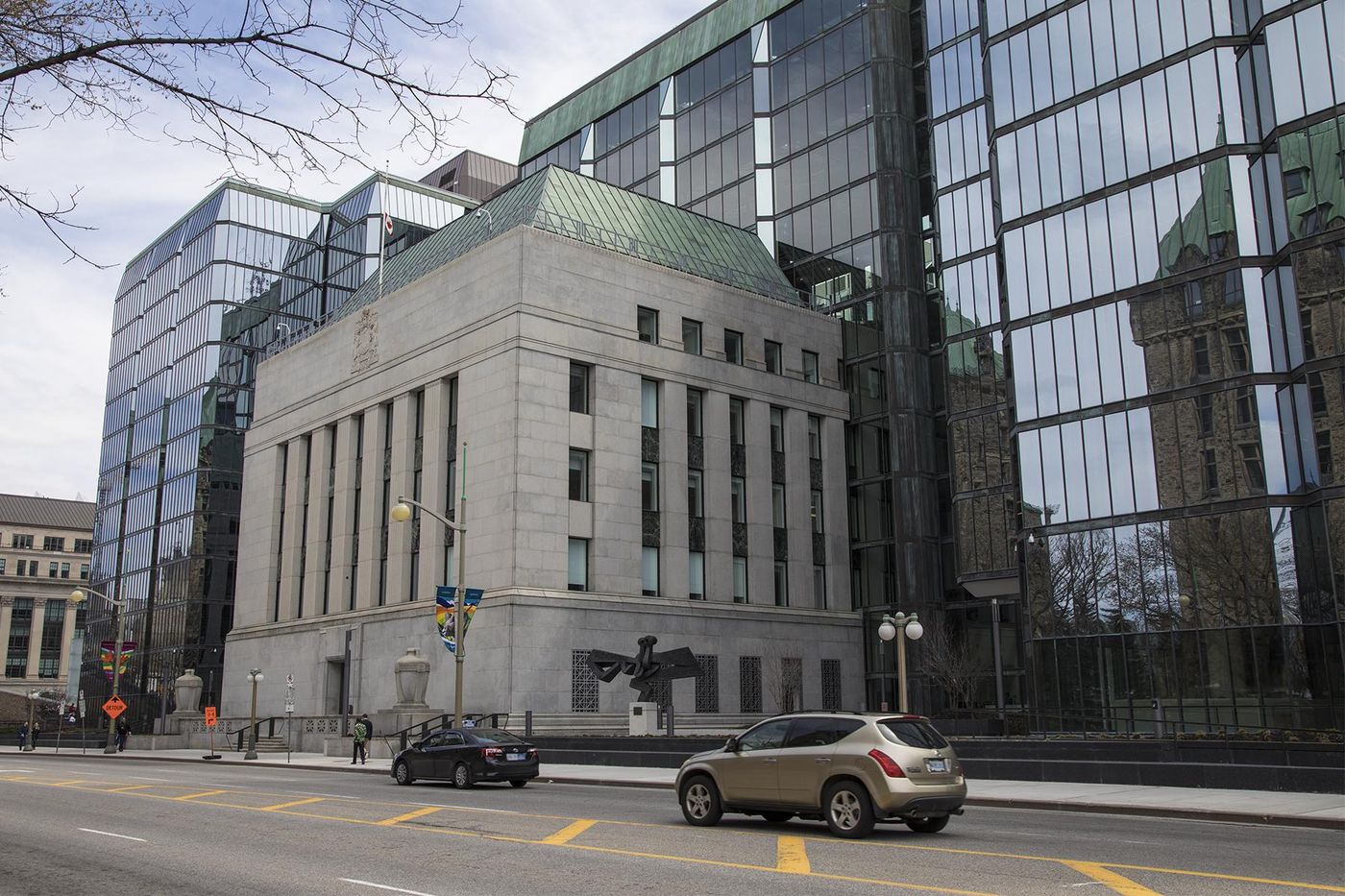
Inflation remains a central concern for policymakers and consumers alike. The Consumer Price Index has moved up recently, largely due to higher oil prices, but there are signs of broadening pressures. The Bank of Canada's preferred core inflation measures began drifting above the 2% target in recent readings. Officials are worried that higher fuel costs will eventually pass through to other goods and services, a trend that could be reinforced by a renewed increase in mortgage interest costs. Mortgage interest costs, which account for roughly 5% of the total CPI basket and 18% of the shelter component, turned deflationary in the second half of 2026 but are expected to turn positive again as mortgage rates have moved higher. This complicates the disinflationary process. Markets are currently pricing in almost a full interest rate hike by the end of 2024, with the Bank of Canada's next policy decision scheduled for October 28. Economists, however, do not expect the bank to raise its policy rate from the current 2.25% until its meeting in June 2025, indicating a cautious approach amid mixed signals.
Inflation has moved up due to higher oil prices linked to conflicts. Officials are worried that higher fuel costs will eventually pass through to other goods and services. The Bank of Canada's preferred core inflation measures began drifting above the 2 per cent target. UBS is calling for inflation of 3.3 per cent when Statistics Canada reports numbers for September on Oct. 19.
- UBS forecasts inflation of 3.3% for September 2024, to be reported on October 19.
- 54% of Canadians think the yearly change in the CPI will be higher than the current 3% a year from now.
- The mortgage interest cost component of CPI is expected to turn positive in coming months.
- The Bank of Canada's next rate decision is on October 28, 2024.
- Economists do not expect an interest rate increase until June 2025.
- Producer prices in the U.S. surged 6.3% year-on-year in September, influencing cross-border pressures.
Housing Market Adjustments and Consumer Impact
The Canadian housing market is clearly feeling the impact of higher borrowing costs. Home sales have been losing momentum since spring, with a steep drop of 2.3% recorded in September 2024. This decline is attributed to higher mortgage rates, with five-year mortgage rates having risen by roughly 35 basis points since the beginning of summer. The weakness is particularly pronounced in rate-sensitive and affordability-constrained markets like the Greater Toronto Area. Price declines have followed, with the national average home price falling 2.3% in September, driven by losses in Ontario, British Columbia, and Quebec. Housing starts data offered little encouragement, as the six-month trend remained flat despite a monthly rise in September. Homebuilding continues to be constrained by high inventories of unsold units, earlier declines in pre-sales, and weak population growth. This sectoral weakness is expected to weigh on residential investment and overall GDP growth in the coming quarters.
Higher yields are not just a problem for prospective homebuyers but also for existing borrowers. Financial stress is costing employers an estimated $74.3 billion in lost productivity, according to the National Payroll Institute. The pullback in housing activity follows a sequence of specific monthly changes and constraints that have defined the recent downturn. This weakness in a major economic sector directly affects consumer sentiment and spending power, setting the stage for the next set of economic data.
- Home sales dropped 2.3% in September 2024.
- The national average home price declined by 2.3% in the same month.
- Five-year mortgage rates rose by roughly 35 basis points since summer.
- Price losses were driven by Ontario, British Columbia, and Quebec.
- The six-month trend for housing starts remained flat.
- Homebuilding is constrained by high inventories and weak pre-sales.
Financial Markets, Business Sentiment, and Data
Canadian financial markets have recently taken cues from commodity prices and international developments. In a post-Thanksgiving week in October 2024, Canadian equities, as measured by the S&P/TSX composite index, closed 1.3% higher, largely driven by rising oil prices. Bond markets reflected stronger-than-expected inflation reports from the United States, contributing to a flattening of the yield curve. The 5-year Government of Canada bond yield ended that week flat but remained 15 basis points below its peak from September. Foreign investors have already poured record amounts into Canadian government bonds as federal issuance has ramped up, indicating strong international demand for Canadian debt. On the business side, confidence appears fragile. A recent poll indicated that one in five small business owners describe their business as being in a weak or critical condition. Businesses are delaying projects as tariffs, higher costs, and supply-chain disruptions weigh on communities across Canada, highlighting the need to boost business confidence and investment to maintain economic momentum.
The schedule of official data releases provides a constant flow of information for analysts. Statistics Canada releases The Daily, its official statistical news publication, every weekday at 8:30 a.m. Eastern time, except during holidays. Recent and upcoming data releases critical for assessing the economy include several key reports. This data, combined with the Bank of Canada's business and consumer surveys, will shape the policy and investment landscape in the final quarter of the year.
| Data Release | Details |
|---|---|
| Monthly Credit Aggregates | Data for August 2026 are now available. |
| Culture and Sport Trade | Canadian imports and exports of these products rose in 2024. |
| Health Indicators | New data from the 2025 Canadian Community Health Survey cycle. |
| Mineral Production | Monthly survey data available for August. |
| Oil Transportation | Data for August on crude oil and liquid petroleum transport. |
| Retail Sales | August 2024 figures are pending release. |
Provincial, Sectoral, and Political Developments
Economic developments are not uniform across the country, with regional and sector-specific stories emerging. In Alberta, the agricultural sector has embraced the result of a recent referendum where the province voted against separation, though some fear Ottawa's response. Premier Danielle Smith stated it was time to move forward following the vote. The aerospace sector received potential relief as former U.S. President Donald Trump appeared to back away from a threat to shut Canadian giant Bombardier out of the U.S. market, after learning about the company's significant operations in Kansas. The energy sector remains a focal point, with higher oil prices providing a macroeconomic boost but increasing costs for consumers and businesses reliant on transportation. The national list of 167 major industrial and infrastructure projects has also unearthed new investing ideas, pointing to areas of potential future growth amidst the current cautious climate.
Political and policy discussions continue to influence the economic conversation. The pivot toward a declining Europe, the staggering federal deficit, and the secular sag in investment are cited as bad long-term signs by some analysts. There are calls to bring 21st-century statecraft to bear in Ottawa's economic policy. Since his election last year, Mark Carney's fiscal pledge has been to spend less to invest more, focusing on clearing obstacles to investment. These high-level policy directions will ultimately filter down to affect business conditions, international competitiveness, and the government's capacity to fund programs for retired Canadians, a demographic that has been highlighted in discussions about capturing future wealth.
Consumer Behaviour and the Outlook
Despite concerns about inflation and higher costs, Canadian consumers have shown resilience. Retail spending in the United States held up in September, rising 0.8% on the month, with gains in 8 of 13 retail segments, which often correlates with trends in Canadian consumer behaviour. Spending at bars and restaurants remained healthy, suggesting consumers remain willing to spend in discretionary areas. In Canada, the upcoming release of August retail sales data will test this resilience directly. The Bank of Canada's consumer survey will also reveal whether households have continued to spend despite revising their inflation expectations higher last quarter. Some consumers have already expressed wariness, suggesting pockets of weakness beneath an otherwise stable headline reading. The question for the final quarter of 2024 is whether the housing market slowdown and persistent cost pressures will finally cause consumer spending to follow the downward trend seen in home sales.
The interconnected nature of global markets means developments abroad directly affect Canada. U.S. equities looked to end a recent week in the red after a hotter inflation report led to a significant selloff in AI-related stocks. There were growing concerns that higher interest rates could pose funding challenges and slow the AI buildout, which has implications for what investments into AI data centres mean for Canadian jobs and well-being. The 10-year U.S. Treasury yield retreated to just under 5.1% after briefly climbing above 5.3%, a move that reflected a flight to safety rather than easing inflation concerns. These international financial conditions, combined with domestic factors like the 2.25% policy interest rate and the potential for future rate changes, will set the tone for Canada's economic performance into 2025 and beyond.
Frequently asked questions
What is happening in the Canadian housing market?
The housing market is cooling under the weight of higher borrowing costs. Nationally, home sales dropped 2.3% in September 2024, and the average home price declined by the same percentage. Markets like the Greater Toronto Area are particularly affected. Housing starts have shown a flat six-month trend, constrained by high inventories, weak pre-sales, and higher mortgage rates.
What are the current concerns about inflation?
Inflation concerns centre on broadening price pressures beyond energy. The Bank of Canada's core inflation measures have drifted above the 2% target. A key worry is that mortgage interest costs, which make up about 5% of the CPI, may soon turn positive again after a period of deflation, adding to shelter inflation. Consumers also expect inflation to be higher than 3% a year from now.
What is the forecast for Canada's economic growth in 2026?
Canada's GDP growth is forecast to slow to 0.9 per cent in 2026. This deceleration is primarily due to the downward pressure from U.S. tariffs and Canadian countermeasures, which continue to weigh on growth. The economy is expected to grow at a moderate pace as it adjusts to these trade pressures. Furthermore, higher borrowing costs are negatively impacting domestic sectors such as housing, which is likely to weigh on residential investment and overall GDP growth. A recent report also stated that Canada will need to boost business confidence and investment to maintain recent upward momentum.
How are higher oil prices affecting the Canadian economy?
Higher oil prices have a dual impact on the Canadian economy. Conflicts in the Middle East and Ukraine have pushed diesel and gasoline prices up dramatically, straining Canadian households. However, these higher crude oil values have also provided a boost to Canada's economy as a whole by increasing export revenues. The rise in energy costs has contributed to inflationary pressures, with officials worried that higher fuel costs will eventually pass through to other goods and services. This complicates the inflation outlook for the Bank of Canada.
When is the Bank of Canada's next interest rate decision?
The Bank of Canada's next interest rate decision is on October 28th. Markets have been pricing in almost a full rate hike by year end based on inflation concerns. However, many economists do not expect the bank to raise interest rates from the current 2.25 per cent until its June meeting next year. The decision will follow the release of key data, including the next inflation reading and the Bank's quarterly business and consumer surveys, which will inform the policy outlook.
How did Canadian stock markets perform recently?
Canadian equities performed well in a recent post Thanksgiving week in October. The S&P/TSX composite index closed 1.3 per cent higher on the week. This gain was largely driven by cues from higher global oil prices. Meanwhile, bond markets reflected developments in the United States, with the 5 year Government of Canada bond yield ending the week flat. It remained 15 basis points below its September peak despite stronger than expected inflation reports from south of the border.
Sources and further reading
- Canadian-Economy financialpost.com
- Weekly Bottom Line, TD Economics, TD Bank economics.td.com
- The Daily, In the news: Statistics Canada's official ... www150.statcan.gc.ca
- BNN Bloomberg, Canada Business News, TSX Today, Oil ... bnnbloomberg.ca
This article explains how things work and is not financial, tax or legal advice. Rules, limits and rates change, so check the current figures with the Canada Revenue Agency, your province or your financial institution before you act.