The Federal Open Market Committee (FOMC) holds eight scheduled meetings each year to determine US monetary policy, which has significant indirect effects on the Canadian economy and financial markets. The Bank of Canada also conducts its own monetary policy, announcing its policy interest rate on eight predetermined dates annually. Understanding the schedules for both central banks helps Canadians anticipate potential changes in borrowing costs, currency valuations, and investment returns. These policy decisions directly influence variable mortgage rates, lines of credit, and the broader economic environment in Canada.
The Role of the FOMC and Its Canadian Impact
The Federal Open Market Committee is the branch of the US Federal Reserve responsible for setting national monetary policy, primarily through open market operations and setting the target for the federal funds rate. Its decisions influence global financial conditions, capital flows, and exchange rates. For Canada, as a close trading partner with deeply integrated financial markets, FOMC policy shifts can affect the value of the Canadian dollar relative to the US dollar, impacting export competitiveness and import costs. Changes in US interest rates can also lead to adjustments in global bond yields, which influence fixed mortgage rates and other long-term borrowing costs in Canada. Canadian investors and businesses closely monitor FOMC communications for signals about the direction of US economic policy.
The FOMC operates on a pre-planned calendar, holding eight regularly scheduled meetings per year, with the ability to call unscheduled meetings as needed. The committee's membership changes at the first regularly scheduled meeting of each calendar year. Following each meeting where a policy decision is made, the FOMC releases a statement and, three weeks later, publishes detailed minutes of the deliberations. These documents are scrutinized by market participants worldwide for clues about the future path of interest rates and the Fed's economic outlook. The tentative schedule for future years is published well in advance, with a two-day meeting already noted for January 25-26, 2028, and each meeting date is tentative until confirmed at the meeting immediately preceding it.

Bank of Canada Monetary Policy Framework
The Bank of Canada is responsible for Canada's monetary policy, with the primary goal of preserving the value of money by keeping inflation low, stable, and predictable. Its main policy tool is the target for the overnight rate, also called the policy interest rate. This rate serves as the benchmark for all other interest rates in the country. The Bank's framework rests on two main pillars: an inflation-control target and a flexible exchange rate. This structure is designed to make the Bank's actions understandable and to ensure accountability to Canadians. By maintaining price stability, the Bank aims to foster confidence, encourage long-term investment, and support job creation and productivity growth, which improves the standard of living.
Monetary policy decisions are made by the Bank's Governing Council. On eight fixed dates each year, the Council announces any change to the target overnight rate at 09:45 Eastern Time. Each announcement simultaneously sets three rates: the policy rate, the Bank Rate which is a quarter point higher for financial institution borrowing, and the deposit rate which is five basis points lower for settlement balances. Four times a year, in January, April, July, and October, the rate announcement is accompanied by the quarterly Monetary Policy Report. This report presents the Bank's base-case projection for inflation and growth in the Canadian economy and its assessment of risks, followed by a press conference with the Governor and Senior Deputy Governor around 10:30 ET, and these reports are released when the Bank announces its target overnight rate.
2026 and 2027 Central Bank Schedules
The Bank of Canada publishes its full annual schedule of interest rate announcement dates well in advance, typically in August of the preceding year. The schedule for 2027 was published in July 2026. This advance notice provides certainty for financial markets, businesses, and households planning around these key dates. The FOMC also publishes its meeting calendars years in advance, with schedules available from 2021 through 2027. Both institutions may issue media advisories with more detailed information approximately three business days prior to an event. All posted times are in Eastern Time unless otherwise noted and use a 24-hour clock notation, as detailed information for most events is made available in a media advisory published approximately three business days prior.
The Bank of Canada's schedule includes other important publications beyond the rate announcements. The Summary of Deliberations, which provides insight into the Governing Council's discussion leading to a policy decision, is published two weeks after the rate announcement. The Bank also conducts and releases its Market Participants Survey quarterly, gathering views from financial market participants on macroeconomic variables and monetary policy. Furthermore, the Senior Loan Officer Survey, which collects information on business-lending practices, is released periodically. These additional publications offer deeper context for the Bank's decisions and the state of the financial system, and the Bank of Canada’s Annual Economic Conference is another scheduled event, set for November 9, 2026 in Ottawa, Ontario.
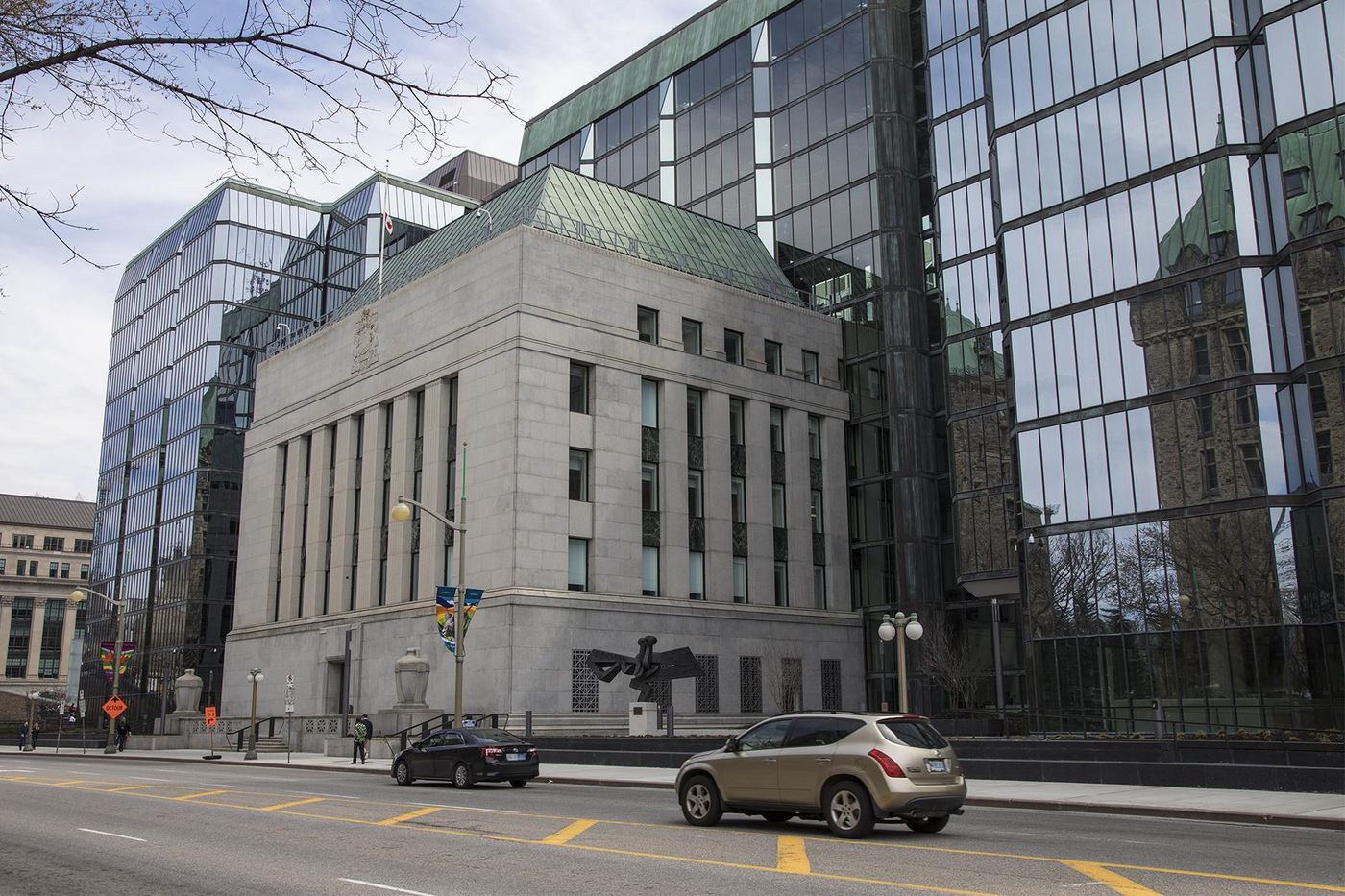
How Policy Rates Affect Canadian Consumers
The Bank of Canada's policy interest rate is the foundational benchmark for borrowing costs across the economy. When the Bank changes its target overnight rate, chartered banks and other financial institutions adjust their prime rate accordingly. The prime rate is the reference rate used for variable-rate mortgages, lines of credit, and variable-rate business loans. Therefore, a change in the Bank's policy rate directly impacts the interest payments for millions of Canadians with variable-rate debt. For instance, as of September 2, 2026, the Bank of Canada policy rate was 2.25%, which influenced a prime rate of 4.45%. Any future increase or decrease would cause an immediate adjustment in these consumer rates.
Fixed mortgage rates are not directly tied to the Bank of Canada's overnight rate but are influenced by longer-term bond yields, which are affected by both domestic and international factors, including expectations for future Bank of Canada policy and actions by the US Federal Reserve. When the FOMC changes the federal funds rate or signals a shift in its policy stance, it can cause movements in global bond markets that feed into Canadian fixed mortgage rates. Consequently, homeowners, prospective buyers, and real estate market participants must monitor both central banks. The Bank of Canada's own assessments, such as those in the Monetary Policy Report, provide crucial guidance on the domestic economic outlook and potential future policy moves, and historical trends are important for determining mortgage rate forecasts.
Recent Policy Stance and Economic Context
As of September 2026, the Bank of Canada has maintained its policy interest rate at 2.25% for seven consecutive decisions. The Governing Council judged that the economy and inflation had evolved broadly as forecast, with the recovery broadening. Second-quarter GDP growth was reported at 3.3%, supported by solid consumer spending, a rebound in housing activity, and gains in exports and business investment. However, the labour market showed signs of cooling, with employment falling and the unemployment rate holding at 6.4% in July 2026. Inflation measured by the CPI hovered around 3%, largely due to persistently high gasoline prices, while core measures of inflation were near the 2% target.
The Bank has noted that risks to its inflation forecast have increased, citing ongoing geopolitical conflict affecting energy shipments and the implementation of new US tariffs and Canadian countermeasures. These factors have made growth prospects less certain. The Bank provided no explicit forward guidance in its September 2026 announcement beyond a standard commitment to adjust monetary policy as needed. Subsequent data, including a weaker August 2026 Labour Force Survey showing a loss of 42,000 jobs, presented a mixed picture leading into the next decision. The Bank continues to expect inflation to return to its 2% target by early 2027, and Governor Tiff Macklem stated that monetary policy cannot offset the effects of certain external shocks.
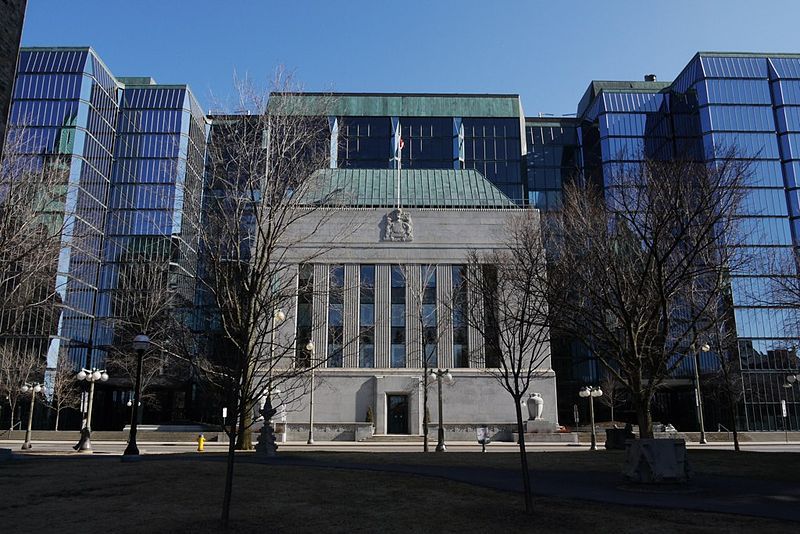
Key Publications and Their Release Schedule
The Bank of Canada and the FOMC produce several key documents that explain their policy decisions and economic outlooks. For the Bank of Canada, the most significant are the Monetary Policy Report and the Summary of Deliberations. The FOMC releases policy statements after each meeting and minutes three weeks later. Understanding the timing and content of these publications is essential for following monetary policy, and they are all published on the official websites of the respective central banks. The Bank of Canada's Monetary Policy Report is released when the Bank announces its target overnight rate on the four quarterly dates.
- Bank of Canada Monetary Policy Report: Released quarterly (Jan, Apr, Jul, Oct) with detailed economic projections.
- Bank of Canada Summary of Deliberations: Published two weeks after a rate decision, offering insight into Governing Council discussions.
- Bank of Canada Market Participants Survey: A quarterly survey of financial market views released on set dates.
- FOMC Policy Statement: Released immediately after each meeting concludes.
- FOMC Meeting Minutes: Published three weeks after the date of the policy decision.
- FOMC Annual FOIA Report: Made pursuant to the Freedom of Information Act.
These documents are published on the official websites of the respective central banks. The Bank of Canada also holds press conferences following the four Monetary Policy Report announcements, where the Governor and Senior Deputy Governor take questions from the media. The FOMC does not hold a press conference after every meeting, but the Chair does hold scheduled press conferences periodically throughout the year. The FOMC FOIA Service Center provides information about the status of FOIA requests and the FOIA process.
Comparing the Annual Schedules
Both the Federal Reserve and the Bank of Canada operate on pre-announced annual calendars, but their structures differ. The FOMC holds eight scheduled meetings, while the Bank of Canada makes eight scheduled rate announcements. The Bank of Canada's schedule is highly regimented, with announcements always at 09:45 ET on a Wednesday. The FOMC meeting dates are also scheduled but can vary in length, with some being two-day meetings. The table below outlines the core elements of each institution's annual schedule for comparison, highlighting their transparency and regularity.
| Feature | Federal Reserve (FOMC) | Bank of Canada |
|---|---|---|
| Number of Scheduled Decision Points | 8 meetings per year | 8 announcements per year |
| Key Publication with Decision | Policy Statement | Press Release |
| Detailed Follow-up Publication | Minutes (after 3 weeks) | Summary of Deliberations (after 2 weeks) |
| Comprehensive Economic Report | Released periodically | Monetary Policy Report (4 times/year) |
| Press Conferences | Held periodically by Chair | Held after each MPR release (4 times/year) |
| Schedule Publication | Published years in advance | Published in August for next year |
This structured transparency allows financial markets, businesses, and analysts to prepare for and analyze the decisions. The Bank of Canada's schedule is integrated with other regular publications like the Senior Loan Officer Survey, which is released on specific dates. The FOMC calendar is subject to confirmation at the meeting immediately preceding any given date, meaning dates are tentative until finalized. The FOMC also makes an annual report pursuant to the Freedom of Information Act. The minutes of the FOMC's regularly scheduled meetings are released three weeks after the date of the policy decision. Committee membership changes at the first regularly scheduled meeting of the year.
Frequently asked questions
How many times a year does the FOMC meet?
The Federal Open Market Committee holds eight regularly scheduled meetings each year. It can also call additional meetings as needed. The meeting schedule is planned years in advance and is publicly available. Each meeting date is tentative until confirmed at the meeting immediately preceding it.
When are the Bank of Canada interest rate announcements in 2026?
The Bank of Canada makes interest rate announcements on eight predetermined dates in 2026. The next scheduled announcement for 2026 is on Wednesday, October 28. Another announcement is scheduled for Wednesday, December 9, 2026. All announcements occur at 09:45 Eastern Time.
What is the current Bank of Canada interest rate?
As of the last update in September 2026, the Bank of Canada's policy interest rate is 2.25%. This was maintained after the September 2, 2026, announcement, marking the seventh consecutive decision where the rate was held steady. This rate influences the prime rate set by Canadian financial institutions. The Bank Rate is set a quarter of a percentage point above the policy rate.
What is the Monetary Policy Report?
The Monetary Policy Report is a quarterly publication by the Bank of Canada's Governing Council. It presents the Bank's base-case projection for inflation and growth in the Canadian economy and its assessment of risks. It is released four times a year alongside the January, April, July, and October interest rate announcements. The report is accompanied by a press conference with the Governor and Senior Deputy Governor.
How does the Bank of Canada's policy rate affect mortgage rates?
The Bank of Canada's policy rate directly influences the prime rate, which banks use to set interest rates for variable-rate mortgages and lines of credit. When the policy rate changes, variable mortgage rates adjust accordingly. The prime rate is what major banks and financial institutions in Canada use to set interest rates for loans. Fixed mortgage rates are more influenced by long-term bond yields, which are affected by expectations for future monetary policy.
How soon after a meeting does the FOMC release minutes?
The minutes from the FOMC's regularly scheduled meetings are released to the public three weeks after the date of the policy decision. This release schedule is a standard procedure for the Federal Open Market Committee. The minutes provide a detailed account of the committee's economic discussions and the rationale behind its monetary policy decisions. Links to these official documents are available in the meeting calendars published on the FOMC website. This process ensures transparency and allows financial markets and the public to understand the committee's views.
Sources and further reading
- Upcoming events bankofcanada.ca
- The Fed, Meeting calendars and information federalreserve.gov
- Bank of Canada Interest Rate Schedule 2026 myperch.io
- Bank of Canada Policy Interest Rate Schedule 2026 nesto.ca
This article explains how things work and is not financial, tax or legal advice. Rules, limits and rates change, so check the current figures with the Canada Revenue Agency, your province or your financial institution before you act.