USD Coin (USDC) is a cryptocurrency stablecoin pegged to the United States dollar and issued by Circle Internet Financial. It is designed to maintain a 1:1 value relationship with the US dollar, functioning as a digital dollar backed by a reserve of highly liquid cash and cash-equivalent assets. For Canadians, USDC represents a significant digital asset, especially as it became the first value-referenced crypto asset (VRCA) to file an undertaking with the Canadian Securities Administrators. This regulatory milestone allows Canadian crypto asset trading platforms to offer USDC under specific terms, integrating it into the domestic digital finance landscape.
What Is USDC?
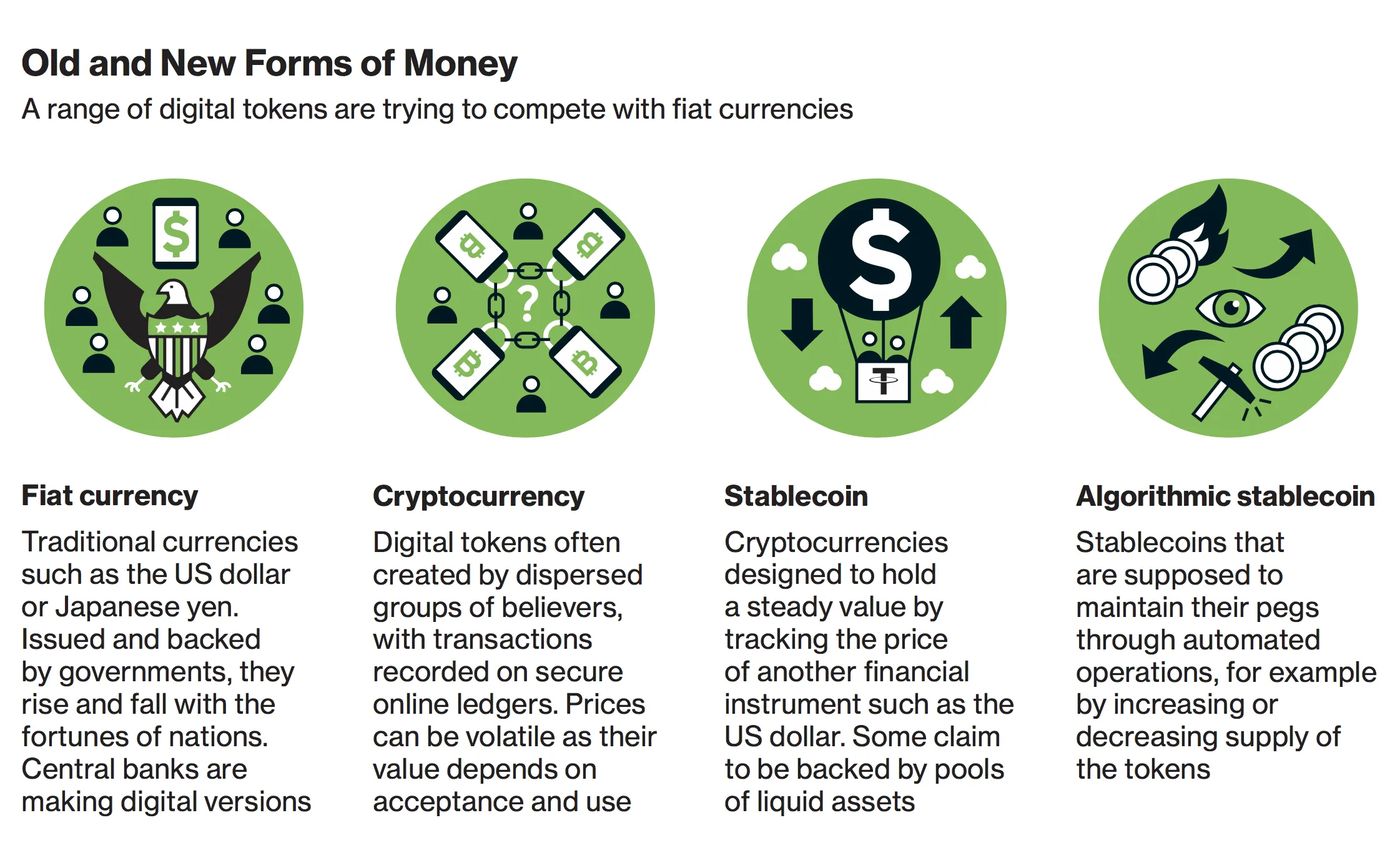
USD Coin (USDC) is a fully reserved stablecoin, a type of cryptocurrency designed to maintain a steady value pegged to the United States dollar. Unlike volatile cryptocurrencies such as Bitcoin, USDC is engineered to maintain price equivalence to the US dollar, redeemable on a 1:1 basis. It is issued by regulated affiliates of Circle Internet Financial, a private-sector financial technology company, and is distinct from a central bank digital currency (CBDC), which would be issued by a government. The stablecoin operates on the principle that each USDC token in circulation is backed by the equivalent value of US dollar-denominated assets held in a segregated reserve. This structure aims to provide the speed and programmability of blockchain technology while offering the stability of traditional fiat currency. USDC is often described as a digital dollar built for rapid global payments and 24/7 financial markets.
How USDC Works: Minting, Burning, and Reserves
The operational mechanics of USDC revolve around a mint-and-burn process that maintains its peg to the US dollar. Creating new USDC, known as minting, is initiated when a verified Circle Mint customer, such as an exchange or institutional trader, wires US dollars to Circle's banking partner. Upon settlement confirmation, Circle credits the customer's account with an equivalent amount of USDC and issues the tokens directly to a specified blockchain address via a smart contract. This process ensures no USDC is minted without a corresponding dollar arriving in the reserves. Conversely, redeeming USDC for dollars involves burning, where a customer sends USDC to Circle's redemption address on a supported blockchain. Circle's issuer contract permanently destroys, or burns, these tokens, reducing the total supply, and then initiates a USD wire transfer from the reserve account to the customer's bank. For everyday users, accessing USDC typically occurs through digital asset exchanges, neobanks, or wallets, where the exchange manages the minting and burning processes with Circle on the backend.
The integrity of the USDC peg relies on its fully reserved model. Circle maintains a reserve of assets that is at least equal to the value of all outstanding USDC tokens. According to Circle's most recent 2026 attestations, the USDC reserve composition is approximately 80% short-dated US Treasury bills and 20% cash held at regulated US banks. The Treasury allocation is held through the BlackRock-managed Circle Reserve Fund (USDXX), an SEC-registered 2a-7 government money market fund. This structure provides USDC holders with indirect exposure to Treasury instruments under established regulatory guardrails for credit quality and liquidity. The cash portion is held with a syndicate of US-regulated banks, with concentration limits at any single bank tightened following past events. It is crucial to understand that USDC is not a bank deposit, is not FDIC-insured, and represents a liability of Circle backed by this segregated reserve portfolio.
Key Steps in the USDC Lifecycle- Minting: A Circle Mint customer wires USD to Circle, which then mints and issues an equivalent amount of USDC to a blockchain address.
- Circulation: USDC tokens are transferred and used for payments, trading, or as collateral across supported blockchains.
- Burning: A customer sends USDC to Circle's redemption address, the tokens are destroyed, and Circle wires USD from reserves to the customer's bank.
- Attestation: An independent auditor like Deloitte regularly verifies that the reserve assets equal or exceed the circulating USDC supply.
History and Development
Circle Internet Group announced USDC on May 15, 2018, and launched it in September of the same year through Centre, a consortium formed as a joint venture between Circle and Coinbase. The stablecoin saw significant adoption milestones, including Visa announcing support for USDC for settling transactions within its payment network on March 29, 2021. By July 2022, the circulation of USDC had reached $55 billion. The project faced a major test in March 2023 when USDC temporarily lost its dollar peg after Circle revealed that $3.3 billion of its reserves were jeopardized due to the collapse of Silicon Valley Bank. The peg was restored four days later. In a significant governance shift, Circle and Coinbase dissolved the Centre Consortium in August 2023, granting Circle full governance over USDC. Further development included Circle discontinuing USDC on the TRON blockchain in February 2024 following a risk management review, with a migration period for users extending to February 2025. Circle achieved a major corporate milestone with its initial public offering on the New York Stock Exchange on June 5, 2025.
The competitive landscape for stablecoins is dominated by Tether (USDT) and USDC. According to data from Visa, USDC overtook Tether in stablecoin transaction volume in August 2024, marking a shift in market activity. In terms of total supply, USDC grew from roughly $44 billion at the start of 2025 to approximately $77 billion by April 2026. This growth has been attributed to factors including Circle's IPO conferring regulatory legitimacy, compliance with the European Union's MiCA framework pulling institutional treasuries into the market, and technological advances like the Cross-Chain Transfer Protocol (CCTP) enhancing utility. USDC has also been used in humanitarian efforts, such as a 2022 pilot program by the UN High Commissioner for Refugees to distribute cash assistance to displaced Ukrainians. The pilot initially involved fewer than 100 participants and tested the use of USDC for efficient aid distribution.
USDC in the Canadian Regulatory Context
In a milestone for the Canadian digital asset market, Circle Internet Financial became the first issuer of a value-referenced crypto asset (VRCA, commonly known as a stablecoin) to file an undertaking with the Canadian Securities Administrators (CSA) in respect of USDC. This undertaking is a prerequisite under CSA Staff Notice 21-333, which outlines the terms and conditions for VRCA issuers that want their stablecoin to be offered on Canadian crypto asset trading platforms (CTPs). The filing signifies that Circle has made specific representations and commitments to the CSA regarding USDC's operation and reserves. For Canadian CTPs, this undertaking is a foundational document they can rely on to legally offer or use USDC on their platforms, provided they also comply with the applicable terms and conditions set by the CSA. Most Canadian investors interact with USDC indirectly through these registered CTPs rather than through direct accounts with Circle.
The regulatory framework emphasizes that Circle maintains a reserve of assets at least equal to the value of outstanding USDC, which supports a holder's redemption right. Circle's global regulatory standing supports this, as the company holds money transmitter or equivalent licenses in applicable U.S. states, is regulated as a money services business with FinCEN, and in July 2024 became the first global VRCA issuer to achieve compliance with the European Union's Markets in Crypto-Assets (MiCA) framework. This multi-jurisdictional compliance, including a Major Payment Institution License in Singapore, forms the basis for the stablecoin's regulated profile for Canadian users. The CSA's framework creates a structured pathway for integrating stablecoins like USDC into Canada's financial ecosystem with defined rules for investor protection and platform operation.
Technical Infrastructure and Blockchain Support
USDC is a chain-neutral digital asset, natively issued on multiple blockchain networks to maximize accessibility and interoperability. As of September 16, 2026, USDC is natively supported on 38 blockchain networks. This broad support allows users and developers to choose a blockchain based on factors like transaction speed, cost, and ecosystem. Major networks include Ethereum, Solana, Base, Polygon, Arbitrum, Avalanche, and Stellar. The native issuance model is critical, it means USDC on each chain is minted directly by Circle's smart contracts on that chain, avoiding the complexities and risks associated with wrapped tokens or bridge protocols. This design ensures that the USDC on Ethereum is the same asset as the USDC on Solana, just operating on different underlying ledgers.
To facilitate movement between these chains, Circle developed the Cross-Chain Transfer Protocol (CCTP). As of October 2026, CCTP V2 supports permissionless USDC transfers across 30 blockchains. This protocol allows users to burn USDC on one chain and have an equivalent amount minted on the destination chain, all without needing a bridging intermediary to custody funds. This technology has been a significant driver of USDC's utility and adoption, as it removes the last practical reason for users to engage with riskier wrapped-token bridges. The combination of native multi-chain issuance and a robust cross-chain transfer protocol makes USDC a highly flexible and programmable dollar for global finance applications. The list of supported chains continues to expand as new networks gain adoption and Circle evaluates their security and stability.
Selected Blockchains Supporting Native USDC (as of 2026)- Ethereum (ERC-20)
- Solana
- Base
- Polygon PoS
- Arbitrum
- Avalanche
- Stellar
- Polkadot
Reserve Composition and Transparency
Transparency regarding the assets backing USDC is a fundamental part of its design and trust model. Circle commits to maintaining a reserve of highly liquid cash and cash-equivalent assets that is 100% backed, meaning the holdings equal or exceed the amount of USDC in circulation. The reserve is segregated from Circle's corporate funds and is designated for the benefit of USDC holders, a structure modeled on trust-asset frameworks used in money market funds. Since January 2023, Circle has engaged Deloitte, a Big Four accounting firm, as its auditor for monthly reserve attestation reports. These reports are published publicly, providing regular verification that the reserve assets match or surpass the outstanding liability. This practice of regular third-party verification is a key feature that distinguishes USDC from other stablecoins with less frequent reporting.
The specific composition of the reserve has evolved. Following the March 2023 depeg event linked to Silicon Valley Bank, Circle diversified its banking partners and tightened concentration limits. As of 2026, the reserve is approximately 80% invested in short-dated U.S. Treasury bills through the Circle Reserve Fund (USDXX) and 20% held in cash at regulated U.S. banks. The Circle Reserve Fund is an SEC-registered 2a-7 government money market fund managed by BlackRock, offering daily independent third-party reporting on its portfolio. This structure subjects the majority of the reserve to the same regulatory standards for credit quality, maturity, and liquidity as traditional money market funds. It is important to note that, per Circle's terms of service, USDC holders are not entitled to any interest or other returns earned on these reserve assets. The reserve's value was reported at $41 billion in December 2024, with total supply reaching approximately $77 billion by April 2026, indicating significant growth in adoption and circulating supply.
Risks and Regulatory Debates
Despite its regulated design, holding and using USDC involves several risks that users must consider. The primary risk is that USDC is not a bank deposit and lacks government deposit insurance like FDIC or CDIC coverage. It is a liability of Circle, a private company. While the reserve assets are segregated, a severe stress scenario involving Circle's insolvency could pose complex legal challenges for redemption, though the structure is designed to protect holders. Operational and cyber risks are ever-present, targeting both Circle's infrastructure and the smart contracts governing USDC on various blockchains. Liquidity risk, demonstrated during the Silicon Valley Bank incident, can cause temporary price deviations from the dollar peg, even if the underlying reserve remains solvent. Furthermore, the regulatory environment, while advancing, remains fragmented and subject to change across different jurisdictions.
The global regulatory landscape for stablecoins is rapidly evolving, which directly impacts USDC. In the United States, the passage of the GENIUS Act established the first comprehensive regulatory framework for U.S. payment stablecoins, mandating requirements for reserve composition, redemption rights, and issuer licensing. This law addressed key risks like credit, liquidity, and custody risk. In Canada, the CSA's VRCA framework creates specific obligations for issuers and trading platforms. Broader debates in financial policy circles concern the systemic implications of stablecoins. Their ability to facilitate rapid, large-scale capital flows could potentially impact monetary policy transmission and financial stability. There are also ongoing discussions about consumer protection gaps, the varying security of different payment rails, and the competitive pressure stablecoins place on traditional banking and payment systems. For users, understanding that stablecoins operate in a nascent, evolving regulatory space is essential. The benefits of speed and accessibility can also create risks related to rapid outflows and operational resilience, which are topics of ongoing analysis by regulators and financial institutions.
USDC Versus Other Stablecoins
USDC's primary competitor in the stablecoin market is Tether (USDT), which has historically dominated by market capitalization. The two stablecoins nearly reached parity in circulation in 2022, but USDC's supply declined following the Silicon Valley Bank incident before recovering. A key differentiator, as highlighted by Visa data, is transaction volume, where USDC overtook Tether in stablecoin transaction volume in August 2024. Beyond competition, USDC is often compared to other digital dollar instruments like tokenized treasuries. While both are digital assets on blockchain rails with minting and burning mechanics, they are fundamentally different. USDC is a stablecoin, a liability of its issuer backed by a mixed reserve, and is designed as a medium of exchange. Tokenized treasuries, in contrast, represent direct ownership in a specific security, such as a Treasury bill or a share of a money market fund, and typically provide yield to the holder. The tokenized Treasury market was valued at $7.3 billion as of September 2025, which is modest compared to the multi-trillion-dollar traditional Treasury market.
The table below contrasts key attributes of USDC with its main competitor and a related digital asset class. This comparison highlights differences in issuer, regulatory approach, transparency, and the economic rights granted to holders. These distinctions are important for investors and users to understand when choosing between different types of digital dollar assets for payments, trading, or investment purposes. The stablecoin market is largely controlled by these two major players, with USDC and Tether representing the majority of fiat-pegged stablecoin supply globally.
| Attribute | USD Coin (USDC) | Tether (USDT) | Tokenized Treasury Fund |
|---|---|---|---|
| Primary Issuer | Circle Internet Financial | Tether Limited | Various Financial Institutions |
| Regulatory Stance | Proactive compliance (CSA, MiCA, GENIUS Act) | Historically less transparent | Governed by securities regulations |
| Reserve Transparency | Monthly attestations by Deloitte | Periodic attestations | Standard fund reporting (e.g., NAV) |
| Holder Entitlement | Redemption for USD, no yield | Redemption for USD, no yield | Ownership stake and yield |
| Primary Use Case | Payments, trading, collateral | Trading, collateral | Investment, yield generation |
Frequently asked questions
How does USDC work in Canada?
In Canada, USDC is offered through registered crypto asset trading platforms (CTPs) that comply with terms set by the Canadian Securities Administrators (CSA). Circle became the first stablecoin issuer to file an undertaking with the CSA, which allows Canadian platforms to legally offer USDC. Most Canadian investors buy and sell USDC on these platforms rather than holding accounts directly with Circle. The regulatory framework ensures Circle maintains adequate reserves to support redemption rights.
Is USDC safe?
USDC incorporates several safety features, including a fully reserved model where each token is backed by equivalent assets, monthly independent reserve attestations by Deloitte, and compliance with emerging regulations like the U.S. GENIUS Act and the EU's MiCA framework. However, it is not risk-free. USDC is not a bank deposit and is not FDIC or CDIC insured. It carries risks such as operational cyber risk, potential issuer insolvency complexities, and temporary de-pegging events, as seen in March 2023.
What is the difference between USDC and USDT?
USDC and USDT (Tether) are both U.S. dollar-pegged stablecoins, but they differ in issuer, regulatory approach, and transparency. USDC is issued by Circle, which pursues proactive regulatory compliance and provides monthly reserve attestations by a Big Four auditor. USDT is issued by Tether Limited. While both are widely used for trading, Visa data indicated that USDC overtook Tether in transaction volume in August 2024. USDC is often perceived as having a more transparent and regulated operational model.
What is USDC?
USDC (USD Coin) is a cryptocurrency stablecoin issued by Circle Internet Group. It is a digital dollar pegged to the United States dollar on a 1:1 basis, meaning it is designed to maintain price equivalence to the US dollar. USDC is a fully reserved stablecoin, which is distinct from a central bank digital currency as it is issued by a private sector financial technology company. It operates as a token on multiple blockchain platforms, including Ethereum, Solana, Base, and Polygon, enabling rapid global payments. According to Forbes in December 2024, USDC had $41 billion in assets under management and primarily competes with Tether in the stablecoin market.
How do I buy USDC in Canada?
In Canada, most investors buy and sell USDC on a registered crypto asset trading platform. Individuals and everyday users can access USDC via exchanges, neobanks, and digital wallets that are part of the ecosystem. These platforms must comply with terms set by the Canadian Securities Administrators, which Circle has engaged with by filing an undertaking. Startups and small businesses can access USDC via on and off ramp providers in the Circle Alliance Program. Large financial institutions, exchanges, and institutional traders can apply for a direct Circle Mint account to mint and redeem USDC, but this service is not available to individuals or small businesses.
What backs USDC?
USDC is backed by a reserve of assets that is at least equal to the value of the outstanding tokens. The reserve consists of US dollar denominated assets held for the benefit of USDC holders. As of 2026, the reserve composition is approximately 80% in short dated US Treasury bills, held through the BlackRock managed Circle Reserve Fund, and 20% in cash held at regulated US banks. Circle publishes monthly reserve attestations conducted by an independent auditor, such as Deloitte. This segregated reserve supports the holder's redemption right, ensuring each USDC token is redeemable 1:1 for US dollars.
Sources and further reading
- USDC (cryptocurrency) (Wikipedia) en.wikipedia.org
- USDC | Powering global finance. Issued by Circle. circle.com
- USDC is first VRCA (stablecoin) to meet new CSA ... blg.com
- How Does USDC Work? 2026 Guide | Support, Eco eco.com
- The Impact of Stablecoins and Digital Assets in the U.S. tdsecurities.com
This article explains how things work and is not financial, tax or legal advice. Rules, limits and rates change, so check the current figures with the Canada Revenue Agency, your province or your financial institution before you act.