Trezor is a hardware wallet, a physical device designed to securely store the private keys that control cryptocurrency assets. It is considered a form of cold storage, meaning the keys are generated and kept offline to protect them from online threats like hacking and phishing. For Canadians holding cryptocurrency, using a Trezor provides a method for true self-custody, moving control away from exchanges and custodial services. The wallet's open-source design and non-custodial model have made it a prominent choice for users prioritizing security and financial independence in the digital asset space.
What is a Trezor Hardware Wallet
A Trezor hardware wallet is a specialized electronic device built for the singular purpose of securing cryptocurrency private keys. Unlike software wallets or accounts on exchanges, a Trezor keeps these keys completely isolated from internet-connected devices like computers and smartphones. This isolation is the core of its security model, protecting assets from remote attacks such as malware, phishing websites, and exchange hacks. The device requires physical confirmation, like pressing a button or tapping the screen, to authorize any transaction, ensuring that even if a connected computer is compromised, funds cannot be moved without the user's direct physical interaction. Trezor is a non-custodial wallet, meaning the user alone holds and controls the private keys. The manufacturer has no access, cannot recover lost keys, and does not act as a custodian. This design philosophy is built around the principle of self-custody, granting the user full ownership and responsibility for their digital assets.
History and Development
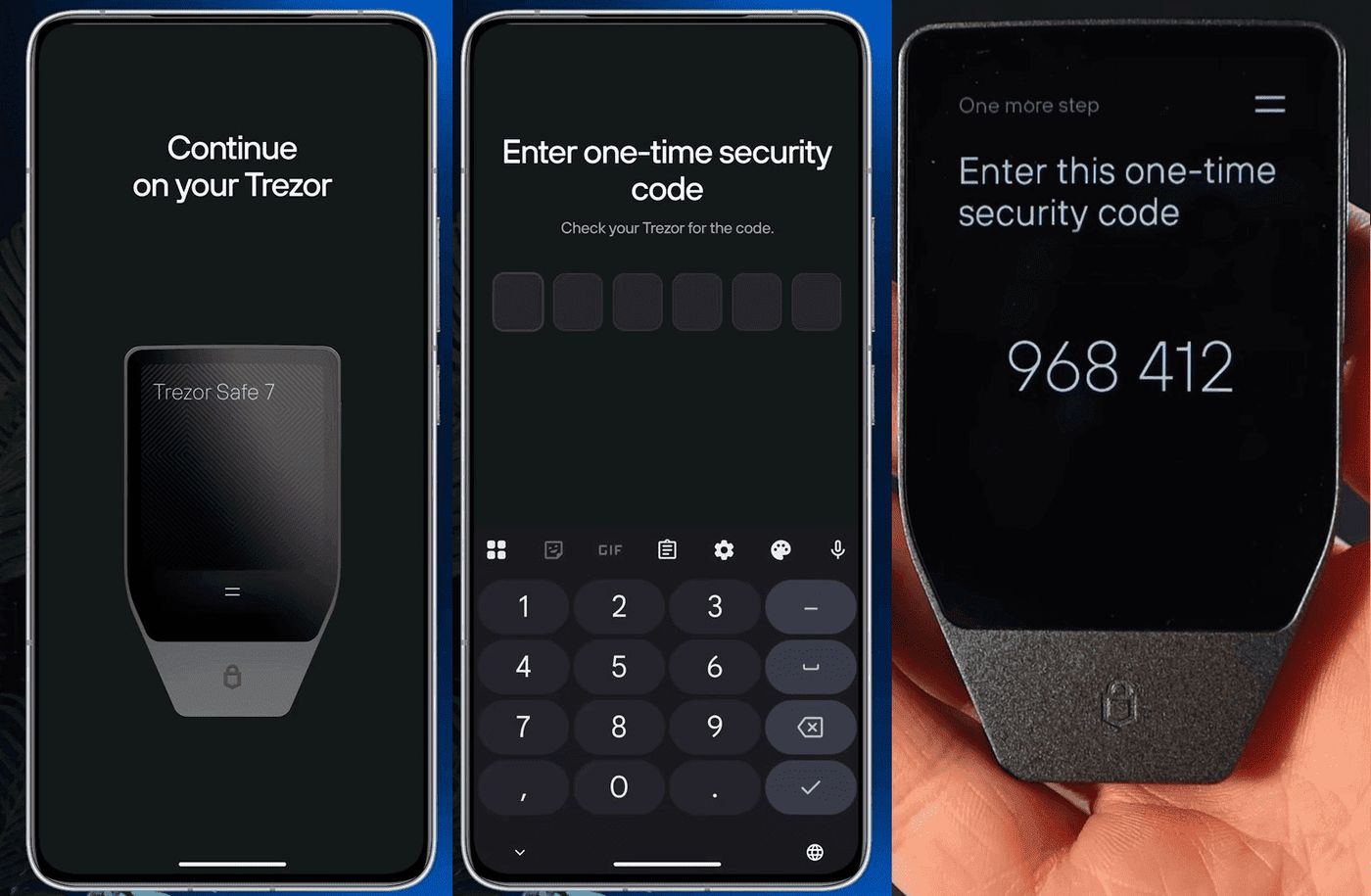
Trezor launched in 2013 as a project by Marek Palatinus and Pavol Rusnák under the Prague-based company SatoshiLabs, marking it as the first commercially available hardware wallet ever sold. Its foundational philosophy of generating private keys on the device and keeping them offline has remained unchanged for over a decade. The original product, now known as the Model One, established the basic template of a small screen and physical buttons for confirmation. The product line expanded with the introduction of the Model T, which added a colour touchscreen and support for more cryptocurrencies. As of 2026, the company's leadership transitioned with Matěj Žák taking over as CEO in 2023, while the founders remained involved in strategic direction. The current product lineup is divided into two generations: the legacy Model One and Model T, and the newer Safe series comprising the Safe 3, Safe 5, and Safe 7. The Safe 7, launched in October 2025, represents a significant technological leap, introducing features like a built-in battery, Bluetooth, full mobile support, and post-quantum cryptography readiness.
How Trezor Works and Key Features
Trezor operates by generating a unique set of private keys internally when the device is first set up. These keys never leave the device's secure environment. To conduct a transaction, the user connects the Trezor to a computer or mobile device and uses companion software like Trezor Suite or a third-party interface like Exodus. The transaction details are sent to the Trezor, which displays them on its screen for the user to verify. The user must then physically confirm the transaction on the Trezor device itself, after which it cryptographically signs the transaction with the private key and sends the signature back to the connected device to be broadcast to the blockchain. This process ensures the private key is never exposed to the online device. Key features of Trezor wallets include open-source firmware, which allows public review of the code for security audits, and support for thousands of coins and tokens across networks like Bitcoin, Ethereum, Solana, and Base. Advanced models support Shamir Backup, a method to split the recovery seed into multiple shares for enhanced security, and WalletConnect for secure interaction with decentralized applications.
Trezor Models and Product Lineup
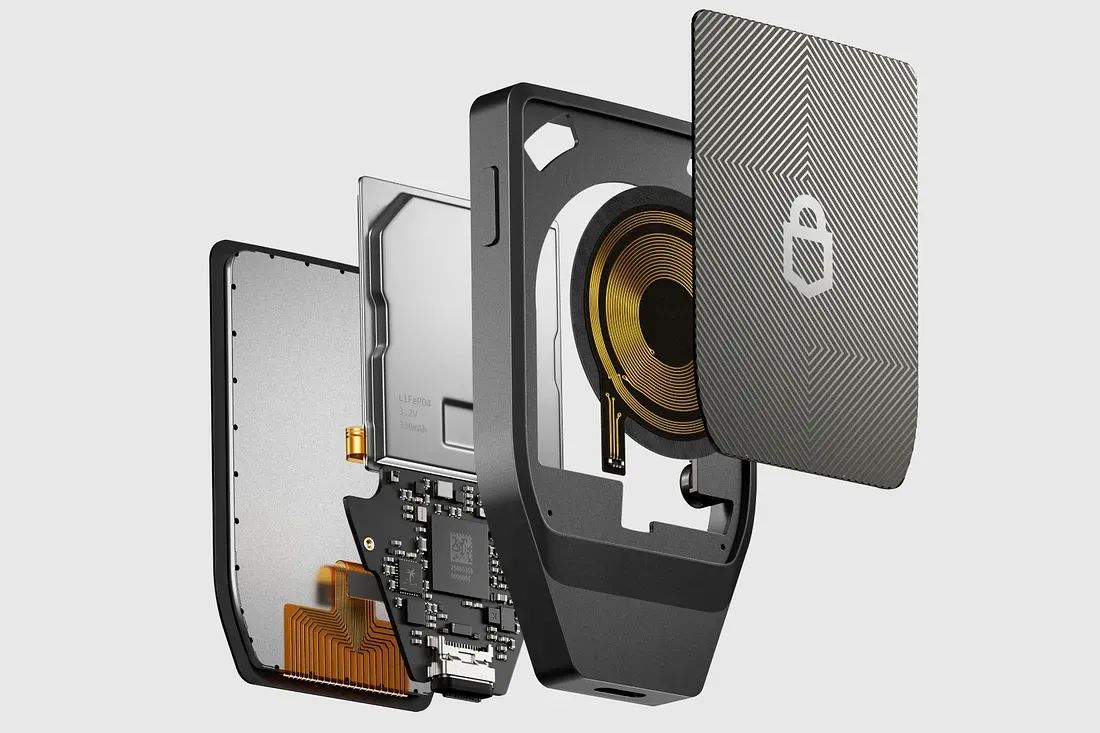
As of 2026, Trezor offers five distinct hardware wallet models catering to different user needs and budgets. The Model One is the original device, featuring a 0.96-inch OLED screen and two buttons, priced around $49 USD. It supports Bitcoin and Ethereum but lacks support for other major coins like XRP, SOL, ADA, or XMR and does not include a secure element chip. The Model T, priced around $79 USD, introduced a 1.54-inch colour touchscreen, broader coin support including XRP and Cardano, and features like a microSD slot and Shamir Backup. The Safe 3, the current entry-level model at around $79 USD, succeeds the Model One by adding a certified EAL6+ secure element chip for physical attack resistance while supporting over 8,000 assets. The Safe 5, with a price range of $129 to $169 USD, features a 1.54-inch colour touchscreen with haptic feedback, a Gorilla Glass front, and an aluminum back, offering a premium feel and easier interaction. The flagship Safe 7, released in October 2025, includes a 2.5-inch touchscreen, Bluetooth connectivity, a built-in battery, full iOS and Android support, and is the first model built with post-quantum cryptography in mind.
- Model One: Original design, two buttons, ~$49 USD, limited coin support.
- Model T: Colour touchscreen, Shamir Backup, ~$79 USD.
- Safe 3: Entry-level with EAL6+ secure element, ~$79 USD, 8,000+ assets.
- Safe 5: Premium touchscreen with haptics, ~$129-$169 USD.
- Safe 7: Flagship with Bluetooth, battery, full mobile support, post-quantum ready.
Using Trezor in Canada: Purchasing, Taxes, and Security
For Canadian users, acquiring a Trezor involves considerations around sourcing, taxes, and long-term storage strategies. It is recommended to purchase directly from the official Trezor.io website or from verified Canadian retailers like Best Buy Canada to avoid the risk of receiving a tampered device from third-party marketplace sellers. Devices shipped from the European Union are classified as electronic data-processing units under HS code 8471, which are duty-free, but buyers will still need to pay the applicable Goods and Services Tax or Harmonized Sales Tax at the border, typically 5 to 13 percent depending on the province. From a tax perspective, moving cryptocurrency from a Canadian exchange like Bitbuy or Wealthsimple Crypto to a personal Trezor wallet is considered a transfer between wallets the user controls and is not a taxable disposition. However, any buy, sell, or trade activity conducted on the exchange before the transfer is a capital gains event that must be reported to the Canada Revenue Agency. Canadians should keep a record of the on-chain transaction used to send funds to their Trezor as proof of the custody transfer.
Long-term security in Canada's climate requires specific planning. A paper backup of the recovery seed phrase stored in an unheated location like a garage or cottage can degrade from moisture and freeze-thaw cycles within two to four years. Experts recommend investing in a metal seed backup solution, such as stainless steel or titanium plates, which are fire-resistant and waterproof, for a one-time cost of approximately $80 to $120 CAD. Furthermore, Canadian estate law treats cryptocurrency as property of the estate, but if an executor cannot access the hardware wallet, those assets are effectively lost. A proper inheritance plan is essential, which may involve using Shamir Secret Sharing, leaving instructions with a lawyer, or securely sharing a passphrase with a trusted person. For holders with more than about $500 CAD in crypto on an exchange, a hardware wallet like Trezor is considered a high-leverage security investment to eliminate risks like exchange hacks, phishing, and SIM-swap attacks.

Integration with Software and DeFi
Trezor devices are designed to work with a variety of software interfaces, extending their utility beyond simple storage. The primary official interface is Trezor Suite, a desktop and web application that allows users to manage their portfolio, buy and sell crypto directly, swap assets across networks, and earn staking rewards, all while the private keys remain secured on the hardware device. Trezor also integrates with popular third-party software wallets like Exodus, where it can be connected via USB or Bluetooth to provide hardware-level security for the assets managed within the Exodus interface. This integration is compatible with Trezor Model T, One, Safe 3, Safe 5, and Safe 7 models. For interacting with decentralized finance applications and non-fungible token platforms, Trezor supports WalletConnect, enabling users to securely connect to protocols like Aave, Uniswap, and OpenSea. The device signs transactions locally, so private keys are never exposed to the dApp or the browser. This capability allows Canadians to participate in DeFi ecosystems while maintaining a high standard of self-custody and security.
Security Philosophy and Potential Risks
The core security philosophy of Trezor is built on the principles of open-source transparency and uncompromising self-custody. Every line of firmware code is publicly available for audit, which allows the global security community to scrutinize it for vulnerabilities. The non-custodial model means Trezor never has access to a user's private keys or recovery seed. There is no backdoor or account recovery service provided by the company. This design places absolute control and responsibility on the user. The primary risk, therefore, is the permanent loss of funds if the recovery seed is lost, destroyed, or forgotten, as there is no central authority to restore access. Users must securely store their seed phrase offline, preferably on a durable metal backup. Another consideration is that while the device protects against remote software attacks, older models without a secure element chip are theoretically more vulnerable to sophisticated physical extraction attacks if an attacker gains possession of the device. The Safe series addresses this with EAL6+ certified secure elements. Finally, users must remain vigilant against phishing attempts that mimic Trezor's software or support sites, as the device itself cannot protect against a user being tricked into confirming a malicious transaction.
Comparison and Market Position
Within the hardware wallet market, Trezor is historically one of the two dominant names, known for its staunch commitment to open-source software and a purely non-custodial approach. This contrasts with some competitors that may use closed-source components or offer optional custodial recovery services. Independent reviews often position Trezor's Safe 7, with its NDA-free EAL6+ secure element and haptic touchscreen, as a top contender for open-source touchscreen security. In terms of value, the Trezor Safe 3 is frequently highlighted as offering enterprise-grade security at an entry-level price point. For Canadian users, factors like Bluetooth connectivity for mobile use, compatibility with Canadian exchanges for onboarding funds, and clear guidance on tax implications are important differentiators. Reviews suggest that for active traders and mobile-first Canadians, models with Bluetooth and full mobile app support, like the Safe 7, offer the best balance of security and convenience. The market position of Trezor is solidified by its long history, consistent philosophy, and a product lineup that ranges from a simple, affordable Bitcoin holder to a feature-rich device designed for the future of cryptography.
Frequently asked questions
Where can I buy a Trezor wallet in Canada?
Canadians can purchase Trezor wallets directly from the official Trezor.io website or from verified Canadian retailers such as Best Buy Canada. It is strongly recommended to avoid third party marketplace sellers to minimize the risk of receiving a tampered or compromised device. When ordering from the EU, the device is duty free under HS 8471, but you will need to pay your province's GST or HST upon import. Independent Canadian focused reviews advise ordering from the manufacturer or a verified Canadian reseller for safety. This approach ensures you receive an authentic device and protects against supply chain attacks, which are noted as the single biggest attack vector for a Canadian buyer.
Is moving crypto to a Trezor wallet taxable in Canada?
Transferring cryptocurrency from a Canadian exchange to your own Trezor hardware wallet is not a taxable event, as it is considered a transfer between wallets you control. However, any buying, selling, or crypto to crypto trade you did on the exchange before the transfer is a capital gain or loss event that must be reported to the Canada Revenue Agency. You should keep a copy of your on chain send transaction as proof of the custody transfer. The Canada Revenue Agency expects these trades to be reported, and the transfer itself is not a taxable disposition. This guidance is part of CRA aware storage advice provided for Canadian crypto holders.
What happens if I lose my Trezor or my recovery seed?
If you lose your Trezor device but still have your recovery seed phrase, you can restore your entire wallet onto a new Trezor device using that wallet backup. Your crypto is safe as long as the seed is secure. If you lose both the device and the recovery seed, your funds are permanently irrecoverable because Trezor is non custodial, meaning the company never holds your keys and cannot recover them on your behalf. This design is a core principle of the wallet, emphasizing true self custody. Therefore, it is critical to keep your wallet backup stored safely offline and never share it with anyone.
Which Trezor model works with an iPhone?
As of 2026, full iOS support, including the ability to send transactions, swap, set up a new device, and manage device settings, is available only on the Trezor Safe 7 model due to its Bluetooth connectivity and built in battery. The Safe 5 allows iPhone users to check balances, buy, and receive crypto, but cannot be used to send or perform setup. Earlier models like the Model One and Model T require a computer connection. The Trezor Safe 7, launched in October 2025, is the first Trezor device with full iOS and Android support, making it the suitable choice for mobile first Canadian users.
How do I secure my recovery seed in Canada's climate?
A paper seed phrase stored in an unheated space can absorb moisture through the winter freeze thaw cycle and become unreadable within a few years. It is recommended for Canadians to use a metal seed backup solution, such as stamped stainless steel or titanium plates, which are rated to high temperatures and are waterproof. This one time purchase helps ensure your recovery phrase remains readable for decades. Products like Billfodl or Cryptosteel Capsule are rated to 1400 degrees Celsius and are IP68 waterproof, providing durable protection that outlasts paper and survives Canada's variable climate conditions.
Can I use Trezor with decentralized finance (DeFi) apps?
Yes, Trezor hardware wallets can interact with DeFi applications. You can connect to platforms like Aave, Uniswap, Morpho, and OpenSea via WalletConnect integration. This allows you to securely manage and swap your assets while the transaction is signed on the physical Trezor device, keeping your private keys offline with hardware level security. Trezor supports thousands of coins and tokens across leading networks, enabling you to transact freely. This integration provides a secure way to participate in DeFi without exposing your private keys to a browser extension wallet directly.
Sources and further reading
- Trezor Hardware Wallet (Official) | Bitcoin & Crypto Security ... trezor.io
- ColdWallets.ca: Best Hardware Wallets in Canada 2026 ... coldwallets.ca
- Exodus + Trezor Hardware Wallet exodus.com
- Trezor Wallet Review 2026 coincub.com
This article explains how things work and is not financial, tax or legal advice. Rules, limits and rates change, so check the current figures with the Canada Revenue Agency, your province or your financial institution before you act.