Tether (USDT) is a stablecoin, a type of digital currency designed to maintain a stable value relative to the United States dollar. Launched in 2014, it has grown to become the world's largest stablecoin by market capitalization and one of the most traded cryptocurrencies globally. For Canadians, USDT is a tool used in cryptocurrency trading and on offshore gaming sites, though it operates outside domestic regulatory frameworks. Its history is marked by rapid growth, significant profits, and ongoing debates about reserve transparency and its use in illicit finance.
What Is Tether and How Does It Work?
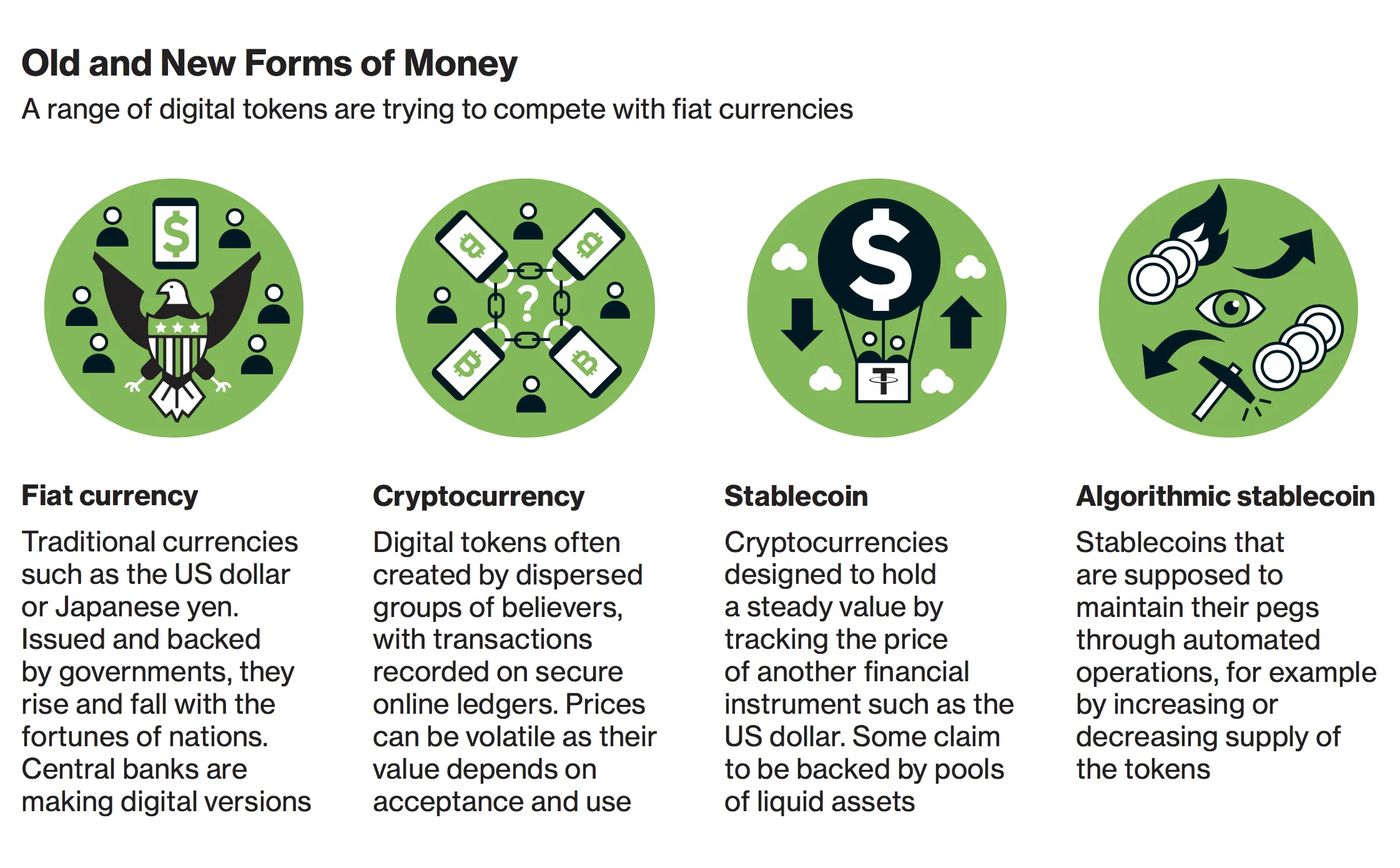
Tether is a fiat-collateralized stablecoin, meaning each USDT token in circulation is intended to be backed by equivalent reserves held by the issuing company, Tether Limited. The primary goal is to maintain a 1:1 peg with the US dollar, providing a digital asset with minimal price volatility compared to cryptocurrencies like Bitcoin. Tether issues tokens on numerous blockchains including Ethereum, Tron, Solana, and Algorand, allowing users to transact on the network of their choice. The company mints new tokens when demand increases and theoretically burns or removes them from circulation when redeemed, aiming to manage the supply in relation to its reserves. Tether's reserves have historically consisted of cash, cash equivalents, short-term deposits, commercial paper, and, more recently, significant holdings of US Treasury securities and gold.
The operational model requires trust that Tether Limited holds sufficient reserves to honour all redemption requests. For years, this was a point of contention as the company provided attestations rather than full audits. In August 2026, Tether announced that KPMG U.S. had completed a full independent audit of its 2025 financial statements and issued an unqualified opinion under U.S. GAAP, a step toward greater transparency. The company's profitability stems largely from interest earned on its substantial reserve assets, particularly U.S. Treasuries. By the second quarter of 2026, Tether reported a net operating profit of approximately $1.5 billion, with total assets of about $187.8 billion and liabilities of approximately $183.6 billion.

History and Evolution of Tether
Tether's origins trace back to 2014 when it was launched as "Realcoin" by co-founders Brock Pierce, Reeve Collins, and Craig Sellars. The first tokens were issued on the Bitcoin blockchain on 6 October 2014, utilizing the Omni layer protocol. The project was renamed Tether in November 2014. The company is owned by iFinex, which also operates the Bitfinex cryptocurrency exchange, and its corporate structure has been based in jurisdictions like the British Virgin Islands and, as of January 2025, El Salvador. Growth was explosive from 2017 onward. The supply of Tether grew from about $10 million in January 2017 to about $2.8 billion by September 2018. By early 2018, Tether accounted for about 10% of Bitcoin trading volume, but during the summer of 2018, it accounted for up to 80% of Bitcoin volume.
By 2019, Tether surpassed Bitcoin in trading volume to become the most traded cryptocurrency. The company expanded its offerings beyond US dollar pegs, launching Tether Gold (XAU₮) in January 2020, a token representing ownership of physical gold, and tokens pegged to the Mexican peso (2022) and the Georgian lari (2026). Under CEO Paolo Ardoino, who took over in October 2023, Tether diversified into new business divisions including artificial intelligence, bitcoin mining, and education. The company also became a major investor, acquiring stakes in companies like Bitdeer, Northern Data AG, and making a significant $1.29 billion offer for Juventus F.C. in 2025, which was rejected.
- 6 October 2014: First Tether (Realcoin) tokens issued on Bitcoin blockchain.
- 2019: Surpasses Bitcoin to become the most traded cryptocurrency globally.
- January 2020: Launch of Tether Gold (XAU₮).
- October 2023: Paolo Ardoino becomes CEO.
- 2024: Reports record annual profit of $13 billion.
- January 2025: Relocates global headquarters to El Salvador.
- August 2026: Announces completion of full independent audit by KPMG U.S.
The company's financial scale became immense. By 2025, the USDT token supply surpassed $140 billion. In the first half of 2024 alone, Tether reported a profit of $5.2 billion, bolstered by its holdings of over $97.6 billion in U.S. Treasuries, making it one of the world's largest buyers of Treasury bills. In December 2023, the city of Lugano, Switzerland, began accepting Tether for paying taxes and fines, illustrating its growing adoption.
USDT in Canada: Trading, Casinos, and Regulation
In Canada, Tether is primarily accessed through cryptocurrency exchanges for trading purposes or used for deposits at offshore online casinos. No provincially regulated gambling operator, including those under iGaming Ontario or provincial lottery corporations like Loto-Québec and BCLC, accepts cryptocurrency deposits. Therefore, any online casino supporting USDT operates strictly offshore and beyond Canadian regulatory supervision. For Canadians, this means familiar consumer protections, such as dispute resolution through provincial ombudsmen or segregated player funds, do not apply when using USDT on these platforms.
Using USDT for offshore gaming involves several steps and costs. Canadians must first purchase USDT using Canadian dollars on a centralized exchange, incurring a typical retail spread between 1.5% and 3.5%. When depositing to a casino, users must carefully select the correct blockchain network (e.g., TRC-20 or ERC-20) as sending tokens on the wrong network can result in permanent loss. Offshore casinos often promote the Tron (TRC-20) network for its fast transaction times, usually under a minute, and lower fees compared to Ethereum. However, users should be aware of minimum deposit thresholds. Transferring an amount below the casino's minimum may result in the funds being forfeited or not credited.
Exchanging USDT for cash CAD in Canada is possible through peer-to-peer services and specialized exchangers. In cities like Montreal, vetted exchanger services allow users to convert Tether TRC20 to physical Canadian dollars. These services are not part of the traditional banking system and carry their own risks, requiring users to research exchanger reputations and reserves. The regulatory environment in Canada for stablecoins like Tether is evolving but remains less defined than the framework established by the U.S. GENIUS Act in 2025, which set requirements for reserve backing, redemption, and oversight for U.S.-issued payment stablecoins. This act mandates that stablecoin issuers maintain high-quality liquid assets to back tokens one-to-one and provide clear redemption rights to holders.
TRC20 vs ERC20: Network Protocols for USDT
Tether exists on multiple blockchains, with the Ethereum (ERC-20) and Tron (TRC-20) networks being the most commonly used, split roughly equally in usage. These are not different tokens but the same USDT stablecoin issued on different technological platforms. The choice between them significantly affects transaction cost, speed, and compatibility. USDT ERC-20 operates on the Ethereum blockchain, offering high security, decentralization, and broad compatibility with decentralized finance (DeFi) applications, wallets, and exchanges. Transactions require gas fees paid in ETH, which can become expensive during periods of high network congestion, and confirmation times can vary from a few seconds to several minutes.
In contrast, USDT TRC-20 is issued on the Tron blockchain, which uses a Delegated Proof of Stake (DPoS) consensus model. This typically allows for faster transaction confirmations, often within seconds, and lower fees. Fees on Tron are paid through a dual model of Bandwidth and Energy, which can be obtained by staking the native TRX token. If a wallet lacks these resources, the network burns TRX to pay the fee, which is generally lower than Ethereum gas fees. However, the Tron ecosystem has more limited DeFi and Web3 application support compared to Ethereum, making it more suited for simple transfers and exchanges.
| Feature | USDT ERC-20 (Ethereum) | USDT TRC-20 (Tron) |
|---|---|---|
| Transaction Speed | Minutes, variable with network load | Seconds to tens of seconds |
| Typical Fee Cost | Higher, paid in ETH (gas) | Lower, uses Bandwidth/Energy or TRX |
| Address Format | Begins with '0x' | Begins with capital 'T' |
| Primary Ecosystem | Broad DeFi, DApps, Web3 | Strong for transfers, more limited DeFi |
| Key Advantage | Security and compatibility | Speed and lower cost |
The critical rule for users is that the sender's network and the recipient's network must match. Sending TRC-20 USDT to an ERC-20 address will result in the loss of funds, as the blockchains are incompatible. Before any transfer, users must verify the correct network and address format. For Canadians using offshore casinos, the platform will specify which network to use, with many favouring TRC-20 for its lower costs and faster settlement, which is beneficial for time-sensitive gaming deposits.
Reserves, Backing, and Financial Performance
The composition and sufficiency of Tether's reserves have been the central issue surrounding its credibility. Initially criticized for a lack of transparency and audits, the company began releasing quarterly attestations from accounting firm BDO Italia in July 2022. The reserves have shifted significantly over time. As of August 2024, Tether reported holding more than $97.6 billion in U.S. Treasury bills, positioning it as one of the world's largest buyers. By June 2026, its reported U.S. Treasury holdings were a major component of approximately $187.8 billion in total assets, with liabilities of $183.6 billion, resulting in an excess of reserves of about $4.11 billion.
Tether's reserve assets are not solely cash. They include cash and cash equivalents, secured loans, corporate bonds, precious metals, and bitcoin. The company has also built substantial gold reserves, reporting holdings of more than 146 metric tons by the end of the second quarter of 2026. This gold backs both its USDT reserves and its separate Tether Gold (XAU₮) product. Tether's profitability is directly tied to the yield generated by these reserve assets. In 2024, it reported a record annual profit of $13 billion, followed by approximately $10 billion in profit for 2025. The first quarter of 2024 alone saw a profit of $4.52 billion, largely driven by U.S. Treasury securities, with additional profits from gold and bitcoin holdings.
- U.S. Treasury Holdings (Aug 2024): >$97.6 billion.
- Gold Holdings (Q2 2026): >146 metric tons.
- Total Assets (June 2026): ~$187.8 billion.
- Net Operating Profit (Q2 2026): ~$1.5 billion.
- Annual Profit (2024): $13 billion.
- Annual Profit (2025): ~$10 billion.
Tether announced in August 2026 that KPMG U.S. had completed a full independent audit of its 2025 financial statements and issued an unqualified opinion under U.S. generally accepted accounting principles. As of 30 June 2026, Tether reported its reserves exceeded its liabilities by approximately $4.11 billion. By July 2025, Tether claimed to hold roughly US $8 billion in gold reserves stored in a Swiss vault. As of the second quarter of 2026, Tether's gold holdings had increased to more than 146 metric tons.
Controversies, Risks, and Law Enforcement Role
Tether has been embroiled in controversy and scrutiny since its early days. Key areas of concern include the historical opacity of its reserves, allegations of market manipulation, and its extensive use in illicit finance. In 2021, the U.S. Commodity Futures Trading Commission (CFTC) fined Tether for only maintaining full reserves during 27.6% of the days between 2016 and 2018. Academic research has suggested that Tether issuances during market downturns were followed by Bitcoin price increases, raising questions about potential market manipulation, which Tether has contested by accusing researchers of using incomplete data.
Perhaps the most persistent debate centres on Tether's role in criminal activity. Blockchain analytics reports have consistently identified USDT as the most used stablecoin for illicit transactions, with $19.3 billion linked to such activity in 2023 and $24.7 billion in 2022. A 2026 U.S. Senate investigation found that 84% of wallets sanctioned by the U.S. and Israel for connections to Iran transacted almost exclusively in Tether, stating it had become a primary means for the Iranian government to fund proxy organizations. In response, Tether has significantly expanded its cooperation with global law enforcement, including with over 140 law enforcement offices across 45 jurisdictions by 2024.
The company actively freezes tokens in wallets associated with suspected illicit activity upon request from authorities. By October 2026, Tether stated it had helped freeze more than $5 billion in illicit assets and supported over 2,900 investigations involving more than 340 law enforcement agencies across 70 countries. Specific actions include freezing $4.2 billion linked to illicit activity reported in February 2026, $344 million linked to Iran in April 2026, and $52 million connected to the Xinbi Guarantee marketplace in September 2026. Despite this cooperation, Tether remained the target of a federal criminal investigation as of October 2024 for possible violations of sanctions and anti-money-laundering rules, illustrating the ongoing regulatory and legal challenges it faces.
Tether's Expansion and Future Outlook
Under CEO Paolo Ardoino, Tether has aggressively diversified beyond its core stablecoin business. The company restructured into four divisions in 2024: artificial intelligence, bitcoin mining, education, and stablecoins. It has made substantial investments in bitcoin mining operations, pledging to invest about half a billion dollars over six months in late 2023 to become a top global miner. Its investment portfolio expanded into technology, finance, and media, including stakes in brain-chip company Blackrock Neutro, video platform Rumble, and precious metals company Gold.com. In 2026, it led a one billion Euro funding round into NEURA Robotics and a $50 million round into Eight Sleep, a smart mattress cover company.
Geographically, Tether has pursued partnerships with national governments, such as Georgia for developing blockchain technologies and launching the GELT stablecoin, and Uruguay for bitcoin mining. The relocation of its global headquarters to El Salvador in January 2025 aligned it with a cryptocurrency-friendly jurisdiction. Following the U.S. GENIUS Act in 2025, Tether announced plans to expand U.S. operations and launched USAT, a U.S.-focused dollar-backed stablecoin issued by Anchorage Digital Bank with Cantor Fitzgerald as reserve custodian. The company also launched StableFund, a $400 million private credit fund with Fasanara Capital in 2026, targeting small and medium-sized business financing and aiming to raise up to $3 billion in additional capital.
The future of Tether hinges on maintaining trust through transparency, managing an increasingly complex global regulatory landscape, and addressing the risks associated with its scale. Its dominance in the stablecoin market appears secure for the near term, but it faces competition from regulated alternatives and ongoing scrutiny from regulators and lawmakers worldwide. Its ability to continue generating massive profits from its reserves while supporting legitimate use cases and combating illicit finance will likely define its trajectory in the coming years. The company's expansion into diverse sectors suggests a strategy to build an ecosystem far beyond its original function as a simple dollar-pegged token, with investments spanning energy, commodities, infrastructure, and advanced technology.
Frequently asked questions
What is Tether (USDT)?
Tether (USDT) is a stablecoin, a type of cryptocurrency designed to maintain a stable value pegged to the United States dollar. Launched in 2014, each USDT token is intended to be backed by reserves held by the issuer, Tether Limited. It is the world's largest stablecoin by market capitalization and is widely used for trading, transfers, and as a dollar proxy on cryptocurrency exchanges and in some decentralized finance applications. As of August 2026, Tether's CEO estimated it had more than 650 million users worldwide.
What is the difference between USDT TRC20 and ERC20?
USDT TRC20 and ERC20 refer to the same Tether stablecoin issued on different blockchain networks. USDT ERC-20 operates on the Ethereum network, offering broad compatibility with wallets and DeFi applications but with higher and more variable transaction fees (gas). USDT TRC-20 operates on the Tron network, which typically offers faster transaction confirmations and lower fees. The networks are incompatible. You must send tokens using the same protocol the recipient address supports, and address formats differ (ERC-20 starts with '0x', TRC-20 starts with 'T').
What backs Tether's reserves?
Tether's reserves consist of a variety of assets. As of recent reports, the largest component is U.S. Treasury securities, with holdings exceeding $97.6 billion as of August 2024. Reserves also include cash and cash equivalents, secured loans, corporate bonds, other investments, precious metals, and bitcoin. The company also holds significant physical gold, over 146 metric tons as of mid-2026, which backs part of the USDT reserves and its separate Tether Gold product. In June 2026, total assets were reported at approximately $187.8 billion.
Can I use USDT at online casinos in Canada?
You can use USDT at offshore online casinos that accept cryptocurrency, but not at any provincially regulated gambling sites in Canada. Operators licensed by iGaming Ontario or provincial lottery corporations do not accept cryptocurrency deposits. Offshore casinos promoting USDT operate outside Canadian regulatory supervision, meaning Canadian consumer protections and dispute resolution mechanisms do not apply. Users must also be careful to use the correct blockchain network (like TRC-20) specified by the casino to avoid permanent loss of funds.
Is Tether legal and safe to use in Canada?
Tether is legal to own and trade in Canada through cryptocurrency exchanges. However, it is not issued or regulated by Canadian financial authorities. Its safety depends on Tether Limited's ability to maintain its peg and honour redemptions, which has been a historical concern, though the company has moved toward greater audit transparency. Using USDT carries risks including potential regulatory actions, the insolvency risk of the issuer, and its noted association with illicit finance, though Tether actively works with law enforcement to freeze illicit funds.
How does Tether work with law enforcement?
Tether has a dedicated team that works with law enforcement agencies worldwide to freeze USDT tokens associated with suspected illicit activity. The company complies with requests from verified authorities to freeze wallets on the blockchain. By October 2026, Tether reported assisting in over 2,900 investigations, working with more than 340 agencies across 70 countries, and helping to freeze more than $5 billion in assets linked to crime, scams, and sanctions evasion. In February 2026 alone, it froze $4.2 billion in tokens connected to illicit activity.
Sources and further reading
- Tether (cryptocurrency) (Wikipedia) en.wikipedia.org
- Online Casino USDT TRC20 Guide: Cashier Conditions & ... securityfinancial.ca
- The Impact of Stablecoins and Digital Assets in the U.S. tdsecurities.com
- USDT TRC20 vs ERC20: Difference, Fees, Speed and Wallet trustee.io
- Exchange Tether TRC20 (USDT) to Cash CAD in Montreal bestchange.com
- USDT Casinos in Canada: Tether Deposits, TRC20 Fees and ... nnpdf.ca
This article explains how things work and is not financial, tax or legal advice. Rules, limits and rates change, so check the current figures with the Canada Revenue Agency, your province or your financial institution before you act.