Solana is a high-performance public blockchain platform designed for fast, low-cost transactions. Its native cryptocurrency, SOL, is used for paying fees, staking for network security, and powering decentralized applications (dApps) and non-fungible tokens (NFTs). For Canadian users, Solana offers an alternative to networks like Ethereum, with transaction fees often under a tenth of a cent and the ability to process over 65,000 transactions per second. The platform has experienced significant growth and volatility, marked by rapid adoption, network outages, and ongoing regulatory scrutiny, particularly from U.S. authorities.
What Is Solana and How Does It Work?
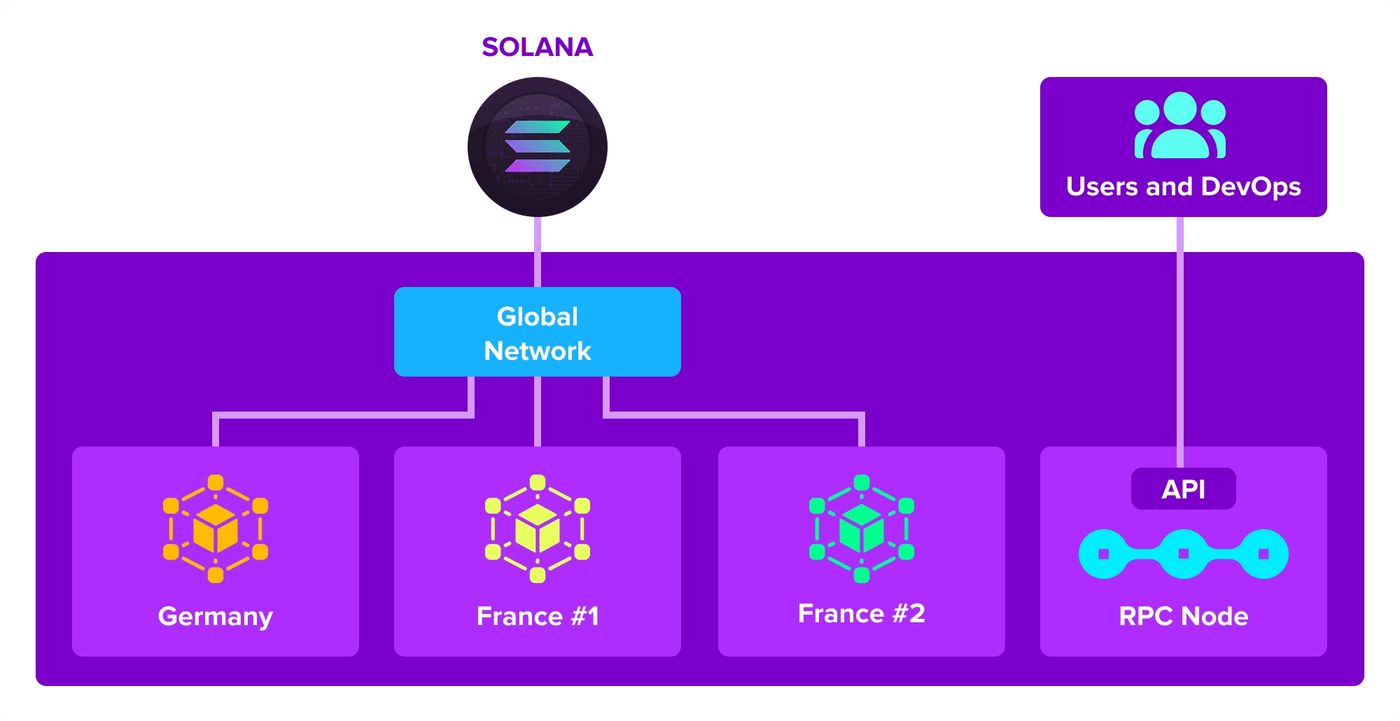
Solana is a layer-1 blockchain platform built to support decentralized applications and cryptocurrencies with high throughput and minimal cost. The platform's architecture is a key differentiator, combining a proof-of-stake (PoS) consensus model with a novel innovation called proof-of-history (PoH). Proof-of-history acts as a decentralized cryptographic clock, creating a verifiable record of the order and timing of transactions before validators vote on them. This design reduces the need for validators to communicate extensively to reach consensus, which significantly speeds up processing. The network's Sealevel runtime allows for the parallel execution of many non-conflicting transactions on a single global state, further contributing to its high throughput. Solana's native token, SOL, is integral to the network's operation, used for paying transaction fees, staking to secure the network, and governing on-chain programs.
Technical Architecture and Performance
Solana's technical design aims to solve the scalability challenges faced by earlier blockchains like Bitcoin and Ethereum. While many cryptocurrencies use proof-of-work or standard proof-of-stake, Solana employs proof-of-history alongside proof-of-stake to achieve its performance. A designated leader node processes transactions within a block quickly, while validator nodes verify the order, cutting down on network latency. This process allows for a block time of just 400 milliseconds, a stark contrast to Bitcoin's 10-minute block time. The network has demonstrated an ability to process over 50,000 to 60,000 transactions per second, with theoretical limits exceeding 65,000. Transaction fees are consistently low, with a base fee of 0.000005 SOL per signature, which equates to approximately half a tenth of a cent when SOL is priced at $100. This combination of speed and low cost has made Solana attractive for microtransactions, high-volume applications, and developers seeking an alternative to more congested networks.
The platform's on-chain programs are primarily written in the Rust programming language, often using the Anchor framework. It utilizes the SPL token standard and supports a broad ecosystem of wallets and developer tools. Despite its high performance, the network's operation is energy-efficient. A December 2023 energy report indicated that Solana's total emissions and energy use per transaction declined by 17.5% and 25%, respectively. The network's monetary policy includes an inflation schedule for new SOL issuance that declines over time toward a long-term rate, and a mechanism where half of each base transaction fee is permanently burned.
History and Development of the Solana Network
The genesis of Solana dates to late 2017 when former Qualcomm engineer Anatoly Yakovenko published a whitepaper introducing the proof-of-history concept. He co-founded Solana Labs in 2018 with Greg Fitzgerald, Raj Gokal, and Eric Williams to build the network, initially naming the project Loom before rebranding to Solana. The team released a testnet in February 2018 and conducted fundraising rounds in 2019. The Solana mainnet beta officially launched in March 2020, with SOL's initial price at $0.9511 USD. The project gained substantial traction in 2021 during the surge of decentralized finance (DeFi) and NFTs, as developers sought cheaper alternatives to Ethereum. In June 2021, Solana Labs sold $314 million worth of SOL in a funding round led by Andreessen Horowitz and Polychain Capital.
The following timeline outlines key events in Solana's history. Solana was first opened to the public in March 2020, with its first block being created on 16 March 2020. The platform was founded in 2018 by Anatoly Yakovenko and Raj Gokal. In June 2021, Solana Labs sold $314 million worth of its native cryptocurrency, SOL, to a group of funds led by Andreessen Horowitz and Polychain Capital.
- November 2017: Anatoly Yakovenko publishes the proof-of-history whitepaper.
- March 2020: Solana mainnet beta launches.
- June 2021: $314 million SOL token sale to institutional investors.
- November 2021: SOL price reaches an all-time high of $259.96 USD.
- August 2022: Hack of approximately 9,231 Solana wallets results in $8 million in losses.
- November 2022: SOL price drops 40% in one day following the FTX bankruptcy.
- June 2023: U.S. SEC sues Coinbase, alleging SOL is an unregistered security.
- January 2025: SOL reaches a new all-time high of $294 following the launch of a Trump memecoin on the network.
Network Outages and Reliability Challenges
A significant aspect of Solana's history has been its struggle with network stability during periods of high demand. The blockchain has experienced several full outages, which have frequently caused the value of SOL to fall. The first major outage occurred in September 2021, when a surge of transactions caused the network to fork, leading to a 17-hour downtime. In 2022, the network went offline multiple times, including a seven-hour outage in May caused by bots and a four-and-a-half-hour outage later that month due to a bug in processing offline transactions. Another six-hour outage happened in October 2022 because of a consensus bug in the validator client. These incidents have raised concerns about the network's long-term reliability for global institutional and retail adoption, especially as competing layer-1 blockchains also scale their infrastructures.
Buying, Trading, and Using Solana in Canada
For Canadians, buying and trading Solana (SOL) is facilitated through several cryptocurrency platforms. Exchanges like Coinsquare and Wealthsimple offer Canadians a way to purchase SOL directly. The process is typically straightforward, allowing users to fund accounts with Canadian dollars and trade for SOL. Once acquired, SOL can be stored on exchange platforms or transferred to self-custody wallets. A popular software wallet for the Solana ecosystem is Phantom, which supports DeFi interactions, NFT management, and staking. Users can also stake their SOL directly through some Canadian platforms. For example, Wealthsimple notes that Solana validators receive a commission based on a percentage of rewards earned from delegated SOL.
Beyond simple holding and trading, SOL is used within the Solana ecosystem for various purposes. It is the required currency for paying transaction fees, which remain minimal even during high demand. SOL is used to execute smart contracts, mint and trade NFTs, and participate in decentralized finance protocols. The network also hosts a significant number of memecoins, such as Bonk, which are used for tipping, gaming, and cultural references within the community. Major companies have integrated Solana for payments. In September 2023, Visa announced support for the Solana blockchain to send USDC stablecoin payments to merchants via processors Worldpay and Nuvei.
Regulatory and Legal Landscape
Solana has faced considerable regulatory scrutiny, primarily from United States authorities, which impacts its global perception and accessibility. In June 2023, the U.S. Securities and Exchange Commission (SEC) sued cryptocurrency exchange Coinbase, alleging that Solana and twelve other tokens offered were unregistered securities. The SEC argued these assets failed the Howey Test, a standard for determining what constitutes an investment contract. Following this announcement, the price of SOL dropped nearly 30%, and some exchanges, including Robinhood, delisted the token. The Solana Foundation has consistently denied that SOL is a security. Robinhood relisted SOL for U.S. customers in November 2024. Prior to the SEC action, a class action lawsuit was filed against Solana Labs in July 2022, accusing the company of selling unregistered securities and misleading investors about the total circulating supply of SOL tokens.
For Canadian users, the regulatory environment is shaped by domestic securities laws and the ongoing developments in the United States, given the interconnected nature of crypto markets. Canadian exchanges that list SOL must comply with provincial securities regulations and registration requirements. In June 2023, the United States Securities and Exchange Commission sued Coinbase, alleging that Solana qualified as an unregistered security, which caused the price of SOL to drop nearly 30 percent. The Solana Foundation has denied that the token is a security.
Market Performance and Key Figures
The market performance of SOL has been characterized by extreme volatility and rapid growth cycles. After its launch in 2020, SOL's price saw a meteoric rise in 2021, increasing by nearly 12,000% to reach a high of $259.96 USD in November 2021. At that time, Solana's market capitalization surpassed $74 billion. The following year brought a severe downturn. By the end of 2022, Solana had lost more than $50 billion in market cap from the beginning of the year, exacerbated by the collapse of FTX and Alameda Research, which held large quantities of SOL. The market began recovering in 2023, with Solana's market cap more than doubling to around $7 billion by mid-March. The table below shows key comparative metrics between Solana and Ethereum, its primary competitor.
| Feature | Solana | Ethereum |
|---|---|---|
| Consensus | Proof-of-Stake with Proof-of-History | Proof-of-Stake |
| Transaction Speed | Over 65,000 TPS (theoretical) | Under 15 TPS on base layer (2021) |
| Typical Fee | ~$0.00025 per transaction | Can spike significantly during congestion |
| Primary Use Cases | DeFi, NFTs, payments, gaming | Broad DeFi, enterprise, consumer apps |
Recent developments continue to influence Solana's market position. The anticipated Firedancer validator client upgrades, expected in 2025, are designed to boost transaction speed and scalability further. Technical upgrades like Alpenglow aim to reduce transaction finality time to 150 milliseconds, while the new Transaction V1 format increased single-transaction data capacity. Developer activity on Solana surged in 2024, with a record number of new projects and memecoins launching on the network.
Risks and Considerations for Canadian Users
Canadian investors and users of Solana should be aware of several key risks and debates surrounding the platform. The most prominent technical risk is the history of network outages, which have occurred during periods of high usage and have led to full network halts. These reliability issues challenge the network's suitability for critical financial applications and global adoption. From a market perspective, SOL has demonstrated high price volatility, susceptible to broader crypto market sentiment, regulatory news, and events like the FTX collapse. Regulatory uncertainty persists, particularly the unresolved question in the United States over whether SOL constitutes a security, which could affect its listing on major exchanges and its overall market liquidity.
Competition is another significant consideration. Other layer-1 blockchains and Ethereum's evolving ecosystem with layer-2 rollups are aggressively scaling and could attract developers and users away from Solana. Furthermore, while Solana promotes low fees, the network's economic model has been questioned. Analysis suggests the cost to run the network significantly exceeds the revenue generated from transaction fees. For Canadian taxpayers, it is important to note that the Canada Revenue Agency (CRA) treats cryptocurrencies like SOL as property for tax purposes. Buying SOL with Canadian dollars and holding it is not a taxable event, but selling it for fiat, trading it for another cryptocurrency, or using it to purchase goods or services is considered a disposition and may trigger a capital gain or loss.
Frequently asked questions
What is Solana?
Solana is a public blockchain platform that uses a proof-of-stake consensus mechanism and provides smart contract functionality. The platform's native cryptocurrency is SOL. Designed to support decentralized applications and high-throughput transactions, Solana employs a unique proof-of-history mechanism in conjunction with proof-of-stake to achieve high-speed transactions. It can handle over 65,000 transactions per second with minimal transaction fees.
How much are Solana transaction fees?
Solana transaction fees are typically very low. Every transaction pays a base fee of 0.000005 SOL (5,000 lamports) per signature. At a SOL price of $100, this equals about $0.0005, or half a tenth of a cent. A typical single-signature transfer costs well under a tenth of a cent. Fees can include optional priority fees during network congestion.
How can I buy Solana (SOL) in Canada?
Buying, storing, and trading Solana (SOL) cryptocurrency in Canada is quick and easy with platforms like Coinsquare, one of the leading cryptocurrency platforms in the country. The process typically involves creating an account, verifying your identity, and depositing Canadian dollars to trade for SOL tokens. Canadians can also use other services such as Wealthsimple, which offers SOL trading through its help centre. The popularity of Solana in Canada is driven by its high speed and minimal transaction fees, which remain low even during periods of high demand. This makes it an attractive option for users and developers needing to handle large volumes of transactions or microtransactions.
What is the Phantom wallet for Solana?
The notes provided do not contain any information about the Phantom wallet for Solana. The available information focuses on the Solana blockchain's technical characteristics, history, and major applications. It details Solana's proof of stake and proof of history consensus mechanisms, its founding by Anatoly Yakovenko, and its launch in March 2020. The notes also cover transaction fees, network outages, and significant events like the launch of Donald Trump's memecoin on the platform. For details on specific wallets like Phantom, other sources would need to be consulted.
Are there casinos or gambling on Solana?
The notes provided do not contain specific information about casinos or gambling applications on the Solana blockchain. The documented applications for Solana include decentralized finance (DeFi), non-fungible tokens (NFTs), payments, games, and consumer crypto apps. For instance, Visa announced support for using the Solana blockchain to send USDC stablecoin payments to merchants. Solana Mobile also sells an Android smartphone with preinstalled Solana based decentralized apps. The platform is known for supporting a wide range of decentralized applications due to its high throughput and low cost, but gambling is not explicitly mentioned in the provided source material.
What is the current Solana price in CAD?
The Solana price in Canadian dollars fluctuates constantly based on market conditions. Canadians should check real time charts on reputable cryptocurrency exchanges or market data websites for the most current valuation. The price of SOL has experienced significant volatility throughout its history, reaching an all time high of $259.96 USD in November 2021 and a new high of $294 in January 2025. Its market capitalization has also seen large swings, surpassing $74 billion in late 2021 before losing over $50 billion in value by the end of 2022.
Sources and further reading
- Solana (blockchain platform) (Wikipedia) en.wikipedia.org
- How to buy Solana (SOL) in Canada coinsquare.com
- Solana (SOL): Overview of This Cryptocurrency coinhouse.com
- What Is Solana (SOL)? How It Works and What to Know tokentax.co
- Solana price today in Canada, SOL Market Cap & Live ... kraken.com
This article explains how things work and is not financial, tax or legal advice. Rules, limits and rates change, so check the current figures with the Canada Revenue Agency, your province or your financial institution before you act.