A recession in Canada is a period of broad economic decline, typically defined as two consecutive quarters of negative real gross domestic product (GDP) growth. It is an expected, though challenging, part of the business cycle, marked by declines in production, incomes, consumer spending, and employment. Since 1970, Canada has experienced five notable recessions, each varying in length and impact. Understanding recessions is crucial for Canadians, as they directly affect household finances, job security, and government economic policy.
Definition and Measurement in Canada
In Canada, a recession is most commonly defined as a period of two consecutive quarters of decline in real gross domestic product, which is total economic output adjusted for inflation. This technical definition is widely cited, though economists also consider a broader set of indicators to assess the depth and breadth of a downturn. The government, through the Bank of Canada and the Minister of Finance, is responsible for determining and communicating when a recession has begun or ended, using data from Statistics Canada. Since 2015, the Federal Balanced Budget Act has provided a formal definition of a recession and sets limits on how the federal government can respond by increasing its operating budgets. Economists also use leading indicators, such as sharp drops in stock markets or retail sales, to predict recessions, and lagging indicators, like rising unemployment, to confirm they have occurred.
The C D Howe Institute's Business Cycle Council, a group of Canadian economists, also plays a role in establishing business cycle dates. While the two-quarter rule is a clear benchmark, analysts argue that a true recession should be judged by its depth, duration, and diffusion across the economy. A period may meet the technical definition without exhibiting the severe, widespread pain of a conventional recession. For instance, a 2026 analysis noted that while Canada had experienced two quarters of GDP decline, the downturn lacked sufficient depth and diffusion to resemble a typical recession, highlighting the limitations of a simplistic definition.
Causes and Characteristics of Recessions
Recessions generally occur when there is a widespread drop in spending, known as an adverse demand shock. This can be triggered by various events such as a financial crisis, an external trade shock, the bursting of an economic bubble, or a large-scale disaster like a pandemic. In Canada, a drop in consumer spending due to high prices, lower incomes, or worries about the future is usually the primary reason for slowing economic growth. This decline in demand causes businesses to reduce investments, output, and their workforce, creating a self-reinforcing downward cycle. Recessions encompass declines in multiple component measures of economic activity including consumption, investment, government spending, and net exports.
Economists describe different recession shapes based on the pattern of decline and recovery. A V-shaped recession involves a sharp contraction followed by a rapid recovery, while a U-shaped recession entails a prolonged slump. A W-shaped, or double-dip recession, occurs when the economy enters a recession, recovers briefly for one quarter, and then enters another recession. Canada has experienced these various forms. The psychological aspect of recessions is significant, as declining consumer and business confidence can worsen an economic downturn. The term animal spirits describes the emotional mindsets and trust that form the basis of economic activity, and when these falter, spending and investment dry up.
- Demand Shock: Widespread drop in consumer and business spending.
- Triggers: Financial crises, trade shocks, asset bubbles, disasters.
- Recession Shapes: V-shaped (short and sharp), U-shaped (prolonged), W-shaped (double-dip).
- Psychological Factor: Declining confidence and animal spirits can deepen downturns.
History of Recessions in Canada Since 1970
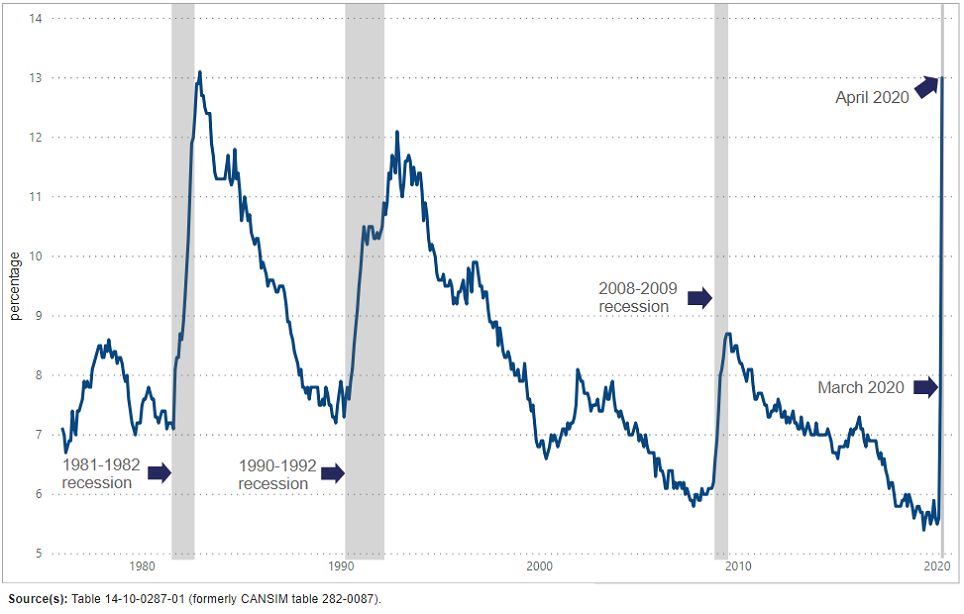
Since 1970, Canada has experienced five significant recessions. Their length and impact have depended on which industries were most affected. The most recent major recession began in October 2008 and lasted until May 2009, a period of seven months coinciding with the global financial crisis. Before that, the early 1990s recession lasted from March 1990 to May 1992. Canada also experienced a technical recession in April 2015. The economic impact of these events varied across provinces due to differing industrial exposures. For example, a recession can occur in Alberta if oil and gas markets decline but not simultaneously in Ontario if manufacturing remains steady. A national recession is declared when all regions and provinces are in contraction.
| Recession Period | Start Date | End Date |
|---|---|---|
| Early 1990s Recession | March 1990 | May 1992 |
| Great Recession | October 2008 | May 2009 |
| 2015 Technical Recession | April 2015 | April 2015 |
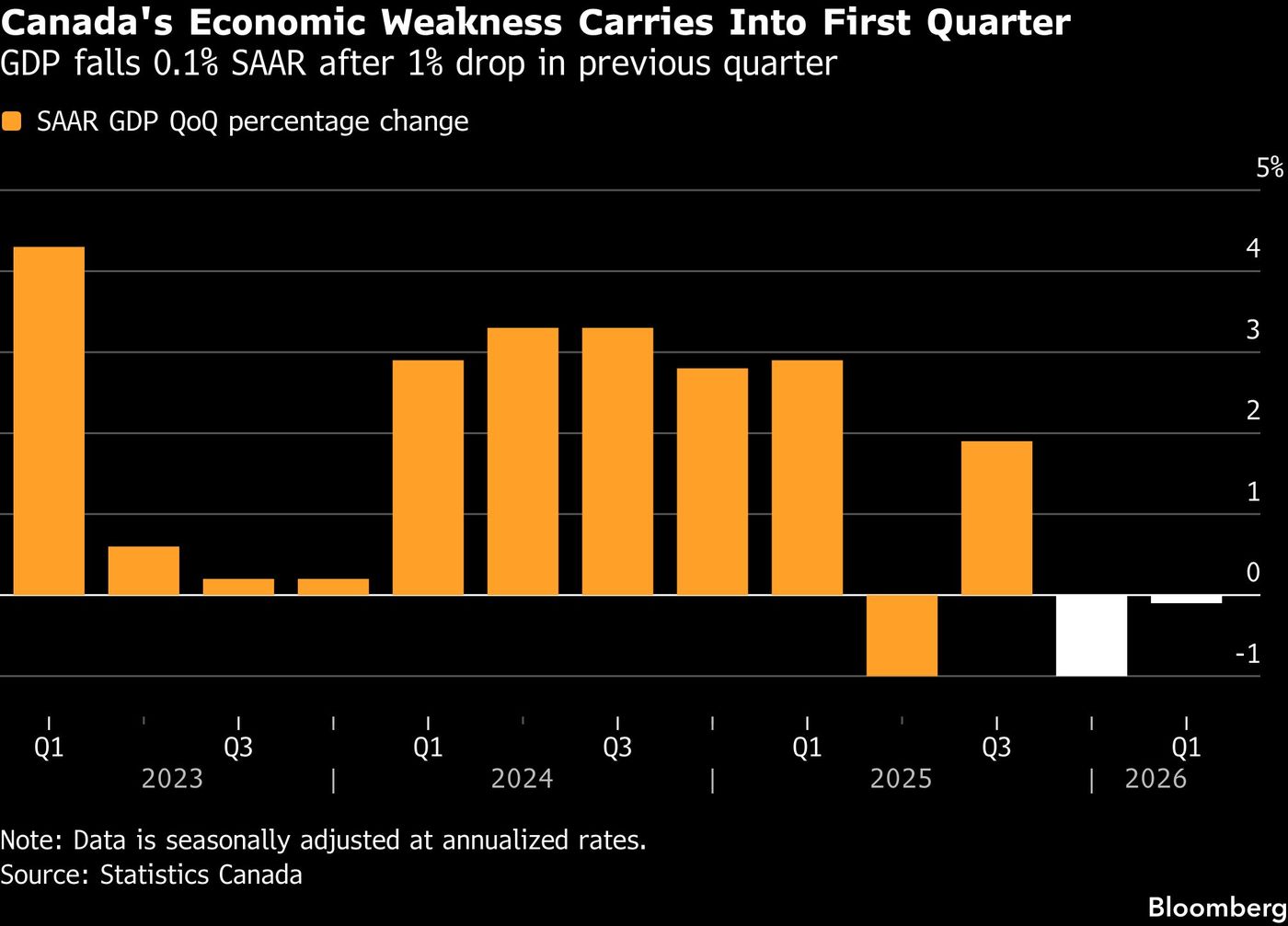
More recently, data indicated Canada slipped into a technical recession in late 2025 and early 2026, with two consecutive quarters of GDP decline. Economists cautioned against panic, noting the declines were small and the situation differed from a broad based recession. The current economic cycle has been described as a series of rolling shocks, where weakness in one sector like housing was cushioned by resilience in another, preventing a deep, widespread downturn. This pattern has led to a prolonged economic adjustment without the conventional markers of a severe recession.
Government and Policy Responses
Governments typically respond to recessions by adopting expansionary macroeconomic policies aimed at stimulating demand. In Canada, this can involve the Bank of Canada reducing interest rates and increasing the money supply to encourage borrowing and spending. The federal government can also increase its own spending on infrastructure, research, and education to create jobs and business activity. The goal is to maintain confidence in the economy and limit the frequency and duration of recessions. The Federal Balanced Budget Act, enacted in 2015, defines the terms of a recession and imposes some limits on how much the federal government can increase its operating budgets in response.
During the 2020s, policy responses have had to account for unique factors such as rapid population growth and its subsequent slowdown. Earlier in the cycle, rapid population growth helped lift aggregate GDP and absorb some drag from higher interest rates. More recently, slower population growth has weighed on headline GDP figures. Policymakers have also had to contend with external shocks like escalating trade tensions with the United States, which have pressured export oriented industries. The government has acknowledged affordability challenges, offering measures like a one time grocery benefits payment, while urging patience for longer term economic foundations to take hold.
Current Economic Context and Indicators
As of 2026, Canada's economic landscape presents a mixed picture. Headline GDP contracted for two consecutive quarters, meeting the technical definition of a recession. The International Monetary Fund forecasts economic growth of 1.6 percent for the year, while the OECD projects a modest improvement to 1.7 percent GDP growth by 2027. The unemployment rate stood at 6.6 percent in May 2026, with youth unemployment significantly higher at 13.4 percent. Inflation was measured at 3.2 percent in May 2026, driven partly by higher energy prices, though down from post pandemic highs near 8 percent.
Canadian households carry the largest debt burden among G7 nations, much of it driven by mortgage debt. Despite this, a recent survey indicated that 70 percent of Canadians describe their current household finances as good or very good. Affordability remains a top concern for many, with 61 percent citing the cost of living as their primary worry, ahead of housing affordability and crime. The economy has faced a series of rolling shocks, starting with higher interest rates impacting housing, then adjustments in population sensitive sectors like education, and most recently pressure on trade exposed industries from global tariffs and uncertainty.
- GDP Growth: Forecast at 1.6% for 2026.
- Unemployment: 6.6% overall, 13.4% for youth.
- Inflation: 3.2% as of May 2026.
- Top Consumer Concern: Cost of living (61% of respondents).
- Major Debt: Household debt highest in G7.
- Rolling Shocks: Interest rates, population changes, trade tensions.
Sectoral Impacts and Regional Differences
Recessions do not affect all sectors or regions of Canada equally. The impact depends heavily on local industry exposure. For instance, a downturn in global oil and gas markets can trigger a recession in Alberta while other provinces with different economic bases remain stable. During the recent economic cycle, weakness rolled from one sector to another. Housing and construction were the first to soften due to higher interest rates. Subsequently, sectors sensitive to population growth, such as education, weakened as government targets for permanent and temporary residents were lowered. More recently, trade exposed industries like manufacturing have faced pressure from escalating trade tensions and tariffs.
This sequential weakening prevented a synchronized, broad based collapse but resulted in a prolonged period of economic adjustment. Some defensive sectors, such as food producers and discount retailers, tend to perform relatively better during recessions because demand for their products remains stable. Recessions can also encourage positive outcomes like firms focusing on productivity, seeking new markets, and the creation of innovative small entrepreneurial firms. However, overall declines in production and incomes coupled with higher unemployment make recessions challenging times for most businesses and households across the country.
Risks and Future Outlook
The primary risks to Canada's economic outlook include the potential for intensified trade tensions, particularly with the United States. The U.S. government has announced plans to impose additional tariffs on selected Canadian exports, creating uncertainty for businesses. Until there is greater clarity on the future trading environment, business investment is likely to remain cautious. Another risk is the high level of household debt, which could constrain consumer spending if economic conditions worsen or interest rates rise further. The economy's ability to absorb successive shocks without tipping into a deep, broad based recession, however, is a reason for cautious optimism.
The future outlook hinges on whether business investment begins to broaden and become more capital intensive. As earlier drags from housing and population adjustments fade, economic growth should become more durable and more visible in per capita measures. The government's plans to invest in infrastructure and defence spending aim to build a more productive and resilient economy, though these long term strategies may not immediately address current affordability challenges for many Canadians. The path forward will require careful monitoring of leading indicators and flexible policy responses to manage ongoing global volatility.
Frequently asked questions
How does the government respond to a recession?
The Canadian government typically responds with expansionary policies. The Bank of Canada may lower interest rates and increase the money supply to encourage borrowing and spending. The federal government can increase its own spending on projects like infrastructure to stimulate job creation and economic activity. These actions are guided by the Federal Balanced Budget Act, which sets parameters for fiscal response during a recession.
What is the definition of a recession in Canada?
In Canada, a recession is typically defined as two consecutive quarters of negative growth in real gross domestic product. This quantitative rule of thumb is widely cited by media and analysts. However, economists also consider a broader qualitative definition involving a significant decline in economic activity spread across the economy, visible in measures like real income, employment, and industrial production. The International Monetary Fund notes there is no single official global definition. This broader assessment helps determine the true depth and diffusion of an economic downturn beyond just the technical GDP measure.
How many recessions has Canada had since 1970?
Since 1970, Canada has experienced five notable recessions. These economic downturns include the early 1990s recession from March 1990 to May 1992, the Great Recession from October 2008 to May 2009, and a technical recession in 2015. Their length and impact varied depending on the industries affected and the triggering events, such as financial crises or adverse external trade shocks. A recession is a temporary period of overall economic decline and is an expected part of the business cycle, with each instance presenting unique challenges for recovery.
Is Canada in a recession right now?
Based on recent data, Canada has met the technical definition of a recession by experiencing two consecutive quarters of negative GDP growth. However, economists argue this label can be misleading as the economic weakness was not broadly diffused across all sectors. The situation has been described as a series of rolling sectoral adjustments rather than a conventional, severe recession with a widespread drop in spending. The focus for some analysts is on longer term challenges like secular stagnation rather than this short term fluctuation.
What are the warning signs of a recession?
Early warning signs of a potential recession include a decline in key indicators like GDP growth, employment rates, and consumer spending. Specific signals are falling consumer confidence, reduced retail sales, declining business investment, and an inverted yield curve in financial markets. Other front end indicators are rising credit delinquencies, a housing market slowdown with falling home sales, and increasing job losses. These signs represent a period of increasing economic stress and uncertainty that precedes the official recognition of a recession, allowing for potential early policy intervention.
Why does household debt matter during a recession?
High household debt levels matter because they can deepen a recession through the paradox of thrift, where increased saving or debt repayment by individuals reduces overall consumption. Since one person's spending is another's income, a widespread drop in spending triggers a broader economic decline. In a balance sheet recession, if asset prices fall below debt values, households focus on repairing their balance sheets by saving more, which further slows the economy. This makes government stimulus spending a critical remedy to offset the decline in private sector demand during such downturns.
Sources and further reading
- Recession (Wikipedia) en.wikipedia.org
- Just how much trouble is Canada's economy in? bbc.com
- Recession in Canada thecanadianencyclopedia.ca
- Beyond the “Technical Recession”, Canada's Rolling ... economics.td.com
- Everything you should know about recessions in Canada mnp.ca
- The “Great” Recession in Canada: Perception vs. Reality bankofcanada.ca
This article explains how things work and is not financial, tax or legal advice. Rules, limits and rates change, so check the current figures with the Canada Revenue Agency, your province or your financial institution before you act.