The loonie is the Canadian one-dollar coin, introduced in 1987 to replace the one-dollar banknote. Its nickname derives from the common loon depicted on its reverse, a design by wildlife artist Robert-Ralph Carmichael. The toonie, Canada's two-dollar coin, entered circulation in 1996 and received its name as a portmanteau of 'two' and 'loonie'. These coins are central to Canada's physical currency, with the term 'loonie' having become a common metonym for the Canadian dollar itself in financial markets.
Origins and History of the Loonie
A parliamentary committee recommended eliminating the dollar bill in 1985, with the government arguing the switch would save between 175 million and 250 million dollars over 20 years due to the coin's longer lifespan. The government officially announced the new coin on March 25, 1986, planning for a 1987 launch. The coin was designed to be compatible with American vending machines, adopting the same 26.5 mm diameter as the failed Susan B. Anthony dollar but differentiating itself with an eleven-sided shape and a distinctive gold colour. The original plan was to use a 'voyageur' design, but the master dies for that coin were lost in transit to the Winnipeg mint in 1986. Fearing counterfeiting, officials quickly approved an alternative design featuring a common loon, which had been submitted by artist Robert-Ralph Carmichael in 1978. The new loonie entered circulation on June 30, 1987, with 40 million coins released initially. After a 21-month transition period where both the coin and the paper dollar were produced, the Bank of Canada ceased printing the one-dollar bill on June 30, 1989, forcing public acceptance of the new coin.
Design and Physical Specifications
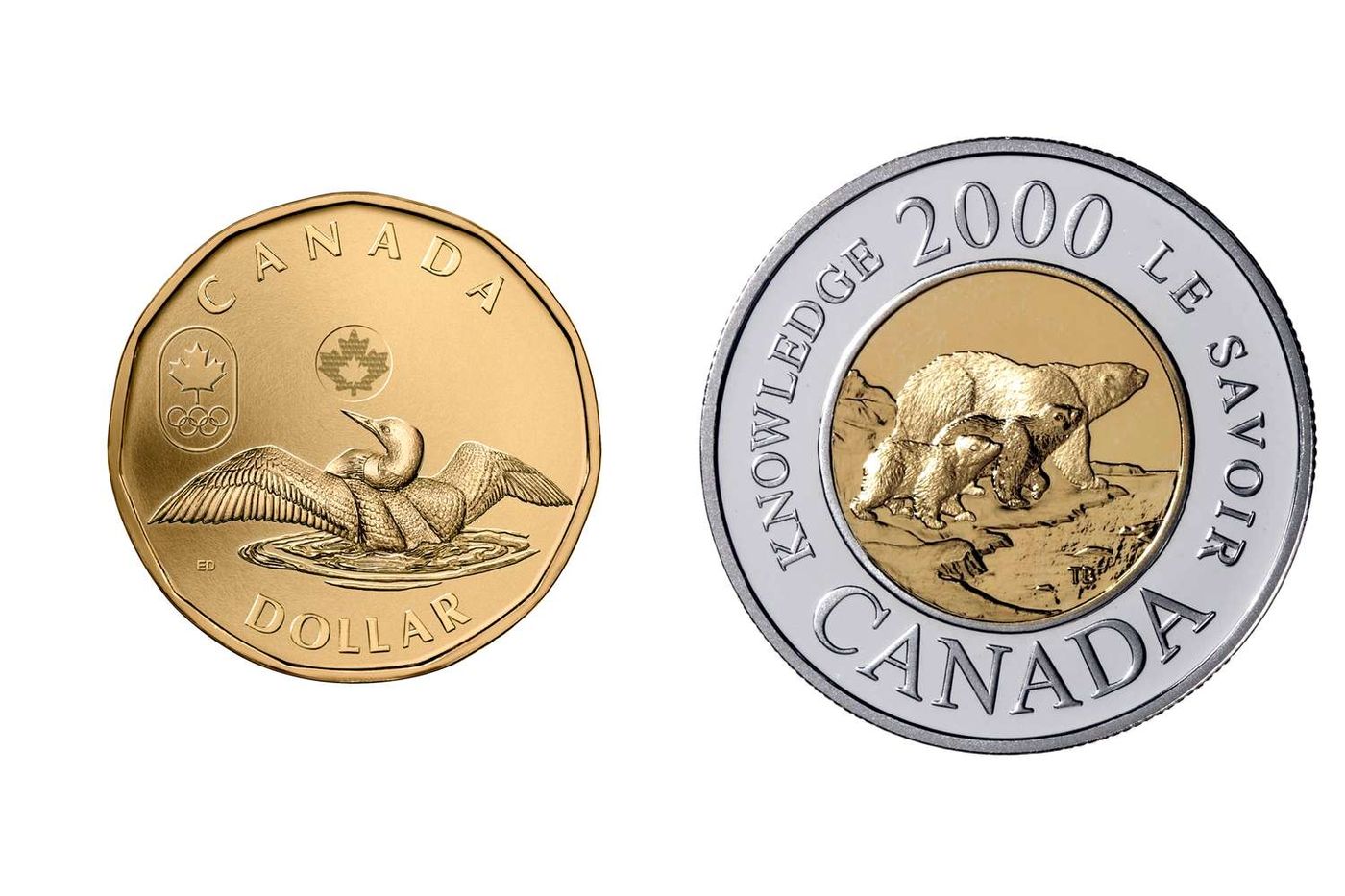
The loonie's most recognizable feature is its 11-sided Reuleaux polygon shape, a curve of constant width that allows it to roll smoothly in vending machines. Its diameter of 26.5 millimetres and thickness of 1.95 millimetres were chosen specifically for vending machine compatibility. The obverse of the coin traditionally featured an effigy of Queen Elizabeth II, with the first coins bearing a design by Arnold Machin. Following the death of Queen Elizabeth II, a new obverse featuring King Charles III, designed by Steven Rosati, was revealed in November 2023 and entered limited circulation in December 2023. The reverse has consistently featured Robert-Ralph Carmichael's design of a common loon swimming on water, though many commemorative editions have temporarily replaced this image. The coin's composition has evolved over time to improve security and manage costs. From its introduction in 1987 until 2011, the loonie was made of aureate, a bronze-electroplated nickel combination, and weighed 7.00 grams. In the second quarter of 2012, the Royal Canadian Mint switched the composition to multi-ply brass-plated steel, which reduced the weight to 6.27 grams. This change introduced new security features, including a small laser-marked maple leaf within a circle on the reverse, intended to make counterfeiting more difficult.
The Birth of the Toonie
The success of the loonie paved the way for a higher-denomination coin. In 1996, the Royal Canadian Mint introduced Canada's two-dollar circulation coin. The public quickly nicknamed it the 'toonie', a playful portmanteau of 'two' and 'loonie'. This name was widely adopted in Canadian media and is the spelling used officially by the Royal Canadian Mint. The toonie was a unique bimetallic coin, featuring an outer ring and a distinct inner core. The initial reverse design by Brent Townsend depicted a polar bear standing on an ice floe, continuing the Canadian wildlife theme established by the loonie and other minor coins. The introduction of the toonie followed a similar logic to the loonie, aiming to provide a more durable and cost-effective replacement for paper currency, in this case the two-dollar banknote. The toonie's bimetallic construction and larger size made it easily distinguishable from other coins, aiding in its public acceptance.
Commemorative and Special Edition Coins
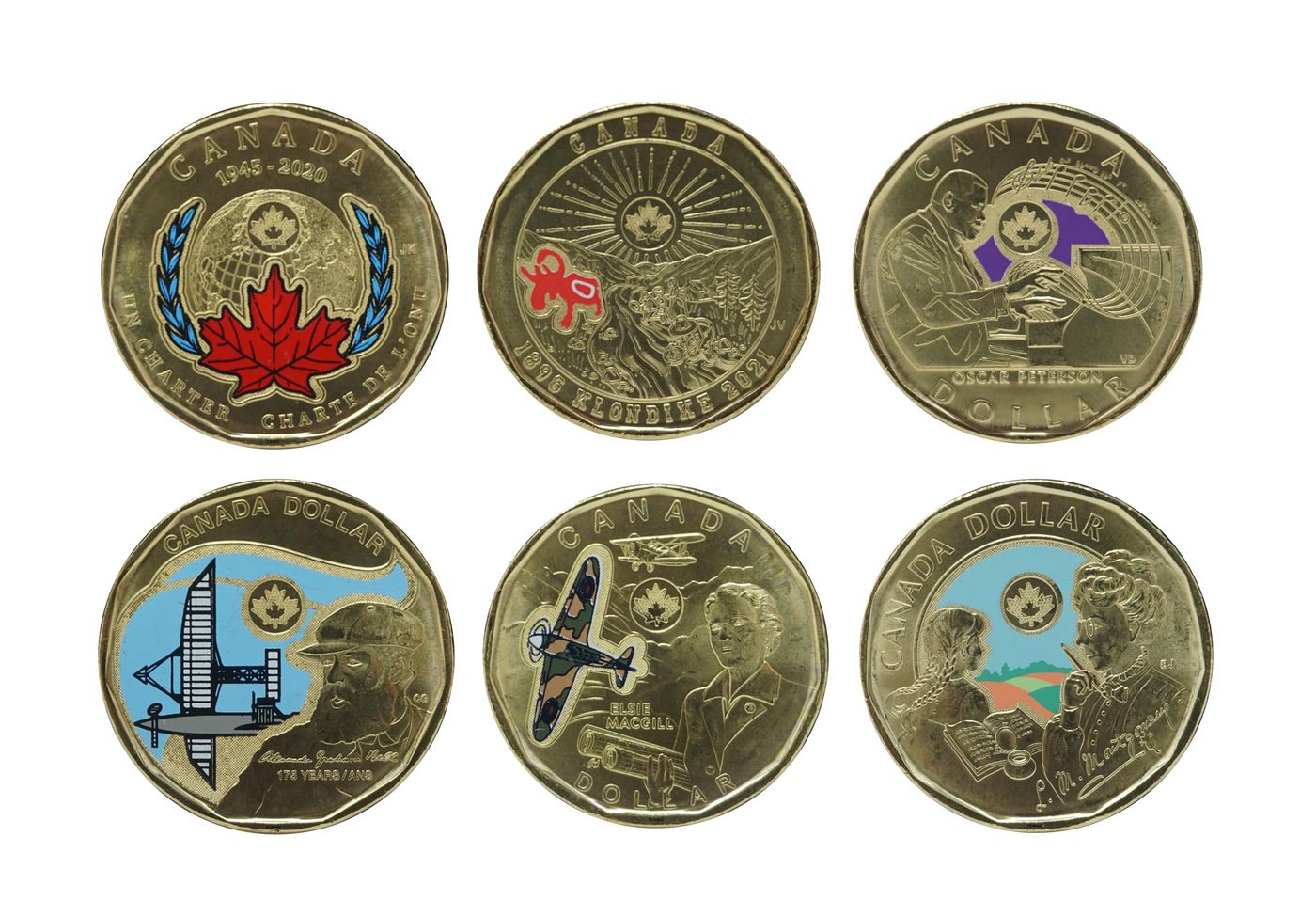
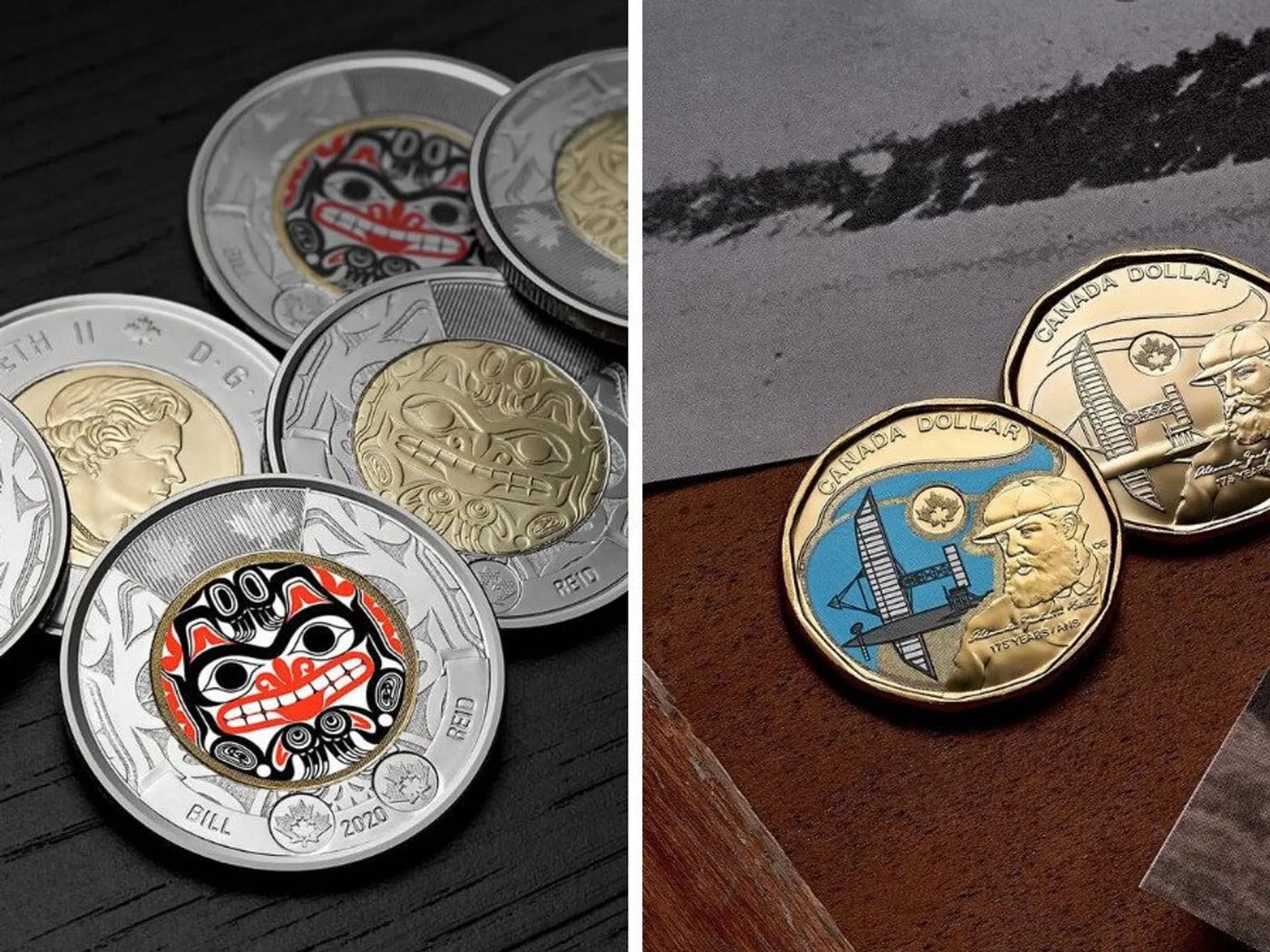
Beyond the standard circulation coins, the Royal Canadian Mint has issued numerous commemorative loonies and toonies. These special editions celebrate historical events, anniversaries, and Canadian icons, often with unique reverse designs temporarily replacing the standard loon or polar bear. The Terry Fox Loonie from 2005, designed by engraver Stanley Witten, commemorated the 25th anniversary of the Marathon of Hope. Starting in 2004, the Mint has issued a special 'lucky loonie' for each Summer and Winter Olympic Games, featuring the loon design alongside the Canadian Olympic team logo. Since 1997, the Mint has regularly issued unique one-dollar coins in annual specimen sets, featuring different native Canadian animals on the reverse. Many earlier commemorative dollar coins, minted before the loonie's introduction, celebrated provincial centennials and national events, such as the 1967 Canadian Confederation centennial goose design by Alex Colville. These commemorative coins are produced in limited mintages and are available in special packaging like rolls or specimen sets, though some are also released directly into general circulation for the public to find.
- Terry Fox Loonie (2005): Designed by engraver Stanley Witten to commemorate the 25th anniversary of the Marathon of Hope.
- Olympic Lucky Loonies: Starting in 2004, the Mint has issued a special 'lucky loonie' for each Summer and Winter Olympic Games, featuring the loon design alongside the Canadian Olympic team logo.
- Specimen Set Editions: Since 1997, the Mint has regularly issued unique one-dollar coins in annual specimen sets, featuring different native Canadian animals on the reverse.
- Provincial and Historical Themes: Many earlier commemorative dollar coins, minted before the loonie's introduction, celebrated provincial centennials and national events, such as the 1967 Canadian Confederation centennial goose design by Alex Colville.
Economic Impact and Public Reception
The transition from paper to coin for the one-dollar denomination was a significant economic decision. The government projected that replacing short-lived banknotes with coins lasting decades would generate substantial savings through seigniorage, the profit made from the difference between a coin's face value and its production cost. It was estimated that the mint could make up to 40 million dollars a year from the loonie. A portion of the initial seigniorage revenue, 60 million dollars over five years, was dedicated to funding the 1988 Winter Olympics in Calgary. Public reception was initially mixed, but removing the dollar bill from circulation ensured the coin's adoption. The 2012 composition change to a lighter, steel-based loonie caused temporary issues, as some older vending machines could not accept the new coins. The Toronto Parking Authority estimated it would cost about one million dollars to upgrade nearly 3,000 parking meters. The Mint defended the change, citing enhanced anti-counterfeiting security and long-term cost savings from using steel instead of nickel. Over time, both the loonie and toonie have become ingrained in Canadian daily life and national identity.
Cultural Significance and the Lucky Loonie Tradition
The loonie has transcended its role as mere currency to become a Canadian cultural icon. The term 'loonie' is now synonymous with the Canadian dollar in financial markets, where exchange rates are commonly discussed as the 'loonie' trading against other currencies. This metonymic status was formally recognized in 2006 when the Royal Canadian Mint secured the trademark rights to the nickname. A unique piece of folklore, the 'lucky loonie' tradition, began at the 2002 Salt Lake City Winter Olympics. Canadian ice technician Trent Evans secretly embedded a loonie at centre ice to give the Canadian hockey teams a target and a good-luck charm. After both the men's and women's teams won gold medals, the story became national news. The original lucky loonie was donated to the Hockey Hall of Fame, and the tradition has continued at subsequent international sporting events, including the burial of loonies in the foundations of venues for the 2010 Vancouver Olympics. The Royal Canadian Mint has commercially capitalized on this tradition by issuing official commemorative lucky loonies for every Olympic Games since 2004.
Composition and Security Evolution
The loonie was initially made of aureate, which is a bronze-electroplated nickel combination. This composition was used from the coin's introduction in 1987. In the second quarter of 2012, the Royal Canadian Mint changed the composition to multi-ply brass-plated steel. This new composition made the coin lighter, reducing its weight from 7.00 grams to 6.27 grams. The Mint stated that the steel technology provides cost savings and creates a harder-to-counterfeit electromagnetic signature. This change also caused some vending machines to initially reject the new 2012 coins.
| Period | Composition | Weight | Key Notes |
|---|---|---|---|
| 1987 to 2011 | Aureate (bronze-electroplated nickel) | 7.00 g | Original gold-coloured composition. |
| 2012–Present | Multi-ply brass-plated steel | 6.27 g | Lighter weight. Includes laser-marked maple leaf security feature. |
The shift to multi-ply plated steel in 2012 was driven by several factors. The Mint stated this technology, already used in smaller denominations, produced an electromagnetic signature that was harder for counterfeiters to replicate. Furthermore, using steel provided insulation from volatile nickel prices and offered long-term cost savings. While the change caused initial compatibility problems with some vending machines, it represented a modernization of Canada's coinage security. Similar security upgrades and design refreshes have also been applied to the toonie over its lifespan to maintain the integrity of Canada's currency.
Production and Notable Incidents
The production of the first loonies was a substantial undertaking, with an expected cost of 31.8 million dollars to produce the initial 300 million coins. The coin's introduction was not without controversy, most notably the loss of the original master dies in 1986. A parliamentary committee investigating the incident discovered the Mint had no documented procedures for transporting master dies and had shipped them via a local courier to save 43.50 dollars. This was found to be the third time the Mint had lost master dies within a five-year period. The Mint's internal review argued that while policy dictated shipping obverse and reverse dies separately, the new coin dies were packaged separately but shipped together. The Royal Canadian Mounted Police believed the dies were simply lost, but the Mint contended they were stolen. The dies were never recovered, leading directly to the adoption of the loon design. By the coin's 20th anniversary in 2007, over 800 million loonies had been struck, demonstrating its successful integration into the monetary system.
Pre-Loonie Dollar Coins and Designs
Before the loonie's introduction in 1987, Canada minted several one-dollar coins that did not achieve wide circulation, primarily due to their large size and weight. The first Canadian silver dollar was issued in 1935 to commemorate the 25th anniversary of King George V's reign, featuring a voyageur design by Emanuel Hahn. This 'voyageur dollar' was minted in silver until 1967, after which it was composed primarily of nickel, weighing 15.6 grams with a diameter of 32.1 millimetres. Throughout the mid-20th century, the Royal Canadian Mint issued numerous commemorative dollar coins for provincial anniversaries and national events. These coins served as important commemoratives but failed to achieve the everyday circulation that the smaller, lighter loonie eventually would.
Frequently asked questions
Why is the Canadian dollar coin called a loonie?
The one-dollar coin is called a loonie because its reverse features a depiction of a common loon, a bird found throughout Canada. The public immediately nicknamed the coin the loonie upon its introduction in 1987. The nickname became so widely recognized that the Royal Canadian Mint secured the rights to it in 2006. The term loonie has since become a common metonym for the Canadian dollar itself.
When was the toonie introduced and why is it called that?
The Canadian two-dollar coin was introduced in 1996. It was nicknamed the toonie, which is a portmanteau of the words 'two' and 'loonie'. This name followed naturally after the one-dollar coin's established nickname. The toonie's name reflects the Canadian public's creativity and the cultural prominence of the loonie.
What is the lucky loonie?
The lucky loonie is a tradition that began at the 2002 Salt Lake Winter Olympics. A loonie was secretly placed at centre ice by an ice crew member for good luck. After both Canadian men's and women's hockey teams won gold medals, the story became famous. The original coin was donated to the Hockey Hall of Fame. The Royal Canadian Mint now releases a commemorative lucky loonie for each Olympic Games.
What is the loonie made of?
When introduced in 1987, the loonie was made of aureate, a bronze-electroplated nickel blend. Its composition switched to multi-ply brass-plated steel in the second quarter of 2012. This change reduced the coin's weight from 7.00 grams to 6.27 grams. The Royal Canadian Mint stated the new composition offers cost savings and enhanced security against counterfeiting.
What is the shape of a loonie?
The loonie has a unique 11-sided shape. Its outline is a Reuleaux polygon, which is a curve of constant width. The coin's diameter is 26.5 millimetres. This size and shape were chosen to match the Susan B. Anthony dollar for vending machine compatibility while being visually distinct from other coins.
Does the loonie still have the Queen on it?
The loonie no longer consistently features Queen Elizabeth II. The coin originally bore her effigy on the obverse from its introduction in 1987. However, following her death, a new design featuring King Charles III was revealed in November 2023. This updated loonie, designed by Steven Rosati, started entering circulation in December 2023. Therefore, while older coins with the Queen remain in use, newly minted loonies now depict the current monarch, King Charles III.
Sources and further reading
- Loonie (Wikipedia) en.wikipedia.org
- 1 dollar mint.ca
This article explains how things work and is not financial, tax or legal advice. Rules, limits and rates change, so check the current figures with the Canada Revenue Agency, your province or your financial institution before you act.