Lisa DeNell Cook is an American economist who became a member of the Board of Governors of the Federal Reserve in 2022, the first Black woman to serve in that role. Her appointment and subsequent tenure have been marked by significant political controversy, including an unprecedented attempt by a sitting president to remove her from office. Cook's career as an academic and policy advisor, with a focus on international economics, economic history, and the economics of innovation and discrimination, holds relevance for Canadians observing U.S. monetary policy and its global impacts. Her legal battle over the independence of the Federal Reserve culminated in a landmark U.S. Supreme Court ruling in 2026.
Early Life and Academic Foundation
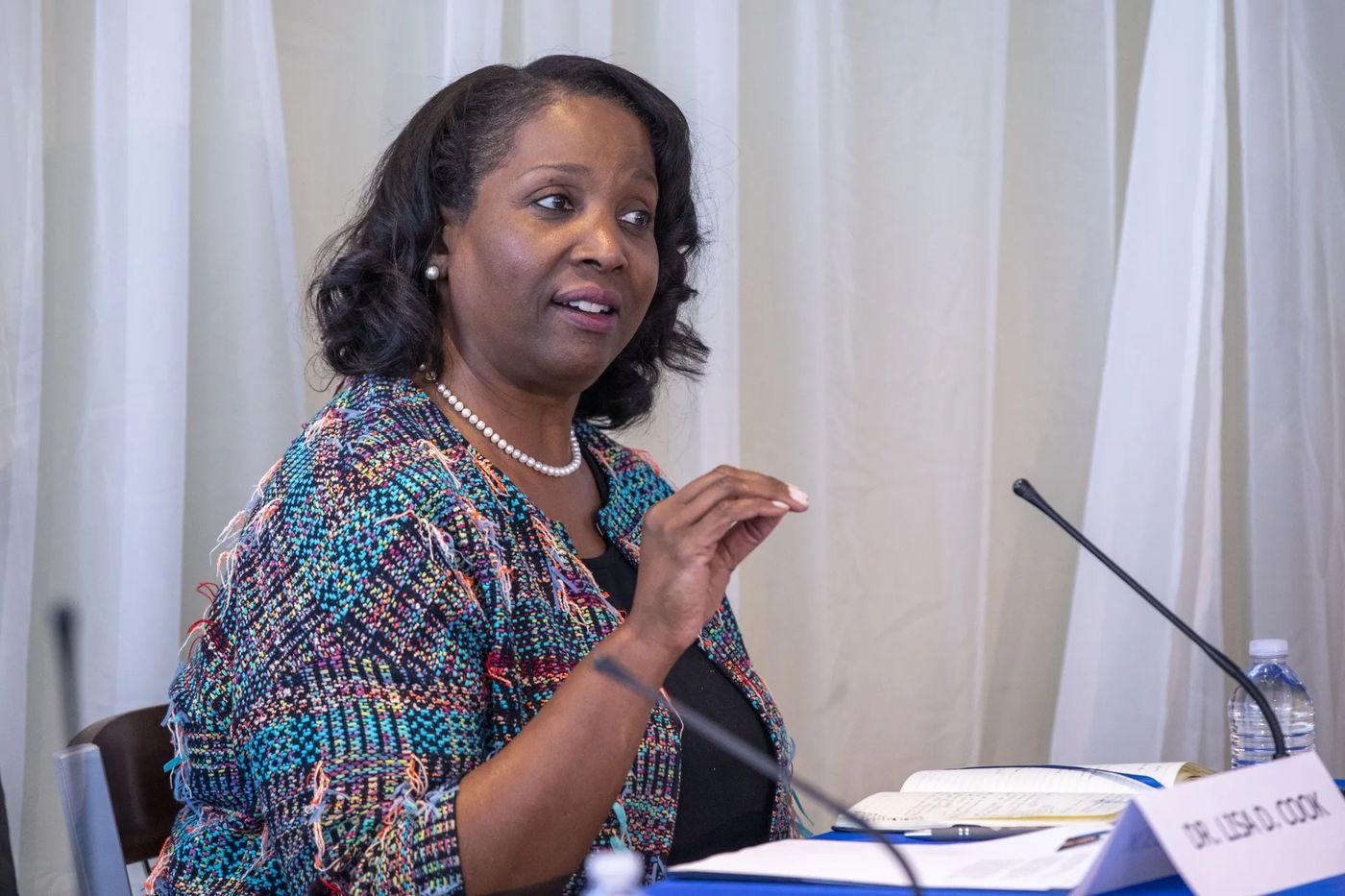
Lisa Cook was born in 1964 in Milledgeville, Georgia, into a family with a strong academic and professional background. Her father was a Baptist hospital chaplain and her mother was a professor of nursing. As a child, Cook was involved in the desegregation of Georgia schools and experienced physical attacks from segregationists, events that left lasting scars. She is a cousin of Percy Julian, the first African American to head a major corporate laboratory. Cook attended Spelman College, graduating magna cum laude in 1986 with degrees in physics and philosophy and was named a Harry S. Truman Scholar. Cook then became Spelman's first Marshall Scholar, earning a second bachelor's degree in philosophy, politics and economics from the University of Oxford in 1988. Her academic path later shifted toward economics following a mountain climbing trip on Mount Kilimanjaro with an economist. She earned her Ph.D. in economics from the University of California, Berkeley, in 1997 under the guidance of Barry Eichengreen and David Romer. Her doctoral dissertation examined the underdevelopment of the banking system in czarist and post-Soviet Russia.
Career in Academia and Policy Advisory
Before joining the Federal Reserve, Lisa Cook built a distinguished career in academia and economic policy. From 1997 to 2002, she served as a visiting assistant professor at Harvard University's Kennedy School of Government and Harvard Business School, where she was also deputy director of Africa Research at Harvard's Center for International Development. She worked as a senior advisor on finance and development at the U.S. Treasury Department in 2000 and 2001 as a Council on Foreign Relations International Affairs Fellow. Cook was a National Fellow and Research Fellow at Stanford University's Hoover Institution from 2002 to 2005. In 2005, she advised the Nigerian government on its banking reforms and the government of Rwanda on economic development. That same year, she joined Michigan State University as an assistant professor, earning tenure as an associate professor in 2013. She served as a senior economist on the Obama Administration's Council of Economic Advisers from August 2011 to August 2012.
Cook's research evolved from a focus on international economics, particularly Russia, to pioneering work on the economic history of African Americans. Her influential 2014 study argued that violence under Jim Crow laws suppressed patent filings by Black inventors, quantifying a significant economic loss. She collaborated on building a long-running database on lynching in the United States. From 2016 to 2020, she directed the American Economic Association's Summer Program for underrepresented minority students, reflecting her commitment to diversity in the field. Cook became a member of the Association's Executive Committee in 2019. In November 2020, she was named a volunteer member of the Joe Biden presidential transition Agency Review Team for the Federal Reserve.
Appointment to the Federal Reserve Board
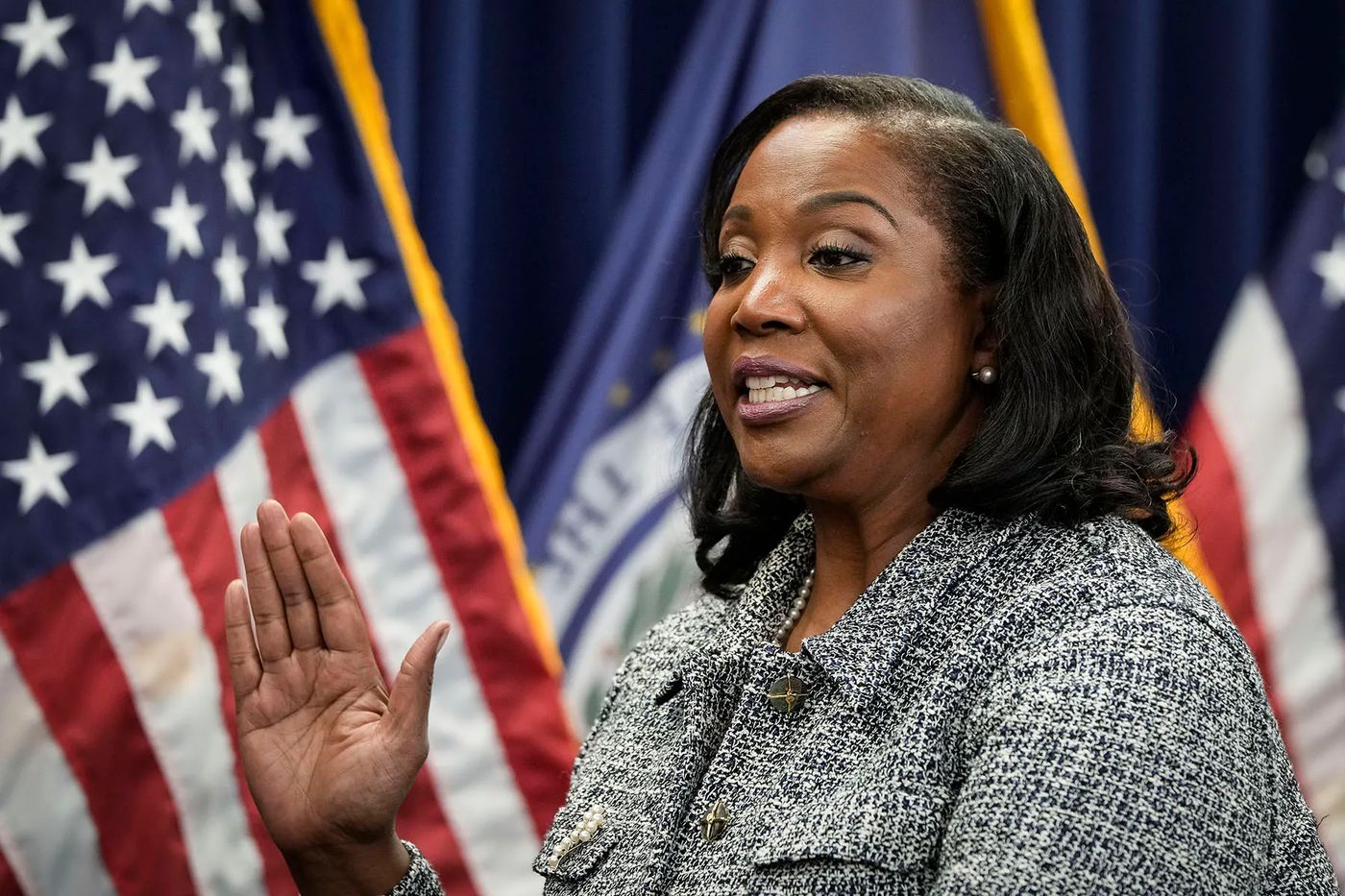
Lisa Cook's path to the Federal Reserve Board of Governors began with advocacy from Senator Sherrod Brown, who reportedly pushed the Biden administration to nominate her. President Joe Biden officially nominated Cook on January 14, 2022. Her confirmation process was intensely partisan and narrowly successful. Hearings were held before the Senate Banking Committee on February 3, 2022. The committee deadlocked on her nomination in a party-line vote on March 16, 2022, forcing a discharge vote by the full Senate. The Senate discharged her nomination from committee on March 29, 2022, by a 50–49 vote. An initial cloture vote failed on April 26, 2022, by a 47–51 vote when two Democratic senators were absent due to COVID-19. No Senate Republican voted for her, with critics characterizing her as unqualified and a left-wing extremist. The Senate finally confirmed Cook on May 10, 2022, by a 51–50 vote, with Vice President Kamala Harris casting the tie-breaking vote after cloture was invoked by a 50–49 vote. She was sworn in on May 23, 2022. In May 2023, President Biden nominated Cook for a full 14-year term, which the Senate confirmed by a 51–47 vote on September 6, 2023.
Mortgage Fraud Allegations and Legal Challenge
In August 2025, Federal Housing Finance Agency Director Bill Pulte accused Lisa Cook of mortgage fraud, alleging she had claimed two different homes as her main residence in 2021 to get better loan terms. Pulte said he submitted a criminal referral to the Department of Justice, which opened an investigation in September 2025. The accusations involved a property in Michigan, one in Georgia, and a third in Massachusetts. Pulte had made similar accusations against other political adversaries of President Donald Trump, namely New York attorney general Letitia James and Senator Adam Schiff, leading to questions about political weaponization. During a CNBC interview, Pulte refused to clarify if the tip about the alleged fraud came from within the government or the public. Twenty-four members of the House Democratic Caucus later requested an inspector general review of how Pulte received the tip. On August 20, 2025, Trump called for Cook's resignation on social media, which she refused, stating she would not be pressured to leave over questions raised in a tweet.
On August 25, 2025, President Trump announced he was firing Cook for cause, citing the allegations. Cook immediately disputed the action, stating the president had no legal authority for such a removal as no cause existed under the law. Her attorney, Abbe Lowell, said they would take whatever actions were needed to prevent the illegal action. This was the first time in the Federal Reserve's 112-year history a president attempted to fire a governor. On August 28, Cook filed a lawsuit against President Trump over the decision. An open letter signed by 593 economists and several Nobel laureates defended Federal Reserve independence and warned that firing Cook would erode trust in one of America's most important institutions.
Court Rulings and Document Analysis
The legal challenge over Lisa Cook's dismissal proceeded quickly through the courts. On September 9, 2025, Judge Jia M. Cobb from the U.S. District Court for the District of Columbia temporarily blocked the president from removing Cook, ruling the justifications did not meet the legal threshold for sufficient cause. The judge noted the loan application in question occurred prior to her tenure as a Federal Reserve governor. On September 12, Reuters published an analysis of loan and job-vetting forms submitted by Cook, as well as property records, which multiple legal and financial experts said completely refuted or dramatically weakened the fraud claims. The documents showed Cook had declared the Georgia property as a vacation home, not a principal residence. They included a loan estimate document submitted to her mortgage lender and the SF-86 form submitted during government background checks. Reuters noted that standard federal mortgage paperwork specifically allows for exceptions from the use of mortgaged properties as primary residence if agreed in writing. Property records also showed Cook never sought a primary residence tax exemption in Georgia. A request to the tax assessor of Ann Arbor, Michigan, revealed no violation of primary residence rules for her property there.
On September 15, the U.S. Court of Appeals for the District of Columbia Circuit upheld the lower court ruling, allowing Cook to vote at the September 16 Federal Open Market Committee meeting. The Trump administration petitioned the U.S. Supreme Court with an emergency appeal to lift the lower court rulings on September 18. On October 1, the Supreme Court rejected an immediate decision and allowed Cook to remain in her position until her case was decided. Cook's attorneys sent a letter to Attorney General Pam Bondi in November 2025 arguing the fraud claims were baseless.
Supreme Court Ruling on Federal Reserve Independence
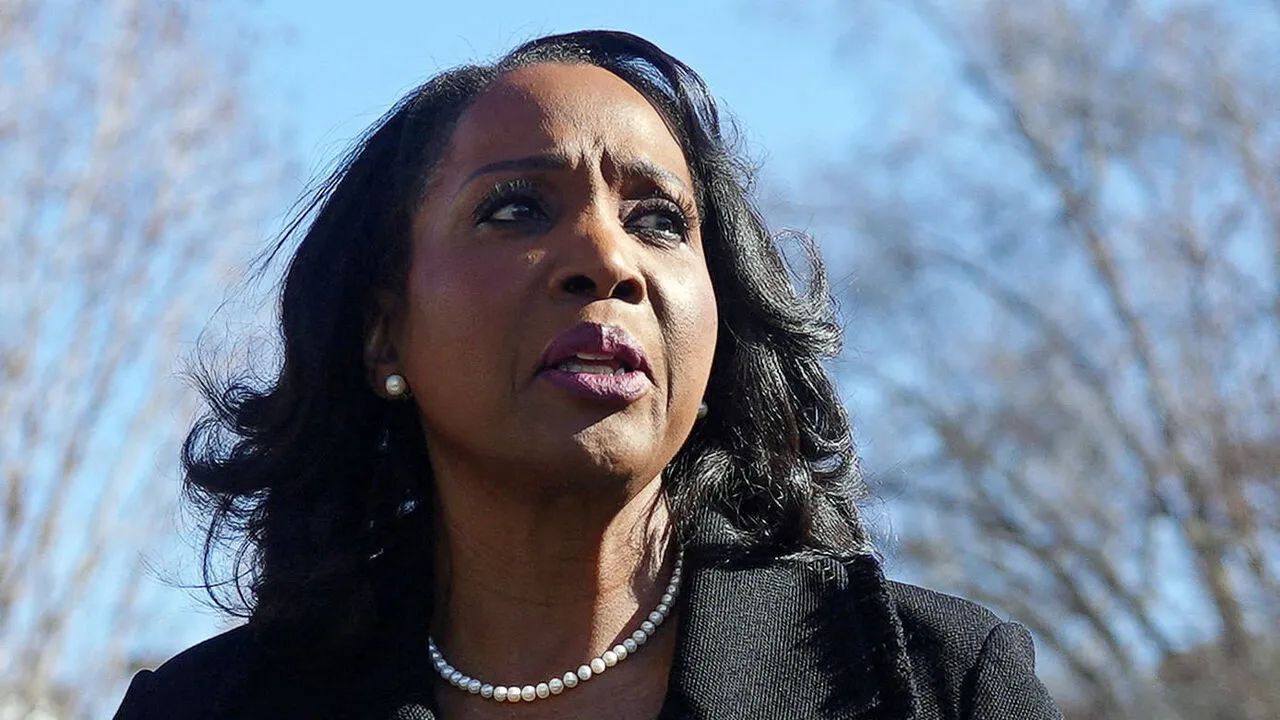
The legal challenge over Lisa Cook's dismissal reached the U.S. Supreme Court, which heard oral arguments on January 21, 2026. A key concern for the justices was preserving the independence of the Federal Reserve Board from political pressure regarding interest rate decisions. Justice Brett Kavanaugh stated that once these tools are unleashed, they are used by both sides, warning of the consequences for the structure of the government. On June 29, 2026, the Supreme Court ruled in a 5-4 decision that President Trump's firing of Lisa Cook was unconstitutional. The ruling affirmed the legal principle that Federal Reserve governors can only be removed for cause, a high bar intended to protect monetary policy from political interference. Despite this definitive ruling, in early August 2026, the White House notified Cook that Trump was considering firing her and gave her three weeks to respond. On October 9, 2026, Trump announced the creation of a committee to recommend if he has cause to fire Cook.
Research Contributions and Published Works
Lisa Cook's scholarly work spans international finance, economic history, and the economics of discrimination and innovation. Her early research focused on trade credit and bank finance in Russia. Her most cited work explores the link between racial violence and suppressed economic innovation among African Americans. Cook has also published on discrimination in lending during the COVID-19 pandemic and the evolution of access to public accommodations in the United States. Her research often involves constructing novel historical datasets, such as those on lynching and distinctively Black names. These contributions have established her as a leading authority on how historical injustices continue to shape modern economic outcomes.
- "Trade credit and bank finance: Financing small firms in Russia." Journal of Business venturing (1999).
- "Violence and economic activity: evidence from African American patents, 1870 to 1940." Journal of Economic Growth (2014).
- "Discrimination in lending? Evidence from the paycheck protection program." Small Business Economics (2022).
- "Regional public goods in international assistance." In Global public goods (1999).
- "The evolution of access to public accommodations in the United States." The Quarterly Journal of Economics (2023).
- "Distinctively black names in the American past." Explorations in Economic History (2014).
Relevance and Implications for Canada
While Lisa Cook is an American official, her role on the Federal Reserve Board and the controversies surrounding it have implications for Canada. The independence of the U.S. central bank is a critical element of global financial stability, affecting exchange rates, cross-border investment, and monetary policy coordination with the Bank of Canada. The unprecedented attempt to remove a governor for alleged personal conduct raised concerns about the politicization of monetary policy, which can create volatility in international markets that directly impacts the Canadian economy. The involvement of 593 economists and Nobel laureates in defending Fed independence underscores the broad professional consensus on this issue. Furthermore, Cook's research on the economic costs of discrimination and barriers to innovation offers valuable comparative insights for Canadian policymakers studying similar issues related to equity and economic inclusion. Her legal victory at the Supreme Court reinforced an important institutional guardrail for central bank independence, a principle also fundamental to the Bank of Canada's operations and credibility.
Frequently asked questions
How was Lisa Cook confirmed to the Federal Reserve?
Lisa Cook was confirmed by the U.S. Senate on May 10, 2022, by a narrow 51-50 vote, with Vice President Kamala Harris casting the tie-breaking vote. Her confirmation followed a party-line deadlock in committee and a failed cloture vote. No Republican senators supported her nomination. She was confirmed for a full 14-year term in September 2023 by a 51-47 vote.
Who is Lisa Cook?
Lisa DeNell Cook is an American economist sworn in as a member of the Federal Reserve Board of Governors in 2022, becoming the first Black woman to sit on the board. Her career includes being a professor of economics and international relations at Michigan State University and serving as a senior advisor on finance and development at the U.S. Treasury Department. She was a senior economist in the Obama Administration's Council of Economic Advisers and has advised governments including Nigeria and Rwanda. Cook also directed the American Economic Association's Summer Program for underrepresented minority students and served on its Executive Committee.
Why was Lisa Cook fired from the Federal Reserve?
President Donald Trump announced he was removing Lisa Cook from the Federal Reserve Board on August 25, 2025, citing allegations of mortgage fraud made by Federal Housing Finance Agency director Bill Pulte. Cook disputed the allegations as baseless and filed a lawsuit arguing her dismissal was unlawful and politically motivated. Federal law allows governors to be removed only for cause to protect the central bank's independence. Reuters later published an analysis of loan and job vetting forms that contradicted the fraud allegations. The U.S. Supreme Court ultimately found her firing unconstitutional.
What did the U.S. Supreme Court decide about Lisa Cook's firing?
On June 29, 2026, the U.S. Supreme Court ruled in a 5-4 decision that President Trump's firing of Lisa Cook was unconstitutional. The ruling upheld the legal provision that Federal Reserve governors can only be removed for cause, a safeguard for the institution's independence. During oral arguments, Justice Brett Kavanaugh expressed concern about the consequences for the structure of government if such tools of removal were unleashed. This decision allowed Cook to remain legally considered an active governor pending the outcome of the litigation.
What is Lisa Cook known for in economics?
Lisa Cook is known for her research at the intersection of macroeconomics and economic history, with a focus on African American history and innovation economics. Her work suggested that violence under Jim Crow laws led to fewer patents filed by African Americans than expected. She has collated a long running database on lynching in the United States with other economists. Cook also has expertise in international economics, particularly the Russian economy, and has published on trade credit in Russia, discrimination in lending, and the evolution of access to public accommodations.
Sources and further reading
- Lisa Cook (Wikipedia) en.wikipedia.org
- Lisa Cook (1966 to 2026) - Bridgewater corkumfuneralhome.ca
- Lisa Cook albertamagazines.com
This article explains how things work and is not financial, tax or legal advice. Rules, limits and rates change, so check the current figures with the Canada Revenue Agency, your province or your financial institution before you act.