Inflation in Canada is the sustained increase in the average price level of goods and services, measured primarily by the Consumer Price Index (CPI). It represents a decline in the purchasing power of the Canadian dollar, meaning each unit of currency buys fewer items over time. The Bank of Canada aims to keep inflation low and stable, targeting a rate of between 1 and 3 percent. Understanding inflation is crucial for Canadians as it affects the cost of living, wages, savings, and interest rates on loans and mortgages.
Definition and Economic Principles
In economics, inflation is defined as an increase in the average price of goods and services in an economy, leading to a reduction in the purchasing power of money. The opposite phenomenon is deflation, a decrease in the general price level. The rate of inflation is the annualized percentage change in a general price index, most commonly the Consumer Price Index. Historically, the term inflation originated from increases in the money supply, known as monetary inflation, which could cause a general rise in prices. In a modern context with fiat currency, inflation is understood as the trend of rising prices across a broad basket of consumer goods and services, distinct from price changes in individual items due to shifts in supply and demand.
Economists attribute changes in inflation to several factors. These include increases in the money supply, fluctuations in real demand for goods and services, changes in available supplies such as during energy crises, significant decreases in interest rates set by the central bank, and changes in inflation expectations. Moderate inflation has both positive and negative effects on an economy. Negative effects include an increase in the opportunity cost of holding money, uncertainty that discourages investment and savings, and potential shortages if consumers begin hoarding goods. Positive effects include reducing unemployment due to nominal wage rigidity and allowing the central bank greater freedom in conducting monetary policy. Most economists today favour a low and steady rate of inflation, a task typically given to central banks that control monetary policy through tools like interest rates.
Related Economic Concepts
Several economic concepts are related to the broader study of inflation. Deflation is a fall in the general price level, while disinflation refers to a decrease in the rate of inflation. Hyperinflation is an out-of-control inflationary spiral, and stagflation is a combination of inflation, slow economic growth and high unemployment. Reflation is an attempt to raise the general level of prices to counteract deflationary pressures. More specific forms of inflation refer to sectors whose prices vary semi-independently from the general trend. Asset price inflation is a general rise in the prices of financial assets without a corresponding increase in the prices of goods or services. Other examples include house price inflation and energy inflation, which are dominated by the costs of oil and gas. Core inflation is a critical measure that excludes food and energy prices from a broad index to better detect long-term trends, as those components can be volatile in the short term due to international events like bad weather or geopolitical conflicts.
Historical Overview of Inflation
Inflation has been a feature of history during the entire period when money has been used. One of the earliest documented inflations occurred in Alexander the Great's empire in 330 BC. Historically, when commodity money like gold or silver was used, periods of inflation and deflation would alternate. Large, prolonged infusions of precious metals into an economy, such as the silver from Latin America in the 16th century, could lead to long periods of inflation like the Price Revolution. The adoption of fiat currency from the 18th century onwards made larger variations in the money supply possible, leading to episodes of hyperinflation, such as in the Weimar Republic of Germany. The 1970s and early 1980s saw annual inflation in most industrialized countries reach double digits. Since the 1980s, inflation has been held low and stable in countries with independent central banks, a period known as the Great Moderation.
Key historical inflation episodes include the price revolution in Western Europe from the 15th to 17th centuries, where prices rose perhaps sixfold partly due to the influx of New World silver. Another significant episode was the hyperinflation in the Weimar Republic of Germany. The hyperinflation in Venezuela reached an annual rate of 833,997% as of October 2018. Historically, large inflations have been interspersed with deflationary periods, such as during the Great Depression in the 1930s.
- 330 BC: Early documented inflation in Alexander the Great's empire.
- 16th-17th centuries: The Price Revolution in Western Europe, with prices rising perhaps sixfold over 150 years due to New World silver.
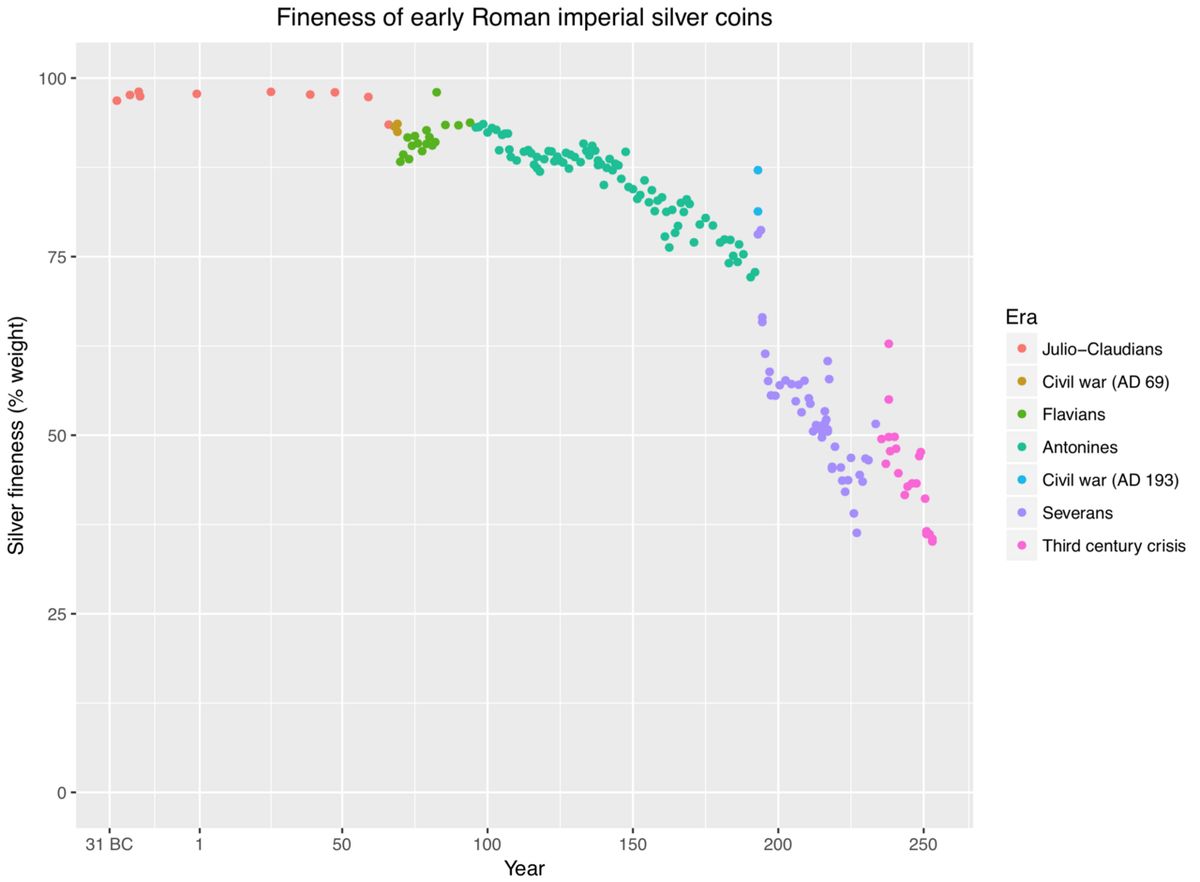
- 3rd century AD: Rapid inflation in the Roman Empire under Diocletian.
- 14th century: Price depression in Egypt due to Mansa Musa's hajj spending gold.
- 1970s-early 1980s: Double-digit inflation in most industrialized countries.
- 2022: Canada's inflation rate hit a 40-year high of 8.1%.
Measuring Inflation in Canada
In Canada, inflation is primarily measured through the Consumer Price Index, published monthly by Statistics Canada. The CPI represents changes in prices as experienced by Canadian consumers by comparing the cost of a fixed basket of goods and services over time. The basket is divided into eight major components: Food. Shelter. Household operations, furnishings and equipment. Clothing and footwear. Transportation. Health and personal care. Recreation, education and reading. And Alcoholic beverages, tobacco products and recreational cannabis. The inflation rate is calculated as the percentage change in the CPI over a specified period, typically year-over-year. For example, if the CPI was 202.416 in January 2007 and 211.080 in January 2008, the annual inflation rate would be approximately 4.28 percent.
Statistics Canada provides several tools for analyzing inflation data. The Consumer Price Index Data Visualization Tool offers access to current and historical CPI data in a customizable visual format. The Personal Inflation Calculator is an interactive tool that allows individuals to estimate a personal inflation rate based on their household expenses. Policy makers and economists often look at core measures of inflation, such as CPI excluding food and energy, to gauge underlying price pressures as these components can be volatile due to international events like bad weather or geopolitical conflicts. Other price indices include the Producer Price Index, which measures changes in prices received by domestic producers, and the GDP deflator, which measures the price of all goods and services included in gross domestic product.
Recent Inflation Trends and Drivers
Canada's inflation rate has fluctuated significantly in recent years. After hitting a 40-year high of 8.1 percent in the summer of 2022, the pace of inflation declined quickly and has been within the Bank of Canada's 1 to 3 percent control range over the past year. In September 2026, the headline CPI inflation rate was 3.1 percent year-over-year, up from 3.0 percent in August. In July 2026, the CPI rose 3.0 percent year-over-year, with higher prices for gasoline and travel tours contributing to the acceleration. On a monthly basis, the CPI rose 0.5 percent in July 2026. The conflict in the Middle East, including disruptions to shipping routes, put upward pressure on gasoline prices in that period.
Several factors drove the recent inflation episode. Demand-pull inflation occurred when demand outpaced the economy's capacity to produce goods and services, a situation the Bank of Canada cited during the pandemic. Cost-push inflation also played a role, with rising costs of production such as wages and materials prompting companies to raise prices. Specific contributors included soaring gasoline prices after Russia's invasion of Ukraine, higher prices for new and used cars due to a computer-chip shortage, and various aspects of shelter costs like mortgage interest and rents. Other explanations included high household savings from pandemic income supports, strong U.S. fiscal stimulus creating overseas demand, and imported inflation due to a weaker Canadian dollar. By July 2026, grocery price inflation had outpaced the all-items CPI for 18 consecutive months, though it decelerated to 3.1 percent year-over-year that month.

Monetary Policy and the Bank of Canada's Role
The Bank of Canada is responsible for keeping inflation low and stable, with a target range of 1 to 3 percent. To control inflation, the central bank uses its benchmark interest rate as its primary monetary policy tool. During the recent high inflation period, the Bank of Canada raised interest rates at the most aggressive pace in several decades. Over a series of decisions, it raised its benchmark rate from 0.25 percent in 2022 to 5.0 percent on July 12, 2023. Subsequently, the bank lowered interest rates four times in 2025 and nine times since the summer of 2024. As of April 2026, the benchmark interest rate is 2.25 percent, and the bank has held rates steady for its past three decisions.
The central bank has indicated it expects to remain on hold for some time but has not ruled out future rate moves if warranted. Bay Street analysts and financial markets expect the bank to remain on hold through 2026. The next interest rate announcement after April 2026 was scheduled for April 29, 2026. The bank's policy actions are guided by various inflation measures, with particular attention paid to core inflation to estimate long-term future inflation trends. While headline inflation has normalized, some concerns remain as core inflation measures had been stuck close to 3 percent for months, although they did trend lower in December 2025.
Provincial and Regional Inflation Variations
Inflation rates can vary significantly across Canada's provinces and territories. Statistics Canada publishes CPI data for the ten provinces and for the territorial capitals of Whitehorse, Yellowknife and Iqaluit. In July 2026, prices rose at a faster year-over-year pace in all provinces compared with June, except for Ontario. Ontario's inflation rate was unchanged at 2.0 percent, the smallest price increase among the provinces, stemming from declines in homeowners' replacement cost and prices for natural gas. Nova Scotia had the highest rate of inflation among the provinces at 5.0 percent in July 2026, driven by higher prices for electricity and rent. New Brunswick also saw faster price growth led by higher prices for electricity and traveller accommodation.
The table below shows illustrative provincial inflation rates and key drivers from recent data. Inflation is measured by the annualized percentage change in a general price index, such as the consumer price index. Changes in inflation are attributed to factors like fluctuations in real demand or changes in available supplies, known as demand shocks and supply shocks. The task of keeping inflation low and stable is usually given to central banks that control monetary policy.
| Province | July 2026 Inflation Rate | Key Contributing Factors |
|---|---|---|
| Nova Scotia | 5.0% | Higher electricity (+3.3%) and rent (+8.7%) |
| New Brunswick | Accelerated | Higher electricity (+4.4%) and traveller accommodation |
| Ontario | 2.0% | Declines in homeowners' replacement cost (-4.6%) and natural gas (-18.7%) |
These variations highlight how regional factors, such as energy sources and housing market conditions, influence the cost of living differently across the country. The CPI basket is weighted according to national spending patterns, with more weight given to housing costs than to clothing or gasoline. Local price movements cause deviations from the national average inflation rate. More specific forms of inflation, like house price inflation or energy inflation, refer to sectors whose prices vary semi-independently from the general trend.
Risks and Ongoing Debates
While inflation has largely normalized, several risks and debates persist. Core inflation measures, which exclude volatile food and energy prices, remain a focal point as they capture underlying domestic price pressures. These measures had been sticky near 3 percent, though they showed signs of trending lower by the end of 2025. Pockets of higher inflation continue in categories important for cost-of-living concerns, such as food. Economists warn that geopolitical events, like the war in the Middle East, can fuel surging energy costs and create short-term price pressures that complicate the inflation outlook. Another debate centres on the potential for inflation expectations to become unanchored, as consumers and businesses may adjust their behaviour in ways that fulfill those expectations, such as demanding higher wages or raising prices preemptively.
If consumers and businesses expect higher inflation in the future, they may adjust their behaviour in ways that fulfill those expectations, such as demanding higher wages or raising prices preemptively. The Bank of Canada monitors these expectations closely. There is also discussion about the lagged effects of monetary policy, as interest rate changes take time to fully influence the economy. Furthermore, the role of government fiscal policy and its interaction with monetary policy remains a topic of analysis, especially following the substantial COVID-19 income supports that boosted household disposable income. Looking ahead, the central bank's challenge is to balance the risks of cutting interest rates too soon, which could rekindle inflation, against keeping them too high for too long, which could unduly restrain economic growth and employment.
Frequently asked questions
What is the current inflation rate in Canada?
As of September 2026, the headline Consumer Price Index inflation rate in Canada was 3.1 percent year-over-year. This was up from 3.0 percent in August 2026. The rate fluctuates monthly based on prices for goods and services like gasoline, food, and shelter. The Bank of Canada aims to keep inflation within a target range of 1 to 3 percent.
What causes inflation in Canada?
Inflation in Canada can be caused by several factors. Demand-pull inflation occurs when consumer demand outstrips the economy's ability to supply goods and services. Cost-push inflation happens when production costs like wages and materials rise. Specific events like geopolitical conflicts affecting oil prices, supply chain disruptions, changes in the Canadian dollar's value, and monetary policy decisions by the Bank of Canada all influence the inflation rate.
What is the Bank of Canada doing about inflation?
The Bank of Canada uses monetary policy, mainly its benchmark interest rate, to control inflation. To combat high inflation, the bank raised its key rate aggressively from 0.25 percent in 2022 to 5.0 percent in 2023. It has since lowered the rate to 2.25 percent as of April 2026 and has held it steady. The bank's goal is to keep inflation within its 1 to 3 percent target range over the medium term.
How does inflation affect my cost of living?
Inflation reduces the purchasing power of your money, meaning your income buys fewer goods and services over time. It directly increases prices for essentials like food, housing, and gasoline. This can strain household budgets, especially if wages do not keep pace. Inflation also influences interest rates, affecting the cost of mortgages, loans, and the returns on savings. Statistics Canada offers a Personal Inflation Calculator to estimate your individual experience.
How is inflation measured in Canada?
Inflation in Canada is primarily measured by tracking the Consumer Price Index (CPI). The CPI measures the average change over time in the prices paid by consumers for a fixed basket of goods and services, which is a standard method described in economic literature. Statistics Canada calculates and publishes this index monthly, and the inflation rate is derived as the annualized percentage change in the CPI. This process shows how each unit of currency buys fewer goods and services as the general price level rises. Other potential measures mentioned in economic notes include the GDP deflator and producer price indices, but the CPI is the most common gauge for consumer inflation.
What is core inflation and why is it important?
Core inflation is a measure that excludes the most volatile components of the Consumer Price Index, typically food and energy prices. This is important because short term supply and demand shocks in markets for oil or food can cause rapid price swings that obscure the long term inflation trend. By focusing on core inflation, central banks like the Bank of Canada get a better estimate of underlying, persistent price pressures stemming from domestic monetary policy and economic conditions. This allows for more stable monetary policy decisions aimed at keeping inflation low and steady, which economists favour for reducing the risk of recessions and avoiding the costs of high inflation.
Sources and further reading
- Inflation (Wikipedia) en.wikipedia.org
- Inflation Calculator bankofcanada.ca
- The Daily, Consumer Price Index, July 2026 www150.statcan.gc.ca
- Canadian Consumer Price Index (September 2026) economics.td.com
- Inflation in Canada theglobeandmail.com
- Consumer Price Index Portal statcan.gc.ca
This article explains how things work and is not financial, tax or legal advice. Rules, limits and rates change, so check the current figures with the Canada Revenue Agency, your province or your financial institution before you act.