The Canadian federal budget is the annual financial plan presented by the Government of Canada, detailing its planned spending, expected revenue, and economic forecasts for the upcoming fiscal year. It serves as the primary blueprint for the government's economic and social agenda, influencing taxation, public services, and national debt. The budget is a confidence measure in Parliament, meaning its defeat can trigger the fall of the government. For Canadians, the budget directly impacts personal finances, business conditions, and the funding of vital public programs from healthcare to infrastructure.
What the Federal Budget Is and Its Purpose
Its core purpose is to present the government's fiscal policy and economic agenda, translating political priorities into financial commitments. The budget forecasts economic conditions, sets taxation levels, and allocates funds to federal departments and national programs. It is the main instrument through which the government manages the country's finances, responds to economic challenges, and signals its policy direction. The budget's passage through Parliament authorizes the government to collect taxes and spend public funds, making it a foundational act of governance. Its contents have direct consequences for the economy, influencing everything from inflation and employment to business investment and household income.
The Budget Process and Parliamentary Approval
The creation and approval of the federal budget is a rigorous process defined by parliamentary tradition and political strategy. The process begins within the federal government's departments, which submit their planned expenditures, known as Main Estimates, to the Treasury Board of Canada Secretariat. These estimates link proposed spending to government programs and objectives, ultimately tying them to the priorities of the ruling government. The Secretariat compiles an initial proposed budget, which is then heavily adjusted by Cabinet and the Prime Minister's Office based on a series of economic, social and political factors, with decisions often made with the primary intent of re-election and advantages for key regions and lobby groups. The final budget is announced in the House of Commons by the Minister of Finance, who traditionally wears new shoes for the occasion. Following the speech, the budget is voted on by Members of Parliament.
This vote is a confidence measure, meaning if the budget is defeated, the government can fall, as occurred with Prime Minister Joe Clark's government in 1980. Governing parties enforce strict discipline, usually expelling any government MP who votes against the budget, while opposition parties almost always vote against it. In minority government situations, the ruling party must typically secure the support of a smaller party by including major concessions to ensure the budget passes. After the budget vote, Parliament passes an appropriation act, initially granting departments three-twelfths of their annual budget (interim supply) to allow for detailed examination of the Estimates. Full supply is appropriated in June, finalizing the spending authority for the year.
Historical Evolution and Secrecy
The tradition and administration of the federal budget have evolved significantly over decades, particularly regarding secrecy and public consultation. Historically, the budget process was immensely secretive to prevent individuals from profiting from advance knowledge of government decisions and to undermine the opposition's response. Under Prime Minister Louis St. Laurent, the Minister of Finance would famously type the entire budget personally to prevent any secretary from reading it. This culture of extreme confidentiality began to change under Prime Minister Jean Chrétien and his Finance Minister, Paul Martin. They initiated a practice of releasing most of the budget's major changes well in advance to gather feedback from the public and financial markets, making the process more transparent and predictable. The timing of the budget presentation has also shifted, moving from a spring release to a fall release starting with Budget 2025 under Prime Minister Mark Carney.
The shift in timing represents a fundamental change in the budgetary calendar. For many years, the budget was delivered in the spring, followed by an economic and fiscal update in the fall. The new schedule, initiated with Prime Minister Carney, presents the main budget in the fall and the economic statement in the spring as the new fiscal year begins. This change allows the government to set its fiscal plan closer to the start of the fiscal year it governs. The rationale for this change aligns with a desire for more timely economic planning and responsiveness. The key changes in budget timing and related documents are as follows:
- Pre-2025: The federal budget was released in the spring.
- Starting with Budget 2025: The federal budget is now delivered in the fall.
- Accompanying Document: An economic and fiscal update is now presented in the spring as the new fiscal year begins.
- Previous Practice: Before this change, an economic and fiscal update was typically released in the fall following the spring budget.
Key Components and Figures from Recent Budgets
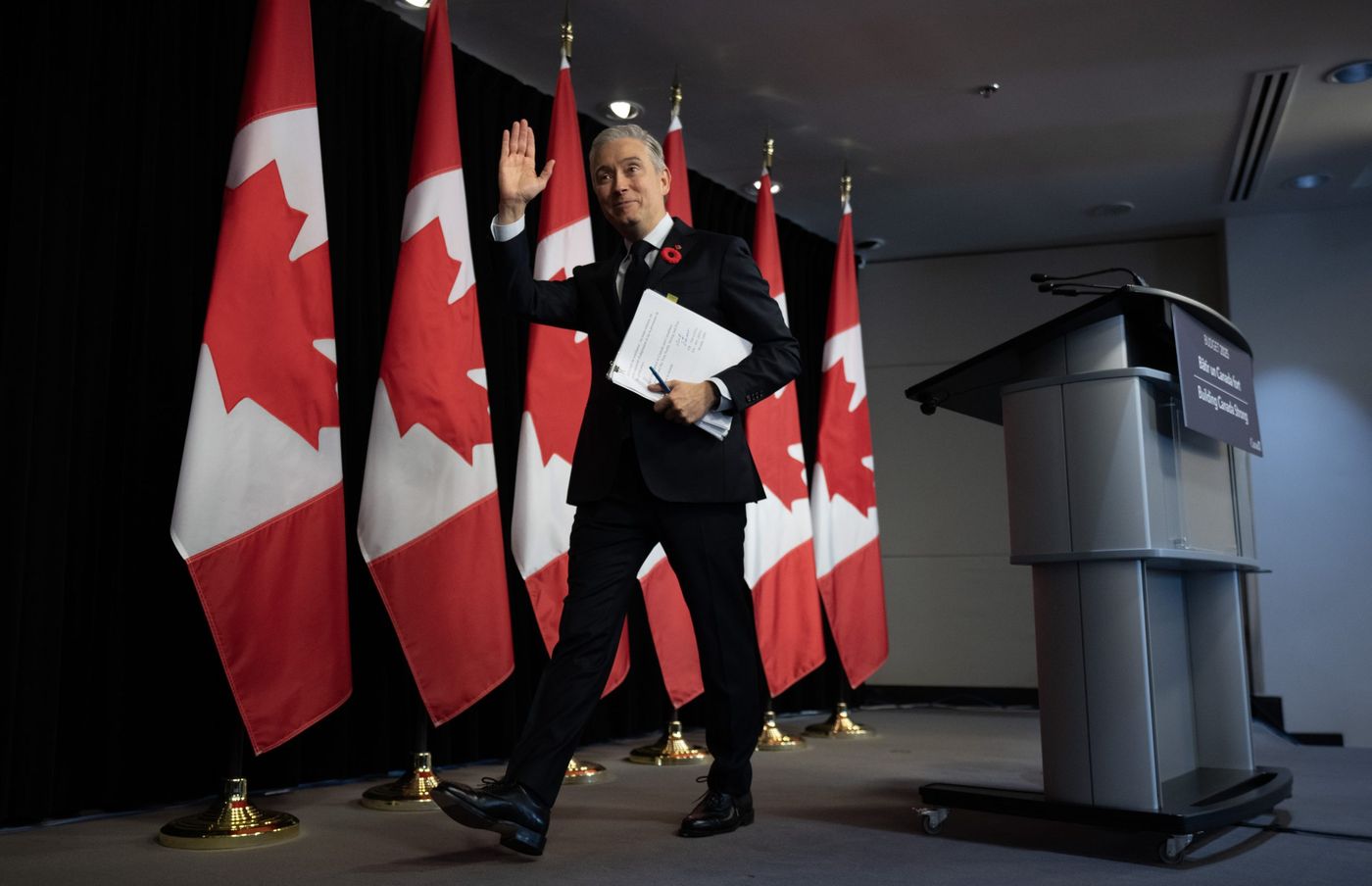
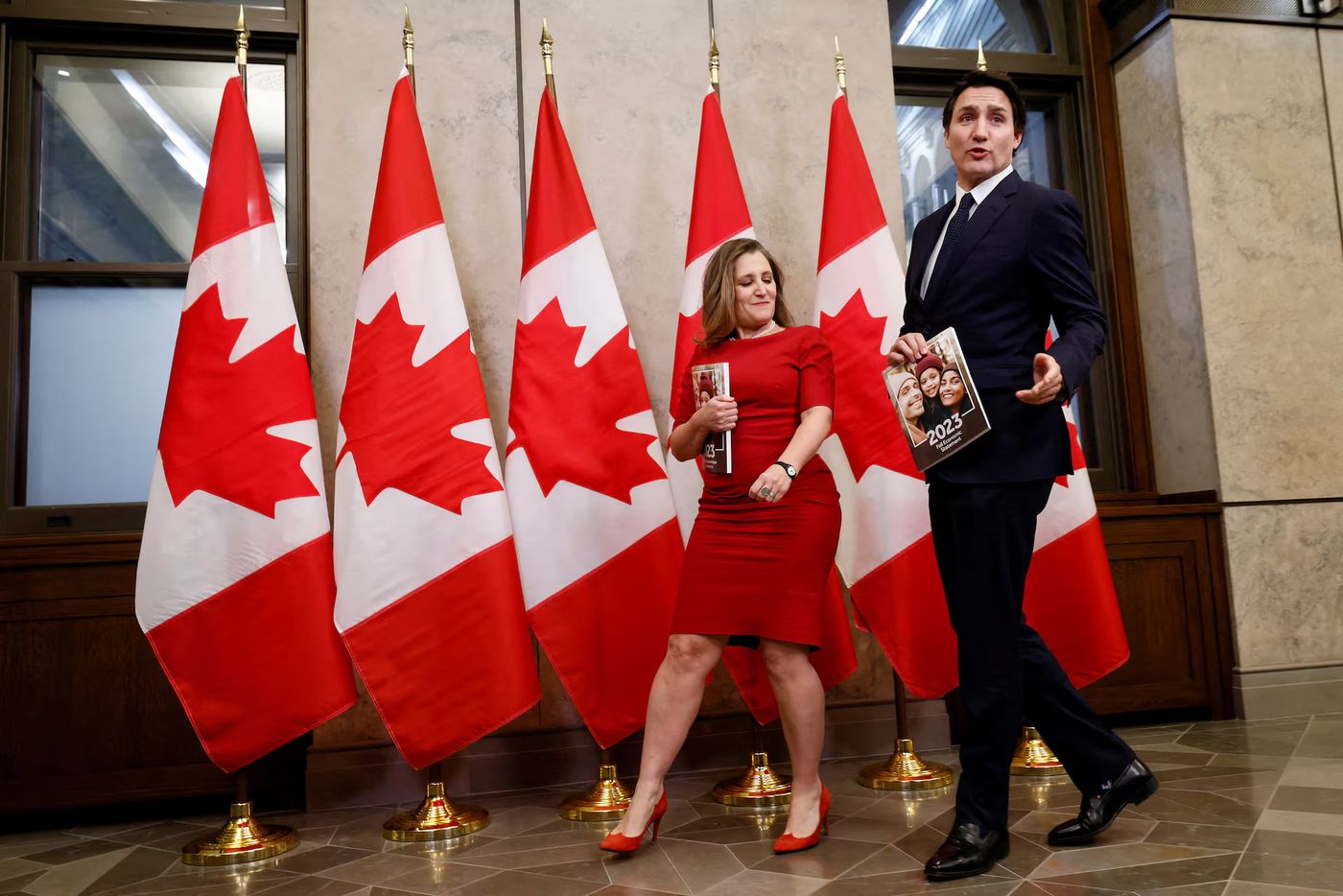
Federal budgets contain detailed projections for revenue, spending, and the resulting deficit or surplus, alongside specific policy measures. Budget 2025, titled 'Canada Strong,' was delivered on November 4, 2025, by Finance Minister François-Philippe Champagne. It positioned itself as an investment budget aimed at cutting operational costs while diversifying trade and boosting productivity. The budget showed a deficit of $78.3 billion and committed $141.4 billion in new spending over the next five years. It also included a generational plan to invest $280 billion over five years in capital to strengthen productivity and competitiveness. The total projected government budget for the Fall of 2025 was $586.0 billion, representing a 14 percent increase over the previous year, with projected revenue of $507.5 billion. In contrast, Budget 2024, tabled on April 16, 2024, by Deputy Prime Minister Chrystia Freeland, anticipated deficits of $40 billion for fiscal 2023-24 and $39.8 billion for fiscal 2024-25, with reduced deficits projected for each of the next four years.
Budgets allocate funds across countless areas, but recent examples highlight major commitments. Budget 2025 proposed $216.6 million per year to make a National School Food Program permanent and announced an additional $8.7 billion in defence spending for 2025-26. It also planned to cut operational spending by 7.5% in 2026-27 and included $617.7 million over five years to bolster the Canada Border Services Agency. Furthermore, the government committed to increasing the Canada Infrastructure Bank's target for Indigenous infrastructure investments from $1 billion to $3 billion. The budget also contained specific investments where Indigenous peoples may access a proportion of funds, such as $2 billion starting in 2026-27 for critical minerals projects and $371.8 million over three years starting in 2026-27 to support critical minerals supply chains. The following table compares key financial figures and features from recent budget documents.
| Budget Year | Deficit Projection | Notable Feature |
|---|---|---|
| 2025 | $78.3 billion | Fall presentation, capital focus, no Indigenous chapter |
| 2024 | $39.8 billion (for 2024-25) | Spring presentation, capital gains tax change |
Revenue changes are also critical. Budget 2025 accounted for a revenue reduction of $5.4 billion per year due to legislative changes from Bill C4. It also accounted for a $9.86 billion reduction in revenue from phasing out the Carbon Tax. This revenue reduction was offset by an equal $9.86 billion reduction in Carbon Tax Rebate expenses. These changes were part of the government's fiscal calculations for the year.
Taxation Measures and Business Impacts
Budgets frequently introduce or adjust tax policies that directly affect individuals, corporations, and investment. Budget 2024 contained several significant tax measures, though it did not change general personal income tax rates or the general corporate tax rate. A major change was the increase in the capital gains inclusion rate for corporations from one-half to two-thirds for gains realized on or after June 25, 2024, requiring transitional rules. It also introduced an accelerated capital cost allowance for eligible new purpose-built rental projects, increasing the rate from 4% to 10% for projects where construction begins between April 16, 2024, and before 2031, and that are available for use before 2036. For specific property in classes related to patents, data networks, and software acquired after April 16, 2024, Budget 2024 allowed for 100% immediate expensing in the first year if available for use before 2027, with a phase-out for property available for use after 2026 and before 2028.
Other business-focused measures included the clean electricity investment tax credit, a 15% refundable tax credit for eligible investments in clean electricity generation and transmission available to taxable Canadian corporations. Corporate income tax rates for manufacturers of qualifying zero-emission technology were reduced to 7.5% from the standard 15% federal general rate, and to 4.5% from the 9% federal small-business rate for eligible income. An additional federal tax of 1.5% on taxable income, subject to a $100 million group exemption, was applied to banks and life insurers. These measures illustrate how budgets are used to steer economic behaviour toward government priorities like housing, innovation, and the green transition. The 2024 federal corporate income tax rates for most businesses remained at 15% for general income and 9% for small businesses on income up to the $500,000 small-business limit for Canadian-controlled private corporations.

Indigenous and Social Program Commitments
Federal budgets often include specific chapters or allocations for Indigenous peoples and social programs, though this practice can vary. Budget 2025 was notably different from previous years as it did not include an Indigenous-specific chapter, which drew significant attention and criticism. The budget did make some commitments to First Nations, particularly around infrastructure and major project consultation. It allocated $10.1 million over three years, starting in 2025-26, to support the participation of Indigenous rights-holders in consultation processes for national interest projects through the Major Projects Office. The budget also renewed the First Nations Water and Wastewater Enhanced Program to maintain progress on approximately 800 active projects aimed at ending water advisories. Furthermore, the Building Canada Homes initiative was tasked with working with First Nations leadership to determine how to contribute to housing needs.
However, the Assembly of First Nations noted the budget fell short in meeting urgent and long-term needs, lacking new investments in critical areas such as mental health and addictions treatment, policing, procurement, and education. The budget stated the government remains committed to reconciliation and will continue to provide services for which it is legally and constitutionally obligated, including child and family services and primary health care, with continued support for Jordan’s Principle for 2025-26. On broader social programs, Budget 2025 included funding for the Department of Women and Gender Equality to revitalize efforts to advance women’s equality and strengthen federal action on gender-based violence. It also committed to undertaking a comprehensive assessment of health care needs in the Arctic and North to identify ways to increase access and reduce medical travel costs.
Major Debates, Criticisms, and Fiscal Risks
The federal budget is invariably a focal point for political debate and public scrutiny, centering on the size of deficits, the allocation of spending, and long-term fiscal sustainability. A persistent criticism, especially from opposition parties and fiscal watchdogs, concerns high spending and persistent deficits. Analysis following Budget 2025 projected that without corrective action, deficits could average $78 billion annually over four years, pushing the federal net debt-to-GDP ratio to 45 percent. Critics argue that large deficits increase debt servicing costs and burden future generations. The practice of opposition parties preparing alternative budgets has waned, though the Reform Party revived it temporarily, and the Canadian Centre for Policy Alternatives produces a non-partisan alternative budget annually. The government's plan to introduce a separate capital budget has also been questioned by analysts who argue that since the government already uses accrual accounting that amortizes capital costs, creating a separate capital budget and targeting only a balanced operating budget could obscure the true fiscal picture.
Specific budget contents also spark intense debate. The omission of a dedicated Indigenous chapter in Budget 2025 drew criticism from groups like the Assembly of First Nations for lacking new investments in critical areas. Furthermore, new spending commitments, such as the NATO pledge to raise defence spending to 5% of GDP by 2035, pose significant future fiscal risks. Estimates suggest increasing annual defence spending from 2% to 5% of GDP over ten years could add $2.3 billion to the deficit in the first year, rising to $11.8 billion in four years, and potentially reaching $68.4 billion annually by year ten. The government has indicated that some security-related investments could be counted from existing budget envelopes, but the full fiscal impact remains a major point of uncertainty. These projections highlight the tension between policy ambitions and fiscal restraint that defines the annual budget debate.
Accessing Budget Documents and Archives
Official federal budget documents and historical archives are maintained by the Government of Canada for public access and research. The Department of Finance Canada provides access to Federal Budget publications covering budgets from 1968 to the latest release in web and PDF formats on its official website. These archives are identified as being for reference, research or recordkeeping purposes, and while archived web pages are not subject to current Government of Canada Web Standards, they remain a vital resource. The House of Commons website also provides information on how budgets are created and approved as part of the government's yearly financial process. All previous budgets are archived on the web, and individuals can request an alternate format by completing a designated form. This system ensures transparency and allows Canadians, researchers, and businesses to review past fiscal plans and track the evolution of government policy over time.
Frequently asked questions
When is the Canadian federal budget released?
Starting with Budget 2025, the federal budget is now released in the fall. Before 2025, federal budgets were traditionally presented in the spring. Alongside the fall budget, the government now provides an economic and fiscal update in the spring as the new fiscal year begins. This change was implemented under Prime Minister Mark Carney.
What happens if the federal budget is voted down?
The budget is a confidence measure in the House of Commons. If it is voted down, the government can fall, potentially triggering a general election. This occurred in 1980 with Prime Minister Joe Clark's government. Governing parties enforce strict discipline, and any government MP who votes against the budget is usually expelled from the party caucus. In a minority Parliament, the government must secure support from other parties to pass the budget.
What was the deficit in the 2025 Canadian federal budget?
Budget 2025, presented in November 2025, showed a deficit of $78.3 billion. It also committed $141.4 billion in new spending over the next five years. Furthermore, the budget included a generational capital investment plan of $280 billion over five years to boost productivity and competitiveness. The total projected government budget for the fall of 2025 was $586.0 billion.
How does the budget affect personal taxes?
Budgets can change personal tax rules, though Budget 2024 did not alter general personal income tax rates. Changes often come through adjustments to credits, benefits, or specific taxes. For example, Budget 2025 accounted for the phase-out of the Carbon Tax and its rebate, while Budget 2024 significantly increased the capital gains inclusion rate for corporations, which can affect investment decisions. Tax changes are detailed in the budget documents each year.
What is the role of the Minister of Finance in the budget?
The Minister of Finance is responsible for presenting the budget to the House of Commons. The minister traditionally wears new shoes while delivering the budget speech. The minister oversees the Department of Finance Canada in preparing the annual budget which identifies planned spending and expected revenue. The budget is a confidence measure, and the minister must ensure its passage through the House of Commons.
Where can I find past Canadian federal budgets?
All previous federal budgets are archived and available online. The Department of Finance Canada provides publications covering budgets from 1968 to the latest release. These are available in web and PDF formats on the Government of Canada's Budgets website. This archived information is for reference, research, or recordkeeping purposes.
Sources and further reading
- Canadian federal budget (Wikipedia) en.wikipedia.org
- Federal Budget, Budgets, Canada.ca budget.canada.ca
- Federal Budget 2025 afn.ca
- Federal Fall 2025 Government Budget canadaspends.com
- The Fiscal Update the Government Should Have Produced ... cdhowe.org
- Canada tables Federal Budget 2024 to 2025 ey.com
This article explains how things work and is not financial, tax or legal advice. Rules, limits and rates change, so check the current figures with the Canada Revenue Agency, your province or your financial institution before you act.