Canada, United States trade relations form one of the largest bilateral trading partnerships in the world, defined by deep economic integration and a shared border. The relationship is governed by the United States, Mexico, Canada Agreement (USMCA), which succeeded the North American Free Trade Agreement (NAFTA). In recent years, this historically stable partnership has faced significant tensions, including the imposition of broad U.S. tariffs on Canadian goods in 2025 and the subsequent suspension of trade negotiations. The daily flow of billions of dollars in goods and services across the shared border makes this relationship central to economic security and prosperity for both nations.
Historical Trade Policy and Agreements
The history of Canada, U.S. trade relations is marked by a long debate between protectionism and free trade. After the Canadian, American Reciprocity Treaty ended in 1866, Canada turned to protective tariffs, a policy solidified by John A. Macdonald's National Policy in 1879. Efforts to restore free trade collapsed again in the 1911 federal election when a proposed reciprocity treaty was rejected over fears of American imperialism. A major shift occurred with the Canada, United States Automotive Products Agreement in 1965, which removed tariffs on automotive trade. The modern era of comprehensive free trade began with the Canada, United States Free Trade Agreement (CUSFTA), which took effect in 1989. This pact laid the groundwork for the trilateral North American Free Trade Agreement (NAFTA), implemented on January 1, 1994. NAFTA was subsequently replaced by the United States, Mexico, Canada Agreement (USMCA), which entered into force on July 1, 2020, and serves as the current framework for North American trade. The USMCA includes comprehensive rules subject to dispute settlement and provisions for trilateral cooperation against non market distortions.

Scale and Composition of Bilateral Trade
The economic scale of Canada, U.S. trade is immense. In 2023, total goods and services trade reached US$916 billion, with Canadian exports at US$476 billion and U.S. exports at US$440 billion, resulting in a US$36 billion trade deficit for the United States. By 2024, an estimated $3.6 billion in goods and services crossed the border each day, fueling an annual relationship worth approximately $1.3 trillion. Canada consistently exports over three quarters of its goods to the United States, while importing nearly half of its goods from its southern neighbour. The trade relationship is highly integrated, with extensive cross border supply chains, particularly in the automotive and energy sectors. The United States is Canada's largest trading partner in goods and services, while Canada is the second largest trading partner for the United States. In 2024, Canada was the top destination for U.S. exports and the third largest source of U.S. imports, demonstrating the mutual importance of the market.
The composition of trade reflects deep economic linkages. Leading U.S. exports to Canada include vehicles, machinery, energy products, and over US$30 billion in agricultural goods such as bakery items, cereals, and fresh produce. Canada's leading exports to the United States are energy products and vehicles, alongside over US$40 billion in agricultural products including baked goods, vegetable oils, and beef. Trade in services is also substantial, with a U.S. services trade surplus of US$27.7 billion in 2025. The following table shows recent trends in goods and services trade, with overall trade declining in 2025 following the imposition of tariffs.
| Trade Category | 2025 Value (US$ billions) | Change from 2024 |
|---|---|---|
| Total Goods & Services Trade | 872.3 | Down 4.6% |
| U.S. Goods Exports to Canada | 333.6 | Down 4.8% |
| U.S. Goods Imports from Canada | 381.9 | Down 7.2% |
| U.S. Goods Trade Deficit | 48.3 | Down 21% |
| U.S. Services Exports to Canada | 92.3 | Up 1.9% |
| U.S. Services Imports from Canada | 64.5 | Up 4.9% |
Key Sectors of Trade and Integration
Several sectors define the integrated nature of Canada, U.S. commerce. Energy trade is the largest component, with Canada being the single largest foreign supplier of energy to the United States. Historically, almost 100 percent of Canada's natural gas, oil, and hydropower exports were destined for the U.S. market. Canada supplies a significant portion of U.S. energy imports, including 99 percent of natural gas imports, 85 percent of electricity imports, and 60 percent of crude oil imports. Canada has the third largest oil reserves in the world, largely from oil sands, and this energy relationship has enhanced U.S. energy security. However, U.S. production from tight oil and shale gas is expanding, and forecasts suggest slower U.S. consumption growth, which may reduce the unlimited market for Canadian energy exports. In April 2026, an order was signed authorizing a Canada Wyoming crude oil pipeline, indicating ongoing energy infrastructure links.
The automotive sector is another pillar of integration, supported historically by the 1965 Automotive Products Agreement and now by the USMCA. Trade across the Ambassador Bridge between Windsor, Ontario and Detroit, Michigan alone equals all trade between the United States and Japan. Agriculture represents both a major trade flow and a source of tension, particularly regarding Canada's supply managed dairy sector. Canada is the only industrialized country using a supply management system for dairy, which applies tariffs of 240 percent for milk and 300 percent for butter on imports above a set quota. These rates were negotiated within the USMCA, and the United States maintains similar above quota tariffs on Canadian agricultural goods. The United States exported over US$30 billion in agricultural products to Canada in recent years, while Canada exported over US$40 billion to the United States.

Major Trade Disputes and Tensions
Despite deep integration, the trade relationship has been punctuated by significant disputes. The Canada, United States softwood lumber dispute is one of the most enduring, centering on U.S. claims that Canadian lumber is unfairly subsidized through provincially set stumpage fees, leading to periodic countervailing duties. The dispute has had its biggest effect on British Columbia, the major Canadian exporter of softwood lumber to the United States. Other agricultural products like beef and tomatoes have also been subjects of dispute. The issue of cheaper prescription drugs imported from Canada to the United States, due to Canadian government price controls, has created ongoing friction, with U.S. laws against such sales at the national level but some state and local laws allowing it. Border security measures following the 2001 terrorist attacks introduced costs and delays estimated at US$10.5 billion for businesses in lost time and uncertain travel, though these concerns have lessened over time with improved technology, registration, and training. The most recent and severe tensions emerged in the 2020s, escalating into a broader trade conflict that began in 2025.
The 2025 Trade War and Its Aftermath
Trade tensions increased dramatically in 2025. On February 1, 2025, U.S. President Donald Trump declared a national security emergency under the International Emergency Economic Powers Act and enacted 25 percent tariffs on nearly all goods imported from Canada, with a 10 percent tariff on energy imports. The de minimis rule for low value shipments was suspended. Canada responded with retaliatory 25 percent tariffs on select U.S. goods. According to the Canadian Chamber of Commerce, Saint John, New Brunswick, and Calgary were forecast to be the most impacted Canadian cities. In October 2025, President Trump announced the termination of all trade negotiations with Canada, stating talks would not proceed further. The Canadian government expressed regret, noting the decision followed a series of tariff escalations. Although most goods remained under USMCA rules, the suspension of talks signalled a major shift in bilateral relations and raised uncertainty for supply chain integration in sectors like energy, automotive and agriculture.
In response to the escalating tensions, the Canadian government established new advisory bodies and support measures. Prime Minister Trudeau announced the Prime Minister's Council on Canada U.S. Relations in January 2025, which was later updated by Prime Minister Carney in April 2026. Canada also formed a Cabinet committee for Canada U.S. relations called the Secure and Sovereign Canada committee, with Dominic LeBlanc serving as the first minister for Canada U.S. trade. The government imposed counter tariffs, provided support for exporters, and pursued international trade diversification. The first mandatory Joint Review of the USMCA is scheduled for July 1, 2026, offering a formal opportunity for the parties to assess the agreement's effectiveness and address issues like digital trade and energy stability. In a rare bipartisan move, the U.S. House of Representatives voted in February 2026 to repeal the 2025 tariffs by a 219 to 211 vote, though Senate approval and presidential assent were still required for actual repeal, and a veto was considered possible.
Canadian Industries Most Vulnerable to U.S. Tariffs
Analysis of export exposure and domestic market depth highlights which Canadian sectors are most at risk from U.S. trade restrictions. Industries with high reliance on the U.S. market and limited domestic absorption capacity are particularly vulnerable. The following list outlines key sectors identified as exposed. Automotive and vehicle parts manufacturing is vulnerable due to deeply integrated cross border supply chains. Softwood lumber and forestry products have been a historical flashpoint for trade disputes and remain sensitive. Aluminum and steel production are critical for manufacturing and construction sectors in both countries. Agricultural commodities like beef, pork, and grains face significant export exposure. Consumer goods such as clothing, cement, and beer were specifically targeted by U.S. tariffs of 50 percent announced in 2025. Energy products, despite their strategic importance, face vulnerability to shifts in U.S. policy and market demand as the U.S. seeks new export destinations for Canadian resources.
Building resilience against market disruption involves diversifying export markets, deepening domestic value chains, and leveraging government support programs for affected businesses and workers. The Government of Canada introduced measures including financing, tariff relief and assistance to help Canadian exporters access new markets following the 2025 tariffs. The administration pursued a strategy of negotiating multiple smaller trade deals and frameworks internationally to reduce dependence on the U.S. market. The Prime Minister's Council on Canada U.S. Relations and the Advisory Committee on Canada U.S. Economic Relations were formed to provide strategic advice on protecting Canadian interests in a changing global trade environment.
Defence, Security, and Border Cooperation
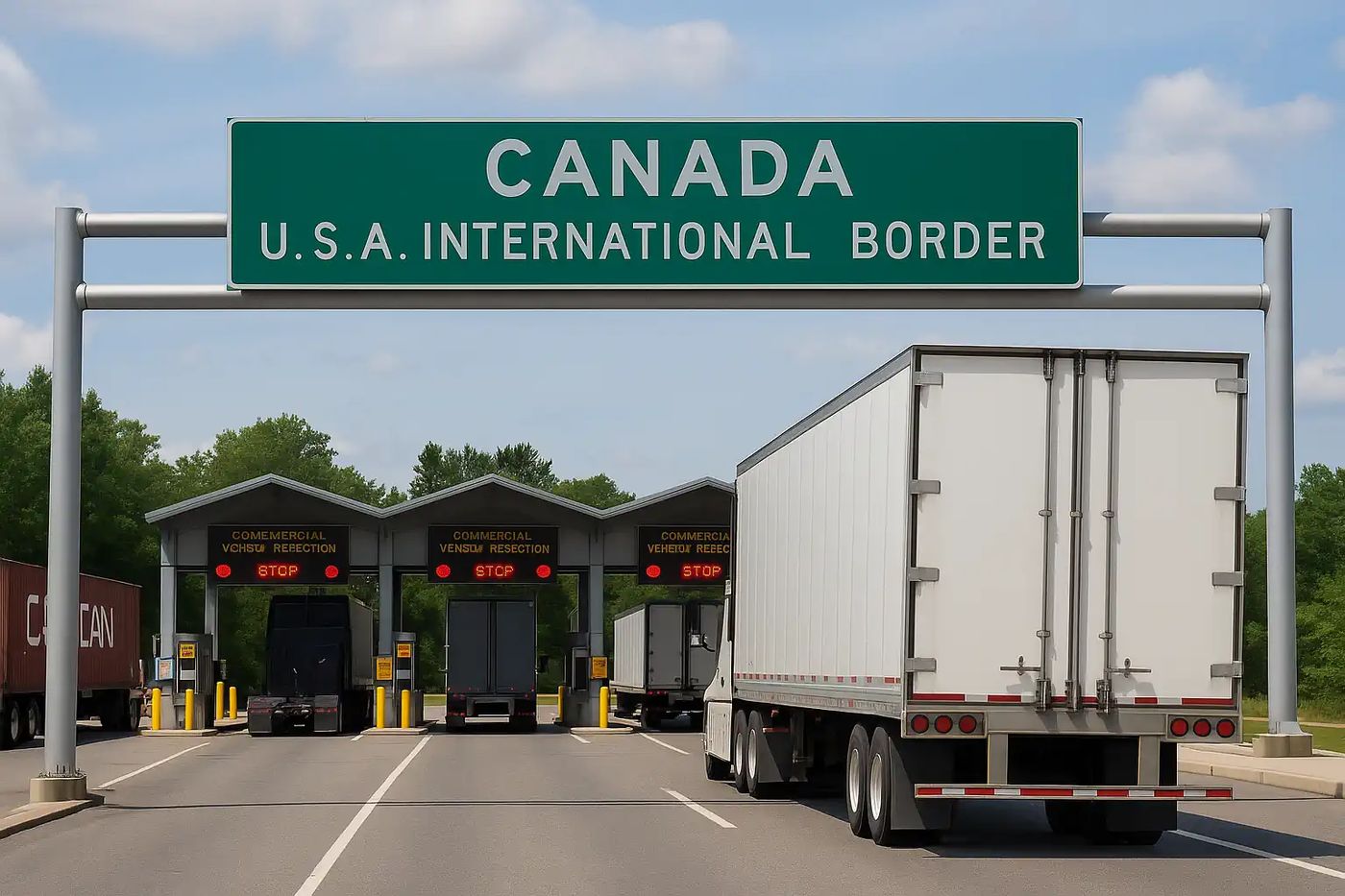
The trade relationship exists within a broader framework of defence and security partnership. Canada and the United States collaborate closely on continental defence through the North American Aerospace Defence Command (NORAD), which both countries have committed to modernize. They are allies in the North Atlantic Treaty Organization (NATO) and partners in the Five Eyes intelligence sharing alliance. Law enforcement and border agencies maintain strong relationships to combat issues like cross border smuggling, child sex exploitation, and firearms violence. Cybersecurity cooperation aims to improve the protection of critical infrastructure shared between the two nations. The two countries share the world's longest international border, which is nearly 9,000 kilometres long, and about two thirds of Canadians live within 100 kilometres of it. Managing the secure and efficient flow of over 328,000 people and billions in goods daily is a shared priority vital to economic competitiveness.
Cooperation extends to the Arctic, where both nations have significant interests, exemplified by the July 2024 Icebreaker Collaboration Effort (ICE Pact) with Finland to build polar icebreakers and capabilities. Canada's Arctic Foreign Policy recognizes the United States as its closest partner in the region. The bilateral defence and security relationship spans the full spectrum from shared continental defence through NORAD to transatlantic collective defence through NATO. This deep cooperation provides both countries with greater security than could be achieved individually and supports the stable environment necessary for the massive flow of trade and investment across the border.
Investment and Future Economic Directions
Beyond trade in goods and services, Canada and the United States have a significant bilateral investment relationship. The United States is the largest foreign investor in Canada, and Canada is the second largest foreign investor in the United States. This cross border investment supports millions of jobs in both countries and facilitates the integrated supply chains that characterize sectors like automotive and energy. Both nations are increasingly reliant on foreign investment, including from Asia, to develop their resource sectors. Asian investors initially focused on project investments as minority partners but have shown growing interest in owning North American energy production companies, viewing the region as an energy supply source. The expanding investment and trade between North America and Asia have the potential to be mutually beneficial, though they also represent a shift in traditional economic patterns.
The future of Canada U.S. trade relations involves managing ongoing tensions while seeking stability. The scheduled USMCA Joint Review in 2026 will be a critical moment for the three parties to assess the agreement and consider updates. Canada continues to engage with the United States to address trade issues, promoting stable and predictable trade. The Canadian government has stated that a mutually beneficial trade agreement that respects sovereignty is possible, but has also walked away from negotiations deemed unfavorable. The broader context includes a U.S. shift towards using tariffs and viewing economic integration as a tool, which contrasts with Canada's pursuit of long term partnerships. This dynamic ensures that trade relations will remain a central and evolving feature of the bilateral relationship.
Frequently asked questions
What tariffs did the U.S. impose on Canada in 2025?
On February 1, 2025, the United States imposed near universal tariffs on Canadian goods under a national security emergency declaration. The general tariff rate was 25 percent on all goods imported from Canada, with a lower rate of 10 percent specifically applied to energy imports. The U.S. also suspended the de minimis rule for low value shipments during the emergency. These measures prompted immediate retaliatory tariffs from Canada on select U.S. goods.
What is the current trade agreement between Canada and the United States?
The current governing trade agreement is the United States, Mexico, Canada Agreement (USMCA), which entered into force on July 1, 2020. It replaced the North American Free Trade Agreement (NAFTA). The USMCA provides the rules for trilateral trade and includes provisions for dispute settlement. The agreement is subject to a mandatory joint review every six years, with the first review scheduled for July 1, 2026.
How much trade crosses the Canada-U.S. border daily?
In 2024, approximately $3.6 billion worth of goods and services crossed the Canada U.S. border each day. This daily activity involves around 328,000 people. It contributes to an annual trade relationship valued at approximately $1.3 trillion. The border is the longest undefended international border in the world. The economic flow across it is among the largest of any bilateral relationship.
What is the softwood lumber dispute about?
The softwood lumber dispute is a long running trade conflict where the United States claims the Canadian lumber industry is unfairly subsidized. The U.S. argues that Canadian provincial governments set stumpage fees for harvesting timber administratively at below market rates, constituting a subsidy. Under U.S. trade laws, this can lead to countervailing duties on Canadian lumber imports to offset the alleged subsidy. The dispute has particularly affected British Columbia, a major exporter.
How did Canada respond to U.S. tariffs?
Canada responded to U.S. tariffs with a combination of countermeasures, support for businesses, and diplomatic engagement. The government imposed retaliatory tariffs on a list of selected U.S. goods. It also introduced financial support, tariff relief, and assistance programs to help Canadian exporters diversify into new markets. Institutionally, Canada established the Prime Minister's Council on Canada U.S. Relations and a Cabinet committee focused on the bilateral relationship.
Does the U.S. have a trade deficit with Canada?
Yes, the United States has historically run a trade deficit in goods with Canada. In 2025, the U.S. goods trade deficit with Canada was US$48.3 billion. However, this is offset by a surplus in services trade, which was US$27.7 billion in 2025. When considering the comprehensive trade balance including services, the U.S. has often maintained a surplus. The merchandise deficit is significantly influenced by U.S. imports of Canadian energy products.
Sources and further reading
- Canada–United States trade relations (Wikipedia) en.wikipedia.org
- Canada | United States Trade Representative ustr.gov
- Canada-United States relations international.gc.ca
- Canada's engagement with the United States international.canada.ca
- Prime Minister Carney delivers remarks on Canada-U.S. trade ... pm.gc.ca
- Canada-U.S. Trade Relations, Ivey Business School ivey.uwo.ca
This article explains how things work and is not financial, tax or legal advice. Rules, limits and rates change, so check the current figures with the Canada Revenue Agency, your province or your financial institution before you act.