Blockchain is a distributed digital ledger technology that records transactions in secure, linked blocks of data. It enables decentralized, transparent, and tamper-resistant record-keeping without a central authority. In Canada, blockchain is recognized as a pillar for future innovation, with an active ecosystem of over 350 companies. The technology forms the basis for cryptocurrencies and has expanding applications in areas like digital identity, finance, and intellectual property.
What is Blockchain?
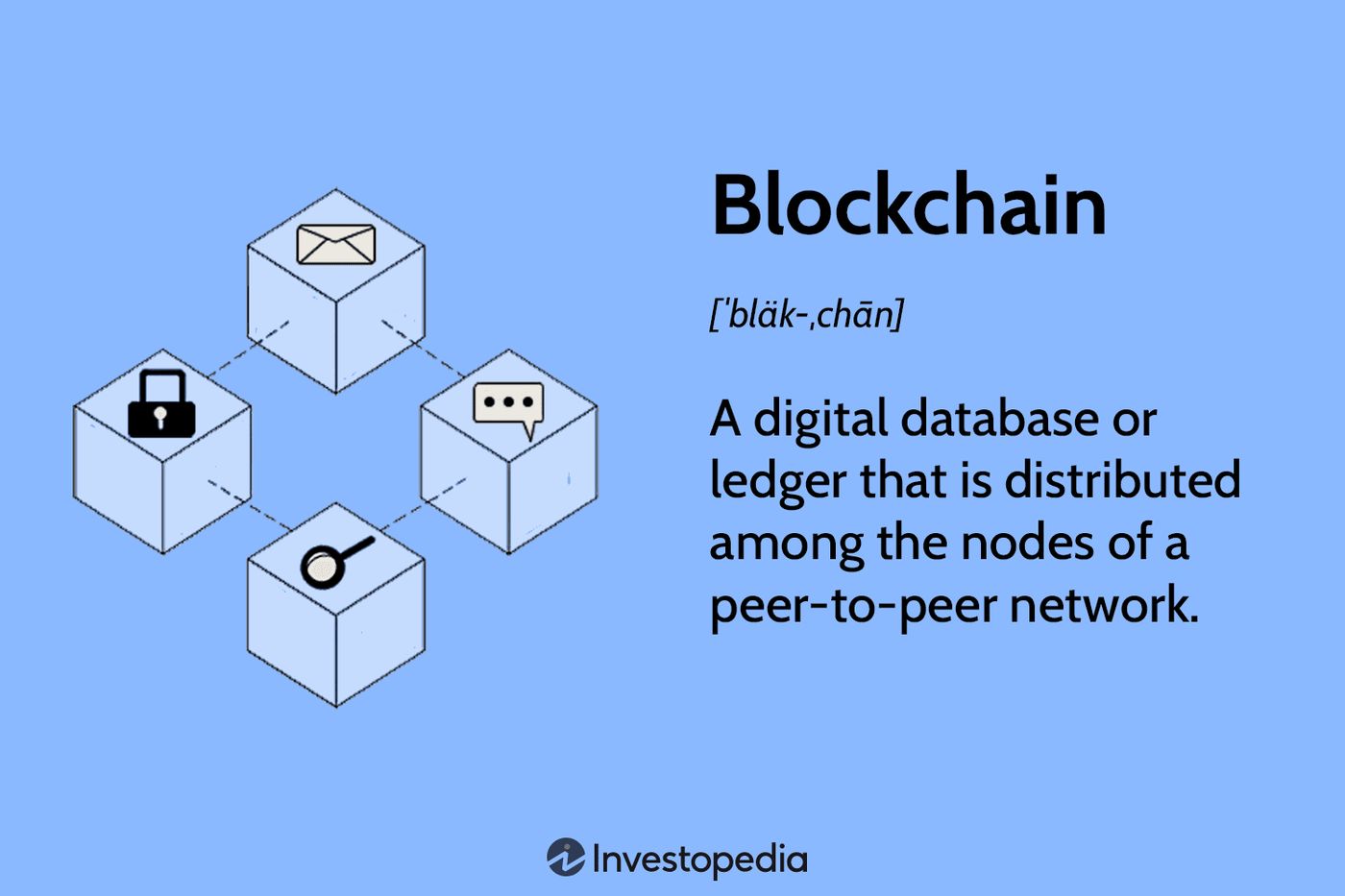
A blockchain is a decentralized and distributed digital ledger consisting of records called blocks. Each block contains a cryptographic hash of the previous block, a timestamp, and transaction data, typically organized in a Merkle tree structure. This design forms a chain where each new block links securely to all prior ones. Once data is recorded in a block, it cannot be altered retroactively without changing all subsequent blocks and obtaining consensus from the entire network. This makes blockchain transactions highly resistant to fraud and tampering. The technology is managed by a peer-to-peer network where nodes follow a consensus protocol to validate and add new blocks. While often associated with cryptocurrencies, blockchain serves as a foundational technology for various applications requiring secure, transparent, and trustless record-keeping.
How Blockchain Works
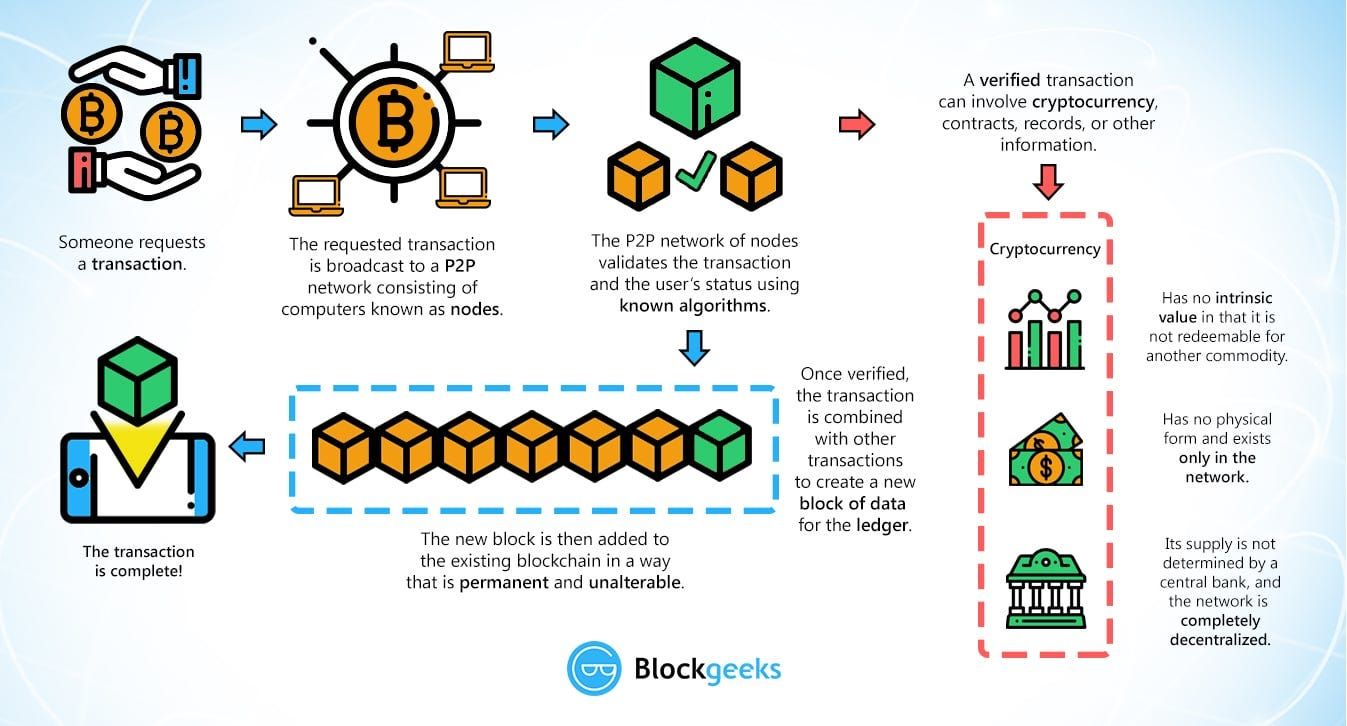
Blockchain operates through a combination of cryptographic principles, distributed networking, and consensus algorithms. Transactions are batched together into blocks. Each block includes a unique cryptographic hash, which is a digital fingerprint generated from the block's data and the hash of the previous block. This creates an immutable chain, as altering any block would change its hash and break the link to all following blocks. The network of nodes, or participants, collectively validates new blocks through a consensus mechanism. For public blockchains like Bitcoin, this often involves proof of work, where miners solve complex computational puzzles to add blocks. Other methods include proof of stake, where validators are chosen based on the amount of cryptocurrency they hold and are willing to stake as collateral. The decentralized nature of the network means every node maintains a copy of the entire ledger, ensuring no single point of failure exists. Data integrity is maintained through massive database replication and computational trust among participants.
The process involves several logical layers working together. The infrastructure layer consists of the hardware running the nodes. The networking layer handles node discovery and the propagation and verification of information across the peer-to-peer network. The consensus layer enforces the protocol rules, such as proof of work or proof of stake, to agree on the state of the ledger. The data layer comprises the blocks and transactions themselves. Finally, the application layer can include smart contracts and decentralized applications that execute automatically based on code stored on the blockchain. This layered structure allows for robust and secure workflows where uncertainty about data security is minimal. The system confirms that each unit of value is transferred only once, solving the long-standing problem of double-spending in digital systems.
History and Development
The conceptual foundations for blockchain technology were laid decades before its famous application in Bitcoin. In 1982, cryptographer David Chaum proposed a blockchain-like protocol in his dissertation on systems maintained by mutually suspicious groups. In 1991, Stuart Haber and W. Scott Stornetta described a cryptographically secured chain of blocks designed to prevent document timestamps from being tampered with. They, along with Dave Bayer, improved the design in 1992 by incorporating Merkle trees, which allowed multiple document certificates to be collected efficiently into a single block. Their company, Surety, has published document certificate hashes in The New York Times every week since 1995. The first decentralized blockchain was conceptualized by Satoshi Nakamoto in 2008. Nakamoto's key innovation was using a Hashcash-like method to timestamp blocks without a trusted party and introducing a difficulty parameter to control the rate of block creation.
The blockchain file size for Bitcoin reached 20 gigabytes by August 2014 and exceeded 600 gigabytes by 2024. The term blockchain, initially two separate words in Nakamoto's paper, was popularized as a single word by 2016. Adoption within financial services reached 13.5 percent in 2016, marking the early adopters' phase. The Global Blockchain Forum was created that same year as an initiative of the Chamber of Digital Commerce. However, broader organizational adoption remained low, with only 1 percent of CIOs indicating blockchain adoption in their organizations in May 2018, though 5 percent considered it a game-changing technology by 2019.
- 1982: David Chaum proposes a blockchain-like protocol.
- 1991: Stuart Haber and W. Scott Stornetta describe a secured chain of blocks.
- 1992: Merkle trees are incorporated into the design by Haber, Stornetta, and Dave Bayer.
- 1995: Surety begins publishing hashes in The New York Times.
- 2008: Satoshi Nakamoto conceptualizes the first decentralized blockchain.
- 2014: Bitcoin blockchain size reaches 20 GB.
- 2016: Term 'blockchain' popularized. Financial services adoption hits 13.5%.
- 2024: Bitcoin blockchain size exceeds 600 GB.
Types of Blockchain Networks
Blockchain networks are broadly categorized by their accessibility and governance structures. The main types are public (permissionless) and private (permissioned) blockchains, with variations like consortium blockchains also existing. Public blockchains are open networks where anyone can participate without restrictions. In these systems, there is no central authority controlling access or transactions. Bitcoin and Ethereum are prominent examples of public blockchains that use consensus mechanisms like proof of work to secure the network. The advantage of an open blockchain is that applications can be added without needing approval from others, using the blockchain as a transparent transport layer. Guarding against bad actors is not required through access controls, as the consensus protocol and cryptographic incentives maintain security.
Private or permissioned blockchains use an access control layer to govern who can participate in the network and what actions they can perform. These are often used by enterprises and consortia where a certain level of trust exists among known participants. Proponents argue that carefully designed permissioned blockchains can guarantee a degree of decentralization and may be more secure in practice than permissionless ones for specific business applications. However, critics compare them to traditional corporate databases, noting they lack decentralized data verification and are not hardened against operator tampering. A permissioned blockchain controlled by a single entity could be vulnerable, as that entity controls all block creation resources, negating the need for a 51 percent attack. Consortium blockchains are a hybrid where the consensus process is controlled by a preselected set of nodes or stakeholders, offering a middle ground between public and private models.
The Blockchain Ecosystem in Canada
Canada has cultivated an active blockchain ecosystem, comprising over 350 companies across various sectors including mining, decentralized finance (DeFi), trading platforms, and infrastructure. The country is home to several prominent organizations dedicated to advancing the technology. Blockchain Canada is a not-for-profit that connects entrepreneurs, researchers, regulators, and the public to help make Canada a global leader. The Blockchain Association of Canada, a not-for-profit incorporated in Vancouver, aims to educate, develop, and empower the Canadian blockchain community while connecting with global leaders. The Blockchain Technology Coalition of Canada represents a coalition of companies working for smart standards and public policy that protects consumers and supports innovation. Academic institutions are also deeply involved, with Blockchain@UBC being a multidisciplinary research cluster at the University of British Columbia focusing on leveraging blockchain to benefit Canadians and the world.
Industry groups argue that by investing in blockchain, Canada can reverse its innovation decline and become a leader in the global digital economy. The technology is seen as a pillar for future innovation with disruptive potential across multiple sectors. Beyond cryptocurrencies, proposed applications in Canada include digital identity systems, integration with artificial intelligence, central bank digital currencies (CBDCs), decentralized finance, and intellectual property protection. These applications leverage blockchain's strengths in providing trust, transparency, security, and efficiency. For instance, blockchain could give individuals control over their medical data, automate insurance claims via smart contracts, and ensure compliance with regulations like PIPEDA. The combination of blockchain and AI is seen as a powerful combination for improving data security and operational efficiency in smart city infrastructure and autonomous systems.
Risks and Security Considerations
While blockchain is designed to be secure by design and offers high Byzantine fault tolerance, it is not without risks and vulnerabilities. A primary concern in public blockchain networks is the 51 percent attack, where a single entity gains control of more than half of the network's mining power or stake. This would allow them to manipulate the blockchain record, prevent new transactions from being confirmed, and even reverse completed transactions to enable double-spending. Blockchain security relies heavily on public-key cryptography, where a public key serves as an address and a private key acts as a password for access. Data stored on the blockchain is generally considered incorruptible due to cryptographic linking, but the ecosystem surrounding it faces threats. The analysis of public blockchains has become crucial as cryptocurrencies have grown in popularity. While cryptocurrencies were once believed to be private and untraceable, specialised tech companies now provide blockchain tracking services, making fund flows more transparent to exchanges, law enforcement, and banks.
For private blockchains, different risks emerge. Critics argue that a private blockchain controlled by a corporation resembles a cumbersome database without a clear security model. Since the operator likely controls 100 percent of the block creation resources, there is no internal economic incentive like mining rewards to secure the network honestly. This makes them potentially vulnerable to insider threats or technical failures at the central server. The technology also faces scalability challenges, as the growth of a decentralized blockchain requires increasing computer resources to process larger amounts of data, which can lead to centralization pressures due to cost. Finality, or the guarantee that a transaction will not be reversed, is probabilistic in most protocols like proof of work. As a block gets deeper into the chain, it becomes less likely to be altered, but not impossible. Some proof-of-stake protocols aim for absolute or economic finality, where validators face penalties like slashing their staked assets for malicious behaviour.
Regulation and Standardization
In Canada, crypto assets, which often utilize blockchain technology, are not legal tender. No government or central bank issues or oversees them directly, distinguishing them from the Canadian dollar. The regulatory landscape is evolving alongside the technology's development. Internationally, standardization efforts for blockchain technology began in earnest in April 2016 when Standards Australia submitted a proposal to the International Organization for Standardization (ISO). This led to the creation of ISO Technical Committee 307, Blockchain and Distributed Ledger Technologies. The committee has working groups focusing on terminology, reference architecture, security and privacy, identity, smart contracts, governance, and interoperability. More than 50 countries participate in this process, along with external liaisons like SWIFT, the European Commission, and the United Nations Economic Commission for Europe.
Many other national and open standards bodies are also developing blockchain standards. These include the National Institute of Standards and Technology (NIST) in the United States, the European Committee for Electrotechnical Standardization (CENELEC), the Institute of Electrical and Electronics Engineers (IEEE), the Organization for the Advancement of Structured Information Standards (OASIS), and participants in the Internet Engineering Task Force (IETF). In Canada, organizations like the Blockchain Technology Coalition of Canada advocate for smart standards and public policy that protect consumers while supporting innovation. These standardization efforts aim to create common frameworks that ensure security, interoperability, and trust as blockchain technology is adopted across different industries and borders.
Future Applications and Debates
The future applications of blockchain extend far beyond its cryptocurrency origins. In Canada and globally, significant potential is seen in several key areas. Digital identity systems built on blockchain can give individuals control over their personal data while allowing secure access to services. Estonia's blockchain-based digital identity system is a leading example. For artificial intelligence, blockchain can secure the data used to train AI models and enable autonomous machine-to-machine transactions via smart contracts. Central bank digital currencies (CBDCs) represent a major frontier, merging fiat currency stability with blockchain's efficiency. China's digital yuan pilot and the European Central Bank's exploration of a digital euro demonstrate this trend. CBDCs could enable programmable money, where funds are coded with rules for specific uses, enhancing transparency in government spending.
Decentralized finance (DeFi) uses blockchain to enable peer-to-peer financial services like lending and borrowing without traditional intermediaries, potentially increasing financial inclusion. The integration of CBDCs with DeFi platforms is seen as a crucial innovation for enabling real-time transactions under regulatory oversight. Blockchain also offers significant potential for intellectual property protection by providing an immutable, time-stamped ledger for proving ownership and managing usage rights. However, debates persist about the fundamental definition and value of blockchain, especially concerning private systems. A central debate is whether a private, permissioned system authorized by a central authority should be considered a true blockchain. Proponents see them as practical for business, while opponents argue they resemble traditional databases and lack decentralized verification. The marketing of privatized blockchains without a proper security model has been criticized as snake oil.
| Application Area | Key Potential |
|---|---|
| Digital Identity | Secure user-controlled data management |
| Artificial Intelligence | Data security for AI and autonomous transactions |
| Central Bank Digital Currencies | Programmable money and efficient payment systems |
| Decentralized Finance (DeFi) | Peer-to-peer financial services without intermediaries |
| Intellectual Property | Immutable proof of ownership and usage rights |
Frequently asked questions
What is blockchain in simple terms?
Blockchain is a type of digital ledger that records transactions in blocks that are linked together securely using cryptography. It is decentralized, meaning it is not controlled by any single entity, but is maintained by a network of computers. Once information is added to a block, it is extremely difficult to change, creating a transparent and tamper-resistant record. This technology is the foundation for cryptocurrencies like Bitcoin and has many other potential uses.
Is blockchain safe and secure?
Blockchain is designed to be secure by using cryptographic hashes to link blocks, making data resistant to alteration. The decentralized nature means there is no single point of failure, and consensus protocols require network agreement to add new data. However, risks exist, such as the theoretical 51 percent attack on public blockchains. The security of private blockchains depends heavily on their design and governance, with critics warning they can be vulnerable if not properly implemented.
How is blockchain used in Canada?
Canada has an active blockchain ecosystem with over 350 companies involved in mining, trading platforms, decentralized finance, and infrastructure. Organizations like Blockchain Canada and the Blockchain Association of Canada work to advance the technology and connect the community. Canadian researchers and companies are exploring applications in digital identity, healthcare data management, artificial intelligence integration, and supporting central bank digital currencies. Crypto assets themselves are not legal tender in Canada.
What is the difference between Bitcoin and blockchain?
Blockchain is the underlying distributed ledger technology. Bitcoin is a specific cryptocurrency that uses a blockchain as its public ledger. The blockchain within bitcoin was the first to solve the double-spending problem without a trusted authority. While bitcoin is a digital currency, blockchain technology has inspired other applications beyond cryptocurrencies.
Can blockchain be hacked or changed?
Changing data on a blockchain is extremely difficult due to its cryptographic design. To alter a single block, an attacker would need to change that block and all subsequent blocks, which requires overwhelming computational power and consensus from the network. On a public blockchain, this would necessitate a 51 percent attack, which is very costly and unlikely for large networks. However, blockchains are not absolutely unalterable, as forks can occur, and the probabilistic nature of finality means very recent blocks could theoretically be reorganized.
What are smart contracts on a blockchain?
Smart contracts are self-executing contracts with the terms of the agreement directly written into code on the blockchain. They automatically execute and enforce obligations when predetermined conditions are met, without needing an intermediary. In Canada, proposed uses include automating insurance claims processing or enabling autonomous machine-to-machine payments, such as a self-driving car paying a toll. They are a key component of many blockchain applications beyond simple value transfer.
Sources and further reading
- Blockchain (Wikipedia) en.wikipedia.org
- Blockchain: A Pillar for Canada's Future Innovation, CSPC sciencepolicy.ca
- The Blockchain Association of Canada: a club of crypto ... blockchainassociation.ca
- Blockchain@UBC: Welcome blockchain.ubc.ca
- What Is Blockchain? oracle.com
- Blockchain North, Blockchain North blockchainnorth.ca
This article explains how things work and is not financial, tax or legal advice. Rules, limits and rates change, so check the current figures with the Canada Revenue Agency, your province or your financial institution before you act.