Bitcoin mining is the computational process that secures the Bitcoin network, verifies transactions, and creates new bitcoins. It involves solving complex cryptographic puzzles using specialized hardware, with successful miners earning block rewards and transaction fees. In Canada, the industry leverages relatively cheap and reliable electricity supplies, with operations concentrated in provinces like Alberta, Quebec, Manitoba, and British Columbia. The sector includes both industrial-scale mining companies and a growing ecosystem of hardware suppliers and repair services catering to individual miners.
What Bitcoin Mining Is and How It Works
Bitcoin mining is the process by which new bitcoins are created and transactions are added to the blockchain ledger. It is a proof-of-work system where network participants, called miners, use computing power to solve cryptographic puzzles. The mining process packages groups of proposed transactions into blocks. To add a block to the chain, miners must find a hash value that meets a specific difficulty target set by the network protocol. This involves repeatedly hashing the block header with a changing nonce value until a valid output is produced. The difficulty of this task is automatically adjusted approximately every two weeks to ensure a new block is generated roughly every ten minutes, regardless of changes in total network computing power. The miner who successfully solves the puzzle first broadcasts the new block to the network. Other nodes then easily verify the hash, and if valid, the block is appended to the blockchain. This mechanism secures the network by making it computationally impractical to alter past transactions, as doing so would require redoing the proof-of-work for that block and all subsequent blocks.
The mining process serves several critical functions for the Bitcoin network. It is the method for issuing new bitcoins into circulation, as the creator of a new block receives a block reward. This reward started at 50 bitcoins and halves approximately every four years, or every 210,000 blocks. It also provides the incentive for nodes to contribute computing power to secure the network and validate transactions. Furthermore, by requiring significant computational effort to propose a block, mining makes it economically unfeasible for a malicious actor to rewrite transaction history unless they control more than half of the network's total hashing power, known as a 51% attack. The system relies on the principle that the honest chain with the most cumulative proof-of-work will always be the longest and accepted by the network.
Evolution of Mining Hardware and Difficulty
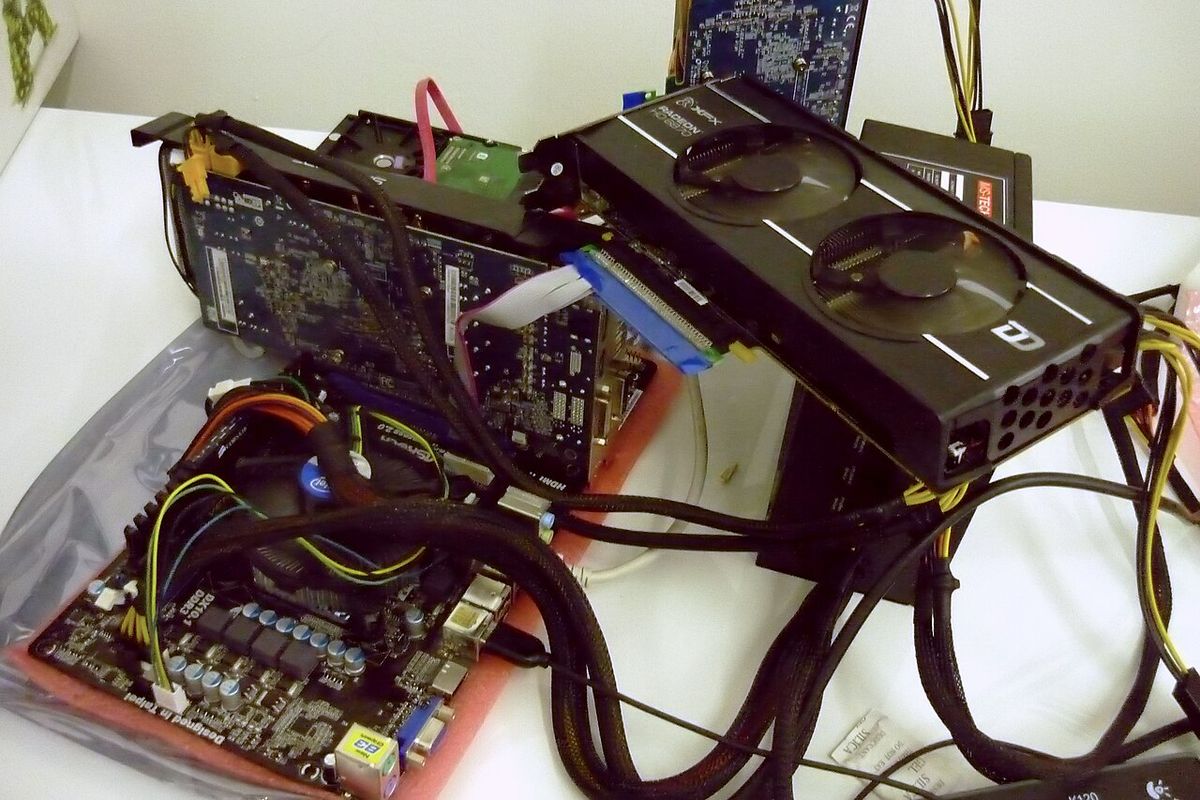
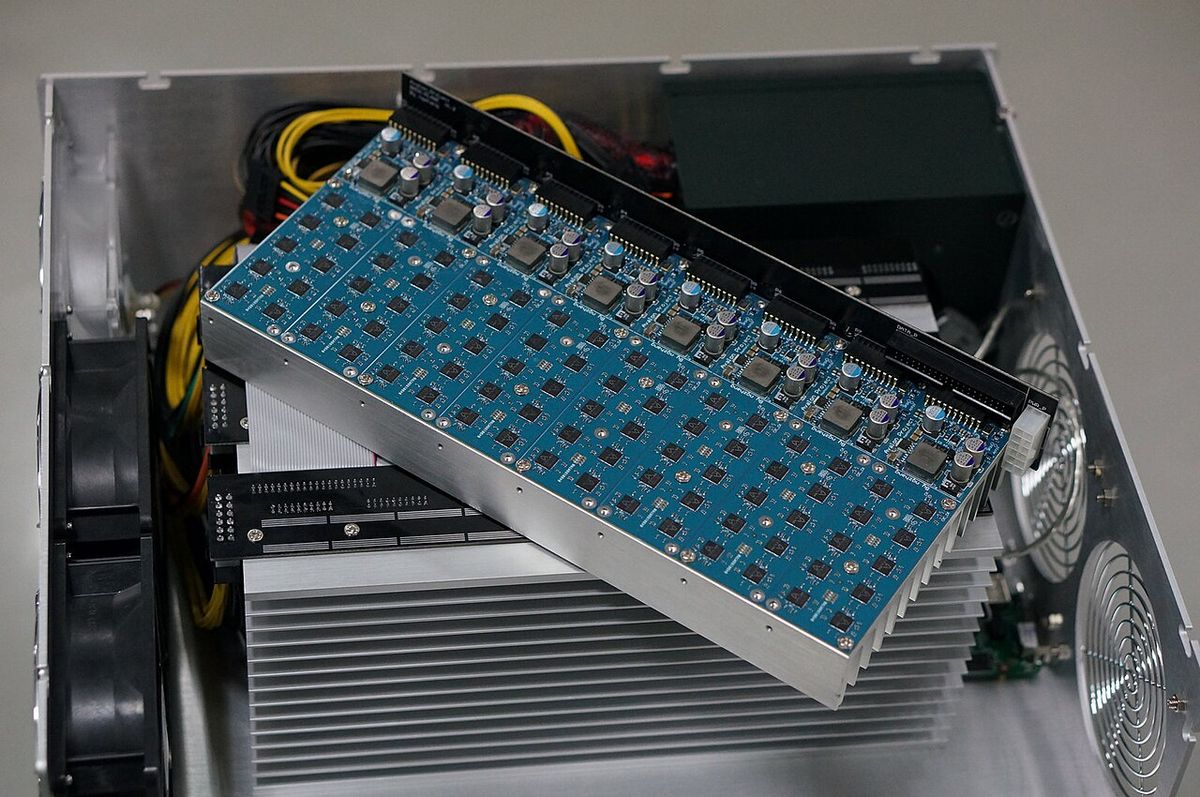
The technology used for Bitcoin mining has evolved dramatically in an ongoing competitive race. Initially, miners used standard central processing units (CPUs) found in personal computers. As difficulty increased, miners shifted to more powerful graphics processing units (GPUs) and then to field-programmable gate arrays (FPGAs). Today, application-specific integrated circuits (ASICs) are the primary and most efficient hardware for mining bitcoin. Bitcoin-specific ASICs have surpassed GPU speed by as much as 300-fold. This specialization has turned mining into a largely industrial-scale activity, though smaller-scale and solo mining persists. The increasing difficulty and capital requirements have led most miners to join mining pools, where participants combine their hashing power to share rewards more consistently. In a pool, all participating miners get paid each time the pool solves a block, with payments distributed based on the amount of work each miner contributed.
The global distribution of mining power has also shifted. Following a ban on bitcoin mining in China in 2021, the United States gained the largest share of global bitcoin mining pools. Canada's share of the global network hashrate was estimated at 4-5% in 2023, a decline from 7-8% at the end of 2022 and a significant drop from its earlier peak. The continuous increase in network-wide hashing power necessitates regular upgrades to mining hardware for operators to remain competitive, as older equipment becomes less profitable due to rising electricity consumption relative to output.
The Canadian Bitcoin Mining Landscape
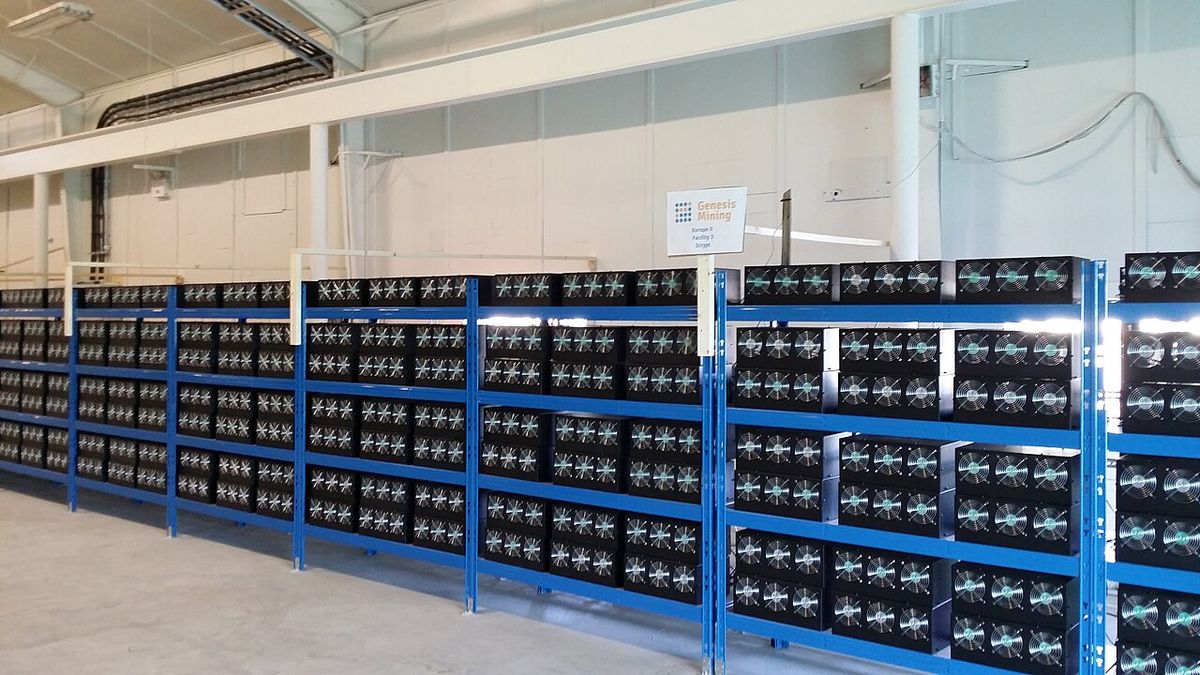
Bitcoin mining operations in Canada are attracted by the country's relatively cheap and reliable electricity supply, particularly from hydroelectric sources. Mining sites are active in Alberta, Quebec, Manitoba, and British Columbia. The industry comprises large publicly traded mining companies, smaller private operations, and a supporting ecosystem of hardware suppliers and service providers. Canada's role in the global mining network has fluctuated, with its hashrate share falling to 4-5% in 2023 from higher levels in prior years. The sector includes companies that focus solely on mining and others that are diversifying into high-performance computing and artificial intelligence infrastructure.
Several Canadian companies specialize in supplying mining hardware and infrastructure. D-Central, based in Montreal, offers a range of products and services tailored for miners. Since 2016, they have sold over 460 products, including ASIC miners, space heaters that mine bitcoin, and open-source mining hardware like the Bitaxe and Nerdaxe. They also operate a repair lab for ASIC miners and offer hosting services in Quebec powered by hydroelectricity. MinerMart, a Calgary-based supplier operating for over 13 years, provides mining hardware directly from manufacturers like Bitmain, WhatsMiner, and Canaan. They also supply cooling solutions and have delivered more than 25 megawatts of mining facilities across Alberta. These suppliers facilitate both industrial and smaller-scale mining operations within Canada.
- Key Canadian mining provinces: Alberta, Quebec, Manitoba, British Columbia.
- Major hardware/service suppliers: D-Central (Montreal), MinerMart (Calgary).
- D-Central services: hardware sales, ASIC repair, hosting, consulting.
- MinerMart services: direct hardware supply, cooling solutions, facility design.
Major Public Bitcoin Mining Companies in Canada
Investors can gain exposure to bitcoin mining through shares of publicly traded Canadian companies. These firms operate large-scale mining facilities and related infrastructure. Their performance is closely tied to bitcoin's price, mining difficulty, and operational efficiency. Some are also expanding into adjacent fields like artificial intelligence cloud services and high-performance computing. The table below outlines key details for three major Canadian-listed mining companies as of 2025 to 2026.
| Company | Primary Focus | Notable Details (2025 to 2026) |
|---|---|---|
| Hut 8 (TSX:HUT) | Bitcoin mining & energy infrastructure | Operates data centers across North America. Pivoting toward AI infrastructure. Reported Q4 2025 revenue of US$235.1 million. |
| Keel Infrastructure (TSX:KEEL) | Digital infrastructure (formerly Bitfarms) | Transitioning from Bitcoin mining to HPC and AI data centers. Reported 2025 revenue of US$229 million. |
| Hive Digital Technologies (TSXV:HIVE) | Green-powered data centers for mining & AI | Operates in Canada, Sweden, Paraguay. Q3 FY2026 revenue of US$93.1 million. Scaling AI cloud services. |
Other notable Canadian-listed companies in the broader crypto ecosystem include Galaxy Digital. Galaxy Digital provides digital asset financial services. DMG Blockchain Solutions is another company that combines mining with software development. WonderFi Technologies owns regulated crypto trading platforms Bitbuy and Coinsquare. These companies represent the diverse facets of Canada's cryptocurrency industry. They range from pure-play mining to diversified financial and technology services.
Economics and Profitability Considerations
The profitability of bitcoin mining depends on several key variables. Miners must cover the costs of electricity, hardware acquisition, and ongoing maintenance. Returns are generated from the block reward, which is newly minted bitcoin, and the transaction fees from all transactions included in the validated block. The block reward undergoes scheduled halvings, reducing the number of new bitcoins issued. The most recent halving in April 2024 reduced the reward from 6.25 to 3.125 bitcoins per block. The next halving is expected in 2028, when the reward will drop to 1.625 bitcoins.
To remain profitable, miners seek locations with low-cost electricity, often from renewable sources, and employ the most efficient ASIC hardware. The initial investment for mining equipment can range from hundreds of dollars for basic ASICs to tens of thousands for professional-grade rigs. Joining a mining pool is common for individual miners to achieve more consistent, though smaller, payouts. Pool operators typically charge fees ranging from 0.1% to 2.5% of the rewards. Additional costs include potential taxes on mined bitcoin as income and fees from cryptocurrency exchanges when selling bitcoin for fiat currency. Ultimately, the market price of bitcoin is a decisive factor, as it must be high enough to offset all operational costs denominated in local currency.
Protocol Security and Potential Risks
The Bitcoin protocol incorporates several features to protect against common attacks. Public-private key cryptography prevents unauthorized spending, as a transaction requires the sender's private key to sign. The blockchain ledger, visible to all, prevents double-spending by ensuring each bitcoin unit has not been previously spent. The proof-of-work consensus and the longest-chain rule defend against history modification. An attacker seeking to alter a past transaction would need to redo the proof-of-work for that block and all subsequent blocks and then outpace the honest network's hashing power. This becomes exponentially more difficult with each new block added, providing security through confirmations. Merchants often wait for multiple block confirmations before considering a transaction final.
Specific attack vectors exist, though they are mitigated by protocol rules and user practices. A race attack involves sending the same bitcoin in two conflicting transactions. The network accepts only the first it receives. A Finney attack is a variant requiring a miner's participation. Users can reduce risk by waiting for a transaction to be included in a block. A 51% attack, where an entity controls most of the network's hashing power, could theoretically double-spend or block transactions, but executing it against the vast Bitcoin network is prohibitively expensive. The protocol's cryptographic primitives, such as the Elliptic Curve Digital Signature Algorithm (ECDSA), are currently secure but are considered vulnerable to attack from a sufficiently powerful general-purpose quantum computer, which could derive private keys from public keys.
Frequently asked questions
What is Bitcoin mining?
Bitcoin mining is the process that secures the Bitcoin network and creates new bitcoins. Miners use specialized computers to solve complex cryptographic puzzles, a system called proof-of-work. The first miner to solve the puzzle gets to add a new block of transactions to the blockchain and is rewarded with newly minted bitcoins and transaction fees. This process validates transactions and prevents fraud like double-spending.
How does Bitcoin mining work in Canada?
In Canada, Bitcoin mining operations are drawn to provinces with low-cost and reliable electricity, such as Alberta, Quebec, Manitoba, and British Columbia. The industry includes large publicly traded companies like Hut 8 and Hive Digital, as well as smaller operators. Canadian suppliers like D-Central in Montreal and MinerMart in Calgary provide hardware, repair services, and hosting. Canada's share of the global Bitcoin mining network hashrate was approximately 4-5% in 2023.
How much can you earn from Bitcoin mining?
Earnings depend on factors like electricity cost, hardware efficiency, participation in a mining pool, and the market price of bitcoin. The block reward for miners is currently 3.125 bitcoins per block, plus transaction fees. This reward halves roughly every four years. Profitability requires that the value of earned bitcoin exceeds the costs of power, hardware, and pool fees. For individual miners, joining a pool provides more consistent, though smaller, payouts.
What are the best Bitcoin mining stocks in Canada?
Major publicly traded Canadian Bitcoin mining companies include Hut 8, Keel Infrastructure (formerly Bitfarms), and Hive Digital Technologies. These companies operate large-scale mining facilities and, in some cases, are diversifying into high-performance computing and artificial intelligence services. Their stock performance is influenced by bitcoin's price, mining economics, and corporate strategy. Other Canadian-listed crypto sector companies include Galaxy Digital and DMG Blockchain Solutions.
Is Bitcoin mining legal in Canada?
Yes, Bitcoin mining is legal in Canada. The activity is subject to standard business regulations and tax laws. Miners must report income from mined bitcoin. The industry operates openly, with companies listed on Canadian stock exchanges and service providers advertising hardware and support. There are no specific federal bans on cryptocurrency mining, allowing operations to proliferate in provinces with favourable energy conditions.
When will the last Bitcoin be mined?
The final bitcoin is projected to be mined around the year 2140. This is based on the programmed halving schedule, where the block reward reduces by half approximately every four years until it approaches zero. After the last bitcoin is issued, miners will no longer receive block rewards. Miners will then earn income solely from transaction fees attached to the transactions they validate and include in blocks.
Sources and further reading
- Bitcoin network (Wikipedia) en.wikipedia.org
- D-Central: Bitcoin Mining Hardware, Heaters & ASIC Repair d-central.tech
- MinerMart: ASIC Miners & Mining Infrastructure In Canada minermart.ca
- 3 Best-performing Canadian Crypto-Mining Stocks in 2026 investingnews.com
- How to mine Bitcoin (BTC) finder.com
- Canadian Crypto Stocks: Which Public Companies ... bitbuy.ca
This article explains how things work and is not financial, tax or legal advice. Rules, limits and rates change, so check the current figures with the Canada Revenue Agency, your province or your financial institution before you act.